Plants
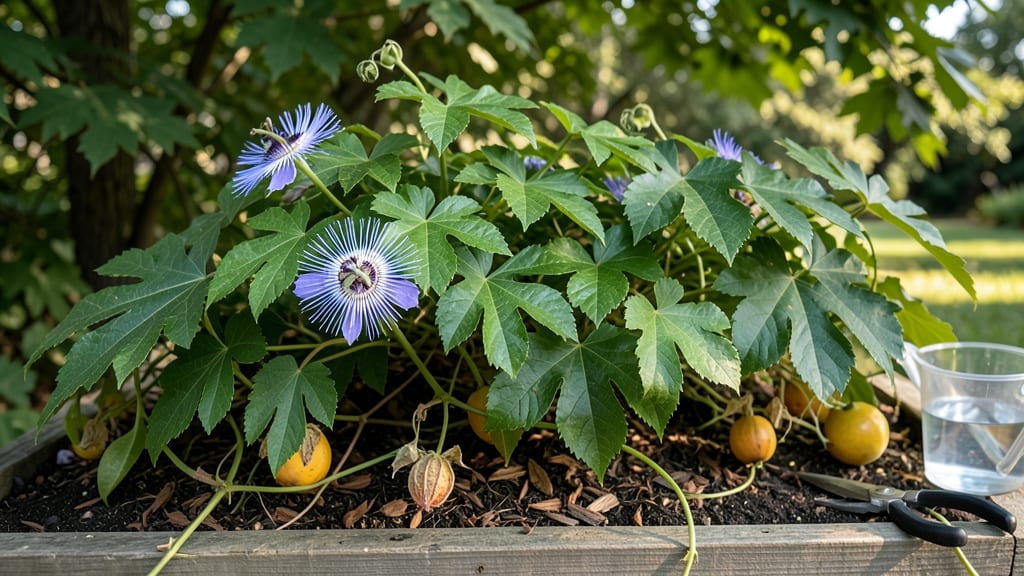
Growing Passiflora caerulea—that stunning frost-resistant blue passionflower—finally makes sense in Pacific Northwest gardens. ✨ This hardy vine thrives where many tropical plants fail, offering dramatic blooms and edible fruit without the fuss of tender species.
The secret lies in its adaptability: it handles cooler summers, occasional frost, and even urban microclimates better than most passionflowers.
You’ll need just five key elements to get started: a sunny spot with at least 6 hours of light, well-draining soil (amend with compost if yours is heavy clay), a sturdy trellis or fence for support, consistent moisture, and a little winter protection in colder zones.
The plants reward this care with vibrant blue flowers that bloom from early summer through fall, followed by tiny, grape-like edible fruits that birds and humans adore.
What you’ll love most is how low-maintenance this vine truly is. Prune back dead growth in early spring, fertilize lightly in early summer, and watch it transform bare walls or fences into a lush, fragrant living tapestry.
Butterflies and hummingbirds will flock to your garden, and you’ll enjoy fresh fruit straight from the vine—no greenhouse required.
Perfect for Pacific Northwest gardeners who want color, edibles, and wildlife magnetism without the high-maintenance drama. Whether you’re a first-time grower or a seasoned vine enthusiast, this plant delivers reliable beauty year after year. Let’s get those roots in the ground!
📚 In This Guide
- What you need
- Instructions
- Tips and common mistakes
- Wrapping up and next steps
What you need
- ● Passiflora caerulea plant: 1 nursery-grown vine (3–6 inches tall) or seeds (if starting from scratch). Pro tip: 💡 Opt for a hardy variety labeled for zones 5–9 to ensure frost resilience!
- ● Well-draining potting mix: 5–10 gallons (for containers) or amend garden soil with compost (1 part compost to 3 parts soil) to improve fertility and drainage.
- ○ Container (optional but recommended for PNW winters): 15–20 gallon pot with drainage holes (if growing in containers).
- ● Grow bags (alternative for easy winter storage).
- ● Support structure: 6–10 foot trellis, arbor, or obelisk (passionflower vines can climb aggressively!).
- ● Organic mulch: 2–3 inches of wood chips or straw to protect roots from temperature swings.
- ● Garden trowel or shovel (for planting).
- ● Pruning shears (to shape vines and encourage blooms).
- ● Gloves (passionflower vines can be thorny!).
- ● Watering can or hose with gentle spray nozzle (keep soil consistently moist but not soggy).
- ○ Frost cloth or row covers (optional but highly recommended for PNW winters—wrap around containers or drape over garden plants when temps drop below 20°F).
- ● Balanced fertilizer (5-10-5 or 10-10-10): 1–2 tablespoons per plant every 4–6 weeks during growing season (spring–fall).
- ● Epsom salt (magnesium sulfate): 1 tablespoon dissolved in water monthly to boost bloom production.
- ● Compost tea (for a nutrient boost during active growth).
- ● Decorative stakes or paint (to personalize your trellis!).
Step-by-Step guide to planting and cultivating Passiflora caerulea
Here’s how to establish this hardy vine in your Pacific Northwest garden for stunning blue blooms.
🌱 Step 1: Select and Prepare the Planting Site
Passiflora caerulea thrives in partial shade to full sun—ideal for PNW gardens where afternoon shade protects it from intense summer light. Choose a location with well-draining soil and a sturdy trellis, arbor, or fence at least 8 feet tall since this vine can reach 15-20 feet in a single season. I always test soil drainage by digging a 12-inch hole, filling it with water, and waiting to see if it drains within 30 minutes. Slow drainage? Amend the soil with 2-3 inches of compost or a 50/50 mix of garden soil and perlite to improve aeration.
This vine tolerates a range of soil types but performs best in slightly acidic to neutral pH (6.0-7.5). A simple soil test kit confirms the pH—if it’s too acidic, add lime to raise the pH gradually. Avoid heavy clay soils, which can suffocate roots. The key here is balance: enough moisture retention to support deep roots but never waterlogged conditions, especially in winter.
🪴 Step 2: Plant with Proper Spacing and Support
Dig a hole twice as wide as the root ball but no deeper—planting too deep can drown the crown. Gently remove the plant from its container and loosen any circling roots with your fingers. Place it in the hole so the top of the root ball sits 1-2 inches below soil level—this prevents stem rot while allowing roots to establish. Backfill with native soil mixed with 1 cup of bone meal for phosphorus, which encourages strong root and vine growth.
Install your trellis or support structure before planting—this vine needs something sturdy to climb immediately. I like to use 3-inch metal stakes driven into the ground at 6-foot intervals along the trellis line, then attach twine or jute twine horizontally every 12 inches for the vine to twine around naturally. Water deeply after planting to settle the soil and eliminate air pockets around the roots. You’ll know it’s right when water drains evenly without pooling.
☀️ Step 3: Water and Fertilize for Establishment
Keep the soil consistently moist but not soggy for the first 4-6 weeks after planting. Water deeply 2-3 times per week, aiming for 1-2 gallons per plant, until the top 6 inches of soil feels damp 2 inches down. Overwatering is the fastest way to invite root rot in this vine—it’s more drought-tolerant once established but needs consistent moisture to take hold. Mulch with 3 inches of wood chips or straw around the base (but keep it 6 inches away from the stem) to retain moisture and regulate soil temperature.
Fertilize lightly in early spring with a balanced 10-10-10 fertilizer applied at half-strength to encourage leafy growth. Once flowers appear in mid-summer, switch to a low-nitrogen, high-phosphorus fertilizer (5-10-10) to support blooming. I avoid high-nitrogen fertilizers—they produce lush foliage at the expense of flowers. Watch for new growth in spring as your cue to fertilize, and stop fertilizing entirely after early fall to allow the plant to harden off for winter.
✂️ Step 4: Prune and Train for Healthy Growth
Prune in late winter or early spring before new growth begins. Remove dead, diseased, or crossing branches first—this improves airflow and reduces pest risks. Then, cut back overly long vines by one-third to encourage bushier growth and more flowers. I always prune just above a leaf node or bud, which is where new growth will emerge. Avoid heavy pruning in fall, as the plant needs foliage to store energy for winter survival.
Train young vines by gently tying them to the trellis with soft twine or plant ties. This vine climbs by twining its tendrils, so it doesn’t need aggressive pruning to stay on support. In summer, pinch back new growth tips to encourage branching—this leads to more flower clusters. If you notice yellowing leaves, it’s often a sign of overwatering or nutrient deficiency. Adjust your watering schedule or apply a chelated iron supplement if the yellowing starts at the new growth.
⏰ Step 5: Protect from Winter and Encourage Repeat Blooming
Passiflora caerulea is hardy to USDA Zone 5, making it perfect for the Pacific Northwest’s mild winters. However, young plants or those in Zone 5’s colder microclimates benefit from mulch protection. Pile 6-8 inches of straw or leaves around the base in late fall, then top with a lightweight burlap wrap if temperatures dip below 15°F. Remove the mulch in early spring once new growth appears—this prevents the crown from rotting.
To encourage repeat blooming, deadhead spent flowers by snipping the stem just above the next leaf node after blooms fade. This redirects the plant’s energy into producing new flowers rather than seed pods. In late summer, reduce watering slightly to once a week to signal the plant to prepare for dormancy. The goal is to balance growth and bloom cycles—too much water in late summer can delay flowering next season.
Tips & tricks for cultivating thriving Passiflora caerulea
Between us, getting your passionflower vine to flourish in the Pacific Northwest takes more than just planting and hoping for the best. These tried-and-true tips will help you avoid common pitfalls and maximize those stunning blue blooms.
Soil Drainage Test: That 30-minute drainage test in Step 1 is non-negotiable. I've seen too many well-intentioned gardeners skip this and end up with root rot within weeks. If your soil drains slower than 30 minutes, mix in that 50/50 soil-perlite blend right into the planting hole—not just around the edges. The goal is to create a well-aerated root zone that mimics the vine's natural habitat.
Support System Strategy: Installing your trellis before planting (as mentioned in Step 2) is brilliant, but here's what nobody tells you: use flexible supports like willow stakes instead of rigid metal for the first year. The vine's tendrils need to find purchase naturally—rigid supports can actually weaken the climbing habit. Once established, you can switch to the 3-inch metal stakes mentioned in the instructions.
Watering Wisdom: The 4-6 week establishment period requires consistent moisture, but timing matters. Water in the morning to prevent fungal issues from evening dampness, and always water at the base—not overhead. I've found that using a drip irrigation system set to deliver 1-2 gallons twice weekly gives perfect control over that "consistently moist but not soggy" balance without overwatering.
Pruning Precision: When you're pruning back those overly long vines by one-third in Step 4, aim for the first set of healthy leaf nodes below the overgrowth. This is where new shoots will emerge most vigorously. I've seen gardeners cut too aggressively and end up with sparse foliage—always leave those leaf nodes as your guide for regrowth.
Pro Tips for Passionflower Passiflora Caerulea
- Between us, getting your passionflower vine to flourish in the Pacific Northwest takes more than just planting and ho...
- Soil Drainage Test: That 30-minute drainage test in Step 1 is non-negotiable. I've seen too many well-intentioned gar...
- Support System Strategy: Installing your trellis before planting (as mentioned in Step 2) is brilliant, but here's wh...
Frequently asked questions
Got questions about growing Passiflora caerulea in your PNW garden?
Here are some of the most common ones—and their answers!
Is passionflower really frost-resistant?
Passiflora caerulea is one of the hardiest passionflowers, tolerating light frosts down to 15–20°F (-9 to -7°C). However, young plants or tender new growth may still suffer in prolonged freezes. Mulch heavily in winter and plant in sheltered spots to boost survival rates. Pro tip: Prune back damaged stems in spring—new growth is resilient!
How fast does passionflower grow?
Expect moderate growth—about 1–2 feet (30–60 cm) per year under ideal conditions. With proper care (sun, water, and support), it can reach 10–15 feet (3–4.5 m) tall in 3–5 years. Patience pays off—this vine thrives when given space to climb! Fun fact: Fast growth often slows in winter but picks up in spring.
Can I grow passionflower in containers?
Yes! Passiflora caerulea adapts well to large containers (15+ gallons) with drainage holes. Use a well-draining potting mix and a trellis for support. Move pots indoors or to a sheltered spot if temps drop below 20°F (-7°C). Just be prepared for slower growth compared to in-ground plants. Pro tip: Fertilize lightly in spring/summer to encourage blooms.
What pests should I watch for?
The biggest threats are aphids, spider mites, and whiteflies. Neem oil or insecticidal soap works well for mild infestations. Ladybugs and lacewings are natural predators—invite them with companion plants like marigolds! Scale insects can also appear; prune and disinfect tools to prevent spread. Prevention tip: Keep plants healthy with balanced watering and airflow.
Why isn’t my passionflower blooming?
Common culprits: too much shade, over-fertilizing (nitrogen-heavy), or young age. Passiflora caerulea needs full sun (6+ hours/day) and balanced fertilizer (low nitrogen) for blooms. Wait 2–3 years for mature plants to flower. If established but still bare, prune back 1/3 in early spring to encourage new growth. Bonus: Deadhead spent blooms to prompt more flowers!
Wrapping up and next steps
Passiflora caerulea is a stunning, frost-resistant treasure that brings vibrant blue blooms and tropical charm to Pacific Northwest gardens—without the fuss! From its low-maintenance care to its pollinator-friendly appeal, this plant proves that beauty and resilience go hand in hand.
Whether you’re a gardening novice or a seasoned green thumb, adding passionflower to your space is a rewarding way to elevate your outdoor oasis.
Ready to transform your garden? Start small—plant a single vine in a sunny spot, or dive deeper by exploring companion plants like lavender or salvia to create a thriving pollinator paradise. Your future garden will thank you! 🌿✨