
What is on this site
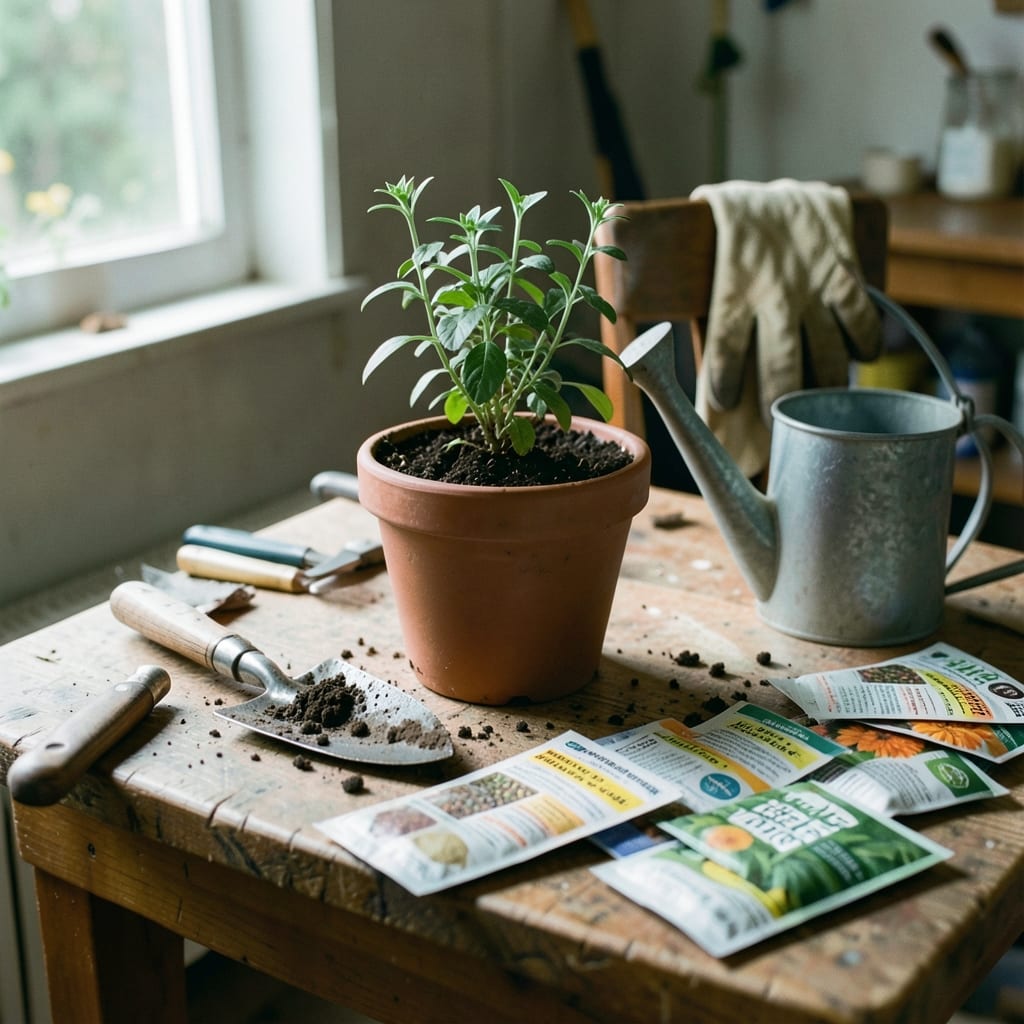
This site is for growing things—plants, seeds, and the quiet work of turning soil into life. We focus on what actually works in real gardens, not just what looks good in a catalog or a photo.
Every guide, tip, and troubleshooting post is tested in actual conditions: uneven sunlight, heavy clay, drought, or the first tentative steps of a beginner.
The site is organised by what you need right now. Need to know how to start? There’s a section on seeds, soil, and the first tools. Stuck on a wilting plant? The troubleshooting guides cut to the root of the problem. Want to grow something specific?
Browse by plant type, season, or difficulty level. And if you’re curious about the *why*—why a tomato needs pruning, why marigolds repel pests—there are deep dives into the science behind the soil.
| Where | What is there | Go here if |
|---|---|---|
| The Homepage | Latest guides, seasonal highlights, and new plant profiles | You’re unsure where to start |
| Guides | Step-by-step instructions for planting, pruning, and problem-solving | You need a clear process for a specific task |
| Plant Profiles | Detailed care notes for common and unusual plants | You’re choosing what to grow next |
| Troubleshooting | Diagnoses for yellow leaves, pests, and stunted growth | Your plant is struggling and you don’t know why |
How to read a page here
Every page follows the same order: first, the goal—what you’ll achieve by the end. Next, the tools and materials you’ll need, listed simply so you can gather them before you start. Then, the steps themselves, numbered and broken into small, actionable parts.
Numbers like *‘3 weeks’* or *‘6 inches deep’* are exact unless noted; measurements like *‘a handful’* are left open for your judgment.
Sidebars appear when they matter—like a warning about a plant’s toxicity or a note on when to adjust for your climate. These are things you can skip on a first read but return to later.
Charts or diagrams (for pruning, spacing, or pest cycles) are always labeled clearly so you can reference them without hunting. And if a step feels unclear, the *‘Why this works’* section explains the science behind it.
Use the *‘Key Takeaways’* box at the end to remember the most critical parts. It’s a cheat sheet for when you’re mid-project and need a quick reminder. If a page has a *‘Common Mistakes’* section, read it first—those are the pitfalls that trip up even experienced gardeners.
When it does not work
Some pages assume you have basics like a trowel or a watering can. Others skip steps that seem obvious (like ‘water the soil, not the leaves’) because they’re written for people who’ve never held a seedling before.
If a guide feels missing something, check the *‘Tools & Materials’* list first—you might need an item you didn’t realise was critical. Then look for a *‘For Beginners’* note; those pages slow down to explain foundational skills.
Before you give up
- Check if the plant or task matches your climate zone (look for ‘USDA Zone X’ or ‘Hardiness Zone X’ notes)
- Verify you’re using the right soil type (sandy, loamy, clay) for the plant—some guides assume amended soil
- Search for ‘[plant name] + your region’—local variations often get their own troubleshooting guides
- Try the opposite of what the guide says (e.g., if it says ‘water deeply,’ try shallow, frequent watering) to rule out misapplication
Who we are

The hands behind this site belong to someone who still gets excited when a seedling breaks through the soil.
| The colophon | |
|---|---|
| Written by | Gustavo Trujillo, who runs the site and tests every guide in his unheated greenhouse or the raised beds outside his Oregon home |
| Tested in | A 1972 greenhouse with cracked glass panes, a north-facing windowsill, and a back patio where the soil stays damp year-round |
| Written with | A cheap trowel, a notebook full of failed experiments, and the free extension service’s annual pest reports |
| Learned from | His grandmother, who grew roses in cracked clay pots and swore by ‘letting the soil tell you when it’s thirsty’ |
| Still getting wrong | Predicting how fast weeds will outpace seedlings—especially in spring |
Gardening is half patience, half paying attention. The best advice you’ll find here isn’t about buying the right tools or following a perfect schedule—it’s about noticing when something *doesn’t* match the guide, and trusting your own eyes over the instructions.
If you need something that is not here
We try to cover the most common questions, but some topics—like large-scale commercial growing or rare heirloom seeds—get their own niches. If you’re looking for something specific and can’t find it, the contact page is the place to ask.
Tell us what’s missing, and we’ll either point you to the right resource or add it to the site ourselves.
The guides are grouped by category: Advice, Aphids, Blooming, Companion Plants, Container Gardens and Fertilization.