Flowers
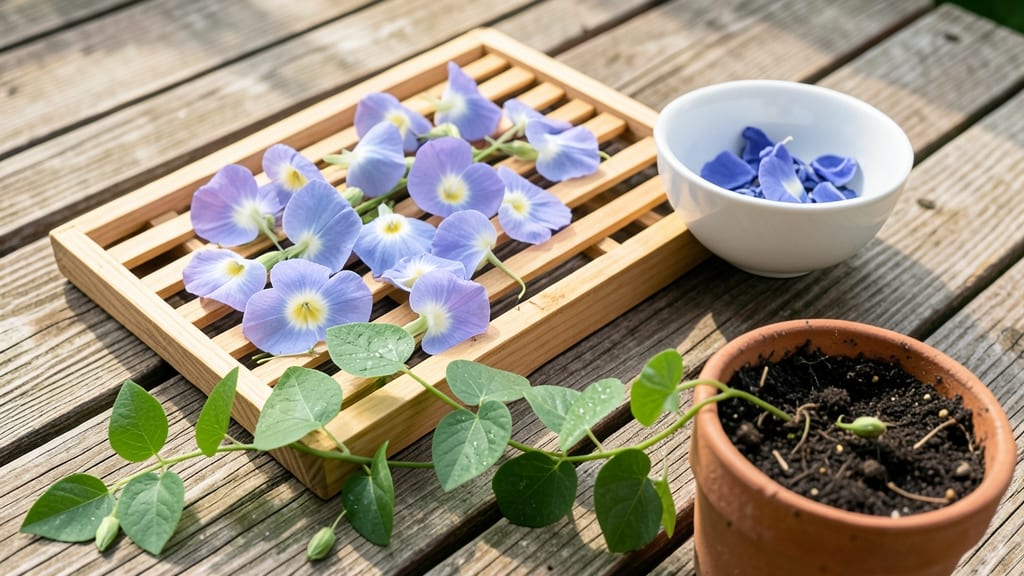
Drying butterfly pea flowers for tea unlocks their magic—those vibrant blooms transform into a color-changing infusion that dances from blue to purple with every sip. ✨ The process is simpler than you'd think, and once you master it, you'll never buy store-bought butterfly pea tea again.
These flowers aren’t just pretty; they’re functional, offering a caffeine-free, antioxidant-rich brew that’s perfect for iced tea, cocktails, or even culinary garnishes.
The key to preserving their potency lies in gentle drying—too much heat or humidity ruins their delicate properties. You’ll need a cool, dry spot with good airflow (like a mesh bag or screen), or a low oven setting if you’re in a hurry.
Just 1-2 weeks of air-drying at room temperature does the trick, while oven-drying at 170°F takes about 1-2 hours. The goal? Flowers that crumble easily between your fingers but retain their vibrant hue.
Once dried, store them in an airtight container away from light to keep their flavors and colors intact for up to a year. A pinch in hot water creates a soothing, earthy tea that shifts colors based on pH—add lemon for blue, vinegar for purple.
The possibilities extend beyond tea: sprinkle them on desserts, infuse oils, or use them as natural food coloring. Your pantry (and taste buds) will thank you.
Here’s the catch: overdrying turns them brittle, while underdrying invites mold. Test a few flowers by crushing them—if they still feel damp, give them more time. The reward? A shelf-stable ingredient that turns ordinary drinks into something extraordinary. Ready to turn those blooms into magic?
📚 In This Guide
- What you need
- Instructions
- Tips and common mistakes
- Wrapping up and next steps
What you need
- ● Fresh butterfly pea flowers (Clitoria ternatea) – 1–2 cups (or ~50–100g). Harvest when fully bloomed but before wilting.
- ● Clean, breathable drying surface – Options include: Silicon drying mat
- ● Wire mesh screen (fine mesh, ~1/4" holes)
- ● Baking sheet lined with parchment paper
- ○ Food dehydrator – Optional but ideal (set to 95–115°F / 35–46°C for gentle drying).
- ● Oven – Alternative method (if no dehydrator; see instructions for settings).
- ● Fine-mesh strainer or sieve – For removing stems and debris.
- ● Air-tight glass jars or resealable bags – 1–2 jars (preferably amber or dark glass to protect from light).
- ● Small funnel – For transferring dried petals into storage containers.
- ● Desiccant packets (silica gel) – To absorb moisture in storage jars.
- ● Labeling tags – Mark jars with the drying date and "butterfly pea tea."
- ● Food-grade essential oils (e.g., lemon or lavender) – A few drops to enhance aroma (use sparingly!).
- ● Mortar and pestle – For crushing dried petals into a fine powder (if making tea blends).
- ● Humidity indicator card – To ensure flowers stay dry during storage.
Step-by-step instructions for harvesting and drying butterfly pea flowers
Here's how I transform fresh butterfly pea blossoms into vibrant, mood-altering tea—no fancy equipment needed.
🌿 Step 1: Harvest Flowers at Peak Color
Pick flowers in the morning after dew has evaporated, when petals are fully unfurled but still deep blue. Avoid any with brown edges or wilting centers—these won't dry properly. I snip stems with clean scissors about 1 inch below the flower head to prevent bruising. The key is harvesting just before full bloom—this ensures the most intense color change when steeped.
Lay freshly picked flowers on a clean kitchen towel in a single layer. Gently pat them dry with another towel to remove excess moisture. Any lingering dampness will create mold during drying. I always work in small batches—about 20-25 flowers per drying session—so they dry evenly without crowding.
☀️ Step 2: Air-Dry Flowers Properly
Spread the flowers on a wire cooling rack or a piece of parchment paper in a warm, dry location. I position mine near a sunny window but out of direct sunlight—too much heat will bleach the petals. The ideal drying spot maintains 70-75°F with good airflow. A small fan on low setting helps prevent humidity buildup.
Turn the flowers every 2-3 hours to ensure even drying. You'll know they're ready when petals become crisp to the touch and lose 80% of their original weight. This typically takes 3-5 days, depending on humidity levels. If your kitchen feels damp, extend drying time to 5-7 days to prevent mold.
🪴 Step 3: Store Dried Flowers for Maximum Potency
Once completely dry, transfer flowers to an airtight glass jar with a tight-sealing lid. I store mine in a cool, dark pantry where they'll maintain their vibrant properties for up to 1 year. The jar should be filled no more than 3/4 full to prevent crushing during storage. Label with the date and variety—freshly dried flowers make the most intense tea.
For best results, use a paper coffee filter when steeping to catch any dried petal fragments. Store-bought butterfly pea tea often contains stems and leaves, which can make the infusion bitter. With your home-dried flowers, you'll get a smoother, more aromatic cup with that signature color-changing magic.
⏰ Step 4: Test for Proper Drying Before Brewing
Before making your first batch, perform a simple test: crush a small pinch of dried flowers between your fingers. Properly dried petals should crumble easily into fine powder with no moisture visible. If they feel slightly damp or clump together, return them to the drying rack for another 24 hours. Overly brittle petals indicate they've dried too long—still safe to use but may steep more slowly.
Once confirmed dry, you're ready to brew! Steep 1 teaspoon of dried flowers per 8 ounces of hot water for 5-7 minutes. The longer it steeps, the more intense the blue-to-purple transformation becomes. I always make a small test batch first to gauge the perfect steep time for your taste preferences.
Tips & tricks for perfect butterfly pea flower drying
Here's what I learned after drying flowers for years—these little tricks make all the difference for vibrant, mold-free petals.
Harvesting Timing: The morning after dew dries is non-negotiable. Flowers picked at this time contain the most anthocyanins—the compounds that create that mesmerizing color change. I've tried harvesting later in the day, and the color transformation is noticeably less dramatic. Also, work quickly once you start harvesting—those petals can wilt fast once they're off the plant.
Drying Environment Control: That 70-75°F range is critical, but humidity is even more important. If your kitchen feels stuffy, place a small bowl of silica gel packets near your drying rack—they'll absorb excess moisture without affecting the flowers. I once had a batch develop mold because I ignored the humidity factor, and it was heartbreaking to watch those beautiful petals spoil.
Weight Loss Indicator: The 80% weight loss guideline might sound vague, but here's how to check: pick up a small handful of fresh flowers, then compare them to dried ones. The dried flowers should feel feather-light in your hand. If they still feel substantial, they need more drying time. This method is more reliable than just looking at them—some flowers can look dry but still contain hidden moisture.
Storage Container Tip: Glass jars are essential, but don't overlook the lid type. Choose jars with airtight, rubber-sealing lids—they create a better seal than simple screw tops. I also store a small piece of unbleached parchment paper inside each jar before adding the flowers. This extra layer protects against any potential moisture transfer from the jar itself.
Pro Tips for Dry Butterfly Pea Flower For Tea
- Here's what I learned after drying flowers for years—these little tricks make all the difference for vibrant, mold-free petals.
- Harvesting Timing: The morning after dew dries is non-negotiable.
- Drying Environment Control: That 70-75°F range is critical, but humidity is even more important.
Frequently asked questions
Got questions about drying butterfly pea flowers for tea?
Here are the answers to the most common ones—so you can brew like a pro!
How long does it take to dry butterfly pea flowers completely?
With proper airflow (like a dehydrator or well-ventilated space), flowers typically dry in 12–24 hours. If using a screen or rack, check daily—they’re ready when brittle and crumbly. Over-drying can dull their vibrant color, so aim for just crispy, not powdery!
Can I dry butterfly pea flowers in the sun instead of a dehydrator?
Yes! Sun-drying works if your climate is dry and humidity is low (<30%). Lay flowers in a single layer on a mesh screen, cover with cheesecloth to shield from dust, and rotate every few hours. Avoid direct midday sun to prevent fading. Pro tip: Test dryness by crushing a petal—it should snap, not feel damp.
Why did my dried flowers lose their blue color?
Color loss often happens from oxidation (air exposure) or over-drying. Store dried flowers in an airtight container with a silica packet to preserve vibrancy. For tea, use hot water (just off boil) and steep for only 5–10 minutes—longer steeping deepens the blue but can make it muddy.
How do I store dried butterfly pea flowers for tea?
Keep them in a cool, dark place (like a pantry) in an airtight container with a tiny silica gel packet to absorb moisture. Label with the drying date—they stay fresh for 6–12 months. For extra shelf life, freeze dried flowers in ice cube trays with water (thaw as needed for tea!).
What if I can’t find fresh butterfly pea flowers?
No worries! Try these alternatives:
- Dried butterfly pea powder (available online)—just steep ½ tsp in hot water.
- Red cabbage (for a purple hue, though flavor differs).
- Blue spirulina (a powdered algae option for color).
Wrapping up and next steps
Drying butterfly pea flowers for tea is a simple yet rewarding process that unlocks a world of vibrant, health-boosting possibilities! With just a few tools and a little patience, you can transform fresh petals into a stunning, color-shifting infusion.
Whether you’re drawn to its antioxidant benefits or its magical hue changes, this guide makes it easy to get started.
Now that you’re equipped with the know-how, why not experiment with flavors? Try blending dried butterfly pea flowers with citrus, mint, or even a pinch of honey for a unique twist. Your kitchen—and taste buds—will thank you! 🌸✨