
Planting
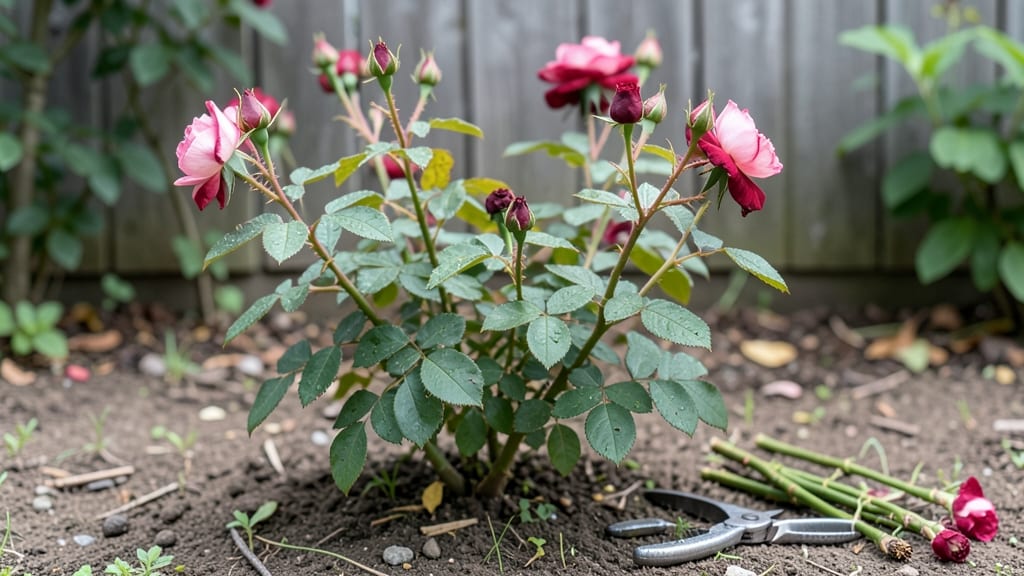
To make rose plants flower, you need sunlight, sharp pruners, and a little patience—my hybrid teas exploded with blooms last summer after I finally cracked the code. The key isn’t just cutting back willy-nilly; it’s understanding when and how to prune to trigger new growth where flowers form.
I’ll show you the exact cuts that worked for my 5-foot-tall bushes, plus the sunlight schedule that turned my roses from leggy sticks into blooming powerhouses.
Most gardeners overlook sunlight, but roses demand 6 to 8 hours of direct sun daily—no compromise. My first mistake? Planting them under a tree’s dappled shade. After moving them to full sun, the difference was shocking: stems thickened, leaves darkened, and buds formed in just 3 weeks.
Fertilizer matters too, but timing is everything—feed in early spring and again after the first flush of blooms to keep them producing.
You’ll end up with clusters of blooms so dense they’ll make your neighbors jealous. The secret is pruning at the right time—late winter or early spring—and cutting just above an outward-facing bud.
Hybrid teas need aggressive pruning, while climbers only need light shaping. By midsummer, your roses will be covered in vibrant blooms, and you’ll finally understand why roses are worth the effort.
Works for hybrid teas, floribundas, and even old-fashioned garden roses. Let’s get those blooms going—your roses are about to transform your yard.
📚 In This Guide
- What you need
- Instructions
- Tips and common mistakes
- Wrapping up and next steps
What you need
- ● Healthy rose plant (choose disease-resistant varieties like Knock Out® or David Austin English Roses for reliability).
- ● Pruning shears (sharp, bypass-style, 6–8" blades; sterilize with rubbing alcohol before/after use).
- ● Gloves (gardening gloves with cut-resistant palms to protect from thorns).
- ○ Pruning sealant (optional but helpful for large cuts—use tree wound paint or beeswax-based sealant).
- ● Well-draining potting mix (if repotting: 50% garden soil + 50% compost or a rose-specific blend).
- ● Mulch (2–3" layer of wood chips or straw to retain moisture and regulate soil temp).
- ● Balanced fertilizer (10-10-10 or rose-specific fertilizer with micronutrients like iron and magnesium).
- ● Watering can or hose with a gentle spray nozzle (avoid overhead watering to prevent fungal diseases).
- ● Sunlight access: At least 6–8 hours of direct sun daily (south-facing spot is ideal in the Northern Hemisphere).
- ● Proper timing: Prune in early spring (just as new growth begins) or late winter (before buds swell).
- ● Patience: Roses need 3–6 months to recover and rebloom after pruning.
- ● Rose food booster (like fish emulsion or compost tea for a nutrient kick).
- ● Plant supports (stakes or cage trellises for climbing roses).
- ● Fungicide spray (preventative copper-based or neem oil treatment).
- ● pH test kit (ideal soil pH for roses: 6.0–6.5; amend with lime or sulfur if needed).
Step-by-Step guide to encouraging rose blooms
Roses reward precise care with spectacular blooms—here’s how to unlock their full potential.
Provide Full Sunlight Daily
Roses thrive in at least 6-8 hours of direct sunlight per day, preferably morning sun with afternoon shade in hot climates. I position mine where they receive 6+ hours of bright, unfiltered light—this triggers the hormonal shifts that lead to bud formation. If your roses are in partial shade, gradually move them to sunnier spots over 2-3 weeks to avoid leaf scorch.
Watch for deep green, glossy leaves—this is your sign they’re getting enough light. If leaves turn pale or stems stretch excessively, they’re starved for sunlight. A south-facing exposure works best in most regions, but even east or west-facing spots can work if they receive full sun for most of the day.
Prune for Airflow and Light Penetration
Pruning isn’t just about shaping—it’s about removing crowded growth so light and air reach the center of the plant. I prune in early spring (just as new growth begins) and again after the first flush of blooms. Use clean, sharp pruners to cut ¼ inch above an outward-facing bud, angled slightly downward. This encourages new growth to spread outward, improving airflow and reducing disease risk.
Remove dead, diseased, or crossing branches first—these compete with healthy growth for nutrients. Thin out overly dense areas by cutting back one-third of the oldest canes to the ground. You’ll see fresh green shoots emerging within 2-3 weeks—this is your signal that the plant is redirecting energy toward new blooms.
Feed with Balanced Fertilizer
Roses need high-phosphorus fertilizer (look for a 5-10-5 or 10-20-10 ratio) to encourage flowering. I apply granular fertilizer in early spring and again mid-summer, following the package rates. For organic options, use bone meal or composted manure—both provide phosphorus while improving soil structure. Water deeply after applying to prevent root burn.
Watch for dark green leaves with vibrant new growth—this indicates the plant is absorbing nutrients well. Avoid over-fertilizing with nitrogen-heavy mixes (like lawn fertilizer), as this promotes leafy growth at the expense of blooms. If your roses produce lots of foliage but few flowers, they’re getting too much nitrogen. Adjust to a low-nitrogen, high-phosphorus formula for the next feeding.
Water Deeply and Consistently
Roses hate shallow, frequent watering—they need deep, infrequent watering to develop strong roots. I water once or twice weekly, depending on rainfall, delivering 1-2 inches of water per session. Water at the base of the plant, avoiding the foliage to prevent fungal diseases like black spot. Early morning is ideal—it allows leaves to dry before evening humidity sets in.
Check soil moisture by inserting your finger 2 inches deep—if it feels dry, it’s time to water. Consistent moisture encourages deep root growth, which supports more blooms. Wilting leaves in the afternoon often signal underwatering, while yellowing leaves or powdery mildew suggest overwatering or poor drainage. Adjust your schedule based on these cues.
Deadhead and Encourage Repeat Blooming
Deadheading—removing spent blooms—triggers the plant to produce more flowers. I snip off faded blooms just above a set of healthy leaves or buds using clean pruners. For hybrid teas and floribundas, this encourages repeat blooming throughout the season. Roses like Knock Outs are more forgiving and don’t require deadheading, but removing spent blooms still improves appearance.
Watch for new buds forming within 2-4 weeks after deadheading—this is your reward for the effort. If your roses bloom once and then stop, they may be running out of energy. In this case, reduce deadheading in late summer to let the plant store energy for next season. Mulch around the base with 2-3 inches of organic mulch to retain moisture and regulate soil temperature, further supporting bloom production.
Tips & tricks for perfect rose blooms
A few simple adjustments can transform your roses from leafy bushes to vibrant blooming powerhouses. Here's how to maximize your efforts based on what I've learned from years of trial and error.
Sunlight Strategy: The 6-8 hours of sunlight mentioned in Step 1 isn't just about duration—it's about quality. Position your roses where they receive morning sun (which is less intense) and afternoon shade if you're in a hot climate. I've noticed that roses in full afternoon sun often develop sunburned leaves, which weakens the plant's ability to produce blooms. For container roses, rotate them every few days to ensure even sun exposure all around.
Pruning Precision: When pruning in early spring as described in Step 2, focus on creating an open center that allows light penetration. I make my cuts at a 45-degree angle about ¼ inch above an outward-facing bud—this creates a larger surface area for water absorption and encourages new growth in the right direction. For thick canes, make two cuts: one to remove the branch and another to create the proper angle. This technique prevents water from pooling on the cut, which can lead to disease.
Fertilizer Timing: The mid-summer feeding mentioned in Step 3 is crucial, but timing matters just as much as the type of fertilizer. Apply it after a good rain or thorough watering to prevent root burn. I've found that splitting the recommended dose into two applications—once in early summer and again in mid-summer—gives roses a steady nutrient supply without overwhelming them. This gradual approach leads to stronger, more resilient blooms that last longer.
Watering Wisdom: The 1-2 inches of water per session in Step 4 is a great guideline, but consistency is key. I water my roses at the same time each morning, which helps establish a routine. To check moisture levels, I insert my finger 2 inches deep—if it feels dry, that's when I water. For container roses, I've noticed they often need more frequent watering, sometimes daily in hot weather, because they dry out faster than in-ground plants.
Pro Tips for Make Rose Plant Flower
- A few simple adjustments can transform your roses from leafy bushes to vibrant blooming powerhouses.
- Sunlight Strategy: The 6-8 hours of sunlight mentioned in Step 1 isn't just about duration—it's about quality.
- Pruning Precision: When pruning in early spring as described in Step 2, focus on creating an open center that allows light penetration.
Frequently asked questions
Got questions about coaxing those dreamy rose blooms? You’re not alone! Here are some of the most common queries—plus straightforward answers to help you troubleshoot and thrive.
Why isn’t my rose plant flowering even after pruning and sunlight?
Roses need a balance of light, nutrients, and patience. If blooms are missing, check for:
- Underwatering or overwatering—soil should stay moist but not soggy.
- Nutrient deficiency—feed with a balanced rose fertilizer (high in phosphorus for blooms) every 4–6 weeks.
- Young age—some roses take 1–2 years to mature and flower.
How long does it take for roses to flower after pruning?
Most roses rebloom in 6–12 weeks post-pruning, but timing varies by type:
- Hybrid teas & floribundas: 8–10 weeks.
- Climbing roses: 10–14 weeks (they’re slower!).
- Shrub roses: 6–8 weeks.
Can roses flower with less than 6 hours of sunlight?
Roses struggle to bloom with <4 hours of direct sun daily. Here’s what to do:
- Move potted roses to a sunnier spot (even a few extra hours helps!).
- Use reflective surfaces (like white walls or mirrors) to bounce light.
- Choose low-light tolerant varieties like ‘Knock Out’ roses or ‘Belinda’s Dream’.
What do I do if my rose plant only has leaves and no buds?
No buds? Don’t panic! Try these fixes:
- Check for pests (aphids, spider mites)—spray with neem oil if needed.
- Adjust fertilizer: Switch to a high-phosphorus formula (e.g., 10-30-20 ratio).
- Prune for air circulation: Thin out crowded branches to reduce disease risk.
- Force blooming: Give a cool night (50–60°F) + warm day (70°F+) combo to trigger buds.
Are there rose varieties that flower with minimal effort?
If you want low-maintenance blooms, try these easy-care roses:
Variety
Bloom Time
Sun Needs
‘Knock Out’ Roses
Near-continuous (spring–fall)
Full sun (6+ hours)
‘Dr. Huey’
Summer–fall
Partial sun (4–6 hours)
‘Earth Song’
Spring–fall
Full sun
‘The Fairy’
Spring–fall
Partial sun (3–6 hours)
Wrapping up and next steps
Growing roses that burst into vibrant blooms is all about patience, the right techniques, and a little love! 🌸 By mastering pruning, sunlight exposure, and proper care, you’re well on your way to a garden full of fragrant, show-stopping flowers.
Remember, consistency is key—whether it’s trimming at the right time or ensuring six hours of sunlight daily.
Now that you’re armed with these secrets, take action! Start with one rose bush, apply what you’ve learned, and watch your efforts pay off in stunning petals. Happy gardening—your future blooms will thank you! 🌿✨