
Flowers
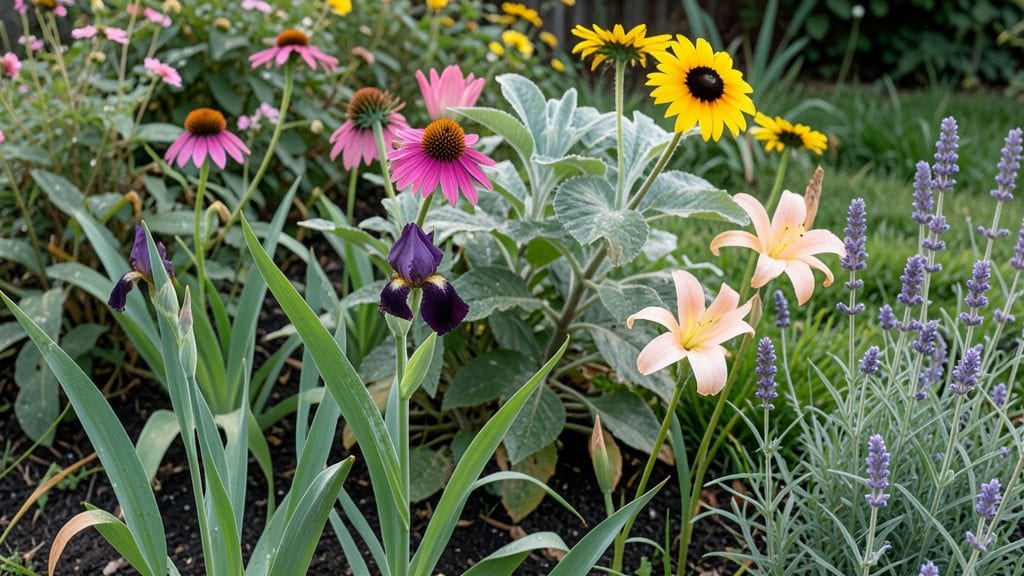
Transform your backyard flower bed designs with these low-maintenance layouts that bloom effortlessly all year—no deadheading or replanting required. I designed my first low-maintenance beds after three seasons of wilting annuals and overgrown perennials, and now they thrive with minimal effort.
The secret lies in layering plants that bloom at different times, using native species that adapt to your climate, and choosing shapes that fit your space naturally.
Start with a simple layout: curved edges soften the look while reducing maintenance, and geometric shapes add structure. For plants, mix three types—tall perennials for backbone, mid-height annuals for seasonal pops, and ground covers to fill gaps.
My go-to combo? Lavender for height, salvia for mid-season color, and creeping thyme as a living mulch. Mulch keeps weeds down, and borders made from stones or bricks define the space without extra work.
You’ll end up with beds that look intentional, not labor-intensive, and stay vibrant from spring through frost. The key is choosing plants that complement each other—like pairing purple coneflowers with silver foliage for contrast.
Once established, these beds need only seasonal trimming and occasional watering. The best part? You can customize the colors to match your home’s palette or your mood.
Works for any yard size, from small urban patches to sprawling suburban plots. The same principles apply whether you’re revamping an existing bed or starting fresh. Ready to design a space that wows with less work?
📚 In This Guide
- What you need
- Instructions
- Tips and common mistakes
- Wrapping up and next steps
What you need
- ● Soil: 2–3 cubic yards of high-quality topsoil or garden soil mix (amended with compost for drainage).
- ● Mulch: 2–3 bags of organic mulch (e.g., shredded bark, pine straw) to retain moisture and suppress weeds.
- ● Plants: Perennials (e.g., coneflowers, black-eyed Susans): 5–10 plants per bed.
- ● Annuals (e.g., petunias, marigolds): 3–5 plants for seasonal pops of color.
- ○ Shrubs (e.g., boxwood, hydrangeas): 1–2 for structure (optional but recommended).
- ● Fertilizer: Slow-release granular fertilizer (10–10–10 ratio) or organic options like fish emulsion.
- ● Digging: Garden shovel, spade, and trowel (for precision).
- ● Measuring: Measuring tape, stakes, and string (for layout).
- ● Edging: Half-moon edger or flexible edging material (e.g., landscaping fabric).
- ○ Watering: Garden hose with adjustable nozzle or a drip irrigation kit (optional but lifesaving).
- ● Safety: Work gloves, knee pads, and a water bottle!
- ● Location: A sunny or partially shaded spot (6+ hours of sunlight for most flowers).
- ● Size: Sketch your bed’s dimensions (e.g., 4’x6’ for a small bed).
- ● Prep Work: Clear weeds, rocks, or debris from the area.
- ● Budget: $100–$300 for materials (varies by plant choices and bed size).
How to design a year-round backyard flower bed with low-maintenance plants
Here’s how to create a vibrant, resilient flower bed that thrives with minimal effort and delivers color from spring through fall.
Assess Your Space and Sunlight Conditions
Start by mapping your yard’s sunlight patterns. Most flower beds need at least 6 hours of direct sun daily, but some shade-tolerant perennials thrive in 4-6 hours. I recommend dividing your space into zones: full sun, partial shade, and deep shade. Use a tape measure to mark boundaries—this ensures you’ll select plants that match each area’s conditions.
Observe the space over a few days to note wind exposure and drainage. Sloped areas or heavy clay soil can create challenges, so test drainage by digging a 6-inch hole, filling it with water, and timing how long it takes to drain. If water lingers beyond 24 hours, you’ll need to amend the soil with 2-3 inches of compost or sand to improve drainage.
Choose a Cohesive Plant Palette With Seasonal Interest
Select a mix of perennials (which return yearly) and annuals (for instant color). For low-maintenance appeal, I focus on three layers: tall plants (like coneflowers or black-eyed Susans) for back, mid-height bloomers (such as daylilies or Russian sage), and ground covers (like creeping thyme or ajuga) to fill gaps. Choose plants with overlapping bloom times—spring bulbs (daffodils, tulips), summer perennials (bee balm, coneflowers), and fall/winter interest (ornamental grasses, hellebores).
Stick to native or well-adapted plants—they require less water and fertilizer. For example, purple coneflower thrives in poor soil and attracts pollinators, while sedum handles drought once established. Avoid fussy annuals like petunias unless you’re willing to deadhead regularly. Sketch a rough layout, spacing plants based on their mature size—12-18 inches apart for most perennials, 24 inches for larger shrubs.
Prepare the Soil for Healthy Root Growth
Remove existing grass or weeds by smothering with cardboard or landscape fabric for 4-6 weeks before planting. This suppresses regrowth without chemicals. Once cleared, loosen the soil to a depth of 12 inches with a garden fork or tiller. Amend with 3-4 inches of compost and 1 cup of 10-10-10 fertilizer per 100 square feet—this gives roots the nutrients they need to establish quickly.
For heavy clay soil, mix in 1 part sand or perlite to improve drainage. Test the pH (ideal range for most flowers is 6.0-7.0) using a soil test kit. If needed, adjust with lime (to raise pH) or sulfur (to lower pH). Level the bed with a rake, creating gentle slopes for water runoff. A well-prepared bed reduces future weeding and watering struggles.
Plant With Layered Depth and Strategic Placement
Start by installing the tallest plants at the back of the bed, working forward to shorter varieties. Dig holes twice as wide as the root ball but no deeper—this encourages roots to spread horizontally. Gently remove plants from containers and tease apart tangled roots. Place each plant in its hole, ensuring the top of the root ball sits level with the surrounding soil (burying too deep suffocates stems). Backfill with native soil, firming lightly to eliminate air pockets.
Water deeply after planting to settle the soil and eliminate gaps. Mulch with 2-3 inches of shredded bark or pine needles, keeping it 2 inches away from plant stems to prevent rot. Mulch conserves moisture, suppresses weeds, and regulates soil temperature. Space plants based on their mature width—18-24 inches apart for most perennials—to allow airflow and reduce disease risk.
Maintain With Minimal Effort Through the Seasons
Water deeply once a week during the first growing season, aiming for 1 inch of water per week (more in extreme heat). Use a soaker hose or drip irrigation to deliver moisture at the root zone—this prevents fungal issues from overhead watering. Once established, most perennials tolerate drought conditions, but annuals may need weekly watering in hot weather.
Deadhead spent blooms regularly to encourage continuous flowering (except for seed-producing plants like coneflowers, which benefit from leaving some seed heads for winter interest). In late fall, cut back tall grasses and perennials to 6 inches to protect them from harsh winds. Top-dress with 1-2 inches of compost in early spring to replenish nutrients without overfeeding. This routine keeps your bed vibrant with almost no daily upkeep.
Tips & tricks for perfect backyard flower bed designs
Creating a stunning flower bed that thrives year-round takes a few key strategies beyond the basics. Here are my go-to tips to ensure your design not only looks beautiful but also requires minimal upkeep.
Layering for Year-Round Interest: In Step 2, when selecting your plant palette, think vertically as well as seasonally. I always include three distinct layers—tall perennials like black-eyed Susans (3-4 feet) at the back, mid-height bloomers such as Russian sage (2-3 feet) in the middle, and low-growing ground covers like creeping thyme (6-12 inches) at the front. This creates depth and ensures every season has visual interest, from spring bulbs to winter ornamental grasses. The key is to overlap bloom times so you never have a bare bed.
Soil Prep Shortcuts: For Step 3, if you're working with heavy clay soil, don't just add sand—mix in equal parts compost and perlite instead. This improves drainage while adding organic matter that holds moisture better than sand alone. I've found that amending with 3-4 inches of compost (as recommended) plus 1 part perlite creates the perfect balance for most flower beds. This combination prevents compaction and gives roots room to breathe, which is crucial for long-term health.
Plant Placement Pro Tip: When arranging your plants in Step 4, pay special attention to mature sizes—what looks perfect now may become overcrowded in a few years. I always sketch a rough layout using the 12-18 inch spacing guideline, but I mark the mature widths on my sketch to visualize how the bed will look in 3-5 years. This prevents the "too crowded" look that often develops with perennial gardens. Also, place taller plants slightly toward the back-center of the bed to create a natural focal point that draws the eye.
Maintenance Hack: For Step 5, the 1 inch of water per week guideline works well, but I've found that using a rain gauge makes it even easier to track. Place it near your flower bed and water only when you've collected less than 1 inch of rain in a week. This prevents overwatering while ensuring your plants get enough moisture. During extreme heat, I increase to 1.5 inches per week for the first few weeks until plants establish deeper roots.
Pro Tips for Backyard Flower Bed Designs
- Creating a stunning flower bed that thrives year-round takes a few key strategies beyond the basics.
- Layering for Year-Round Interest: In Step 2, when selecting your plant palette, think vertically as well as seasonally.
- Soil Prep Shortcuts: For Step 3, if you're working with heavy clay soil, don't just add sand—mix in equal parts compost and perlite instead.
Frequently asked questions
Got questions about creating a stunning, low-maintenance flower bed? You’re not alone!
Here are answers to the most common queries from gardeners just like you—whether you're a beginner or looking to refine your green thumb.
What’s the best time of year to plant a flower bed for year-round color?
For perennial plants (the low-maintenance stars of your bed!), aim for early spring or fall when soil is workable but not scorching. Spring gives roots time to establish before summer heat, while fall planting avoids drought stress. Annuals can go in after the last frost—just check your local frost dates!
How often should I water a low-maintenance flower bed?
Newly planted beds need deep watering 2–3 times per week for the first month. After that, 1–2 inches of water per week (including rain) is ideal. Mulch (2–3 inches) locks in moisture—just avoid piling it against stems. Drought-tolerant plants (like lavender or sedum) need even less!
What are the most common pests in flower beds, and how do I prevent them?
Watch for aphids, slugs, and deer. Start with healthy soil (compost + organic matter) to boost plant resilience. For pests:
- Aphids: Spray with soapy water or introduce ladybugs.
- Slugs: Use copper barriers or diatomaceous earth.
- Deer: Plant deer-resistant varieties (e.g., daffodils, catmint) or add a fence.
Can I mix perennials and annuals in one flower bed?
Absolutely!
Pair perennials (for structure and longevity) with annuals (for seasonal pops of color). For example:
Perennials (Backbone)
Annuals (Seasonal Flair)
Coneflower, Black-Eyed Susan
Marigolds, Petunias
Sedum, Lavender
Zinnias, Snapdragons
What’s the easiest way to keep weeds from taking over?
Weeds thrive in bare soil, so mulch is your BFF! Apply 2–3 inches of organic mulch (shredded bark, straw) around plants but keep it 6 inches away from stems to prevent rot. Pre-emergent herbicides (applied in early spring) can help too—but they’re not needed if you mulch consistently.
How do I refresh a tired-looking flower bed without starting over?
Give your bed a low-effort facelift with these tricks:
- Prune back overgrown perennials in early spring.
- Add new plants in gaps (e.g., creeping thyme or ajuga for ground cover).
- Swap out faded annuals for fresh ones (like cosmos or salvia).
- Fertilize lightly with compost or a slow-release granular fertilizer.
Wrapping up and next steps
Transforming your backyard into a vibrant, low-maintenance flower bed is easier than you think! By choosing the right perennials, annuals, and seasonal blooms, you can enjoy year-round color with minimal effort.
Whether you’re a gardening pro or just starting, these designs prove that beauty and simplicity go hand in hand.
Ready to get started? Sketch a rough layout, gather your tools, and dive in—your future garden will thank you! 🌸 For extra inspiration, explore local nurseries or online plant databases to refine your vision before breaking ground.