Flowers
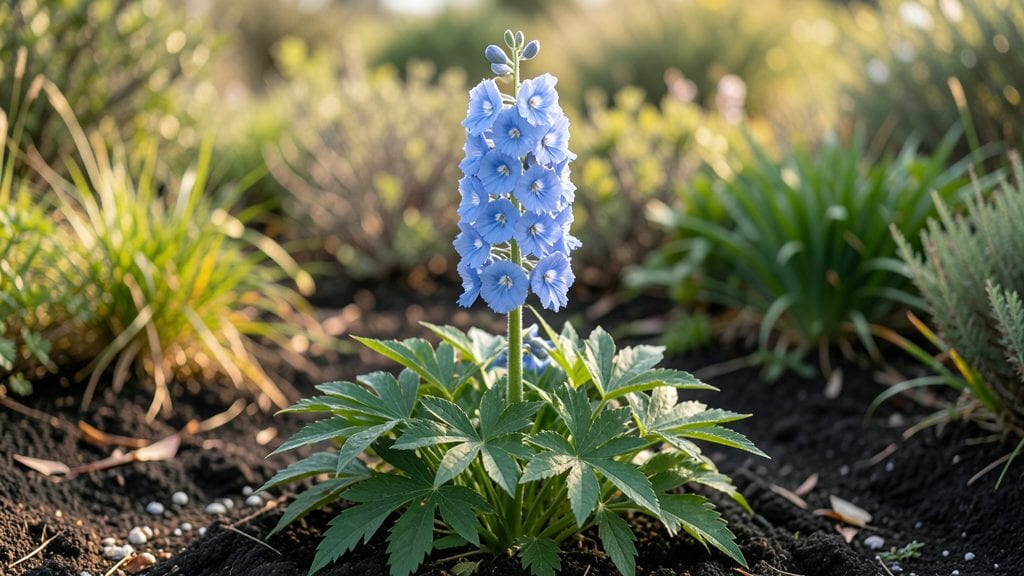
Blue-colored perennial flowers transform Pacific Northwest gardens into cool-toned masterpieces that thrive through frost and rain. 🌿 I’ve designed borders with delphiniums towering over lavender, their deep blues echoing the region’s misty skies, while agapanthus adds architectural drama in containers.
These plants don’t just survive—they steal the show, their vibrant hues turning even gray days into visual feasts.
The magic lies in their resilience and versatility. Delphiniums reach 6 feet tall, perfect for back borders, while lavender stays compact at 2-3 feet, ideal for edging or pollinator-friendly pockets.
Agapanthus thrives in containers, bringing blue splashes to patios or balconies. Together, they create textured layers—spiky delphiniums, fuzzy lavender, and strappy agapanthus—that dance with light and shadow.
Imagine a garden where every season reveals new blue tones: spring’s pale delphinium blooms, summer’s lavender spikes, and autumn’s agapanthus clusters. The color palette works with whites for crisp contrast or purples for moody depth.
These perennials reward patience with years of effortless beauty, their roots deepening each frost while their blooms brighten the landscape.
Whether you’re framing a pathway, filling a raised bed, or adding height to a mixed border, these frost-hardy stars deliver low-maintenance drama. Let’s explore how to pair them for maximum impact—your garden’s coolest season is about to begin.
📚 In This Guide
- What you need
- Instructions
- Tips and common mistakes
- Wrapping up and next steps
What you need
- ● Blue perennial flowers: Choose frost-hardy varieties like Delphiniums, Lungwort (Pulmonaria), Blue Flax (Linum lewisii), or Cobaea scandens. Buy 5–10 plants per variety (or seeds for direct sowing).
- ● High-quality potting soil: 10–20 lbs (depending on pot size). Opt for well-draining, organic soil with a pH of 6.0–7.0.
- ● Compost or organic fertilizer: 5 lbs of balanced 10-10-10 or fish emulsion for nutrient boost.
- ● Mulch: 2–3 inches of cedar chips, straw, or pine bark to retain moisture and insulate roots.
- ● Garden trowel or transplant spade (for digging and planting).
- ● Pruning shears (for trimming dead blooms or overgrowth).
- ● Watering can or hose with a gentle spray nozzle (perennials prefer deep but infrequent watering).
- ● Gloves (to protect hands from thorns or soil).
- ● Measuring tape or ruler (to ensure proper spacing—12–24 inches apart for most perennials).
- ● Slow-release fertilizer tablets (for nutrient consistency).
- ● Blue-tinted garden stakes or markers (to label varieties and track growth).
- ● Frost cloth or row covers (for extra protection during late frosts).
- ● Rain gauge (to monitor watering needs—PNW’s rainy season can be tricky!).
How to select and plant frost-hardy blue perennials for the Pacific Northwest
Here's my go-to approach for curating a vibrant, low-maintenance blue perennial garden that thrives through our region's wet winters and mild summers.
🌱 Step 1: Choose the Right Blue Perennials for Your Site
Select plants that match your garden's moisture and light conditions. For shady spots, delphiniums and lungwort deliver striking blue blooms, while catmint and salvia handle full sun and dry soil beautifully. I always check each plant's mature size—Russian sage can reach 4 feet tall, while creeping phlox stays compact at just 6 inches.
For wetter sites, blue flag iris thrives in boggy conditions, while blue fescue grasses add texture without demanding perfect drainage. Mix heights and textures: pair tall delphiniums with low-growing ajuga to create visual interest. Here's the thing—blue perennials often need companions to pop against their cool tones.
☀️ Step 2: Prepare Planting Sites with Proper Soil Amendments
Test your soil's pH—most blue perennials prefer neutral to slightly alkaline conditions (6.0-7.5). If your soil is acidic, add 1-2 pounds of garden lime per 100 square feet and mix it into the top 6 inches of soil. For heavy clay soils common in the PNW, I blend in 3 inches of compost to improve drainage while retaining moisture.
Dig planting holes twice as wide as the root ball but only as deep—planting too deep suffocates roots. Loosen the sides of the hole with a garden fork to encourage root spread. Here's what I do: I fill the bottom third with a mix of native compost and sand to create a well-draining base before adding backfill soil.
💧 Step 3: Plant with Proper Spacing and Watering Techniques
Space plants according to their mature size—Russian sage needs 3-4 feet between plants, while creeping phlox thrives 12 inches apart. Plant in early spring or fall to give roots time to establish before summer heat or winter frost. Water deeply immediately after planting to eliminate air pockets, then water once weekly for the first month to encourage root growth.
I always water at the base rather than overhead to prevent fungal diseases. For the first two weeks, check soil moisture daily—blue perennials like delphiniums wilt dramatically when thirsty. Mulch with 2-3 inches of wood chips to retain moisture and regulate soil temperature, but keep mulch 6 inches away from stems to prevent rot.
✂️ Step 4: Maintain Through the Growing Season
Deadhead spent blooms on catmint and salvia to encourage continuous flowering, but leave seed heads on Russian sage and blue fescue for winter interest. Fertilize lightly in early spring with 5-10-10 fertilizer at half strength—blue perennials generally don't need heavy feeding. I've found that delphiniums respond well to fish emulsion for vibrant blooms.
Watch for powdery mildew on lungwort in humid summers—improve airflow by spacing plants properly and watering in the morning. Divide clumping perennials like creeping phlox every 3-4 years in early spring to maintain vigor. Here's the moment that matters: when you see new growth emerging in early spring, that's your cue to start regular maintenance.
Tips & tricks for perfect frost-hardy blue perennial gardens
Creating a stunning blue perennial garden in the Pacific Northwest requires a few strategic moves that make all the difference between a mediocre display and a showstopping landscape.
Companion Planting Strategy: In Step 1, when pairing your blue perennials, consider adding silver foliage plants like artemisia or lamb's ear to make those cool blue hues truly pop. The contrast creates visual drama that flatters the blue tones. I've found that delphiniums look especially striking when planted near silver foliage—it's like adding a built-in frame to your blue blooms. For maximum impact, group plants with similar water needs together, which simplifies your irrigation routine.
Soil Preparation Secret: When preparing your planting sites in Step 2, don't overlook the importance of organic matter. Beyond the recommended 3 inches of compost, I like to add a handful of worm castings to each planting hole. These provide beneficial microbes that help establish strong root systems. For clay-heavy soils, consider adding perlite or coarse sand to improve drainage while maintaining moisture—this is especially important for blue flag iris which can suffer in soggy conditions.
Watering Wisdom: The first month after planting is critical for root establishment, but don't rely solely on the weekly watering schedule mentioned in Step 3. In our region's unpredictable weather, I recommend checking soil moisture every 3-4 days during dry spells. Use your finger to test moisture—if the top 2 inches of soil feel dry, it's time to water. Early morning watering is ideal as it reduces evaporation and fungal risks, but if you must water in the evening, avoid getting foliage wet to prevent mildew.
Fertilization Fine-Tuning: While the instructions suggest a light feeding with 5-10-10 fertilizer, I've found that delphiniums particularly benefit from a low-phosphorus fertilizer (like 7-3-3) to prevent excessive leaf growth at the expense of blooms. For Russian sage, I skip fertilizer entirely—it thrives in lean soil and over-fertilizing can make it leggy. Always apply fertilizer in early spring when new growth appears, as mentioned in Step 4, and water thoroughly after application to prevent root burn.
Pro Tips for Blue Colored Perennial Flowers
- Creating a stunning blue perennial garden in the Pacific Northwest requires a few strategic moves that make all the difference between a mediocre display and a showstopping landscape.
- Companion Planting Strategy: In Step 1, when pairing your blue perennials, consider adding silver foliage plants like artemisia or lamb's ear to make those cool blue hues truly pop.
- Soil Preparation Secret: When preparing your planting sites in Step 2, don't overlook the importance of organic matter.
Frequently asked questions
Got questions about adding blue-colored perennial flowers to your Pacific Northwest garden? You’re not alone! Here are some of the most common queries—and their answers—to help you plan like a pro.
Which blue perennials thrive in the PNW’s wet, mild winters?
The Pacific Northwest’s frost-hardy blue stars include Delphiniums (tolerate cold down to -20°F), Lobelia (great for shady spots), Ceratostigma plumbaginoides (drought-tolerant once established), and Agapanthus (if you’re in Zone 7+). For true winter resilience, focus on Delphinium or Ceratostigma—they’ll bounce back year after year.
How long does it take for blue perennials to bloom after planting?
Most blue perennials take 1–2 years to establish and flower, but some (like Agapanthus) can bloom in their first year if planted in spring. Delphiniums and Lobelia often reward patience—skip the first-year blooms and enjoy showstopper displays in years 2–3. Pro tip: Deadhead spent blooms to encourage more flowers!
Do blue perennials need extra care in rainy PNW climates?
While many (like Delphiniums) handle moisture well, poor drainage is the real enemy. Amend heavy clay soil with compost, and plant in raised beds if needed. Agapanthus and Ceratostigma are drought-tolerant once established—just avoid soggy roots. Mulch in winter to protect roots from freeze-thaw cycles.
Can I mix blue perennials with other colors for a cohesive look?
Blue perennials pair beautifully with silver foliage (like Artemisia), purple (e.g., Salvia nemorosa), or white (e.g., Helleborus) for a dreamy, high-contrast garden. For a PNW woodland vibe, try Lobelia + Heuchera (coral bells) + Ferns. Rule of thumb: Stick to 2–3 colors per bed for harmony.
Are blue perennials deer- or slug-resistant?
Unfortunately, most blue perennials are on deer’s menu—Delphiniums and Agapanthus are top targets. For slugs, Ceratostigma and Lobelia (when grown in containers) are less appealing. Solutions: Use deer repellent sprays, plant slug traps (beer!), or opt for less palatable alternatives like Russian sage (lavender-blue) or Catmint.
Still stumped? Drop your specific zone or soil type in the comments—we’re happy to help tailor suggestions!
Wrapping up and next steps
Transforming your Pacific Northwest garden with blue-colored perennial flowers is a rewarding way to bring year-round beauty and resilience to your outdoor space. From the delicate Delphinium to the hardy Lobelia, these frost-resistant blooms are nature’s true color champions—easy to grow, low-maintenance, and packed with charm. 🌿
Ready to dive in? Start by sketching a simple layout or browsing local nurseries for your favorite varieties. Whether you’re a seasoned gardener or just beginning, every blue bloom you plant is a step toward a vibrant, thriving garden that stands up to the elements. Happy planting!
- Next step: Pick one blue perennial to try this season—your garden will thank you! 🌸