
Flowers
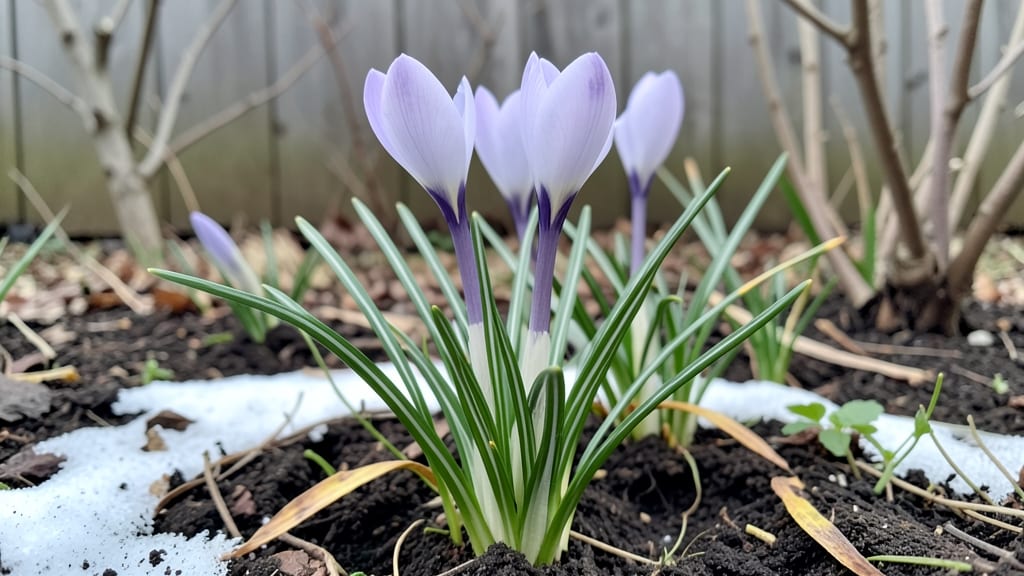
There's nothing like the first flash of purple in a snow-dusted landscape—those crocus flowers snow reveals are winter's secret gift. 🌱 I remember the first time I saw them poking through fresh snowfall in my New England garden, their delicate petals unfurling like nature's own surprise.
These hardy blooms don't just tolerate snow; they thrive under its weight, emerging earlier than almost any other spring flower.
The secret lies in planting them in autumn, when soil temperatures drop but before the ground freezes solid. Snow acts like a natural blanket, protecting their delicate roots while the cold period actually triggers their bloom cycle.
Varieties like Crocus tommasinianus (woodland crocus) and Crocus vernus (Dutch crocus) are the stars of snowy climates, often blooming weeks before daffodils or tulips make their appearance.
What you'll get is a snow melt surprise—those first cheerful faces peeking through melting snow, their fragrance cutting through winter's chill. The blooms may last just a week or two, but that fleeting moment transforms a gray landscape into something magical.
Plus, they're deer-resistant and multiply over time, creating natural drifts of color year after year.
Perfect for rock gardens, under deciduous trees, or along driveways where early blooms create visual impact. Here's how to bring this winter magic to your own yard, no matter where you live.
📚 In This Guide
- What you need
- Instructions
- Tips and common mistakes
- Wrapping up and next steps
What you need
- ● Crocus bulbs (choose early-blooming varieties like Crocus vernus or Crocus tommasinianus): Quantity: 10–20 bulbs per 1 sq. ft. for a lush display
- ● Size: Medium to large (1.5–2 inches in diameter)
- ● Well-draining soil: Type: Sandy loam or a mix of garden soil + perlite (1:1 ratio)
- ● pH: Slightly acidic to neutral (6.0–7.0)
- ● Garden trowel or bulb planter (for digging)
- ● Organic mulch (e.g., straw or shredded leaves) to protect bulbs from harsh winter
- ● Watering can or hose with a gentle spray nozzle
- ● Decorative stones or gravel (for a polished look around planted bulbs)
- ● Winter-themed containers (e.g., ceramic pots, wooden boxes, or galvanized troughs)
- ● Slow-release fertilizer (low-nitrogen, 5-10-10 ratio, for spring feeding)
- ● Frost cloth or burlap (to shield bulbs from extreme cold in zones below 5)
- ● Pruning shears (for trimming spent foliage in late spring)
How to plant crocus for a stunning winter display
Here's the simple method I use to bring those cheerful purple blooms through snow—no greenhouse needed.
🌱 Step 1: Choose the Right Crocus Varieties and Planting Site
For winter blooms, select hardy crocus varieties like 'Christmas Magic' or 'Snow Bunting'—they thrive in cold climates. Plant in a spot with full sun to partial shade (6+ hours of sunlight daily). I always pick a location where you'll see them from a window or walkway, because their early blooms are such a cheerful surprise.
Crocus roots need good drainage, so avoid low spots where water pools. If your soil is heavy clay, mix in a handful of coarse sand or perlite to improve drainage. The ideal planting site gets afternoon shade in warmer climates to prevent early dormancy.
🪴 Step 2: Prepare the Soil and Plant Corms at the Right Depth
Loosen the soil to a depth of 8-10 inches with a garden fork or trowel. Crocus corms are sensitive to compacted soil, so breaking up any hardpan ensures roots can spread freely. Work in a 2-3 inch layer of compost to provide nutrients without being too rich—crocus prefer lean soil.
Plant corms 3-4 inches deep and 2-3 inches apart—deeper planting prevents them from heaving out of the ground during freeze-thaw cycles. I like to plant them in clusters of 5-7 for a natural look, rather than single stems. The pointed end should face up, and the flatter base should sit at the bottom of the hole.
☀️ Step 3: Water and Mulch for Winter Protection
After planting, water deeply to settle the soil around the corms. You won't need to water again until spring, but this initial soaking helps establish root contact with the soil. Let the water drain completely—crocus rot quickly in soggy conditions.
Apply a 2-3 inch layer of mulch (straw or shredded leaves work best) to insulate the corms during winter. This protects them from extreme temperature fluctuations and prevents heaving. I always mark the planting area with small stakes or flags so I don't disturb them when clearing snow in spring.
⏰ Step 4: Wait and Enjoy the Winter Blooms
Crocus need a period of cold dormancy to bloom, so don't be tempted to fertilize or disturb them until after flowering. In most climates, you'll see the first shoots emerge in late fall or early winter, with flowers appearing 4-6 weeks after planting.
The blooms typically last 1-2 weeks, but each stem produces 1-2 flowers that add incredible early color to the garden. After flowering, let the foliage die back naturally—it feeds the corm for next year's blooms. I always leave the dead foliage until it turns completely brown before removing it.
🌿 Step 5: Maintain for Future Seasons
In spring, add a light layer of compost around the planting area to replenish nutrients. Crocus are low-maintenance perennials that multiply over time. If you notice fewer blooms after 3-4 years, dig up and divide the corms in early fall—this rejuvenates the plants and gives you more flowers for next season.
For continuous winter interest, I plant different crocus varieties that bloom at slightly different times. This creates a cascading effect of color from late fall through early spring. The key is patience—once established, these hardy plants will return year after year with minimal care.
Tips & tricks for perfect winter crocus planting
Here's what I've learned after years of planting these cheerful winter bloomers—these little tricks make all the difference for stunning results.
Variety Selection: While 'Christmas Magic' and 'Snow Bunting' are my top picks for winter color, don't overlook the fragrant varieties like 'Tommasinianus'—their spicy scent is unbeatable. For continuous blooms, mix early, mid, and late-season varieties like 'Purple Dream' (January) with 'Whitewell Purple' (March). I've found that planting 3-4 different varieties creates a cascading effect of color that lasts from December through March.
Soil Preparation: The 8-10 inch soil loosening in Step 2 is crucial—crocus roots need room to establish before winter. If your soil is particularly compacted, rent a soil aerator for the area. For heavy clay soils, I mix in a 50/50 blend of sand and compost (about 2 inches total) to improve drainage. This prevents the dreaded "crocus rot" that can happen when corms sit in soggy conditions.
Planting Clusters: Planting in clusters of 5-7 corms creates that natural, woodland garden look you see in photos. For best results, arrange them in a loose circle with the pointed ends all facing outward. This creates a natural dome shape that catches snow beautifully. I always plant my clusters along garden paths or near windows where I can enjoy the winter display daily.
Mulching Strategy: That 2-3 inch mulch layer in Step 3 is your winter insulation—don't skimp! I use straw because it breaks down slowly and provides excellent insulation. For extra protection in extremely cold climates, add an additional 1-2 inches of mulch after the first hard frost. This prevents temperature fluctuations that can cause corms to heave out of the ground during freeze-thaw cycles.
Pro Tips for Crocus Flower Snow
- Here's what I've learned after years of planting these cheerful winter bloomers—these little tricks make all the difference for stunning results.
- Variety Selection: While 'Christmas Magic' and 'Snow Bunting' are my top picks for winter color, don't overlook the fragrant varieties like 'Tommasinianus'—their spicy scent is unbeatable.
- Soil Preparation: The 8-10 inch soil loosening in Step 2 is crucial—crocus roots need room to establish before winter.
Frequently asked questions
When do crocus flowers bloom in snow?
Crocus flowers often bloom in late winter (February–March) when snow is still present, especially in colder climates. Some varieties, like Crocus vernus, emerge as early as January, while others wait until spring. Their hardiness allows them to push through snow for sunlight.
Can crocus flowers grow in heavy snow?
Yes! Crocus bulbs are winter-hardy (USDA Zones 3–8) and can survive snow cover. Their low-growing habit and protective outer scales shield them from freezing. However, too much snow (over 12 inches) may delay blooming—gentle snowfall actually insulates them.
What are some snow-friendly crocus varieties?
Look for early bloomers like Crocus tommasinianus (purple) or Crocus chrysanthus (white/yellow). Dutch crocus (Crocus vernus) is also reliable. All thrive in snowy conditions, but avoid tender species like Crocus sativus (saffron crocus), which need milder winters.
Why aren’t my crocus flowers blooming?
Common reasons include:
- Lack of sunlight: Plant in full sun (6+ hours/day) for best results.
- Improper planting depth: Bulbs should be 3–4 inches deep.
- Overcrowding: Divide bulbs every 3–5 years.
- Poor drainage: Snowmelt can rot bulbs—ensure well-draining soil.
Can I force crocus indoors for early blooms?
Yes! Dig bulbs in fall, pot them in sandy soil, and refrigerate for 12–15 weeks. Then, place in bright light (60°F/15°C). They’ll bloom weeks earlier! Just replant outdoors after flowering to encourage future growth.
Wrapping up and next steps
The crocus flower is nature’s cheerful promise that winter’s chill won’t last forever—its delicate petals and intoxicating scent are proof that beauty thrives even in the snow.
Whether you’re admiring them in the wild or cultivating your own patch, these early bloomers remind us to embrace the quiet magic of the season. Ready to welcome spring’s first whispers? Grab some seeds, a sunny spot, and a little patience—your garden’s fragrant transformation is just a few months (and a few snowflakes) away! 🌱❄️