
Flowers
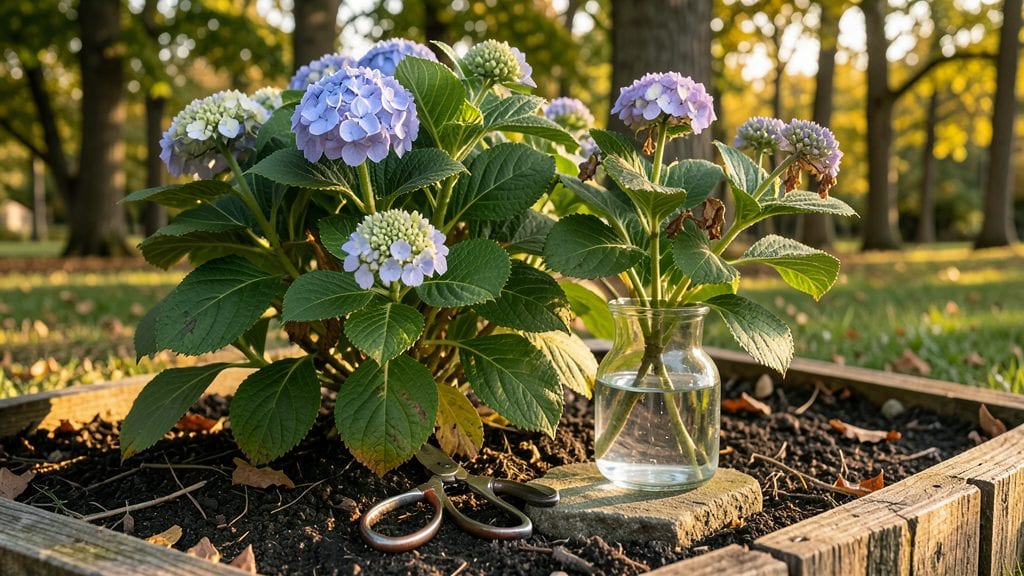
Cutting hydrangea flowers at the right angle transforms your bouquets from wilted in days to lasting for weeks. ✨ I learned this the hard way after snipping stems straight across and watching my arrangements droop by noon—until I discovered the 45-degree secret that keeps water flowing to every bloom.
The key is timing and technique: harvest in early morning when stems are hydrated, use sharp pruners to avoid crushing, and cut just above a leaf node. You’ll need clean containers, fresh water changed daily, and a cool spot away from direct sun.
Even my black thumb can’t kill properly cut hydrangeas—these flowers just refuse to give up.
What you end up with is bouquets that stay vibrant for two full weeks, their petals unfurling slowly like nature’s own slow-release beauty.
The stems stay sturdy, the color holds true, and you’ll find yourself sneaking extra blooms into every arrangement—because nothing beats that fresh-cut hydrangea scent lingering in your home.
Works for gardeners in zones 5-9, whether you’re harvesting from your own bushes or foraging wild varieties. Here’s how to make every cut count—no more sad, drooping stems in your vase.
📚 In This Guide
- What you need
- Instructions
- Tips and common mistakes
- Wrapping up and next steps
What you need
- ● Sharp pruning shears or floral scissors: Choose 4-6 inch blades with a clean, precise cut (avoid dull tools—hydrangeas bruise easily!)
- ● Bucket or vase: Fill with 2-3 inches of fresh, cool water (a clean, food-grade bucket works for bulk cutting; a narrow vase for single stems).
- ● Water: Room-temperature or slightly chilled (never straight from the fridge!).
- ○ Flower food (optional but recommended): 1 packet or homemade mix (sugar + bleach or vinegar for bacteria control).
- ● Newspaper or towel: For staging and protecting surfaces from sap.
- ● Rubbing alcohol or bleach wipes: To sterilize tools between cuts.
- ● Hydrangea-specific floral preservative: Extend vase life by 3-5 days.
- ● Sharpie or marker: Label stems by variety or cutting time.
- ● Plastic wrap: Cover stems overnight in water to prevent wilting.
- ● Glove: Avoid sap irritation (hydrangeas can be sticky!).
How to cut hydrangea flowers for bouquets that last
Here's the method I use to harvest hydrangeas with sharp cuts and keep them fresh for weeks.
✂️ Step 1: Time Your Cut for Maximum Freshness
Harvest hydrangeas in the early morning after dew has dried but before the sun peaks—this is when stems are fully hydrated. Avoid cutting on hot afternoons, as stems will wilt quickly. Look for blooms that are just starting to open; fully open flowers will last only a few days in a vase.
Use sharp, clean pruners or a knife to make your cut. Dull blades crush stems and block water uptake, causing flowers to droop within hours. I always wipe my pruners with rubbing alcohol between cuts to prevent bacterial buildup that can shorten vase life.
🌿 Step 2: Cut at the Right Angle and Depth
Make your cut at a 45-degree angle about 2 inches below the bloom cluster. This angled cut creates a larger surface area for water absorption, which is critical for hydrangeas that drink heavily. Avoid cutting too close to the flower head—you'll lose valuable stem length and water-carrying tissue.
Focus on the main stem just below where the flower cluster meets the branch. Side branches may look tempting, but they often wilt faster because they're less connected to the plant's water supply. For bouquets, aim to harvest 3-4 stems per cut to balance your arrangement.
💧 Step 3: Prepare Stems Immediately After Cutting
Strip any lower leaves that would sit below the waterline in your vase—these leaves rot and clog the water. Use your fingers to gently remove them, starting about 6 inches below the flower head. Never submerge leaves in water, even if they're small.
Place stems in a bucket of lukewarm water for at least 30 minutes before arranging. This hydrates the stems and helps them absorb water more efficiently. I like to add a few drops of bleach (1 part bleach to 4 parts water) to the bucket to prevent bacterial growth during this soaking period.
☀️ Step 4: Arrange and Maintain Your Bouquet
Fill your vase with room-temperature water and add 1 teaspoon of floral preservative (or a mix of 1 tablespoon sugar + 1 teaspoon bleach). Hydrangeas thrive with this simple solution—sugar feeds the stems, while bleach keeps water clean. Change the water every 2-3 days to prevent bacterial buildup.
Trim stems again at a 45-degree angle right before placing them in the vase to reopen the water channels. Keep bouquets away from direct sunlight and drafts—both cause premature wilting. You'll know your hydrangeas are happy when they stay fresh for 10-14 days instead of just a few.
Tips & tricks for perfect hydrangea bouquets
A few simple tricks can transform your hydrangea bouquets from wilted in days to vibrant for weeks.
Timing is Everything: The early morning window in Step 1 is non-negotiable for maximum freshness. If you must harvest later, do it in the late afternoon instead of hot midday—stems wilt fastest when temperatures exceed 85°F. I've seen hydrangeas harvested at noon last only 3 days compared to 10-14 days when cut in the morning.
Angle Precision: For that perfect 45-degree cut in Step 2, use a ruler or protractor as a guide if you're not confident with freehand cutting. The angle should be consistent all the way around the stem—think of slicing a pizza diagonally. This creates the maximum surface area for water absorption, which is why your bouquets will stay fresh longer.
Stem Hydration Strategy: After your 30-minute lukewarm water soak in Step 3, don't skip the bleach solution—it's not just about cleanliness. The bleach creates a protective barrier that prevents bacterial growth in the water, which is often what kills hydrangeas after 3-4 days. I've had bouquets last nearly 2 weeks using this method.
Equipment Upgrade: Invest in a pair of bypass pruners with a sharp blade—they make clean cuts that won't crush stems. I use mine for both harvesting and trimming stems before arranging. For large-scale harvesting, consider a pruning saw for thicker stems, but always make that same 45-degree angle cut.
Pro Tips for Cutting Hydrangea Flowers
- A few simple tricks can transform your hydrangea bouquets from wilted in days to vibrant for weeks.
- Timing is Everything: The early morning window in Step 1 is non-negotiable for maximum freshness.
- Angle Precision: For that perfect 45-degree cut in Step 2, use a ruler or protractor as a guide if you're not confident with freehand cutting.
Frequently asked questions
Got questions about cutting hydrangea flowers? You’re not alone! Here are some of the most common concerns—plus quick, expert-backed answers to keep your bouquets fresh and fabulous.
When is the best time to cut hydrangea flowers for the longest vase life?
Cut hydrangeas in the early morning when flowers are fully bloomed but still firm. Avoid cutting after a heavy rain or in extreme heat—both can shorten their lifespan. Aim for sunny, cool days (60–75°F) for the freshest stems.
How often should I trim hydrangeas to encourage more blooms?
Timing depends on your hydrangea type! For mophead and lacecap varieties, prune right after flowering (late summer/fall) to promote next year’s blooms. Panicle hydrangeas can be trimmed in late winter or early spring before new growth starts. Avoid heavy pruning in fall for cold-sensitive types.
Why do my cut hydrangeas wilt so fast, even after recutting the stems?
Wilting often signals blocked water flow or bacterial growth. Before arranging, re-cut stems at a 45° angle under water, then soak in lukewarm water for 1–2 hours. Add a flower food packet and change water every 2–3 days. Also, avoid placing bouquets near drafts or direct sunlight.
Can I propagate hydrangeas from cuttings? If so, how?
Take 4–6 inch cuttings from non-flowering stems in early summer. Remove lower leaves, dip in rooting hormone, and plant in moist perlite or sand. Keep humidity high (use a plastic bag) and place in indirect light. Roots should form in 4–8 weeks—then transplant!
Are there any hydrangea varieties that last longer in arrangements?
Yes! Panicle hydrangeas (like ‘Limelight’) and oakleaf hydrangeas tend to hold up best in bouquets. For extra longevity, choose fully open blooms (not buds) and avoid varieties like bigleaf hydrangeas, which wilt faster. Pro tip: Pre-treat stems with a commercial preservative for an extra 3–5 days of freshness!
Wrapping up and next steps
Cutting hydrangea flowers the right way transforms a simple bouquet into a stunning, long-lasting centerpiece! By using sharp tools, making clean cuts at 45-degree angles, and trimming stems properly, you’ll keep your blooms fresh and vibrant for days.
Whether you’re pruning for your garden or crafting a gift, these techniques ensure every stem reaches its full potential.
Now that you’re armed with the secrets to hydrangea success, grab your shears and get creative! Try experimenting with different arrangements—mixed bouquets, single-stem vases, or even dried flower crafts. Your green thumb (or budding passion) is all you need to bloom with confidence! 🌸✂️