Pests
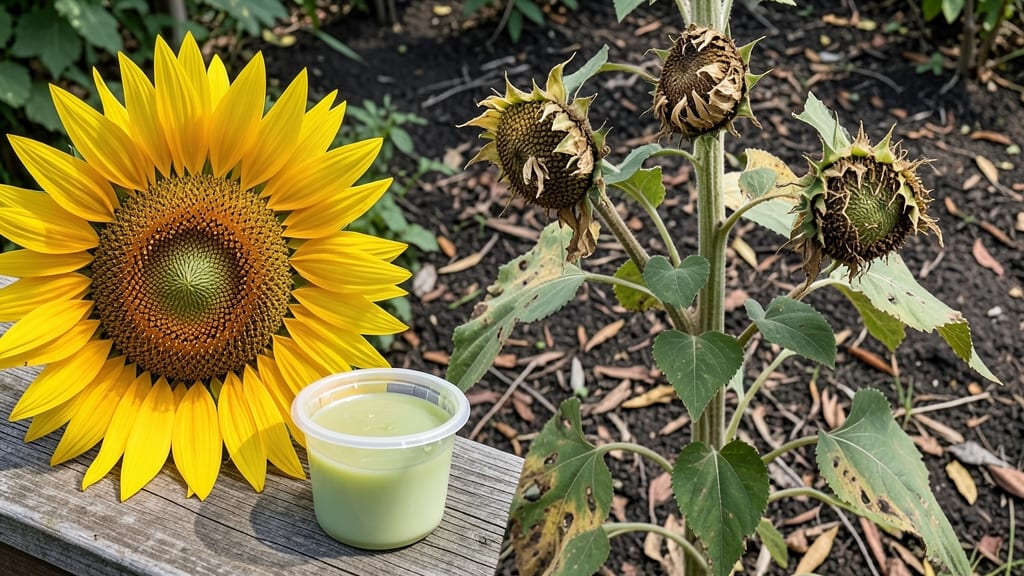
Your sunflowers are sending up misshapen heads instead of proud, golden blooms, and I get it—it’s frustrating after all that hope. 🌻 Deformed sunflower heads usually mean one of three things: hidden pests chewing the buds, fungal infections stunting growth, or environmental stress like wind or drought.
The good news? You can fix this with simple adjustments before next season’s planting.
Start by inspecting the undersides of leaves and flower buds for tiny larvae or beetles—the culprits behind most deformities. If you spot them, a neem oil spray or soapy water wash (1 tablespoon mild dish soap per gallon of water) works like a charm.
For fungal issues, prune affected stems immediately and apply copper fungicide to prevent spread. Environmental stress? Mulch heavily to retain moisture and stake tall varieties to shield them from wind.
Within 2-3 weeks of treatment, you’ll see new buds forming straight and strong, with vibrant green centers that’ll mature into perfect blooms. The key is acting fast—once the head deforms, it won’t recover, but next year’s plants will thank you for these small fixes.
Think of it as a reset button for your sunflowers.
For future gardens, choose disease-resistant varieties like ‘Autumn Beauty’ or ‘Moulin Rouge’ and plant in well-draining soil with 3-4 inches of compost. A little prevention now means bold, straight stems and full, symmetrical blooms come summer. Let’s get those sunflowers back on track!
📚 In This Guide
- What you need
- Instructions
- Tips and common mistakes
- Wrapping up and next steps
What you need
- ● Pruning shears or sharp scissors – Clean, sterilized (rubbing alcohol wipe works!).
- ● Garden gloves – Thick, cut-resistant (to protect from thorns and pests).
- ● Neem oil or horticultural oil – 1–2 tablespoons per quart of water (organic pest control).
- ● Insecticidal soap – Ready-to-use spray (for soft-bodied pests like aphids).
- ● Fungicide (copper-based or sulfur) – Follow label instructions (for fungal infections).
- ● Spray bottle or garden sprayer – 16–32 oz capacity (for even application).
- ● Disinfectant (bleach or hydrogen peroxide) – 1 part bleach to 9 parts water (for cleaning tools).
- ● Beneficial insects – Ladybugs or lacewings (natural pest predators).
- ● Compost or worm castings – 1 cup per plant (boosts plant health).
- ● Reflective mulch or aluminum foil – To deter pests.
- ● Magnifying glass – For close-up pest inspection.
How to fix deformed sunflower heads in 3 simple steps
Sunflowers are tough, but even they need a little help when blossoms go wonky.
🌱 Step 1: Diagnose the Problem and Remove Affected Blooms
Start by examining the deformed heads closely. Common causes include blossom blight (fungal infection), pests like sunflower moths, or nutrient deficiencies—especially magnesium or boron. If the centers look mushy, brown, or have tiny holes, you’re dealing with disease or pests. Gently twist off the deformed blooms at the base to prevent spread. I always use clean, sharp pruners to avoid tearing stems and introducing bacteria.
Don’t toss those blooms in your compost—they could harbor pathogens. Instead, bag them in plastic and discard in yard waste. This step is critical: removing infected blooms stops the problem from spreading to healthy flowers. If you spot chewed petals or larvae, you’ll need to address pests next.
💧 Step 2: Adjust Watering and Fertilize for Recovery
Sunflowers hate wet feet, but they also need consistent moisture—especially during bloom. Water at the base (not overhead) to keep foliage dry and prevent fungal spores from splashing onto new buds. Aim for 1-1.5 inches of water per week, adjusting for rain. If the soil feels dry 2 inches down, it’s time to water again.
Feed with a balanced fertilizer (10-10-10) or a low-nitrogen, high-phosphorus blend (like 5-10-5) to encourage flowering. I mix ½ teaspoon of Epsom salt (for magnesium) and ½ teaspoon of borax (for boron) into the soil around the base. These minerals often fix the yellowing or crinkling that causes deformed heads. Avoid over-fertilizing—too much nitrogen makes plants grow leaves instead of blooms.
☀️ Step 3: Boost Support and Prevent Future Issues
Weak stems or heavy blooms can also deform heads. If your sunflowers are tall and leggy, stake them early with 3-foot bamboo stakes or tomato cages. Tie stems loosely with soft plant ties—too-tight knots can damage stems as they grow. I also prune lower leaves to improve airflow, which reduces humidity around the blooms and cuts down on fungal risks.
For next season, rotate planting locations to avoid soil-borne diseases. If pests were the issue, interplant with basil or marigolds—their scents deter sunflower moths. Mulch with straw to keep soil moist and cool, which encourages strong root growth. With these adjustments, your sunflowers should rebound with perfect, plump blooms by mid-summer.
Tips & tricks for fixing deformed sunflower heads
Here's what nobody tells you about saving your sunflowers—these simple tricks make all the difference between sad, shriveled blooms and stunning, healthy heads.
Diagnosis Tip: In Step 1, when examining those deformed heads, look for tiny black specks on the centers—these are a dead giveaway for sunflower moth eggs. If you find them, you'll need to address pests immediately rather than just nutrient issues. I've caught this early by using a magnifying glass, and it saved my entire garden from total infestation.
Tool Upgrade: Don't use your regular kitchen scissors for Step 1! Invest in a pair of clean, sharp pruners specifically for garden work. I sterilize mine with rubbing alcohol between uses, which prevents cross-contamination of diseases between plants. Sterilizing tools is one of those small details that makes a huge difference in garden health.
Watering Wisdom: Step 2's watering advice is critical, but here's the secret: water in the early morning (between 6-8 AM) rather than evening. This gives foliage plenty of time to dry before nightfall, which dramatically reduces fungal spore development. I've seen blossom blight disappear completely after switching to morning watering.
Fertilizer Timing: When applying that ½ teaspoon of Epsom salt and borax in Step 2, do it right after watering the soil. This ensures the minerals dissolve properly and get absorbed by the roots immediately. I mix them directly into the irrigation water for even distribution, which prevents nutrient burn from concentrated applications.
Pro Tips for Deformed Sunflower Heads
- Here's what nobody tells you about saving your sunflowers—these simple tricks make all the difference between sad, shriveled blooms and stunning, healthy heads.
- Diagnosis Tip: In Step 1, when examining those deformed heads, look for tiny black specks on the centers—these are a dead giveaway for sunflower moth eggs.
- Tool Upgrade: Don't use your regular kitchen scissors for Step 1!
Frequently asked questions
Got questions about those wonky sunflower heads?
You’re not alone! Here are answers to the most common concerns—so you can save your blooms and enjoy those cheerful faces again.
Why are my sunflower heads deformed?
Deformed sunflower heads are usually caused by sunflower midge larvae, fungal diseases (like Sclerotinia), or environmental stress (extreme heat/drought). Pests burrow into buds, while diseases rot them from the inside. Check for tiny white maggots or moldy spots to confirm the culprit.
Can I still save a deformed sunflower after it’s already misshapen?
If the deformation is from pests or disease, the head is likely beyond saving—but don’t toss the plant! Prune affected blooms to redirect energy to new growth. For midge damage, treat remaining buds with neem oil or pyrethrin spray to prevent further spread.
What’s the best way to prevent deformed sunflower heads next year?
Start with healthy seeds and rotate planting locations to avoid soil-borne diseases. Use row covers early in the season to block midges, and apply organic insecticides like kaolin clay if pests are a recurring issue. Deadhead spent blooms to encourage new, pest-free growth.
Are there sunflower varieties less prone to deformation?
Yes! Try ‘Autumn Beauty’ or ‘Moulin Rouge’—they’re midge-resistant and thrive in hot climates. Dwarf varieties like ‘Teddy Bear’ also mature faster, reducing exposure to pests. Check seed packets for “midge-resistant” labels for extra peace of mind.
How do I tell if my sunflower has a pest problem vs. a disease?
| Pest Signs (Midge) | Disease Signs (Fungal/Bacterial) |
|---|---|
| Tiny white maggots in buds | Mushy, discolored stems or blackened centers |
| Stunted, crinkled petals | White mold or powdery spots on leaves |
| Holes in buds (larvae exit) | Wilting despite moist soil |
For pests, use soapy water sprays; for diseases, improve airflow and avoid overhead watering.
Wrapping up and next steps
Deformed sunflower heads don’t have to be a lost cause—with the right care, your plants can bounce back stronger than ever! 🌻 By identifying the issue early, applying targeted fixes, and preventing future problems, you’ll help your sunflowers thrive. Start small: pick one plant to test your new approach, and watch your garden bloom beautifully.
Need more help? Dive deeper into organic pest control or companion planting to keep your sunflowers happy year-round!