Flowers
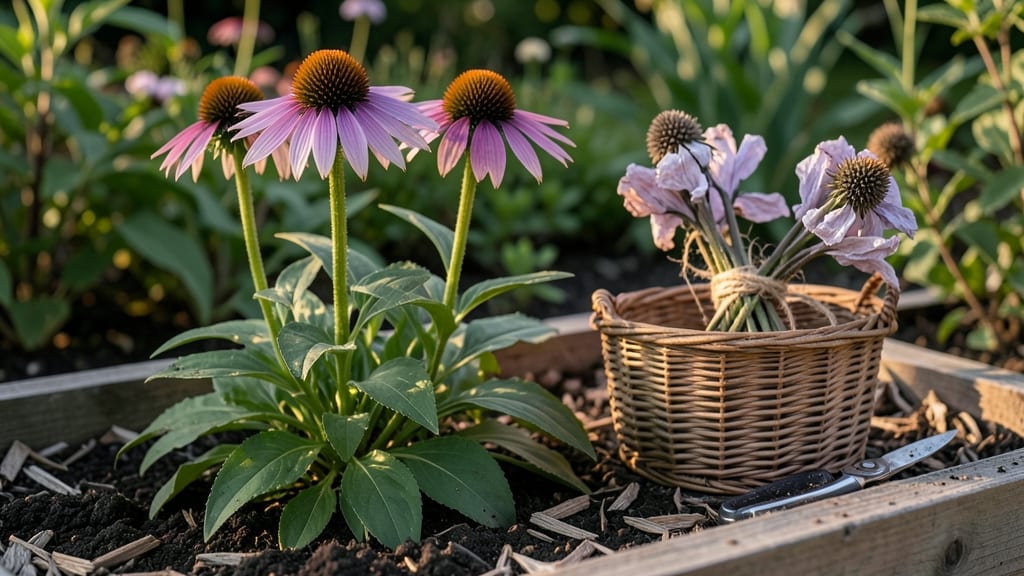
Harvesting the dried echinacea flower transforms my garden’s purple sunbursts into teas and tinctures that last through winter, and the process starts with letting these hardy perennials thrive in... full sun.
The key? Harvesting at peak potency—right when the petals drop but the centers stay intact—before transforming them into fragrant, shelf-stable remedies.
You’ll need minimal tools: sharp scissors, breathable paper bags, and either a warm, dry spot or a dehydrator set to 100°F. The flowers themselves are low-maintenance—once established, they multiply yearly and resist pests.
Even beginners can master this: just snip, dry, and store in airtight jars for up to 12 months. The payoff? Homegrown immunity support that costs pennies per batch.
Picture this: jars of dried echinacea blooms glowing on your windowsill, ready for teas that soothe sore throats or tinctures that boost resilience. The drying process preserves their immune-boosting compounds while keeping their vibrant hues—perfect for crafts too.
Whether you’re a herbalist or just love cottage-garden charm, these flowers deliver both beauty and benefits with almost no effort.
Works in zones 3–9, from rocky slopes to container gardens, and thrives even in poor soil. Start with one plant, and you’ll soon have more dried echinacea than you know what to do with. Let’s turn your garden into a medicine cabinet—naturally.
📚 In This Guide
- What you need
- Instructions
- Tips and common mistakes
- Wrapping up and next steps
What you need
- ● Echinacea seeds or plants: Choose Echinacea purpurea (purple coneflower) or Echinacea angustifolia (narrow-leaf coneflower) from a reputable supplier. Quantity: 10–20 seeds (or 2–3 nursery plants) for a small garden patch.
- ● Well-draining soil: A mix of 60% topsoil, 30% compost, and 10% perlite or sand (pH 6.0–7.0). Test your soil’s pH if unsure!
- ● Sunlight access: A full-sun spot (6+ hours/day)—echinacea thrives in open, sunny areas.
- ● Watering can or hose: With a gentle spray nozzle to avoid disturbing seedlings.
- ● Organic fertilizer: A balanced 10-10-10 or low-nitrogen (5-10-10) fertilizer for flowering plants. Apply: 2–3 times during the growing season.
- ● Mulch: 2–3 inches of straw or wood chips to retain moisture and suppress weeds.
- ● Garden trowel or shovel (for planting/seeding).
- ● Pruning shears (sharp, bypass-style for clean cuts).
- ○ Gloves (optional but recommended for handling thorny stems).
- ○ Drying rack or screen (for curing flowers—see optional section).
- ○ Spray bottle (optional) for misting seedlings if humidity is low.
- ● Hardiness zone: USDA Zones 3–9 (cold-hardy and drought-tolerant once established!).
- ● Planting time: Seeds: Start indoors 8–10 weeks before last frost or direct-sow in early spring (after soil warms to 50°F/10°C).
- ● Transplants: Early spring or fall (avoid extreme heat).
- ● Spacing: 18–24 inches apart (allows airflow and prevents disease).
- ● Companion plants: Marigolds or basil to deter pests.
- ● Echinacea-specific tea bags or capsules (for harvesting dried flowers).
- ● pH test kit (to monitor soil acidity).
- ● Shade cloth (if growing in Zone 10+ to protect from intense sun).
Step-by-step guide to cultivating echinacea for drying
This hardy perennial thrives with minimal fuss—here’s how to grow it strong enough for drying medicinal blooms.
🌱 Step 1: Select and Prepare the Planting Site
Echinacea thrives in full sun to partial shade with at least 6 hours of direct sunlight daily. Choose a location with well-draining soil—it hates soggy roots. If your soil is heavy clay, mix in 2-3 inches of compost to improve drainage and fertility. I always test soil pH first; echinacea prefers 6.0-7.0. If your soil is too acidic, add lime to raise the pH gradually.
Dig a hole twice as wide as the root ball but only as deep. This encourages root spread rather than settling too low. Gently loosen the roots if they’re tightly bound before placing the plant in the hole. Water deeply after planting to eliminate air pockets and help roots establish contact with the soil.
☀️ Step 2: Plant and Maintain Through the Growing Season
Space plants 18-24 inches apart to allow airflow and prevent fungal diseases. Mulch around the base with 2-3 inches of organic mulch (like shredded bark) to retain moisture and suppress weeds. Keep mulch 2-3 inches away from the stem to avoid rot. Water 1-2 inches per week, more during drought, but never let the soil stay soggy—echinacea roots rot easily in wet conditions.
Fertilize lightly in early spring with a balanced 10-10-10 fertilizer at half strength. Too much nitrogen produces lush foliage but fewer blooms. Watch for Japanese beetles—they devour petals. I handpick them early in the morning when they’re sluggish. Deadhead spent blooms to encourage more flowers and extend the blooming season.
⏰ Step 3: Harvest and Dry the Flowers Properly
Harvest flowers when fully open but before petals begin to brown, usually in mid-to-late summer. Cut stems 3-4 inches below the bloom with clean shears. Choose dry, sunny days for harvesting—moisture on petals slows drying. Remove leaves from the stems to prevent mold during the drying process. Bundle 5-10 stems together with twine and hang upside down in a dark, well-ventilated area like a closet or attic.
Drying takes 2-3 weeks depending on humidity. Flowers are ready when petals crisp easily and break apart when touched. Store dried blooms in airtight containers away from direct light to preserve their medicinal properties. If you prefer a faster method, use a dehydrator at 95°F for 4-6 hours—just avoid high heat, which destroys volatile oils.
🌿 Step 4: Overwinter and Prepare for Next Year
Echinacea is cold-hardy down to USDA Zone 3, but mulch heavily in fall with 4-6 inches of straw or leaves to protect roots from freezing temperatures. In early spring, remove old mulch and reapply fresh compost to replenish nutrients. Prune back dead foliage but leave last year’s stems—birds use them for nesting, and they provide winter interest in the garden.
Divide mature plants every 3-4 years in early spring to prevent overcrowding. Dig up clumps, separate into 3-5 inch sections with roots intact, and replant immediately. This rejuvenates growth and increases flower production. If you notice fewer blooms, it’s time to divide—older plants naturally decline after a few years.
Tips & tricks for perfect dried echinacea cultivation
Growing echinacea for drying takes patience and precision—these tips help you avoid common pitfalls and maximize your medicinal harvest.
Soil Preparation: The 2-3 inches of compost you mix into heavy clay soil isn't just about drainage—it also introduces beneficial microbes that help echinacea roots establish faster. I've found that adding a handful of worm castings to the planting hole gives plants an extra boost in their first growing season. For acidic soils, don't just add lime all at once—work it into the top 6 inches gradually over several months to avoid shocking the plants.
Watering Wisdom: Those 1-2 inches of water per week might seem like a lot, but echinacea's deep taproot needs consistent moisture to develop properly. I've noticed that watering deeply once a week (rather than shallow daily watering) encourages roots to grow downward where they'll find stability. In containers, use self-watering pots to maintain even moisture without risking soggy soil.
Harvest Timing: The mid-to-late summer harvest window is crucial because that's when echinacea's medicinal compounds reach peak concentration. I always check flowers in the morning—they'll be fully open and vibrant, with petals that still feel slightly plump. If you wait until afternoon, the petals often start to wilt, making them less suitable for drying.
Drying Optimization: While the 2-3 week air-drying method is traditional, I've found that using a dehydrator at 95°F for 4-6 hours gives you a faster result without compromising quality. The key is to spread flowers in a single layer on dehydrator trays—overcrowding creates humidity pockets that can lead to mold. For air drying, I hang bundles in my garage where temperature stays consistently around 70°F and humidity is moderate.
Pro Tips for Dried Echinacea Flower
- Growing echinacea for drying takes patience and precision—these tips help you avoid common pitfalls and maximize your medicinal harvest.
- Soil Preparation: The 2-3 inches of compost you mix into heavy clay soil isn't just about drainage—it also introduces beneficial microbes that help echinacea roots establish faster.
- Watering Wisdom: Those 1-2 inches of water per week might seem like a lot, but echinacea's deep taproot needs consistent moisture to develop properly.
Frequently asked questions
Can I dry echinacea flowers indoors, or do I need outdoor space?
You can dry echinacea flowers indoors, but outdoor drying (in a shaded, well-ventilated spot) preserves more potency. If indoors, lay blooms on a mesh screen or paper towel in a warm, dry area for 1–2 weeks. Avoid direct sunlight to prevent color fading or mold. Pro tip: Bundle stems with rubber bands for easier handling!
How long does it take for echinacea to bloom after planting?
Echinacea typically blooms 60–90 days after planting, though first-year plants may take longer. Cold-hardy varieties (like Echinacea purpurea) often reward patience with vibrant blooms in late spring to early summer. Pro tip: Deadhead spent flowers to encourage more blooms and extend the season!
What’s the best way to store dried echinacea for medicinal use?
Store dried echinacea in an airtight glass jar away from light and moisture. Keep it in a cool, dark place (like a pantry) for up to 1 year. Label with the harvest date! For teas, crush flowers lightly before steeping—no need to overpack the jar to avoid clumping.
Are there alternatives to echinacea for immune support?
Yes! Other immune-boosting herbs include astragalus, elderberry, and elderflower. Astragalus is another cold-hardy perennial, while elderberry thrives in similar conditions but requires more pruning. Pro tip: Rotate herbs seasonally to diversify benefits—echinacea excels in early fall, while elderberry peaks in late summer!
Why did my echinacea plants wilt or stop blooming?
Wilting often signals overwatering or poor drainage. Echinacea prefers well-draining soil and tolerates drought once established. Lack of blooms? Check for nutrient deficiencies (add compost) or pests (like Japanese beetles). Pro tip: Mulch around plants to retain moisture and deter weeds—2–3 inches of organic mulch works best!
Wrapping up and next steps
Growing dried echinacea flowers is a rewarding journey that blends beauty with wellness—whether you’re harvesting them for immune-boosting teas, natural remedies, or stunning dried arrangements. 🌿 With the right care, these cold-hardy perennials thrive year after year, offering both practical benefits and vibrant blooms.
Start small, experiment with varieties, and soon you’ll have a bountiful supply of echinacea to share with friends or enjoy yourself!
Ready to take the next step? Try planting a few seeds or cuttings this season and watch your garden (and your wellness routine) flourish! 🌱