
Flowers
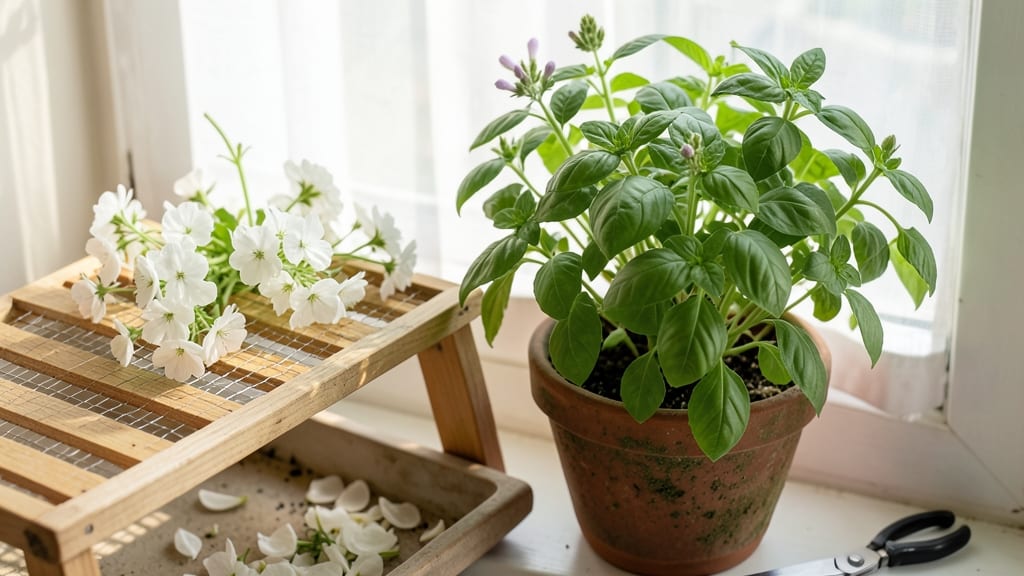
Preserving basil flowers for tea and garnishes is one of those small gardening triumphs that makes summer last all year. ✨ The delicate lavender blooms pack more fragrance than the leaves themselves, and drying them properly unlocks flavors that store-bought herbs can't match.
My first attempt ended with brittle, flavorless scraps, but I've since perfected a method that keeps their essence intact—whether you're making herbal tea or fragrant sachets.
The key lies in harvesting when flowers are fully open but before they brown, then choosing between air-drying or low-heat oven drying. Air-drying works beautifully in warm climates, while oven-drying gives consistent results in humid conditions.
You'll need just a few supplies: clean scissors, a drying rack or paper bags, and patience for the 1-2 week process. The payoff? A pantry staple that smells like summer and elevates everything from soups to homemade potpourri.
Once dried, these flowers transform into aromatic garnishes for pasta, flavorful tea blends, or decorative accents for wreaths. The scent lingers longer than fresh basil, and the delicate petals add visual charm to any dish.
Store them in airtight containers away from light to preserve their potency for up to a year. This isn't just about saving flowers—it's about capturing the essence of your garden's peak season.
Whether you're a tea enthusiast, a culinary experimenter, or simply love preserving nature's beauty, this method works for any basil variety. The process is simple enough for beginners but rewarding enough for seasoned gardeners. Let's get those flowers preserved before they fade away.
📚 In This Guide
- What you need
- Instructions
- Tips and common mistakes
- Wrapping up and next steps
What you need
- ● Fresh basil flowers: Harvest organic, pesticide-free basil flowers (preferably from potted basil plants). Aim for 1–2 cups of fully bloomed flowers.
- ● Clean, breathable cloth or paper towels: For gently patting moisture off the flowers (e.g., bamboo or cotton to avoid lint).
- ● Drying method of choice: Air-drying: Drying screen, mesh bag, or a well-ventilated area (e.g., a hanging rack or paper towels laid flat).
- ● Oven or dehydrator: Low-heat setting (170–190°F / 77–88°C) and a baking sheet lined with parchment paper.
- ● Storage containers: Air-tight glass jars, tins, or resealable bags (e.g., 4–8 oz capacity for small batches).
- ● Food dehydrator: Speeds up drying with precise temperature control.
- ● Silica gel packets: For instant drying (place flowers in a sealed container with packets for 24–48 hours).
- ● Essential oil (e.g., lemon or lavender): Add 2–3 drops to jars for extra fragrance.
- ● Labeling supplies: Masking tape + marker to note drying dates.
Step-by-Step guide to drying basil flowers for tea and garnishes
Here's how I preserve basil blooms at their peak—keeping their delicate fragrance for months ahead.
🌿 Step 1: Harvest Flowers at Peak Freshness
Pick basil flowers in the morning after dew has dried, when petals are fully open but haven't begun wilting. Use clean, sharp scissors to snip stems just above the first set of leaves—this prevents damage to the plant. I harvest entire flower clusters rather than individual blooms; they dry more uniformly this way and retain better aroma.
Fill a bowl with cold water and immediately submerge the cut stems. This "shock treatment" prevents premature wilting while you prepare them for drying. Change the water every 30 minutes for the first two hours to remove any sap that could encourage bacterial growth during drying.
⏰ Step 2: Choose and Prepare Drying Method
For the most aromatic results, I recommend air-drying in small bundles. Tie 8-10 stems together with twine, leaving 2 inches of stem exposed at the bottom. Hang bundles upside down in a dry, dark place with good airflow—like a pantry or closet—where the temperature stays between 65-75°F. Avoid direct sunlight, which can bleach the petals and degrade their flavor.
If you prefer a faster method, use a food dehydrator set to 95°F. Arrange single-layer flower clusters on the trays, ensuring they don't touch. Run for 2-3 hours until petals become brittle to the touch but haven't lost their color. For oven drying, spread flowers on a baking sheet lined with parchment paper and bake at 170°F with the door slightly open for 1-2 hours.
🌱 Step 3: Test for Proper Drying and Store Correctly
The flowers are ready when petals crumble easily between your fingers but haven't turned powdery. Gently rub a petal between your thumb and forefinger—it should feel dry and papery, not damp or sticky. Remove any remaining green stems or leaves, as they can impart bitterness to your dried flowers.
Store dried basil flowers in an airtight glass jar away from light and moisture. For tea blends, I crush the dried petals lightly with a rolling pin before storing to release their oils. Label the jar with the date—properly dried flowers retain their fragrance for up to 12 months, though they'll lose potency after 6 months. Use within 3 months for the best flavor in garnishes.
☀️ Step 4: Use Dried Flowers Creatively
Infuse dried basil flowers into olive oil by steeping them in warm (not hot) oil for 2 weeks, changing the oil every 3 days. Strain and use the fragrant oil for dressings, marinades, or finishing dishes. For tea, steep 1 teaspoon of dried flowers in 1 cup of hot water for 5-7 minutes. Strain and enjoy the subtle sweetness—perfect for iced tea or cocktails.
Sprinkle whole or crushed dried flowers over pasta, soups, or salads just before serving to add a delicate floral note. I also mix them into homemade vinegars by steeping in white wine vinegar for 1 week, then straining for a fragrant basilic vinegar that elevates any dish. The key is moderation—start with small amounts and adjust to taste.
Tips & tricks for perfectly dried basil flowers
A few simple techniques that'll make all the difference when preserving those delicate basil blooms.
Harvest Timing Secret: Morning is absolutely critical for harvesting—those dew-covered petals in the afternoon will wilt faster and lose their vibrant color. I've learned this the hard way after trying to harvest in the late afternoon and ending up with dull, limp flowers that never dried properly. The 30-minute water change trick in Step 1 is non-negotiable too; that sap removal prevents bacterial growth that can ruin your entire batch during drying.
Bundle Size Matters: The perfect bundle size of 8-10 stems creates ideal airflow while maintaining structural integrity. I've experimented with larger bundles that take longer to dry evenly, and smaller ones that dry too quickly and lose aroma. When hanging, leave that 2-inch stem exposed—it's the perfect length for secure hanging without blocking airflow to the flowers. For extra security, I double-knot the twine at both ends.
Temperature Control: The 65-75°F range for air drying is ideal because it's warm enough for even drying without accelerating oxidation. If your kitchen runs hotter, move the bundles to a cooler spot like a basement or garage. For dehydrator or oven methods, stick precisely to the 95°F and 170°F temps—any hotter and you'll risk bleaching those beautiful purple petals. A kitchen thermometer is worth its weight in gold for monitoring these temperatures accurately.
Storage Wisdom: That 12-month shelf life is only achievable if you store them properly. I use amber glass jars to block light completely, and I crush the petals lightly before storing for tea blends—this releases the essential oils that give dried basil its signature aroma. The 3-month window for garnishes is where you'll notice the biggest flavor decline, so use them sooner rather than later for garnishes where appearance matters.
Pro Tips for Drying Basil Flowers
- A few simple techniques that'll make all the difference when preserving those delicate basil blooms.
- Harvest Timing Secret: Morning is absolutely critical for harvesting—those dew-covered petals in the afternoon will wilt faster and lose their vibrant color.
- Bundle Size Matters: The perfect bundle size of 8-10 stems creates ideal airflow while maintaining structural integrity.
Frequently asked questions
Got questions about drying basil flowers?
Here are answers to the most common ones—from timing to troubleshooting—to help you preserve that fresh basil magic!
How long does it take to dry basil flowers completely?
Drying basil flowers typically takes 1–3 weeks, depending on your method. Air-drying (hanging upside down) is the slowest but most gentle, while a dehydrator (at 95°F) speeds it up to 4–6 hours. Check for readiness when petals crumble easily and stems snap cleanly.
Can I dry basil flowers too fast?
Yes! If you rush drying (e.g., high heat or direct sunlight), the flowers may lose fragrance or turn brittle. Ideal conditions: Low heat (below 110°F), indirect airflow, and patience. Think of it like slow-roasting—gentle and consistent wins every time!
What’s the best way to store dried basil flowers?
Store them in airtight containers (glass jars or sealed bags) away from light and moisture. Label with the date—they’ll stay potent for 6–12 months. For extra freshness, add a dried silica packet or a bay leaf to absorb humidity.
Are dried basil flowers good for tea?
They add a delicate, floral note to herbal teas. Steep 1–2 tsp per cup of hot water (not boiling) for 5–10 minutes. Pair with lemon or honey for a refreshing twist. Pro tip: Crush lightly before steeping to release more aroma!
What if my dried basil flowers smell weak?
Weak scent usually means over-drying or improper storage. Try reviving them by placing the jar in a warm, sunny spot for a day or two. If that fails, blend them into homemade potpourri or infuse oils (like olive oil) for cooking—fragrance transfers even if the flowers themselves fade.
Wrapping up and next steps
Drying basil flowers is a simple yet rewarding way to preserve their vibrant aroma and beauty for teas, garnishes, or homemade crafts. 🌿 With just a few ingredients and minimal effort, you can transform fresh basil into a fragrant, long-lasting treasure.
Whether you’re a culinary enthusiast or a DIY lover, this method opens up endless possibilities for enhancing your dishes and creations.
Now that you’re equipped with the know-how, give it a try! Start small—pick a sunny day, gather your basil, and follow the steps. Once your dried flowers are ready, share your creations with friends or experiment with new recipes. Happy drying! 🌟