Flowers
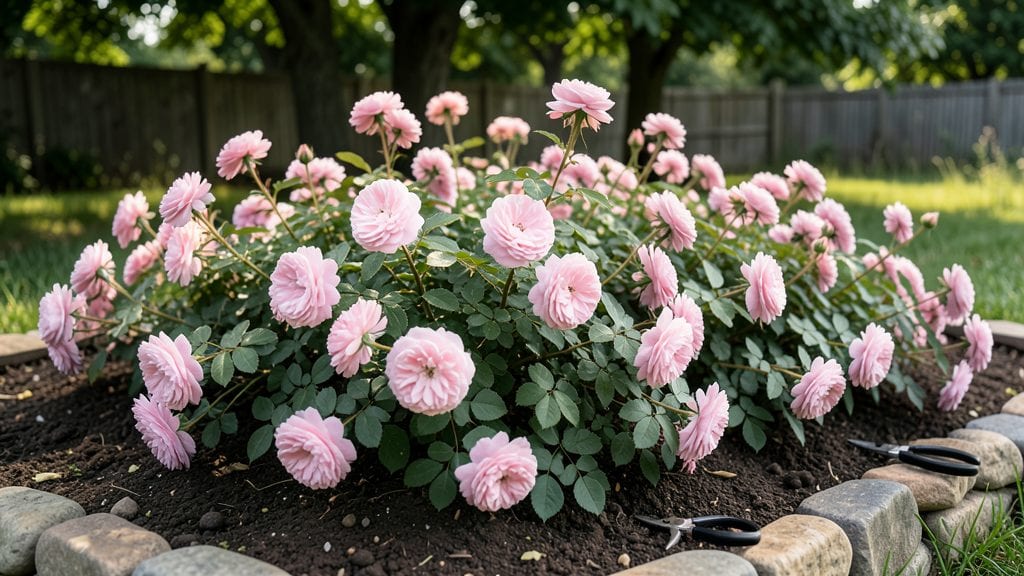
Pink "Flower Carpet" roses transform any garden into a soft, velvety dream with their year-round color and effortless spread. 🌸 I fell for them the first time I saw how they smothered bare soil in my front yard, turning winter's brown patches into a living tapestry of blush and green.
There's something magical about a plant that works this hard for you—no fuss, no dead zones, just endless blooms from spring through frost.
Their secret weapon? A growth habit that hugs the ground like a living carpet while reaching just high enough to catch your eye. Pair them with lavender for a modern border or mix in white daisies for a cottage-garden feel.
They even thrive in containers, spilling over edges like a pink waterfall. The best part? They outperform traditional roses in every way—disease-resistant, drought-tolerant, and pollinator magnets that keep bees buzzing all season.
Imagine your garden in summer: warm pink blooms peeking through lush foliage, their fragrance lingering in the afternoon breeze. In winter, the same plants surprise you with fresh growth and occasional blooms, defying the cold.
They're the kind of plant that makes neighbors stop and ask, "What are those?"—and then you get to say, "Oh, just my secret weapon for easy beauty."
Whether you're filling a shady corner, softening a modern landscape, or creating a romantic cottage path, these roses deliver instant elegance with minimal effort. The key is planting them densely from the start—think of them as living mulch that doubles as decoration.
Ready to see how they can work in your space?
📚 In This Guide
- What you need
- Instructions
- Tips and common mistakes
- Wrapping up and next steps
What you need
- ● Flower Carpet Rose Pink Plants: Quantity: 10-20 plants per 100 sq. ft. (closer spacing = faster coverage!)
- ● Specification: Dwarf, cold-hardy variety (e.g., Rosa 'Flower Carpet' or similar).
- ● High-Quality Soil: Type: Well-draining, slightly acidic (pH 6.0-6.5) garden soil or a mix of 50% topsoil + 50% compost.
- ○ Optional: Perlite or sand (1 part per 5 parts soil) to improve drainage.
- ● Mulch: Type: Organic mulch (e.g., shredded bark, pine straw, or composted leaves).
- ● Quantity: 2-3 inches (spread evenly after planting).
- ● Fertilizer: Type: Slow-release, rose-specific fertilizer (e.g., 10-10-10 or 5-10-5 NPK ratio).
- ○ Optional: Organic options like fish emulsion or bone meal.
- ● Garden Trowel or Shovel (for planting and soil prep).
- ● Pruning Shears (to trim dead foliage or shape plants).
- ● Garden Gloves (protect your hands from thorns and soil!).
- ● Watering Can or Hose (with a gentle spray nozzle for delicate roots).
- ● Measuring Tape or String (to mark planting patterns, if desired).
- ○ Optional: Soil pH test kit (to check acidity levels).
- ● Drip irrigation system (for automated watering).
- ● Edging tool (to define borders neatly).
- ● Sunlight: Full sun (6+ hours daily) or partial shade (at least 4 hours).
- ● Location: Choose a spot with good air circulation to prevent fungal diseases.
- ● Season: Plant in early spring or fall (avoid extreme heat or frost).
- ● Prep Work: Remove weeds, rocks, or debris from the planting area.
- ● Loosen soil to a depth of 12 inches for better root growth.
How to plant and maintain Flower Carpet rose pink for stunning year-round color
This easy-care ground cover delivers blooms from spring to frost—here's how to set it up right.
🌱 Step 1: Choose the Perfect Planting Location
Flower Carpet roses thrive in full sun to partial shade, with at least 6 hours of sunlight daily. I always pick a spot where they’ll get morning sun and afternoon shade if your climate runs hot—this prevents leaf scorch while keeping the blooms coming. Test your site by observing how much sun it gets over a week before planting.
These roses grow best in well-draining soil with a pH between 6.0 and 7.0. If your soil is heavy clay, mix in 2-3 inches of compost to improve drainage. The roots spread aggressively, so space plants 18-24 inches apart to give them room to fill in without crowding.
🪴 Step 2: Prepare the Soil and Plant Correctly
Dig a hole twice as wide as the root ball but only as deep as the container’s bottom. Gently loosen the roots if they’re circling the pot—this encourages outward growth instead of struggling to break free. Place the plant so the top of the root ball sits just below soil level; planting too deep can suffocate the rose.
Backfill with native soil mixed with 1 cup of balanced fertilizer (10-10-10) per plant. Water deeply to settle the soil and eliminate air pockets. The first year, mulch with 2-3 inches of organic mulch (like shredded bark) to retain moisture and regulate soil temperature.
☀️ Step 3: Water and Feed for Continuous Blooms
Water newly planted roses deeply 2-3 times per week until established, which takes about 6-8 weeks. You’ll know they’re getting enough water when the soil feels 2-3 inches deep and slightly damp—never soggy. After the first year, these drought-tolerant roses need water only during dry spells.
Feed with a slow-release rose fertilizer in early spring and again after the first flush of blooms. I skip summer fertilizing—it encourages late-season growth that won’t harden off before frost. Deadhead spent blooms regularly to redirect energy into more flowers instead of seed production.
✂️ Step 4: Prune for Health and Shape
Prune in early spring, just as new growth begins, to remove any dead or crossing branches. Cut back last year’s growth by one-third to encourage bushier, more compact growth. Avoid heavy pruning in fall—it stimulates tender new growth that won’t survive winter.
Watch for leggy growth or bare stems in spring. Trim these back to a healthy bud or leaf node to restore balance. Flower Carpet roses are low-maintenance, but a quick cleanup in early spring keeps them looking their best all season.
🌿 Step 5: Protect and Enjoy Year-Round
In winter, apply 3-4 inches of mulch around the base to insulate roots from freezing temperatures. These roses are cold-hardy, but extra protection helps them bounce back faster in spring. Remove mulch in early spring before new growth appears.
Once established, Flower Carpet roses spread beautifully, creating a lush carpet of color. They’re deer-resistant and handle foot traffic well, making them perfect for pathways or slopes. With minimal care, you’ll enjoy blooms from spring through fall—and sometimes even a few hardy flowers in winter.
Tips & tricks for perfect Flower Carpet rose pink ground cover
Here's what I've learned to help your Flower Carpet roses thrive and keep blooming beautifully.
Sunlight Strategy: In Step 1, when choosing your planting location, pay attention to how sunlight shifts throughout the day. If your area gets intense afternoon sun, position your roses to catch morning sunlight instead—this prevents leaf burn while still giving them the 6 hours of sunlight they need. I've seen roses in hot climates struggle when planted in full afternoon sun, even with proper spacing.
Soil Prep Secret: For Step 2, if your soil tests outside the ideal pH of 6.0-7.0, don't worry—you can adjust it! For acidic soil, mix in some lime (about 1/2 cup per plant), and for alkaline soil, work in peat moss or sulfur. The 2-3 inches of compost recommendation is non-negotiable though—it improves drainage and provides essential nutrients for those aggressive roots.
Watering Wisdom: In Step 3, those 2-3 inches deep waterings are crucial for establishing strong roots. I use a moisture meter to check soil dampness—it's worth the investment. Once established, you'll notice how drought-tolerant these roses become, but those first 6-8 weeks are critical for root development. Water in the morning to prevent fungal issues from evening moisture.
Pruning Pro Tip: When you're doing your spring pruning in Step 4, look for those little buds where leaves meet stems—they're the key to new growth. Cut just above these buds when you trim back by one-third. This technique creates bushier plants and more blooms. I've seen gardeners accidentally cut above the bud, which leaves bare stems that never produce flowers.
Pro Tips for Flower Carpet Rose Pink
- Here's what I've learned to help your Flower Carpet roses thrive and keep blooming beautifully.
- Sunlight Strategy: In Step 1, when choosing your planting location, pay attention to how sunlight shifts throughout the day.
- Soil Prep Secret: For Step 2, if your soil tests outside the ideal pH of 6.0-7.0, don't worry—you can adjust it!
Frequently asked questions
How long does it take for a flower carpet rose pink to fully establish?
A flower carpet rose pink typically takes 12–18 months to fully establish and fill in gaps. In the first year, focus on watering deeply (1–2 inches per week) and mulching to encourage root growth. Patience pays off—once established, it spreads aggressively, creating that lush, carpet-like effect!
How often should I water flower carpet rose pink?
During the first year, water deeply 2–3 times per week to encourage root development. After establishment, it’s drought-tolerant but benefits from 1 inch of water weekly during dry spells. Pro tip: Water in the early morning to reduce evaporation and fungal risks.
Do I need to prune flower carpet rose pink, and if so, when?
Pruning is minimal! Trim back dead or leggy stems in early spring before new growth begins. Lightly shear the entire plant in late summer to encourage bushiness. Avoid heavy pruning—this hardy ground cover thrives with minimal intervention and even blooms year-round in mild climates!
Can flower carpet rose pink grow in full sun or shade?
This versatile plant handles partial shade to full sun, but morning sun + afternoon shade is ideal for most climates. In hot, sunny areas, ensure consistent watering to prevent stress. Shade lovers: It may bloom less but stays lush and green—perfect for under trees or north-facing yards!
Are flower carpet roses prone to pests or diseases?
Generally pest-resistant, but watch for aphids or spider mites in dry conditions. Treat with neem oil or insecticidal soap if needed. Overwatering can lead to root rot, so ensure well-draining soil. Prevention tip: Space plants 12–18 inches apart for airflow and reduce fungal risks.
What’s a good alternative if I want a similar look but lower maintenance?
If flower carpet rose pink seems too delicate, try:
- Creeping thyme – Drought-tolerant, fragrant, and thrives in sun.
- Ice plant (Delosperma) – Succulent-like, handles heat, and blooms year-round.
- Ajuga (Bugleweed) – Shade-loving, spreads quickly, and has striking foliage.
Wrapping up and next steps
The Flower Carpet Rose Pink isn’t just a pretty face—it’s a game-changer for effortless, year-round beauty in your garden! With its vibrant pink blooms, drought tolerance, and minimal upkeep, it’s the perfect solution for turning bare spots into lush, colorful carpets.
Whether you're a seasoned gardener or just starting out, this ground cover makes gardening fun and rewarding.
Ready to transform your outdoor space? Grab your gloves, pick a sunny spot, and let the Flower Carpet Rose Pink work its magic! Start small—plant a few sections, watch them thrive, and soon, you’ll be dreaming up even bigger garden projects. 🌸✨