
Light Requirements
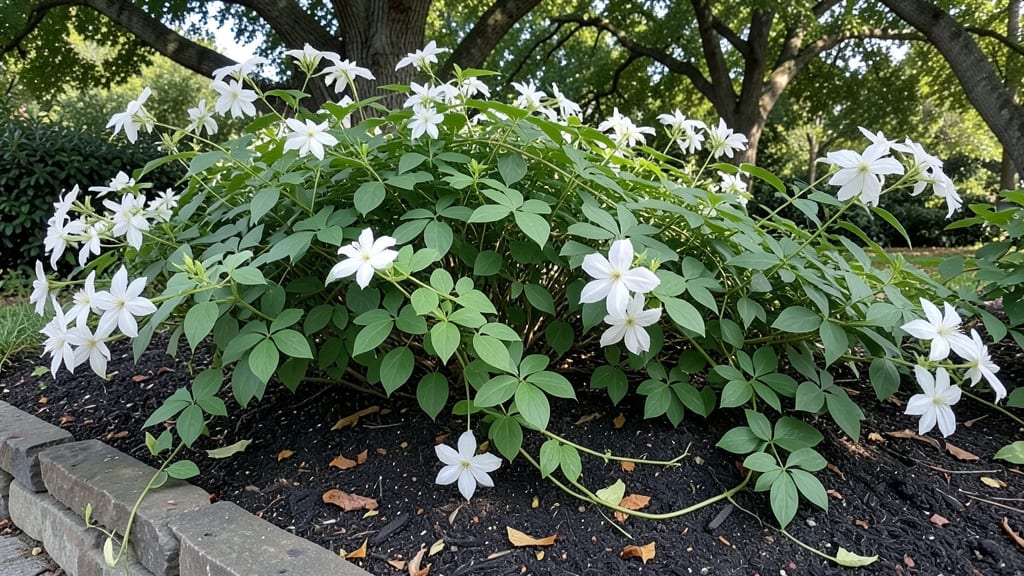
Transforming your darkest corners into lush vertical gardens starts with the right full shade flowering vines. 🌿 I’ve turned my shady patio into a fragrant, blooming paradise using plants that most gardeners overlook—because they think shade means no flowers.
The secret lies in choosing vines that thrive where sunlight barely reaches, like Clematis montana or Hoya carnosa, which burst with color even in deep shade.
These vines don’t just survive—they thrive, climbing trellises, arbors, or even old fences with minimal effort. You’ll need sturdy support structures (think metal trellises or wooden arbors) and well-draining soil mixed with compost to keep roots happy.
Most varieties need only occasional watering once established, making them low-maintenance stars for any shaded spot.
Imagine wisteria-like blooms in spring, glossy foliage all summer, and autumn berries that add winter interest. With the right placement, your vertical garden becomes a year-round showstopper—no sunlight required. The key is pairing fast-growing climbers with slower, flowering varieties for layered drama.
Whether you’re dressing up a balcony, hiding an unsightly wall, or creating a romantic garden entrance, these vines deliver bold color and texture without the sun. Let’s pick the perfect plants for your space and get growing!
📚 In This Guide
- What you need
- Instructions
- Tips and common mistakes
- Wrapping up and next steps
What you need
- ● Flowering vines (full shade-tolerant): 1–3 plants of Clematis armandii (evergreen, fragrant)
- ● 1–2 plants of Hoya carnosa (wax plant, low-maintenance)
- ● 1–3 plants of Fatsia japonica (for bold foliage + occasional blooms)
- ● 1–2 plants of Actinidia kolomikta (ornamental kiwi vine, variegated leaves)
- ● Support structures: 1–2 trellises (6–8 ft tall, metal or wooden)
- ○ Arbors or pergolas (optional, for larger spaces)
- ● 1–2 rolls of landscape fabric (to suppress weeds)
- ● Soil & amendments: 1–2 bags of well-draining potting mix (or amend garden soil with compost)
- ● 1 bag of perlite or sand (for drainage, 1 part per 3 parts soil)
- ● 1 bag of slow-release fertilizer (10-10-10 or organic options like fish emulsion)
- ● Tools: 1 trowel (for planting)
- ● 1 pruners (sterilized, for trimming)
- ● 1 garden hose or watering can (with a gentle spray nozzle)
- ● 1 measuring tape (to space plants 3–6 ft apart)
- ● A shady location (dappled light to full shade, <4 hours of direct sun/day).
- ● Space for vines to climb vertically (check mature vine spread—some reach 20+ ft!).
- ○ Optional but helpful: A moisture meter (to monitor soil hydration in deep shade).
- ● Mulch (2–3 inches of shredded bark or leaves to retain moisture).
Step-by-Step guide to planting full shade flowering vines
Here's how to transform dark corners into vibrant vertical gardens using shade-loving climbers.
🌱 Step 1: Choose the Right Vines for Your Space
Select vines that thrive in full shade (0-3 hours of direct light) and match your structure's size. Clematis 'Jackmanii' (6-8 feet) handles deep shade better than most, while Hoya carnosa (3-5 feet) thrives in dim corners with its waxy, heart-shaped leaves. I always check the mature height—nothing ruins drama like a vine that outgrows its trellis.
For immediate color, opt for Campsis radicans (trumpet vine) varieties bred for shade tolerance, though they'll produce fewer blooms than sun-loving types. Test your light levels with a light meter app for 1-2 weeks—shade patterns change with seasons, and some spots get morning sun that disappears by noon.
🪴 Step 2: Prepare the Planting Site and Support Structure
Dig a hole twice as wide as the root ball but only as deep—planting too deep suffocates roots. Amend the native soil with 3 inches of compost mixed into the bottom half of the hole. Full shade vines often struggle with compacted soil, so I add a handful of perlite to improve drainage if your area stays damp.
Install your trellis, arbor, or fence before planting—vines hate being transplanted later. For heavy climbers like clematis, use a 4-inch diameter metal or wooden post buried 18 inches deep to anchor the structure. Secure lightweight trellises with galvanized screws to prevent rust stains on walls.
☀️ Step 3: Plant and Stake for Proper Growth Habits
Position the vine so the top of the root ball sits 1 inch below soil level. Backfill with native soil mixed with compost, tamping gently to remove air pockets. Water deeply to settle the roots, then add 2 inches of mulch around the base (keep mulch 6 inches away from stems to prevent rot).
Stake immediately with 3-foot bamboo stakes tied loosely to the trellis. This trains vines to climb vertically instead of sprawling. For clematis, I prune the first year's growth to 12 inches to encourage bushier second-year blooms. Water 2-3 times weekly until new growth appears—shade vines dry out faster than sun-lovers because they can't photosynthesize efficiently.
🌿 Step 4: Feed and Maintain for Season-Long Blooms
Apply a balanced 10-10-10 fertilizer at planting, then feed again in early spring and mid-summer with a low-phosphorus formula (like 5-10-5) to avoid leafy growth over flowers. I use a slow-release granular fertilizer worked into the top 2 inches of soil—this prevents burn from concentrated liquid feeds.
Check for powdery mildew weekly in humid climates. Most shade vines tolerate moisture, but crowded leaves trap humidity. Prune leggy growth in early spring to improve airflow. Deadhead spent blooms regularly—this redirects energy to new flowers rather than seed production, which drains shade-tolerant plants.
✂️ Step 5: Winterize and Prune for Next Season's Growth
Cut back one-third of the oldest stems in late winter (before new growth starts) to rejuvenate the plant. For clematis, I remove all dead wood and shape the remaining stems to encourage outward growth. Wrap young vines with burlap if your winters drop below 15°F—this protects tender stems from freeze-thaw cycles.
Reduce watering in fall as growth slows, but keep soil moist until the first hard frost. Most shade vines enter dormancy naturally, but a 2-inch layer of straw mulch insulates roots through winter. Mark pruning locations with flagging tape if you have multiple vines—next spring's new growth will help you remember which stems to preserve.
Tips & tricks for perfect full shade flowering vines
These pro tips will help you create a thriving vertical garden that brings life to even the shadiest corners of your space.
Light Level Strategy: In Step 1, when selecting your vine, remember that "full shade" means 0-3 hours of direct sunlight—but watch for subtle light changes. East-facing walls often get morning sun that disappears by noon, while north walls stay consistently dark. Use a light meter app for 1-2 weeks to track patterns before committing to a vine species. I've learned the hard way that what seems like full shade in winter might get surprising light in summer.
Soil Preparation Secret: For Step 2, don't skip the soil amendment process—full shade vines are particularly sensitive to compacted soil. Mix that 3 inches of compost thoroughly into the bottom half of the hole, then add a handful of perlite to improve drainage if your area stays damp. I've seen shade vines struggle when planted in unamended native soil, even with proper watering. The key is creating that loose, well-draining environment right from planting.
Staking Technique: When you're staking in Step 3, use 3-foot bamboo stakes tied loosely to the trellis with soft plant ties—not wire or tight twine. The loose ties allow the vine to grow while still providing support. For clematis specifically, I prune the first year's growth to just 12 inches to encourage stronger second-year blooms. This might seem counterintuitive, but it forces the plant to put energy into root development rather than vertical growth.
Winter Protection: In Step 5, if your winters drop below 15°F, wrap young vines with burlap and consider adding a 2-inch layer of straw mulch around the base. I've found that this extra insulation prevents the freeze-thaw cycles that can damage tender stems. Mark pruning locations with flagging tape if you have multiple vines—next spring's new growth will help you remember which stems to preserve during your late winter pruning.
Pro Tips for Full Shade Flowering Vines
- These pro tips will help you create a thriving vertical garden that brings life to even the shadiest corners of your space.
- Light Level Strategy: In Step 1, when selecting your vine, remember that "full shade" means 0-3 hours of direct sunlight—but watch for subtle light changes.
- Soil Preparation Secret: For Step 2, don't skip the soil amendment process—full shade vines are particularly sensitive to compacted soil.
Frequently asked questions
Got questions about growing full shade flowering vines? You’re not alone! Here are answers to the most common concerns—so you can dive in with confidence.
What are the easiest full shade flowering vines for beginners?
Start with Clematis montana (for partial shade) or Hoya carnosa (more tolerant of deep shade). For true full shade, Fatsia japonica (with small white flowers) or Actinidia kolomikta (silver-and-pink foliage with tiny blooms) are forgiving picks. All three thrive with minimal fuss!
How long does it take for full shade vines to flower?
Patience is key! Most full shade vines take 1–3 years to establish roots and bloom. Clematis may flower in the second year, while Hoya or Actinidia could wait until year three. Provide consistent moisture and mulch to speed up the process slightly.
Can full shade flowering vines survive drought?
Most need regular watering—especially in deep shade where soil dries slower but roots struggle to access moisture. Fatsia and Hoya are slightly more drought-tolerant once established, but mulching (2–3 inches of organic matter) helps retain moisture. Avoid letting the soil bone-dry!
What if my vine isn’t flowering? Troubleshooting tips.
Check these fixes:
- Light: Even "full shade" vines may need dappled light (e.g., under tall trees). Try moving it to a slightly brighter spot.
- Fertilizer: Use a balanced, acidic fertilizer (10-10-10) in spring. Over-fertilizing can reduce blooms.
- Pruning: Deadhead spent blooms and prune leggy growth in early spring to encourage new flowers.
- Patience: Some vines (like Actinidia) flower on old wood—prune after blooming!
Are there non-climbing alternatives for full shade?
If trellises aren’t an option, try:
- Heuchera (coral bells) – Not a vine, but its colorful foliage and delicate flowers add vertical interest in containers.
- Lobelia – Trailing habit with blue/purple blooms; perfect for hanging baskets.
- Ivy (Hedera helix) – Hardy, evergreen, and tolerates deep shade (though flowers are small and greenish).
Wrapping up and next steps
Transforming your shady spots into vibrant vertical gardens is easier—and more rewarding—than you think! With the right full shade flowering vines, you can add color, texture, and life to walls, trellises, or fences without needing sunlight.
Whether you’re a seasoned gardener or just starting out, these plants prove that shade doesn’t mean boring.
Ready to take the next step? Start small: pick one vine from our list, gather your supplies, and watch your space bloom! 🌿✨ Your shady sanctuary is just a few plants away.