
Planting
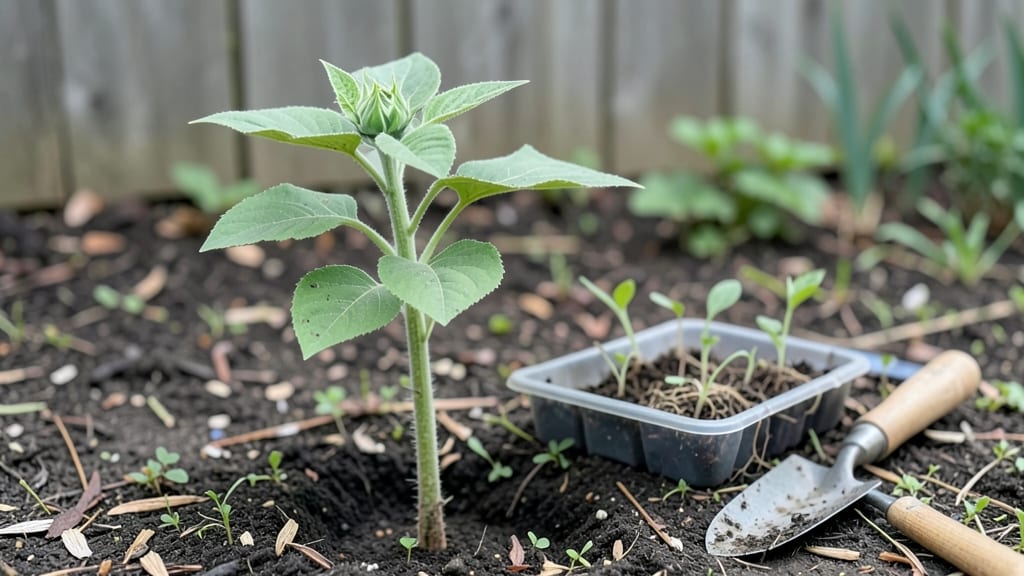
Planting sunflower plants starts with the right timing and a handful of simple steps that’ll have you watching towering blooms in just 90 days.
I’ve learned the hard way that sunflowers aren’t fussy, but they do need good soil, consistent water, and plenty of space to stretch their legs—otherwise, you’ll end up with lanky, floppy stems instead of proud, sun-catching giants.
The secret to happy sunflowers begins with well-draining soil (they hate soggy feet) and a sunny spot that gets at least 6-8 hours of direct light daily.
You can plant directly in the ground or in containers as long as they’re at least 12 inches deep—just make sure the roots have room to sink in.
Dig a hole twice as wide as the root ball but only as deep as the container it came in, then water thoroughly before backfilling.
Once planted, keep the soil evenly moist (not soggy) for the first few weeks, then let it dry slightly between waterings. Sunflowers drink deep, so a good soaking once a week is better than daily shallow watering.
Within 7-10 days, you’ll see those first true leaves unfurl—and by summer’s end, you’ll be snapping photos of blooms that reach your shoulders (or higher).
Pro tip: If you’re growing multiple plants, space them 18-24 inches apart to prevent crowding, which leads to weak stems. And if you’re in a cooler climate, start seeds indoors 2-3 weeks before the last frost for a head start.
The rest? Just stand back and watch nature do its magic.
📚 In This Guide
- What you need
- Instructions
- Tips and common mistakes
- Wrapping up and next steps
What you need
- ● Sunflower seeds: Choose Helianthus annuus varieties (e.g., ‘Mammoth’ for giants or ‘Teddy Bear’ for compact blooms). Buy 1–5 seeds per plant (or a seed packet for multiple plants).
- ● Well-draining potting mix or garden soil: 1–2 cubic yards (for in-ground planting) or 5–10 gallons (for containers). Mix in compost (1 part compost to 3 parts soil) for extra nutrients.
- ● Sunlight: A full-sun spot (6+ hours of direct sunlight daily)—no shortcuts here!
- ● Water: 1–2 gallons per plant during dry spells (sunflowers love hydration!).
- ○ Planting containers (optional but helpful): 5–7 gallon pots with drainage holes (if growing in containers).
- ● Garden trowel or hand shovel (for digging holes 1–2 inches deep).
- ● Gloves (to keep hands clean and protect from prickly stems).
- ● Watering can or hose with a gentle spray nozzle (avoid blasting seeds!).
- ○ Mulch (optional): 2–3 inches of straw or wood chips to retain moisture and suppress weeds.
- ○ Fertilizer (optional): A balanced 10-10-10 or low-nitrogen formula (follow package instructions).
- ● Wait until after the last frost date in your area (sunflowers hate cold!). Check your local frost dates.
- ● Test your soil’s pH (6.0–7.5 is ideal; adjust with lime or sulfur if needed).
- ● Space plants 12–24 inches apart (giant varieties need more room!).
Step-by-Step instructions for planting sunflower plants
Here's the straightforward method I use to grow sunflowers that reach their full towering potential.
Choose the Right Location and Prepare the Soil
Sunflowers thrive in full sun, so pick a spot that gets at least 6-8 hours of direct sunlight daily. The more sun, the taller and sturdier your stems will grow. I always test the soil by digging a 6-inch hole—if it feels compacted or clay-heavy, mix in 2-3 inches of compost to improve drainage and nutrient availability.
Loosen the soil to a depth of 12 inches with a garden fork or tiller. This prevents roots from struggling to spread. Sunflowers have deep taproots, so breaking up hardpan is key. If your soil is sandy, add a handful of organic matter like peat moss to help retain moisture without suffocating roots.
Plant Sunflower Starts at the Correct Depth and Spacing
Dig holes 1-2 inches deeper than the root ball of your sunflower starts. Gently remove the plant from its container and place it in the hole, ensuring the top of the root ball sits just below soil level. Press the surrounding soil firmly around the roots to eliminate air pockets, but avoid compacting it.
Space your sunflowers 18-24 inches apart in rows that are 2-3 feet apart. This gives them room to grow their massive leaves without competing for sunlight. For a dramatic display, I plant them in a grid pattern—it looks intentional and maximizes sunlight exposure for all plants. Water deeply right after planting to settle the soil and encourage root growth.
☀️ Step 3: Water and Maintain Consistent Care
Keep the soil evenly moist but not soggy for the first 2 weeks after planting. Sunflowers are drought-tolerant once established, but young plants need steady moisture to develop strong stems. Water at the base of the plant in the morning to allow foliage to dry quickly, reducing the risk of fungal diseases.
After the initial two weeks, water 1-2 times per week, depending on rainfall. You'll know they're getting enough water when the soil feels dry to the touch 1-2 inches below the surface. Overwatering is a common mistake—sunflowers hate wet feet and can develop root rot. Mulch around the base with 2-3 inches of straw or wood chips to retain moisture and suppress weeds.
✂️ Step 4: Support and Prune for Stronger Growth
As your sunflowers grow taller, they may need support, especially in windy areas. I stake the tallest varieties with 6-foot bamboo stakes tied loosely to the stem with soft fabric strips. This prevents snapping without restricting growth. Watch for side branches forming near the base—pinch these off early to direct the plant's energy upward.
If you notice yellowing leaves, it's often a sign of overwatering or nutrient deficiency. Feed your sunflowers with a balanced fertilizer (10-10-10) when they reach 12 inches tall. This boosts their growth during the critical flowering stage. Avoid fertilizing late in the season—it encourages weak stems that can't support heavy blooms.
⏰ Step 5: Harvest and Enjoy Your Giant Blooms
Sunflowers are ready to harvest when the back of the flower turns yellow and the petals begin to dry. Cut the stem 2-3 inches below the flower head with clean pruners. Hang them upside down in a dry, dark place for 1-2 weeks to fully dry. This preserves the seeds for planting next year.
For fresh flowers, harvest in the morning when the blooms are fully open. You'll know they're at peak freshness when the petals are vibrant and the center is tight. Enjoy them in bouquets or press them for artwork. The process from planting to blooming takes about 90 days, so plan ahead for a summer full of sunshine and color.
Tips & tricks for perfect sunflower planting
A few simple tricks will help you grow sunflowers that reach their full height and beauty. These are the lessons I've learned from years of planting these cheerful giants.
Sunlight Secret: In Step 1, when choosing your location, remember that sunflowers will follow the sun throughout the day. If you're planting near a fence or wall, position them so they face east to avoid shading each other. I've seen sunflowers grow 20% taller when given unobstructed morning sun—this is especially important in Step 3 when they're establishing their root systems.
Soil Prep Tip: For the 12-inch soil loosening in Step 1, don't just scratch the surface. Use your garden fork to break up compacted layers all the way down. I like to add a handful of bone meal to the planting hole—this gives them a phosphorus boost for strong roots and vibrant blooms. The bone meal breaks down slowly, providing nutrients exactly when your sunflowers need them most during the 90-day growth cycle.
Planting Depth Trick: When planting in Step 2, make sure the top of the root ball sits just below soil level—this prevents stem rot while encouraging strong root growth. I've found that pressing the soil firmly around the roots (but not compacting it) creates better soil contact, which helps the plants establish faster during those critical first two weeks mentioned in Step 3.
Watering Wisdom: In Step 3, when checking soil moisture, don't just look at the surface. Stick your finger 1-2 inches down—this is where the roots are actively growing. I water deeply in the morning to allow foliage to dry quickly, which prevents fungal diseases that can weaken your plants. The mulch layer helps maintain this moisture balance without creating soggy conditions.
Pro Tips for Plant A Sunflower Plant
- A few simple tricks will help you grow sunflowers that reach their full height and beauty.
- Sunlight Secret: In Step 1, when choosing your location, remember that sunflowers will follow the sun throughout the day.
- Soil Prep Tip: For the 12-inch soil loosening in Step 1, don't just scratch the surface.
Frequently asked questions
Got questions about growing sunflowers? Here are some of the most common concerns—and their answers—to help you grow a thriving sunflower patch with confidence!
When is the best time to plant sunflower seeds?
Sunflowers thrive in warm soil, so plant them after the last frost date in your area—typically mid-to-late spring (April–June in most U.S. zones). For a longer bloom season, you can also plant a second batch in early summer (6–8 weeks before your first frost). Just avoid planting in extreme heat (above 85°F), as it can stress seedlings.
How long does it take for sunflowers to grow?
From seed to full bloom, sunflowers typically take 80–100 days, depending on the variety. Dwarf sunflowers may bloom in as little as 50 days, while giant varieties (like ‘Mammoth’) can take up to 120 days. Pro tip: Check your seed packet for the exact days-to-maturity estimate!
What are common sunflower pests, and how do I prevent them?
Sunflowers are generally low-maintenance, but watch for aphids, sunflower moths, and bird damage. To deter pests:
- Use row covers for young plants.
- Spray neem oil or insecticidal soap on aphids.
- Hang reflective tape to scare birds away.
- Remove damaged leaves promptly.
How often should I water sunflowers?
Water sunflowers deeply 1–2 times per week (about 1–1.5 inches of water), especially during dry spells. Key times:
- Seedlings: Keep soil consistently moist (not soggy).
- Mature plants: Reduce watering slightly to prevent lodging (falling over).
- Drought tolerance: Once established, sunflowers handle dry spells well!
Can I grow sunflowers in containers?
Dwarf varieties (like ‘Teddy Bear’ or ‘Moulin Rouge’) thrive in 5-gallon containers or larger. Use well-draining potting mix and a support stake for taller types. Place containers in full sun (6+ hours/day) and water regularly. Bonus: Container sunflowers are perfect for balconies or small spaces!
Why aren’t my sunflower seeds germinating?
If seeds aren’t sprouting within 7–14 days, try these fixes:
- Check soil temperature—ideal range is 70–90°F.
- Ensure seeds are fresh (old seeds may lose viability).
- Plant deeper (1–2 inches) if soil is dry or rocky.
- Try soaking seeds overnight in warm water before replanting.
Wrapping up and next steps
Planting sunflowers is a rewarding journey that brings bright, cheerful blooms to your garden in just 90 days! With the right soil, spacing, and care, you’ll enjoy towering stems and vibrant faces that attract pollinators.
Now that you’re armed with tips and tricks, why not take the next step? Share your sunflower success with friends or explore advanced techniques—like companion planting—to maximize your garden’s potential. Happy growing! 🌻✨