
Flowers
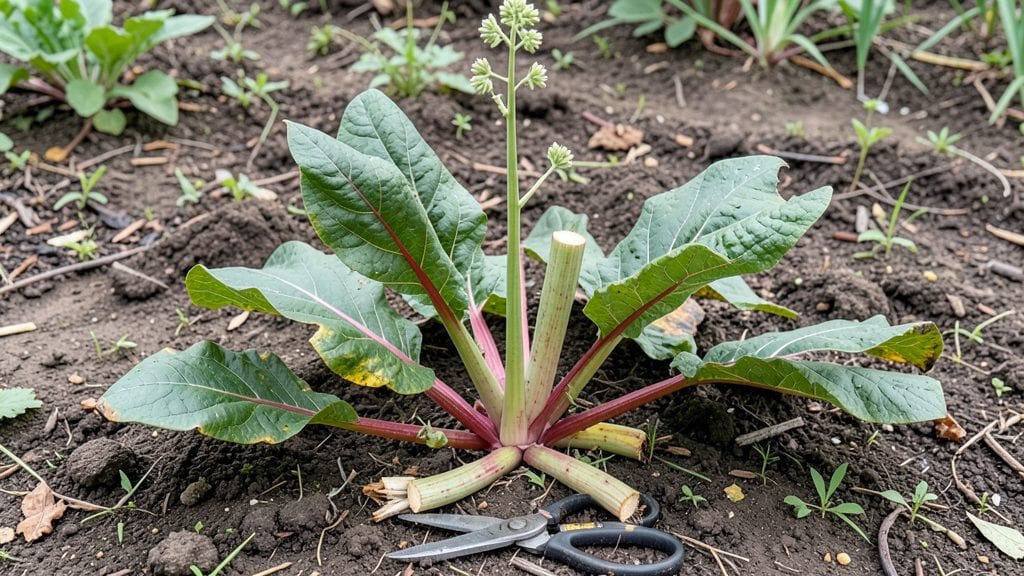
Removing rhubarb flower stalks before they elongate is the secret to bigger, sweeter leaves next season—something I learned after my first rhubarb plant produced just a handful of tiny stalks.
Those flower stalks might look pretty, but they drain energy your plant needs for leaf production, which is what you actually eat. The key is acting fast, before the stalks get thick and woody, or you'll struggle to cut them cleanly without damaging the crown.
You'll need just three simple tools: sharp pruners (to avoid tearing), gardening gloves (rhubarb sap can stain), and a small bucket (to collect the stalks). Timing matters—aim to remove stalks as soon as they appear in early spring, ideally when they're still 3-4 inches tall.
This gives your plant the full growing season to redirect energy into leaf growth instead of seed production. I like to do this on a dry morning when the stalks are firm and easy to grip.
After cutting, you’ll notice new shoots emerging within 10-14 days—a sure sign your rhubarb is recovering. To keep it thriving, water deeply after removal and side-dress with a balanced fertilizer (like 10-10-10) to replenish nutrients.
Mulch around the base with 2-3 inches of straw to retain moisture and protect the crown from temperature swings. The result? A plant that produces 2-3 times more leaves than one left to flower.
Here’s the golden rule: Never cut stalks after they’ve elongated—they’ll pull nutrients from the leaves, leaving you with a weak plant. And if you accidentally nick the crown while cutting, don’t panic—just trim the damaged area cleanly and keep the soil moist while it heals.
With this method, your rhubarb will reward you with bold, crisp stalks for years to come.
📚 In This Guide
- What you need
- Instructions
- Tips and common mistakes
- Wrapping up and next steps
What you need
- ● Pruning shears or sharp garden scissors – Choose bypass-style (clean cuts) with a 4- to 6-inch blade. Sterilize with rubbing alcohol before use to prevent disease spread. 🌱
- ○ Gloves (optional but recommended) – Heavy-duty gardening gloves to protect hands from thorns and sap. Nitrile-coated gloves work best for grip.
- ● Disposable gardening bag or bucket – A 5-gallon capacity for collecting flower stalks and debris. Line with a trash bag for easy disposal.
- ● Rubbing alcohol (70% isopropyl) or bleach solution – 1 part bleach to 9 parts water for sterilizing tools between cuts.
- ● Watering can or hose (with adjustable nozzle) – For post-pruning hydration to reduce plant stress.
- ● Hand pruners with ergonomic grips – Reduces hand fatigue during long sessions.
- ● Knee pads or a small stool – For comfort if your rhubarb patch is large.
- ● Compost bin access – Flower stalks can be composted (if disease-free).
- ● Plant food or compost tea – To revitalize the rhubarb after pruning.
Step-by-step instructions for removing rhubarb flower stalks
Here's how to keep your rhubarb plants strong and productive year after year.
Identify and Wait for the Right Time
Rhubarb flower stalks emerge in early spring as thick, upright stems that look like oversized asparagus. These are called "scape stalks," and they rob energy from your plant's leaf production—the part you actually harvest. Wait until these stalks are 4-6 inches tall before removing them. Cutting too early can stress the plant, while waiting too long drains its strength.
I like to check my rhubarb every 3-4 days starting in late April or early May, depending on your climate. The stalks will be firm and upright—never remove wilted or brown ones. This timing ensures you catch them before they flower, which would divert energy away from leaf growth.
Cut or Snap the Stalks Cleanly
Use clean, sharp pruning shears or your hands to remove the stalks at the base. If you're using shears, cut just above the soil line to avoid damaging the crown. For a cleaner break, grasp the stalk firmly about 2 inches from the base and snap it upward with a quick, decisive motion. You'll hear a satisfying crack—this is the sound of a job well done.
Don't pull the entire stalk out by its roots; this can harm the plant. The goal is to remove only the flower stalk while leaving the crown and leaf stalks intact. If you miss a stalk, don't worry—just remove it the next time you check. A few stalks won't ruin your harvest, but consistent removal keeps your plant healthier.
Monitor and Repeat as Needed
New flower stalks may appear 2-3 weeks after the first batch, especially in younger plants. Keep an eye out and remove them as soon as they reach 4-6 inches. I usually check my rhubarb plants once a week during the early growing season to stay on top of this. The more stalks you remove early, the more energy your plant will put into producing those sweet, tangy leaves you love.
After removing the stalks, give your rhubarb a light watering if the soil feels dry to the touch. This helps the plant recover and redirect its energy. Avoid heavy watering immediately after cutting, as this can lead to rot or fungal issues. Instead, water deeply 2-3 days later to encourage strong root growth.
Maintain Healthy Leaf Growth
Once all flower stalks are removed, focus on keeping your rhubarb well-watered and fertilized. A balanced 10-10-10 fertilizer applied in early spring and again after harvest encourages robust leaf production. Avoid over-fertilizing, as this can lead to excessive leaf growth at the expense of root development.
Harvest leaves carefully by cutting them at the base with a clean knife or shears. Leave at least half the leaves on the plant to ensure it can continue photosynthesizing and storing energy for next season. If you harvest too aggressively, your rhubarb may produce fewer leaves the following year.
Tips & tricks for perfect rhubarb flower stalk removal
These simple tricks will help you maintain a thriving rhubarb plant with minimal effort—and keep those delicious leaves coming back year after year.
The Timing Secret: I can't stress enough how important those 4-6 inches are when checking for removal. The stalks should be firm and upright—if they're already starting to flower, you've waited too long. I mark my calendar for 3-4 days intervals starting in late April because missing just one week can mean the difference between a healthy plant and one that's struggling to recover.
Tool Technique: Don't have pruning shears? Your hands work perfectly fine—just grasp the stalk about 2 inches from the base and give it a firm snap. The satisfying crack tells you it's done right. For shears, always cut just above the soil line to protect the crown. I keep a small pair in my gardening toolkit specifically for rhubarb maintenance because it makes the job so much cleaner.
Monitoring Strategy: Set a recurring reminder for once a week checks during early spring. New stalks often appear 2-3 weeks after the first batch, especially in younger plants. I like to do my checks in the morning when the stalks are firmest—this makes it easier to spot any new growth that might have appeared overnight.
Watering Wisdom: After removing stalks, resist the urge to give your rhubarb a big drink right away. Instead, wait 2-3 days before watering deeply. This prevents rot while allowing the plant to redirect its energy. I've seen too many gardeners overwater immediately after pruning, which can actually do more harm than good in this case.
Pro Tips for Remove Rhubarb Flower Stalk
- These simple tricks will help you maintain a thriving rhubarb plant with minimal effort—and keep those delicious leaves coming back year after year.
- The Timing Secret: I can't stress enough how important those 4-6 inches are when checking for removal.
- Tool Technique: Don't have pruning shears?
Frequently asked questions
Why should I remove rhubarb flower stalks?
Removing rhubarb flower stalks redirects the plant’s energy toward leaf and stalk growth instead of seed production. This ensures a more abundant harvest next season. Skipping this step can weaken your plant over time.
When is the best time to remove rhubarb flower stalks?
The ideal time is early spring before the flowers emerge or late summer after harvest. Avoid removing them during peak growing season (spring to early summer) to prevent stressing the plant.
What if I accidentally leave a flower stalk?
Don’t worry! A single missed stalk won’t ruin your harvest. Just remove it as soon as you notice it. Focus on consistency—most gardeners remove 90% of stalks to keep the plant healthy.
Can I still harvest rhubarb if flower stalks appear?
Yes! Flower stalks don’t affect edible stalk quality, but they do drain energy. Harvest as usual, but prioritize removing new flower buds to maintain vigor for future harvests.
What if my rhubarb plant isn’t producing flower stalks?
Young plants (under 2–3 years) may not flower yet. If an older plant skips flowering, it could signal stress (e.g., poor soil, overcrowding, or pests). Check for yellowing leaves or stunted growth and adjust care accordingly.
Wrapping up and next steps
Removing rhubarb flower stalks is a simple yet essential task to ensure your plant stays healthy and productive for years to come! By following the steps above—whether you’re cutting, pinching, or pulling—you’ll encourage lush leaf growth and a bountiful harvest next season. You’ve got this! 🌱
Now that you’re armed with the know-how, take a moment to inspect your rhubarb plant and act before the flowers fully bloom. Happy gardening! 🌸