Planting
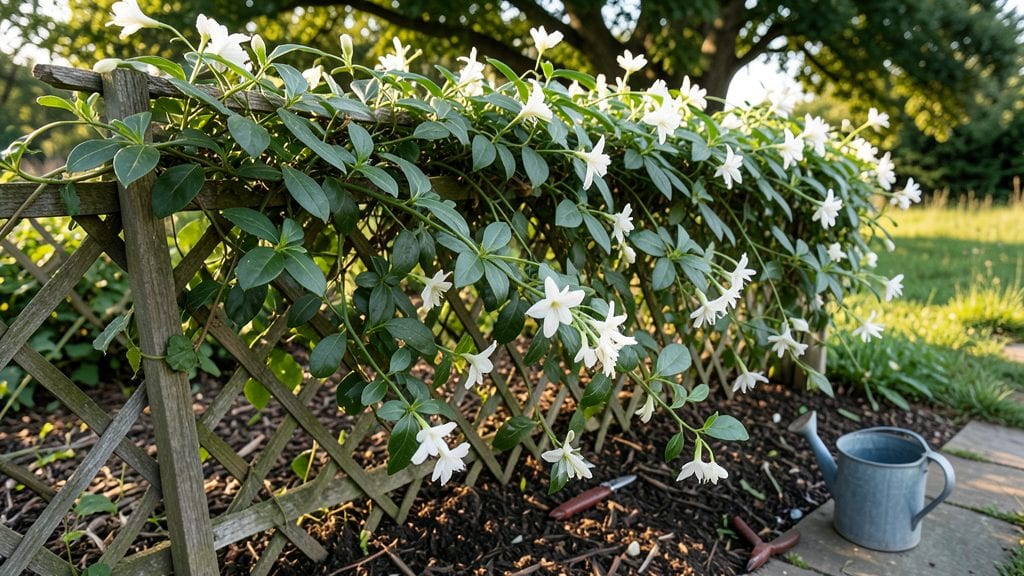
Growing a jasmine flower plant from seed unlocks a fragrant journey that starts with tiny sprouts and ends with fragrant clusters by summer. 🌱 I’ve nurtured jasmine vines that now climb my porch trellis, filling evenings with sweet perfume—no greenhouse or fancy tools required.
The secret lies in patience, the right soil mix, and understanding when to coax those delicate stems toward sunlight.
You’ll need well-draining soil, a spot with 6+ hours of morning sun, and a trellis or sturdy support—jasmine vines can grow 10+ feet if happy. Star jasmine and Confederate jasmine are the easiest beginners’ picks, but all varieties thrive with consistent moisture and occasional pruning to shape their growth.
The first blooms arrive in 3 months if you start seeds indoors in early spring.
What you’ll love most is that jasmine rewards small efforts: pinch back leggy stems early, fertilize lightly during bloom season, and watch those creamy-white flowers open night after night.
Even yellowing leaves or slow growth have simple fixes—like adjusting water or checking for pests. The payoff? A fragrant, low-maintenance vine that outshines store-bought florals.
Works for balconies, trellises, or even containers—just ensure drainage and winter protection in colder zones. Ready to grow yours? Let’s get those seeds started.
📚 In This Guide
- What you need
- Instructions
- Tips and common mistakes
- Wrapping up and next steps
What you need
- ● Jasmine seeds or cuttings: Seeds: 5–10 (for better germination odds, opt for Jasminum officinale or Jasminum sambac). Cuttings: 2–3 healthy, 4–6 inch stems (from a mature jasmine plant, with at least 2–3 leaf nodes).
- ● Potting soil: 1–2 gallons of well-draining, peat-based or cactus/succulent mix (sterilized to prevent pests).
- ● Containers: For seeds: 3–4 small pots (4–6 inches wide) with drainage holes. For cuttings: 1–2 small pots (4 inches wide) or a propagation tray.
- ● Drainage materials: Small pebbles, perlite, or broken terracotta pots (1–2 inches layer at the bottom of pots).
- ● Watering can or spray bottle (with a fine mist nozzle for seedlings).
- ○ Rooting hormone (optional but recommended for cuttings).
- ● Pruning shears or sharp scissors (for cutting stems at a 45° angle).
- ● Gloves (to protect hands from soil and sap).
- ● Plastic wrap or humidity dome (to retain moisture for seeds/cuttings).
- ● Grow lights or sunny windowsill (6+ hours of indirect light daily).
- ○ Fertilizer: Balanced liquid fertilizer (e.g., 10-10-10, diluted to half-strength). Slow-release granules (optional, for long-term growth).
- ● Support structure (e.g., trellis, bamboo stakes, or a small cage for climbing varieties).
- ● Epsom salt (1 tsp/month in water to boost magnesium).
- ● Compost tea or worm castings (for nutrient-rich soil).
- ● Mulch (e.g., shredded bark) to retain soil moisture.
- ● Pest control: Neem oil or insecticidal soap (preventative measure).
Step-by-step guide to growing jasmine from seed to blooming plant
Here’s how I’ve learned to coax fragrant jasmine blooms from tiny seeds—no green thumb required.
🌱 Step 1: Stratify Seeds for Successful Germination
Jasmine seeds need a cold period to break dormancy. Place seeds between two damp paper towels in a sealed plastic bag, then refrigerate for 4-6 weeks. Check weekly—if the towels dry out, mist them lightly. This mimics winter’s natural chilling process and ensures stronger seedlings.
After stratification, sow seeds ¼ inch deep in moist, well-draining potting mix. I use a small tray with drainage holes to prevent soggy soil. Keep the tray in a warm spot (70-75°F) until germination, which takes 3-6 weeks. Patience here pays off—rushing the process often leads to weak, slow-growing plants.
💧 Step 2: Provide Warmth and Humidity for Seedlings
Once sprouts emerge, move them to a sunny windowsill or under a grow light for 12-14 hours daily. Jasmine seedlings thrive in warmth but hate drafts. I place a small space heater near the tray at night to maintain 65°F minimum temperatures. Without consistent warmth, growth stalls.
Cover the tray with clear plastic wrap to retain humidity until the first true leaves appear. Mist the leaves lightly every 2-3 days—never let them dry out completely. You’ll know humidity is right when condensation forms on the plastic but doesn’t drip onto the soil.
☀️ Step 3: Transplant and Train for Bushier Growth
When seedlings have 3-4 sets of leaves (about 8-10 weeks after sowing), transplant them into 6-inch pots filled with a mix of potting soil and perlite (70/30 ratio). I pinch off the top set of leaves to encourage branching—this trick forces energy into lateral growth instead of one long stem.
Pinch again when new growth reaches 4-6 inches to promote a fuller, more fragrant plant. Jasmine blooms best when pruned this way. Place pots in bright, indirect light for the first week to reduce transplant shock. After that, gradually introduce morning sun to harden them off.
✂️ Step 4: Prune and Fertilize for Fragrant Blooms
By 3 months, your jasmine should be ready for its first major pruning. Trim back leggy stems by ⅓ to encourage denser foliage. I use clean, sharp scissors to make cuts just above a leaf node. Avoid cutting into old wood—new growth only comes from green stems.
Feed monthly with a balanced liquid fertilizer (10-10-10) diluted to half strength. Jasmine is light on nutrients but responds well to occasional fish emulsion for extra fragrance. Reduce watering slightly in winter—overwatering causes root rot, and jasmine blooms poorly when stressed.
🌿 Step 5: Support and Harvest for Long-Term Fragrance
As your jasmine grows, it may need a trellis or small stake to support climbing stems. I weave vines gently through a bamboo trellis to train them upward. This not only saves space but also improves airflow, reducing fungal risks.
Harvest blooms in the morning for peak fragrance. Snip stems just above a leaf node, leaving 2-3 buds to encourage future flowers. Store cuttings in water overnight to preserve their scent. With proper care, your jasmine will reward you with year-round blooms—just prune lightly after each flush to maintain shape.
Tips & tricks for perfect jasmine flower growth
Growing fragrant jasmine from seed is all about patience and precision—here’s how to avoid common pitfalls and maximize your success.
Stratification Precision: The 4-6 week cold treatment is non-negotiable for jasmine seeds. I’ve learned the hard way that skipping this step results in weak, slow-growing seedlings. Place a small dish of water in your fridge near the seeds to maintain humidity without over-saturating the towels. If condensation forms inside the bag, open it for 10 minutes to prevent mold—this keeps your seeds happy during their winter nap.
Lighting Strategy for Seedlings: Those critical 12-14 hours of daily light in Step 2 should be bright but indirect. I use a simple LED grow light on a timer rather than relying on windows, which can provide inconsistent light. Position the light 6-8 inches above seedlings and adjust as they grow. Too close = burnt leaves; too far = leggy stems. A south-facing window works in summer, but supplement with artificial light during shorter winter days.
Transplanting Technique: When your seedlings reach the 3-4 sets of leaves stage (around 8-10 weeks), handle them gently to avoid root damage. I fill the 6-inch pots with my soil-perlite mix first, then make a small hole with a pencil before placing each seedling. Water thoroughly after transplanting, but don’t let the soil stay soggy—jasmine roots need oxygen too. The pinch-off trick for branching works best when you remove just the top set of leaves, leaving at least 2-3 sets below.
Pruning Secrets: That first major pruning at 3 months should target stems that are growing too long or leggy. I always make cuts at a 45-degree angle just above a leaf node—this prevents water from pooling on the cut and reduces disease risk. For extra fragrance, trim back stems that have finished blooming after each flush. The plant responds by producing more side shoots, which means more flowers and more of that intoxicating scent.
Pro Tips for Jasmine Flower Plant
- Growing fragrant jasmine from seed is all about patience and precision—here’s how to avoid common pitfalls and maximize your success.
- Stratification Precision: The 4-6 week cold treatment is non-negotiable for jasmine seeds.
- Lighting Strategy for Seedlings: Those critical 12-14 hours of daily light in Step 2 should be bright but indirect.
Frequently asked questions
Got questions about growing your own jasmine plant? You’re not alone! Here are some of the most common queries—and their simple, foolproof answers—to help you cultivate fragrant blooms like a pro.
How long does it take for jasmine seeds to sprout?
Jasmine seeds can take anywhere from 2 to 4 weeks to sprout, depending on temperature and moisture. For faster germination, soak seeds in warm water for 24 hours before planting and keep the soil consistently moist (but not soggy). Patience is key—some varieties may take even longer!
Can I grow jasmine indoors, or does it need outdoor conditions?
Many jasmine varieties, like Jasminum officinale (common jasmine), thrive indoors with bright, indirect light (e.g., near an east- or west-facing window). Ensure good airflow and rotate the plant occasionally for even growth. Just avoid drafts or extreme heat/cold, which can stress the plant.
Why aren’t my jasmine flowers opening?
Jasmine flowers often stay closed due to lack of sunlight, poor airflow, or over-fertilizing. Move your plant to a sunnier spot (6+ hours of light daily) and prune lightly to encourage air circulation. Avoid heavy-handed fertilizing—jasmine prefers balanced, diluted feedings every 4–6 weeks during growing season.
What’s the best way to prune a jasmine plant?
Prune jasmine in early spring (before new growth) to shape the plant and encourage bushier blooms. Use clean, sharp shears to trim back 1/3 of the plant’s length, focusing on overcrowded or leggy stems. Deadhead spent flowers regularly to redirect energy into new growth—and more fragrant blooms!
Are there jasmine varieties that grow faster than others?
Yes! Jasminum polyanthum (star jasmine) and Jasminum sambac (Arabian jasmine) are among the fastest-growing varieties, often blooming within 3–6 months from seed (with proper care). For quicker results, opt for rooted cuttings or young nursery plants—these can flower even sooner!
Wrapping up and next steps
Growing a jasmine flower plant from seed is a rewarding journey that fills your space with intoxicating fragrance and natural beauty—all in just three months! 🌸 Whether you're a beginner or a seasoned gardener, these fragrant blooms are well worth the effort.
With the right materials, a little patience, and a dash of love, you’ll soon be enjoying lush vines and heavenly scents.
Ready to take the next step? Start with a seed today and watch your green thumb bloom—literally! Share your progress with fellow plant lovers or experiment with different varieties to create your own fragrant oasis. Happy growing! 🌱✨