Flowers
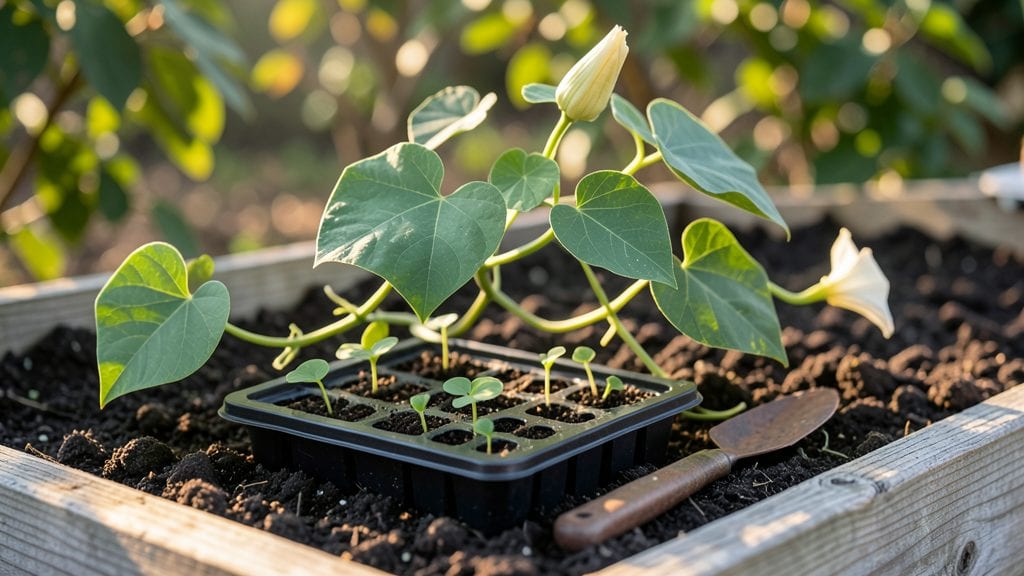
Moonflower seedlings in the Pacific Northwest can bloom faster than you’d expect—if you time it right. 🌙 I’ve grown them here for years, and the secret lies in mimicking their tropical roots while working with our cool, damp climate.
Most gardeners give up after two weeks of waiting, but with the right soil and warmth, those first leaves appear in just 7-10 days.
Their love for warmth is the trickiest part—these seedlings need soil that stays between 70-80°F to germinate. I use a heat mat under my seed trays in early spring, then move them to a sunny windowsill once they sprout.
Overwatering is the real enemy; keep the soil moist but never soggy, or you’ll risk damping-off, a fungal disease that wipes out seedlings overnight.
By midsummer, you’ll be rewarded with those iconic, fragrant white blooms that only open at night. The vines grow aggressively, so give them a strong trellis or let them climb a fence—they’ll cover it in weeks.
With proper care, you’ll have blooms by July, and the pollinators will thank you for the late-season nectar.
Works just as well from store-bought transplants if you’re short on time, but starting from seed gives you bigger, hardier plants by season’s end. Here’s how to get those first leaves popping through the soil without the usual PNW delays.
📚 In This Guide
- What you need
- Instructions
- Tips and common mistakes
- Wrapping up and next steps
What you need
- ● Moon flower seeds (Ipomoea alba) – 5–10 seeds (organic, non-GMO preferred for best results).
- ● Seed-starting mix – 2–3 cups of sterile, well-draining potting soil (avoid garden soil—it’s too dense!).
- ● Biodegradable seedling pots – 5–10 small pots (2–3 inches deep) or a seed tray with cells.
- ● Spray bottle – For gentle watering (avoid over-saturating seeds!).
- ● Clear plastic dome or plastic wrap – To create a mini greenhouse effect.
- ● Grow lights or sunny windowsill – 6–8 hours of light daily (south-facing window or LED grow lights work best).
- ● Heating mat – Speeds up germination (set to 75–80°F for optimal warmth).
- ● Humidity tray – Keeps moisture levels consistent under the plastic cover.
- ● Fertilizer – Balanced liquid fertilizer (5-5-5 or 10-10-10) for seedlings (dilute to half-strength!).
- ● Tweezers or toothpick – For carefully handling delicate seedlings.
- ● Journal or app – To track germination dates and growth milestones!
Step-by-step instructions for growing moon flower seedlings in the Pacific Northwest
Here’s how to get those delicate moonflower vines blooming quickly—even in our cooler, damp climate.
🌱 Step 1: Start Seeds Indoors at the Right Time
Moonflowers (Ipomoea alba) need a long growing season, so begin seeds indoors 8-10 weeks before your last frost date—typically mid-March in the PNW. Use biodegradable peat pots (3-4 inches deep) filled with sterile seed-starting mix to avoid damping-off. Press seeds ½ inch deep in warm, moist soil—just enough to cover them lightly.
Place pots in a seedling heat mat (70-75°F) to speed germination, which can take 14-21 days in our cooler homes. Keep the soil consistently damp but not soggy—moonflowers hate soggy roots. A humidity dome helps, but remove it once sprouts appear to prevent fungal issues.
☀️ Step 2: Provide Bright, Indirect Light for Strong Seedlings
Moonflowers need 12-14 hours of bright light daily—a south-facing window often isn’t enough. Supplement with a grow light (LED or fluorescent) held 2-3 inches above seedlings for the first 2 weeks. You’ll know they’re getting enough light when leaves are dark green and compact, not stretched or pale.
Rotate pots quarter-turn daily so seedlings grow straight instead of leaning. If stems grow leggy (too tall, thin), lower the light or increase exposure. Overwatering also causes legginess, so let the top inch of soil dry between waterings.
🌿 Step 3: Harden Off and Transplant After Frost
When seedlings have 3-4 true leaves (not just cotyledons), start hardening them off. Place pots outside in partial shade for 2 hours the first day, gradually increasing time over 7-10 days until they’re out all day. This toughens stems for our windy PNW springs.
Transplant after all frost risk has passed (usually late May in most of the PNW). Choose a sunny, sheltered spot with well-draining soil—moonflowers wilt easily in soggy ground. Bury stems deeper than the pot to encourage stronger root growth. Water deeply at planting to settle soil around roots.
✂️ Step 4: Train Vines and Prune for Fast Blooms
Moonflowers are fast growers—6-10 feet in a season—so provide a trellis or sturdy fence within 2 weeks of transplanting. Gently weave vines upward as they grow; never force them or you’ll snap tender stems. Prune yellow or damaged leaves regularly to redirect energy to blooms.
Pinch back new growth by ⅓ when vines reach 3-4 feet to encourage bushier, more productive plants. This is key for fast blooms—skipping it delays flowers by weeks. Deadhead spent blooms daily to keep vines producing new flowers all summer.
💧 Step 5: Water and Feed for Continuous Blooms
Moonflowers need consistent moisture—water deeply 2-3 times weekly (more in heatwaves) to keep soil evenly damp but not waterlogged. Mulch with 2-3 inches of straw to retain moisture and cool roots. In the PNW’s damp climate, overwatering is riskier than underwatering—let the top inch dry before watering again.
Fertilize every 2 weeks with a balanced liquid fertilizer (10-10-10) once blooms appear. Too much nitrogen = leafy vines, no flowers. Stop fertilizing 6 weeks before first frost to harden plants for fall. You’ll know you’re doing it right when vines burst with large, fragrant white blooms by midsummer.
Tips & tricks for perfect moon flower seedlings
Here's what I've learned from growing moonflowers in the PNW—these little tricks make all the difference in getting those dreamy blooms.
Heat Mat Hack: The 70-75°F heat mat is non-negotiable for PNW germination. I've tried starting seeds without it, and germination took nearly twice as long. Pro tip: Place a small thermometer on the heat mat to confirm you're hitting that sweet spot—our homes often run cooler than we think.
Lighting Strategy: That 12-14 hours of bright light requirement is tough to meet with just windows. I use a combination of a south-facing window and a simple LED grow light on a timer. The key is keeping the light 2-3 inches above seedlings—any higher and they'll stretch toward it. I set mine to turn on at 6am and off at 8pm automatically.
Harden Off Gradually: Don't rush the 7-10 day hardening off process! I learned this the hard way when a sudden windstorm flattened my seedlings. Start with just 2 hours in partial shade and increase by 30 minutes each day. Watch for any wilting—this is your cue to move them to more shade or bring them back inside temporarily.
Transplanting Tip: When transplanting after frost, bury those stems deeper than the pot—this encourages stronger root growth. I make a small trench around each seedling and gently fold soil over the lower stems. Water deeply right after to help settle the soil and eliminate air pockets around roots.
Pro Tips for Moon Flower Seedlings
- Here's what I've learned from growing moonflowers in the PNW—these little tricks make all the difference in getting those dreamy blooms.
- Heat Mat Hack: The 70-75°F heat mat is non-negotiable for PNW germination.
- Lighting Strategy: That 12-14 hours of bright light requirement is tough to meet with just windows.
Frequently asked questions
Got questions about growing moon flower seedlings? You’re not alone!
Here are answers to the most common concerns—from timing to troubleshooting—so you can get those dreamy blooms thriving in your Pacific Northwest garden.
How long does it take for moon flower seedlings to germinate?
Moon flower seeds (like Ipomoea alba) typically germinate in 7–21 days when kept warm (70–85°F) and moist. In the cooler PNW climate, use a heat mat or start indoors 4–6 weeks before your last frost date. Patience is key—some seeds may take longer, especially if soil temps dip below 60°F.
Can I plant moon flower seeds directly in the ground, or should I start them indoors?
Both work, but the PNW’s unpredictable spring makes indoor starts easier. Sow seeds ½ inch deep in pots 4–6 weeks before transplanting. If you direct-sow, wait until soil is at least 60°F and protect seedlings with row covers—frost will kill them! Harden off seedlings for 1–2 weeks before moving outside.
Why aren’t my moon flower seedlings sprouting? Troubleshooting tips!
Check these first:
- Cold soil: Moon flowers need warmth to germinate. Try a seedling heat mat or wait for warmer temps.
- Dry seeds: Soak seeds in warm water for 4–12 hours before planting to soften the hard outer shell.
- Low light: Place trays in a sunny window or under grow lights (12+ hours/day).
- Old seeds: Viability drops after 2–3 years. Test a few seeds in a damp paper towel to confirm germination.
What’s the best companion plant for moon flower seedlings?
Moon flowers thrive with fast-growing, low-competition companions like:
- Marigolds (pest-repellent)
- Sunflowers (provide shade for roots)
- Bush beans (fix nitrogen in soil)
How do I extend the blooming season for moon flowers in the PNW?
To enjoy moon flowers longer:
- Succession plant: Sow new seeds every 2–3 weeks from late spring to early summer.
- Choose early/late varieties: Some cultivars (like ‘Moonlight’) bloom slightly earlier or later.
- Deadhead spent blooms: Prune faded flowers to encourage more blooms.
- Protect from frost: Use row covers or move potted plants indoors at night if frost threatens.
Moon flowers are annuals in most of the PNW, so plan to replant yearly for continuous magic.
Wrapping up and next steps
Growing moon flower seedlings in the Pacific Northwest is totally doable with the right know-how—and now, you’ve got the secrets! 🌙 From selecting the perfect soil to mastering germination tricks, these steps will set you up for stunning blooms that’ll make your garden the talk of the neighborhood.
With patience and a little TLC, those delicate petals will soon light up your space like magic.
Ready to take the next step? Start with just a few seeds this season and watch your confidence (and blooms!) grow. Happy planting—your moonlit garden awaits! 🌱✨