Pruning
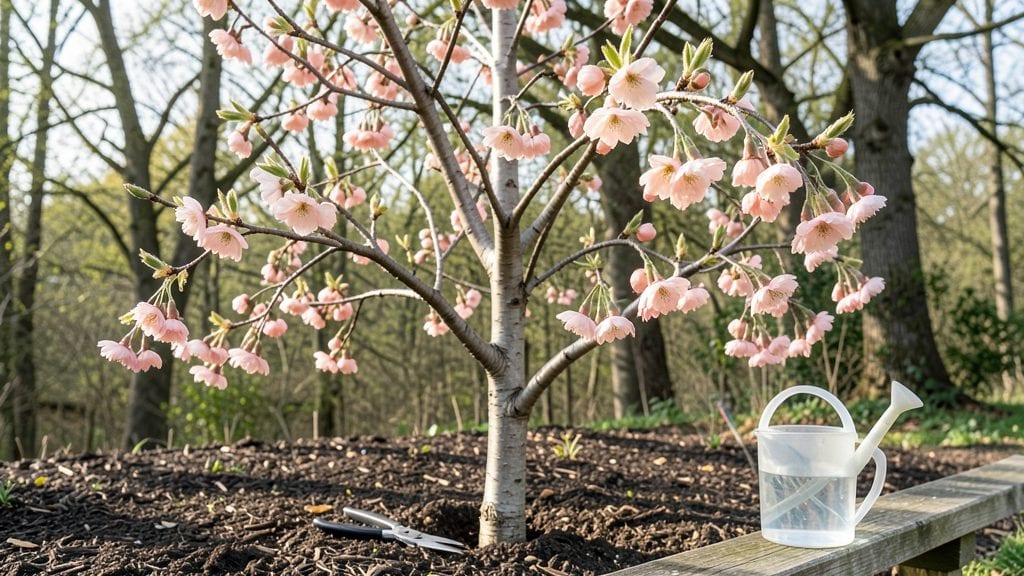
A peach-colored flowering tree turns your garden into a soft, dreamy retreat. 🌸 I fell for Cercis canadensis 'Forest Pansy' the moment I saw its blush-pink blooms—it’s the kind of tree that makes neighbors pause and take photos.
The secret to its charm isn’t just the flowers; it’s how it dresses up every season with velvety foliage and graceful branches.
This tree thrives in full sun to partial shade and handles most soil types, making it a foolproof choice for almost any yard. Plant it as a focal point near patios or entryways where its vibrant peach hues will steal the show.
Pair it with lavender, hostas, or ornamental grasses for a textured, layered look that feels effortlessly polished.
You’ll get spring blooms so dense they look like clouds of confetti, followed by heart-shaped leaves that deepen to burgundy in fall. Even in winter, the exfoliating bark adds subtle texture. The best part? It rarely needs pruning—just a light trim to shape it after flowering.
Works beautifully in small urban yards or as a statement piece in larger landscapes. For extra drama, plant two near a walkway—their mirrored blooms create a romantic, almost whimsical effect. Let’s make your garden the envy of the block!
📚 In This Guide
- What you need
- Instructions
- Tips and common mistakes
- Wrapping up and next steps
What you need
- ● Peach-colored flowering tree: 1 healthy sapling or mature tree (e.g., Prunus persica ‘Bonanza,’ Cercis canadensis ‘Forest Pansy,’ or Lagerstroemia ‘Natchez’ for peachy hues)
- ○ Optional: Pre-blooming variety for extended seasonal color
- ● Planting supplies: 1 high-quality organic compost (5–10 lbs, depending on pot size)
- ● 1 slow-release balanced fertilizer (10-10-10 or 20-20-20, 1 lb)
- ● 1 mulch (3–4 inches, shredded bark or pine straw)
- ● Pruning tools: 1 pair bypass pruners (for clean cuts on small branches)
- ● 1 pruning saw (for thicker branches, 8–10 inches)
- ● 1 sterilizing solution (rubbing alcohol or 10% bleach spray)
- ● 1 gloves (gardening or cut-resistant)
- ● Safety & maintenance: 1 ladder (if tree is mature, 6–10 ft extendable)
- ● 1 tree support stake (for young saplings, 1–2 inches in diameter)
- ● 1 watering can or hose (with adjustable nozzle)
- ● 1 tree growth regulator (e.g., paclobutrazol, for compact growth)
- ● 1 drip irrigation system (for consistent moisture, especially in drought-prone areas)
- ● 1 tree banding or protective wrap (to prevent sun scorch on young bark)
- ● 1 soil pH tester (to ensure ideal 6.0–7.0 range for flowering)
- ● 1 seasonal bloom extender (e.g., Epsom salt for magnesium boost)
Step-by-Step guide to planting and maintaining a peach-colored flowering tree
Transform your landscape with a stunning peach-blooming tree that thrives with minimal fuss.
🪴 Step 1: Choose the Right Location and Prepare the Soil
Select a spot with at least 6 hours of direct sunlight daily—most peach-colored flowering trees, like the ornamental peach or Japanese apricot, demand full sun for vibrant blooms. Avoid low-lying areas where cold air pools, as these trees are sensitive to late frosts. Test your soil’s drainage by digging a 12-inch hole; if water pools after 30 minutes, amend with 2-3 inches of organic compost or coarse sand to improve aeration.
Peach-colored bloomers prefer slightly acidic to neutral soil with a pH between 6.0 and 7.0. If your soil is heavy clay, mix in 1 part perlite to 3 parts native soil to prevent root rot. I always spread a 3-inch layer of mulch around the base (but not touching the trunk) to retain moisture and suppress weeds—just refresh it annually.
🌱 Step 2: Plant at the Correct Depth and Stake for Support
Dig a hole twice as wide as the root ball but only as deep. Position the tree so the top of the root ball sits 1-2 inches above ground level—this prevents soil from settling and smothering the trunk. Gently remove the tree from its container and tease out any circling roots with your fingers; these will strangle the plant if left intact.
Backfill with native soil mixed with 1/3 compost, tamping lightly every 2 inches to eliminate air pockets. Water deeply to settle the soil, then install a 4-5 foot stake at a 45-degree angle, tying the tree to it with a soft fabric strip (never wire—it cuts into bark). This supports young trees during windstorms, but remove the stake after 1-2 years once the root system stabilizes.
☀️ Step 3: Water Deeply and Establish a Consistent Irrigation Routine
Water the newly planted tree to a depth of 12 inches—this means the soil should stay moist down to your wrist when checked with your finger. For the first 2-3 months, water 2-3 times per week, adjusting based on rainfall. Overwatering is the fastest way to kill these trees; always let the top 2 inches of soil dry out between waterings.
Once established (after 1 year), reduce watering to once every 10-14 days unless experiencing extreme drought. Mature trees are drought-tolerant, but their peach-colored blooms will fade to pale pink if stressed. I set up a drip irrigation line at the drip line of the canopy to deliver water slowly at the root zone—this mimics natural rainfall and prevents fungal issues from overhead watering.
✂️ Step 4: Prune Only When Necessary to Encourage Healthy Growth
Peach-colored flowering trees bloom on new wood, so minimal pruning is key. Remove only dead, diseased, or crossing branches in late winter or early spring before buds swell. Use clean, sharp pruners to make cuts just outside the branch collar—the raised area where the branch meets the trunk—to prevent unsightly stubs.
Thin out crowded branches to improve airflow, aiming for an open, vase-like shape. Never remove more than 25% of the canopy in one season, or you’ll stress the tree and reduce next year’s blooms. I skip heavy pruning entirely unless a branch is dying—these trees reward patience with prolonged, abundant blooms when left alone.
🌿 Step 5: Fertilize Lightly and Monitor for Pests
Apply a balanced, slow-release fertilizer (10-10-10) in early spring, spreading it evenly over the root zone and watering it in. Avoid high-nitrogen fertilizers, which promote leafy growth at the expense of flowers. A ½ cup per inch of trunk diameter is plenty—too much fertilizer burns roots and attracts pests.
Watch for aphids or scale insects, which love the sweet sap of peach-colored bloomers. Spray infested branches with a soapy water solution (1 tsp mild dish soap per gallon of water) if you spot sticky residue (honeydew) on leaves. Healthy trees rarely need treatment, but I inspect mine weekly during bloom season—early intervention prevents outbreaks before they’re visible.
Tips & tricks for perfect peach-colored flowering trees
These simple strategies will help you coax vibrant blooms from your peach-colored flowering tree with minimal effort.
Sunlight Secret: That 6 hours of direct sunlight requirement in Step 1 is non-negotiable for those signature peach blooms. I've seen trees in partial shade produce pale, weak flowers—almost like a faded watercolor. If your yard doesn't get full sun, consider planting against a south-facing wall or fence where reflected light can boost exposure.
Drainage Test: The 30-minute drainage test in Step 1 is your first line of defense against root rot. I've learned this the hard way—once, I planted in heavy clay soil and lost a tree within months. If water doesn't drain within 30 minutes, mix in that 1 part perlite to 3 parts soil ratio until you see improvement. A simple test: Dig a 12-inch hole, fill with water, then time how long it takes to drain.
Mulch Matters: That 3-inch layer of mulch isn't just for looks—it's a moisture regulator and weed barrier. I always use wood chips or shredded bark because they break down slowly. Pro tip: Keep mulch 3 inches away from the trunk to prevent moisture buildup that invites fungal diseases. Refresh it annually to maintain that protective layer.
Watering Wisdom: The 12-inch watering depth in Step 3 means you're not just wetting the surface—you're encouraging deep root growth. I use a trowel to check moisture at that depth before watering again. For newly planted trees, I set a timer for 20-30 minutes per watering session to ensure proper saturation without overdoing it. Remember, those peach blooms need strong roots to support their beauty!
Pro Tips for Peach Colored Flowering Tree
- These simple strategies will help you coax vibrant blooms from your peach-colored flowering tree with minimal effort.
- Sunlight Secret: That 6 hours of direct sunlight requirement in Step 1 is non-negotiable for those signature peach blooms.
- Drainage Test: The 30-minute drainage test in Step 1 is your first line of defense against root rot.
Frequently asked questions
about peach-colored flowering trees—because every gardener deserves clarity! Here are answers to the most common questions to help you grow a stunning, low-maintenance tree.What’s the best time to plant a peach-colored flowering tree?
Plant in early spring or fall when temperatures are mild (50–70°F). Avoid extreme heat or frost, which can stress young roots. Container-grown trees can be planted year-round in mild climates, but spring is ideal for root establishment.
How much sunlight does this tree need for vibrant blooms?
Most peach-colored flowering trees thrive in full sun (6+ hours daily), but some varieties tolerate partial shade (4–6 hours). For the boldest hues, prioritize sun exposure—especially in cooler climates. Monitor leaves for pale yellowing if light is insufficient.
Can I prune anytime, or is there a best time?
Prune in late winter or early spring (before buds swell) to shape the tree and encourage blooms. Avoid heavy pruning in fall—it can stimulate new growth vulnerable to frost. Light trimming to remove dead branches is safe year-round.
Are peach-colored flowering trees cold-hardy?
Hardiness varies by species, but many (like Prunus cerasifera ‘New Dawn’) tolerate USDA Zones 5–9. Check your tree’s label! Mulch the base in winter and water deeply before the first freeze to protect roots. Evergreen varieties handle colder temps better.
What’s a good alternative if I can’t grow this tree?
Try these low-maintenance, colorful bloomers:
- Crabapple trees (white/pink blooms, Zone 4–8)
- Japanese maple (red/purple foliage, Zone 5–8)
- Dwarf lilac (fragrant purple blooms, Zone 3–8)
Do these trees attract bees or pests?
Yes! Their bright blooms attract pollinators (bees, butterflies), which is great for ecosystems. Pests like aphids or spider mites may appear—spray with water or neem oil if needed. Healthy trees with good airflow resist most issues.
Wrapping up and next steps
Transforming your garden with a peach-colored flowering tree is easier—and more rewarding—than you think! 🌸 These stunning beauties thrive with minimal pruning, offering vibrant blooms year-round while keeping maintenance simple. Whether you’re a seasoned gardener or just starting, their resilience and low-upkeep nature make them a dream addition.
Ready to elevate your outdoor space? Start small: Research the best variety for your climate, gather your tools, and take the first step toward a blooming oasis. Your future self—and your garden—will thank you!