
Flowers
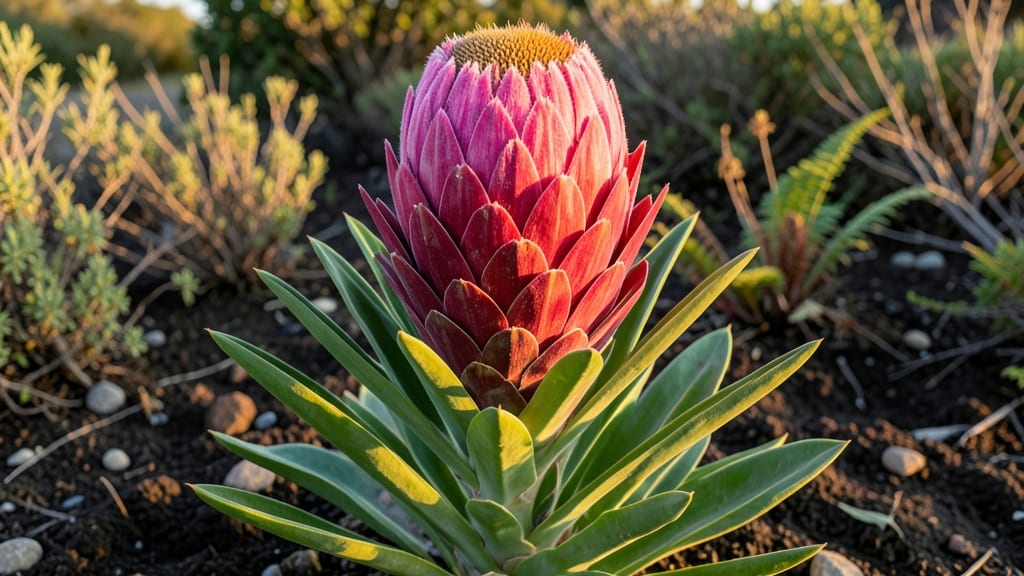
Growing pincushion flower proteas (Leucospermum spp.) in the Pacific Northwest means embracing their dramatic, velvety blooms and drought-tolerant nature—exactly what transforms a dry corner into a showstopper. 🌿 These South African natives thrive in our region’s mild summers and cool winters, but they demand well-draining soil and full sun to prevent those stunning flowers from wilting before they open.
I’ve learned the hard way that soggy roots are their kryptonite, so I’ll show you how to mimic their natural habitat with minimal fuss.
The secret lies in three simple adjustments: amending heavy clay soil with gritty materials like perlite or pumice, planting in slightly acidic conditions (pH 5.0-6.5), and watering only when the top inch of soil feels bone-dry.
Container growing works beautifully here—just use pots with drainage holes and a fast-draining mix of cactus soil and sand. Pruning after blooms encourages bushier growth, and these plants reward patience with bold, long-lasting flowers that last from summer through fall.
What you’ll love most is how low-maintenance they become once established—no fertilizing, no fussing, just occasional deadheading to keep them tidy. In my garden, they’ve survived three consecutive summers with almost no care, proving they’re the perfect choice for gardeners who want drama without the daily upkeep.
The key is getting them off to the right start, and I’ve got you covered with step-by-step guidance.
Whether you’re planting in the ground or containers, these proteas adapt well to the PNW’s mild, wet winters and dry summers, making them a standout for coastal and inland gardens alike.
Let’s get those roots settled so you can enjoy blooms that turn heads—and maybe even neighbor-jealousy levels—all season long.
📚 In This Guide
- What you need
- Instructions
- Tips and common mistakes
- Wrapping up and next steps
What you need
- ● Pincushion protea seeds or nursery-grown plants: Choose disease-free, healthy seedlings or seeds from a reputable supplier. Pro tip: 💡 Start with 3-5 plants to experiment before scaling up!
- ● Well-draining soil mix: 50% peat moss or coco coir (for moisture retention)
- ● 30% perlite or coarse sand (for aeration)
- ● 20% compost or worm castings (for nutrients)
- ● Large containers or raised beds: Use 12-18 inch deep pots with drainage holes or a sandy, acidic soil bed (pH 4.5-6.0).
- ● Slow-release fertilizer: A balanced 10-10-10 or acid-loving plant fertilizer (e.g., Miracle-Gro Azalea, Camellia, & Rhododendron).
- ● Mulch: Pine bark or wood chips (2-3 inches) to retain moisture and acidify soil.
- ● Drip irrigation or spray bottle: Proteas hate soggy roots—keep soil consistently moist but not waterlogged.
- ● Pruning shears: Sharp, sterilized shears for trimming dead blooms or overgrowth.
- ● Frost cloth or row covers: Protect young plants from light frosts (below 28°F/-2°C).
- ○ Greenhouse or cold frame: Optional but helpful for winter overwintering in colder PNW zones (USDA 7-9).
- ○ Acidifier (optional): Aluminum sulfate or sulfur to adjust soil pH if needed.
- ● 🌡️ Test your soil pH—proteas are fussy about acidity! Aim for 4.5-6.0.
- ● 🔥 Avoid tap water with high chlorine—use rainwater or distilled water instead.
- ● 🎯 Plant in full sun (6+ hours/day) but provide afternoon shade in hot summers.
Step-by-step instructions for cultivating pincushion flower protea
Here's how I grow these striking proteas in the Pacific Northwest—where cool summers and wet winters demand special care.
🌱 Step 1: Select and Prepare the Right Soil Mix
Proteas refuse soggy roots, so I blend 50% coarse sand with 50% well-draining potting mix—never garden soil. The sand mimics their natural, rocky South African habitat. Add a handful of perlite to prevent compaction. Test your mix by squeezing a handful: it should crumble easily when dry, never stay clumpy.
Acidic soil is critical—aim for pH 4.5-5.5. If your mix isn't acidic enough, stir in sphagnum peat moss (about 20% of the total volume). I always test my soil with a pH meter before planting; proteas turn yellow and drop buds in alkaline conditions. For containers, use 10-12 inch pots with drainage holes—these plants hate wet feet.
☀️ Step 2: Position for Maximum Sunlight and Shelter
Pincushion proteas need full sun (6+ hours daily)—but in the PNW, that means south-facing exposure with afternoon shade in summer. I place mine against a south wall where they get morning sun and afternoon breeze. If growing in containers, move them to a sheltered spot during winter rains to prevent root rot.
Watch for leaf scorch—if edges turn crispy, they're getting too much midday sun. A 50% shade cloth during peak afternoon (1-4 PM) works wonders. In containers, rotate pots weekly so stems grow straight toward the light, not lopsided.
💧 Step 3: Water Deeply and Establish a Routine
Water only when the top 2 inches of soil feel dry—proteas store water in their stems, so frequent light watering encourages weak roots. I use a moisture meter to avoid guesswork. When watering, soak until it drains freely from the bottom, then empty the saucer to prevent soggy roots.
In winter, cut back to watering every 10-14 days unless pots dry out faster. Overwatering is the #1 killer—you'll see yellowing leaves or mushy stems as warning signs. Mulch with 2 inches of gravel or bark to keep roots cool and reduce evaporation.
✂️ Step 4: Prune for Shape and Encourage New Growth
Prune right after flowering (late spring) to shape the plant and encourage next year's blooms. Use clean, sharp shears to cut back 1/3 of the oldest stems at the base. Avoid cutting into old wood—proteas bloom on new growth, so always trim just above a leaf node.
Remove dead or diseased branches immediately—they spread fungal issues fast. I also snip off spent flower heads to redirect energy into new buds. Never prune in fall; the plant needs all its strength to harden off for winter. After pruning, fertilize lightly with acid-loving plant food to support recovery.
🪴 Step 5: Winterize for Pacific Northwest Conditions
Proteas are semi-evergreen but need protection from PNW's wet winters. Wrap containers in burlap and move to a sheltered spot (like a garage with ventilation). If planted in the ground, mound 4-6 inches of bark mulch around the base to insulate roots. Avoid plastic wraps—they trap moisture and cause rot.
Check soil moisture monthly in winter; proteas go dormant but still need occasional watering if pots dry out. Watch for gray mold on stems—this means humidity is too high. If you see it, trim affected areas immediately and improve airflow by spacing plants 12+ inches apart.
Tips & tricks for cultivating stunning pincushion proteas
These pro tips will help you coax vibrant blooms from your proteas—even in the challenging Pacific Northwest climate.
Soil Mix Secret: When mixing your 50% sand and 50% potting blend, I add a pinch of sulfur granules to naturally lower pH—it's a game-changer for maintaining that critical 4.5-5.5 range. Think of it as insurance against alkaline soil that causes those dreaded yellow leaves. For containers, I use terracotta pots instead of plastic—they breathe better and help regulate moisture.
Sunlight Strategy: The PNW's summer sun can be deceptive—what feels like gentle light can actually cause leaf scorch. I test my plants' sun tolerance by observing their leaves at midday. If you notice crispy edges by 1 PM, it's time to move them under that 50% shade cloth for the afternoon. Rotating your pots weekly isn't just about aesthetics—it ensures even growth and prevents lopsided plants that lean toward the light source.
Watering Wisdom: That moisture meter is your best friend, but here's what I watch for: in summer, my proteas need watering every 3-4 days when the top 2 inches feel dry, while winter's 10-14 day schedule can stretch to 3 weeks if the pot stays cool. The key is to water deeply until it drains completely—this mimics their natural summer drought periods. I always empty saucers immediately to prevent the very problem we're trying to avoid: soggy roots.
Pruning Precision: When you're cutting back those oldest stems in late spring, look for the leaf node—it's that little bump where leaves attach. Trim just above it at a 45-degree angle to prevent water pooling. I use sterilized shears and wipe them with rubbing alcohol between cuts to prevent spreading any potential fungal spores. This is also the perfect time to remove any stems that are thinner than a pencil—they won't produce quality blooms.
Pro Tips for Pincushion Flower Protea
- These pro tips will help you coax vibrant blooms from your proteas—even in the challenging Pacific Northwest climate.
- Soil Mix Secret: When mixing your 50% sand and 50% potting blend, I add a pinch of sulfur granules to naturally lower pH—it's a game-changer for maintaining that critical 4.5-5.5 range.
- Sunlight Strategy: The PNW's summer sun can be deceptive—what feels like gentle light can actually cause leaf scorch.
Frequently asked questions
Got questions about growing pincushion flower protea in your Pacific Northwest garden? You’re not alone! Here are some of the most common queries—and their answers—to help you nurture these stunning blooms with confidence.
How cold can pincushion protea handle in the PNW?
Pincushion protea (Leucospermum spp.) thrive in USDA Zones 7b–10b, but the PNW’s chilly winters (especially in Zone 7a) can be tricky. While mature plants tolerate brief dips to 15–20°F, young plants or severe freezes may need protection like frost cloth or container relocation. In Zone 7a, grow them in containers for winter moves indoors or under cover.
When is the best time to plant pincushion protea in the PNW?
Plant in early spring (March–April) after the last frost, or in late summer (August–September) to avoid winter stress. The PNW’s mild summers give them time to establish roots before cooler weather. Container-grown plants can also be planted year-round, but avoid transplanting during heatwaves (above 85°F).
How often should I water pincushion protea?
These drought-tolerant beauties hate soggy soil—water deeply 1–2 times per week in summer, letting the top 2–3 inches of soil dry out between waterings. In the PNW’s rainy seasons (fall/winter), reduce frequency to once every 2–3 weeks unless planted in well-draining containers. Mulch lightly to retain moisture without suffocating roots.
Are pincushion protea prone to pests in the PNW?
Generally pest-resistant, but watch for aphids, spider mites, or scale in dry conditions. Treat infestations early with neem oil or insecticidal soap. Snails/slugs may target young plants—use copper barriers or diatomaceous earth. Fungal issues (like root rot) are rare if soil drains well, but avoid overhead watering to prevent mildew.
Can I grow pincushion protea in containers, and what soil should I use?
Containers work great for PNW climates, especially in colder zones. Use a fast-draining mix of 50% gritty soil (like cactus mix), 30% peat/pine bark, and 20% perlite or pumice. Ensure pots have drainage holes and choose terracotta or fabric pots for airflow. Size up: 1–2 gallons for young plants, 5+ gallons for mature protea.
Wrapping up and next steps
The pincushion flower protea is a stunning, low-maintenance gem that thrives in the Pacific Northwest’s unique climate—just as long as you give it the right care! With well-draining soil, bright sunlight, and a little patience, you’ll be rewarded with show-stopping blooms that bring bold color and texture to your garden.
Whether you’re a seasoned gardener or just starting out, this resilient plant makes it easy to grow something extraordinary.
Ready to transform your outdoor space? Start by picking your favorite protea variety and follow the steps above—your future garden centerpiece is just a few seasons away! 🌸✨