Flowers
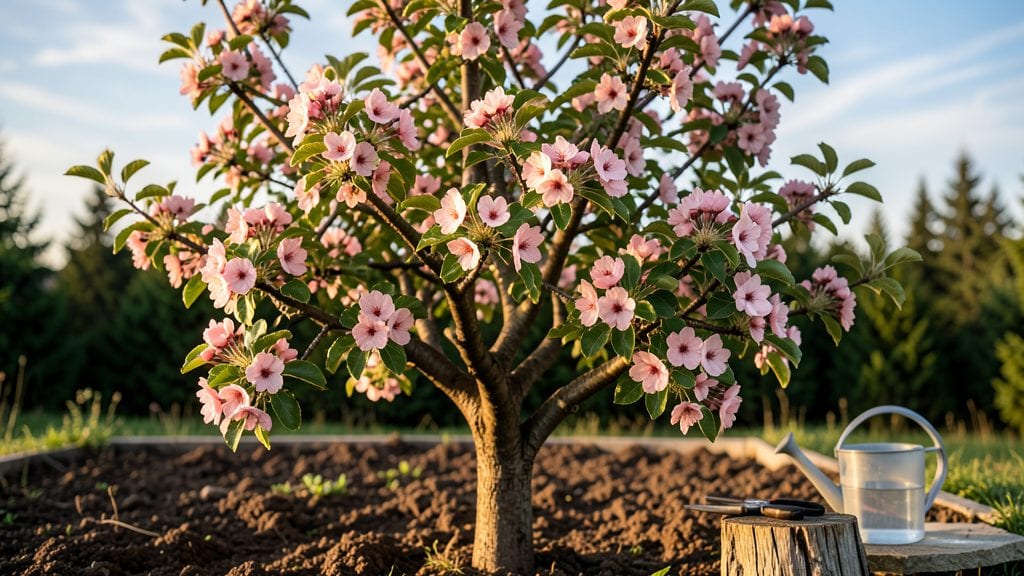
Pink Lady apple trees burst into vibrant pink blossoms every spring, signaling the start of your harvest—but getting those flowers to translate into fruit takes the right timing, care, and a few Pacific Northwest-specific tricks.
I’ve grown Pink Ladies for years in my Zone 7 garden, and the difference between a tree loaded with blossoms and one that barely sets fruit comes down to understanding their pollination quirks and seasonal needs.
Here’s the secret: Pink Lady apples need cross-pollination from another variety like Gala or Fuji, and their blossoms are sensitive to late frosts—so planting a second compatible tree and protecting early flowers is non-negotiable. The payoff?
Those pink blooms turn into crisp, sweet fruit with a signature tang that’s worth the extra effort. Even in rainy PNW winters, these trees thrive with the right soil prep and pruning schedule.
By late winter, you’ll spot the first rosy buds forming—this is your cue to start monitoring frost forecasts and adjusting watering. A well-pruned tree in early spring directs energy into blossoms, not excess foliage, and a light mulch keeps roots cool during heatwaves.
When those flowers open, you’ll know you’re on track for a harvest that’ll have neighbors asking for cuttings.
Troubleshooting poor flowering? Often it’s over-fertilizing with nitrogen or inconsistent watering—both send the tree into leafy growth instead of reproductive mode. The PNW’s damp climate also invites fungal issues like apple scab, so proactive sprays (or copper-based treatments) in early spring are key.
With these adjustments, your Pink Lady will reward you with years of reliable blossoms—and fruit.
📚 In This Guide
- What you need
- Instructions
- Tips and common mistakes
- Wrapping up and next steps
What you need
- ● Pink Lady apple tree (Malus domestica 'Pink Lady') – Choose a dwarf or semi-dwarf variety (4–6 ft tall) for smaller gardens. Ensure it’s cold-hardy (Zones 5–8).
- ● Well-draining soil – Aim for a mix of 60% topsoil, 30% compost, and 10% perlite/sand (pH 6.0–7.0). Test soil moisture before planting!
- ● Sunlight access – A full-sun spot (6+ hours/day) with afternoon shade (to protect from PNW heat).
- ● Watering can or hose with adjustable nozzle – Deep watering (1–2 gallons per tree, 2–3x/week) is key, especially in drought-prone areas.
- ● Organic mulch (wood chips or straw) – 2–3 inches to retain moisture and regulate temperature.
- ● Pruning shears (sterilized) – Sharp, bypass-style shears (for clean cuts) and hand pruners for small branches.
- ● Fertilizer – Balanced 10-10-10 (spring) + citrus-specific fertilizer (fall) for blooms.
- ● Garden gloves – Heavy-duty, nitrile-coated for thorn protection.
- ● Soil pH tester kit – Adjust with lime (to raise pH) or sulfur (to lower) if needed.
- ○ Drip irrigation system – Optional but ideal for consistent moisture in PNW’s variable climate.
- ● Tree support stake & ties – Use if planting a young sapling in windy areas.
- ● Pest control (neem oil, horticultural oil) – For aphids, codling moths, or apple scab (common in PNW).
- ● Flower pollinator attractants – Plant companion flowers (e.g., lavender, thyme) nearby to boost pollination!
Step-by-step guide to cultivating Pink Lady apple trees in the Pacific Northwest
Here’s how to grow this cold-hardy, flavorful variety with minimal fuss—ideal for our region’s unique climate.
Select the Right Location and Prepare the Soil
Pink Lady apples thrive in full sun—choose a spot that gets at least 6-8 hours of direct sunlight daily. In the Pacific Northwest, this often means a south- or west-facing slope where frost pockets don’t linger. Avoid low-lying areas where cold air settles, as even Pink Lady’s cold hardiness has limits.
Test your soil’s pH—it should be between 6.0 and 6.5 for optimal fruit production. If your soil is too acidic, amend it with lime before planting. Work in 3-4 inches of well-composted organic matter (like the 4 cubic yards of compost you’ll need for four trees) to improve drainage and fertility. Pink Lady trees are heavy feeders, so rich soil prevents stunted growth or poor fruit set.
Plant at the Correct Depth and Stake for Support
Dig a hole twice as wide as the root ball but no deeper—this prevents soil compaction around the roots. Place the tree so the graft union (the bump where the scion meets the rootstock) sits 2-3 inches above the finished soil line. This protects it from moisture-related rot while allowing flexibility for seasonal soil shifts.
Backfill with native soil mixed with a balanced organic fertilizer (like 10-10-10) to encourage early root establishment. Stake the tree only if needed—Pink Lady’s semi-dwarf rootstock is sturdy, but young trees benefit from temporary support in windy PNW sites. Use two stakes driven 12 inches apart and tie the trunk loosely with rubber tree ties (not wire, which can girdle the bark).
Water Deeply and Mulch to Retain Moisture
Water immediately after planting, soaking the root zone to 12-18 inches deep. In the Pacific Northwest’s damp climate, overwatering is less of a risk, but consistent moisture is critical during the first two growing seasons while roots establish. Use a soaker hose to deliver water slowly at the base—avoid wetting the foliage to prevent fungal diseases like apple scab.
Apply 3-4 inches of wood chips or straw mulch around the tree, keeping it 6 inches away from the trunk to prevent rot. Mulch retains moisture, regulates soil temperature, and suppresses weeds—essential in our region’s wet winters and dry summers. Replenish mulch annually as it breaks down.
Prune for Airflow and Fruit Development
Prune in late winter or early spring (before buds swell) to shape the tree and encourage strong scaffold branches. Remove dead, crossing, or inward-growing branches first—these compete for energy and reduce airflow, increasing disease risk. Aim for an open-centered canopy with branches spaced 12-18 inches apart to maximize sunlight penetration.
Thin out water sprouts (vigorous vertical shoots) and suckers (shoots from the base) regularly. Pink Lady trees are prone to biennial bearing (alternating heavy and light fruit years), so prune to reduce alternate bearing by promoting a balanced structure. Leave 3-4 main branches for semi-dwarf trees to maintain manageable size.
Fertilize and Monitor for Common PNW Pests
Apply a slow-release organic fertilizer (like 10-10-10) in early spring and again after harvest. Avoid high-nitrogen fertilizers late in the season—they encourage tender new growth that’s vulnerable to frost. In the Pacific Northwest, codling moths and apple maggots are persistent pests. Use row covers for young trees and pheromone traps in summer to disrupt mating cycles.
Watch for apple scab, a fungal disease common in our damp climate. Space trees properly, prune for airflow, and apply copper fungicide preventatively in spring. If you notice yellowing leaves, it could signal iron deficiency—common in alkaline soils. Test soil again and amend with chelated iron if needed.
Tips & tricks for perfect Pink Lady apple tree cultivation
Growing Pink Lady apple trees in the Pacific Northwest requires a few key strategies to overcome our region's unique challenges. These tips will help you avoid common pitfalls and maximize fruit production.
Sunlight Strategy for PNW Gardens: While the instructions specify 6-8 hours of sunlight, I've found that in cloudy PNW summers, you may need to supplement with a south-facing wall or reflective surface to boost light exposure. Pink Lady trees actually perform better with direct sunlight for at least 5 hours daily—even on overcast days—so monitor light levels carefully, especially in the first two growing seasons when roots are establishing.
Soil Preparation Secret: The recommended 3-4 inches of compost is a great start, but for our region's acidic soils, I recommend adding 1 part peat moss to every 3 parts compost before mixing into the soil. This creates the ideal 6.0-6.5 pH range while improving moisture retention. Test your soil annually—PNW soils can shift pH unexpectedly due to our wet winters and dry summers.
Planting Depth Visual Cue: When positioning your tree so the graft union sits 2-3 inches above soil level, use this trick: Hold the tree at arm's length and align the graft union with your elbow's natural bend point. This ensures consistent placement every time. The graft union's height above soil prevents moisture-related rot while allowing flexibility for seasonal soil movement.
Pruning Technique for Biennial Bearing: To combat Pink Lady's tendency toward biennial bearing, incorporate heading cuts during your late winter pruning—cut back 3-4 inches from the tips of scaffold branches. This stimulates branching and encourages more consistent fruit set. Remember to remove any branches growing toward the center of the tree first, as these create shaded areas where fungal diseases thrive.
Pro Tips for Pink Lady Apple Flower
- Growing Pink Lady apple trees in the Pacific Northwest requires a few key strategies to overcome our region's unique challenges.
- Pink Lady trees actually perform better with direct sunlight for at least 5 hours daily—even on overcast days—so monitor light levels carefully, especially in the first two growing seasons when roots are establishing.
- Soil Preparation Secret: The recommended 3-4 inches of compost is a great start, but for our region's acidic soils, I recommend adding 1 part peat moss to every 3 parts compost before mixing into the soil.
Frequently asked questions
Got questions about growing Pink Lady apple flower blooms in your Pacific Northwest garden? You’re not alone! Here are answers to the most common queries—from timing to troubleshooting—to help your orchard thrive.
When do Pink Lady apple flowers bloom in the PNW?
Pink Lady apple trees typically bloom in late April to early May in the Pacific Northwest, depending on frost dates. Warmer microclimates (like urban areas) may see blooms 1–2 weeks earlier. Monitor local frost forecasts—late frosts (<28°F) can damage buds, so consider frost cloth if needed.
How do I encourage more flowers (and fruit) on my Pink Lady tree?
Pink Lady trees need cross-pollination—plant a compatible variety (like ‘Granny Smith’ or ‘Fuji’) within 50 feet. Prune in late winter to open the canopy for sunlight, and fertilize in early spring with low-nitrogen, high-phosphorus (e.g., 10-20-10) to boost blooms. Avoid heavy nitrogen—it promotes leaves over flowers!
Why aren’t my Pink Lady apple flowers turning into fruit?
Common culprits:
- Poor pollination: Hand-pollinate with a paintbrush if bees are scarce.
- Thinning needed: Overloaded branches drop fruit early—thin clusters to 6–8 inches apart.
- Environmental stress: Drought, extreme heat (>90°F), or frost can cause flower drop.
Can I grow Pink Lady apples from seed? Will the flowers match?
Nope! Seeds produce wild, unpredictable trees with different flowers/fruit. For true Pink Lady blooms (and apples!), graft a certified nursery tree or propagate via whip-and-tongue grafting in late winter. Grafting ensures the iconic pink-pinkish-white flowers and crisp fruit.
Are Pink Lady apple flowers frost-sensitive? How do I protect them?
Yes! Buds open at 40–50°F, and frost (<32°F) can kill them. Use these tricks:
- Frost cloth: Drape over branches before sunset on frost-watch nights.
- Windbreaks: Plant near a fence or evergreen hedge to reduce wind chill.
- Overhead sprinklers: Run water (1/4 inch/hour) to create insulating ice.
What’s a cold-hardy alternative if Pink Lady struggles in my zone?
Try these PNW-friendly apple varieties with reliable blooms and fruit:
- ‘Enterprise’: Disease-resistant, red-pink flowers, thrives in zones 4–8.
- ‘Liberty’: Fire blight-resistant, white-pink blooms, great for containers.
- ‘Cox’s Orange Pippin’: Classic pink flowers, cold-hardy to zone 5.
Wrapping up and next steps
Growing Pink Lady apple flowers in the Pacific Northwest is a rewarding journey—whether you’re dreaming of vibrant blooms or sweet harvests!
These cold-hardy varieties thrive with the right care, from well-draining soil to strategic pruning. Remember, patience is key: your efforts will soon be rewarded with stunning blossoms and crisp, flavorful apples.
Ready to take the next step? Start small—plant a single tree or a few saplings in your garden today! If you’re feeling adventurous, explore companion planting or grafting techniques to expand your orchard. Happy growing! 🌱🍎