
Transplanting
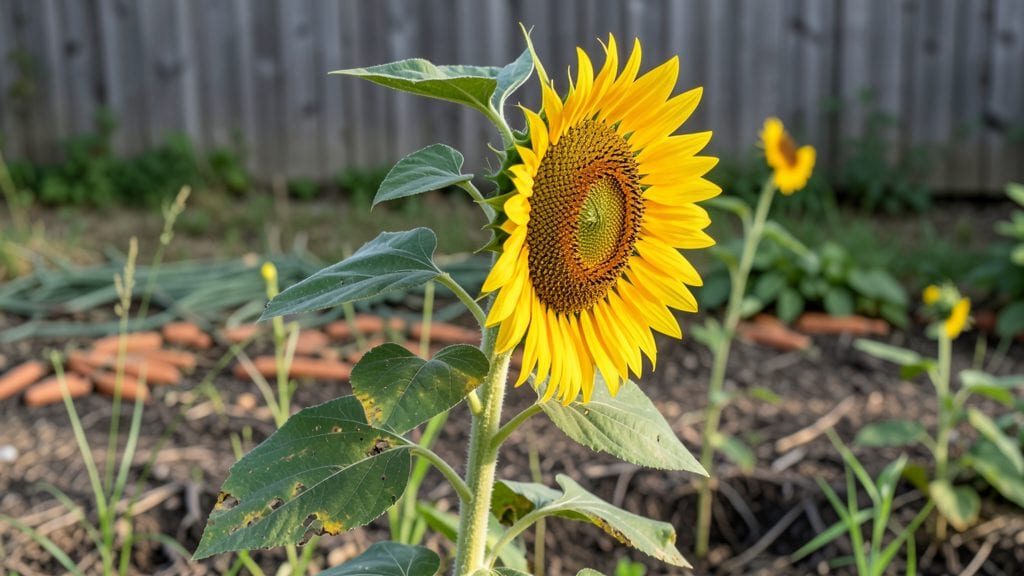
Growing Russian Mammoth sunflowers means welcoming 12-foot-tall giants that turn your Pacific Northwest garden into a sunlit spectacle. 🌻 I’ve watched these towering beauties sway in coastal breezes while still thriving—proof they’re built tougher than most varieties.
Their massive blooms feed hummingbirds, attract pollinators, and make stunning cut flowers that last weeks in a vase.
The secret starts with well-draining soil and full sun (at least 6 hours daily), even in cloudy PNW summers. Plant seeds ½ inch deep after the last frost, spacing them 2–3 feet apart—these sunflowers need room to stretch their legs.
Germination takes 7–14 days, and stems can grow 2–3 inches per day once established, so patience pays off.
By mid-summer, you’ll be harvesting 10–12-inch blooms that double as bird feeders and bouquets. Water consistently at the base (not the leaves) to prevent mildew, and stake taller varieties if winds pick up.
The payoff? A garden centerpiece that outshines everything else—and yes, they’re just as happy in containers if space is tight.
Bonus: Deadhead spent blooms to encourage more flowers, and save seeds for next year’s foolproof sunflowers. Even beginners nail this variety—it’s the PNW’s most reliable giant. Let’s get those seeds in the ground!
📚 In This Guide
- What you need
- Instructions
- Tips and common mistakes
- Wrapping up and next steps
What you need
- ● Seeds: Russian Mammoth sunflower seeds (10–20 seeds, depending on desired spacing). Look for heirloom or non-GMO varieties for best results.
- ● Potting mix: High-quality, well-draining seed-starting mix (5–10 lbs). Avoid garden soil—it’s too dense for young seedlings.
- ○ Containers: Biodegradable seedling pots (72-cell trays) or small nursery pots (3–4 inches deep). Optional: Peat or coconut coir pots for easy transplanting.
- ● Transplant location: Full-sun spot (6+ hours of sunlight daily) with well-draining, nutrient-rich soil. Amend clay-heavy PNW soil with compost (2–3 inches mixed into the top 12 inches of soil).
- ● Fertilizer: Seedling stage: Balanced, water-soluble fertilizer (e.g., 10-10-10 or 5-5-5) or fish emulsion (diluted to half-strength).
- ● Transplant stage: Slow-release granular fertilizer (10-10-10 or 5-10-10) or compost tea for a natural boost.
- ● Mulch: Straw or wood chips (2–3 inches) to retain moisture and suppress weeds.
- ● Hand trowel or small transplant spade (for digging seedling holes).
- ● Garden gloves (to protect hands from prickly stems and thistles).
- ● Watering can or hose with a gentle spray nozzle (avoid blasting seedlings!).
- ○ Optional: Plant support stake (6–8 feet tall) or bamboo stake for taller varieties (though Russian Mammoths are self-supporting, windy PNW conditions may require extra help).
- ○ Optional: Row cover or frost cloth (for early transplants if frost is a concern).
- ● Last frost date in your area (PNW ranges from late April to early June—check local guidelines!).
- ● Patience! Russian Mammoths take 80–100 days to mature, so plan accordingly.
- ● Pro tip: Test your soil’s pH (ideal range: 6.0–7.0). PNW soil can be acidic—amend with lime if needed!
Step-by-Step guide to growing Russian Mammoth sunflowers in the Pacific Northwest
These towering giants thrive with the right approach—here's how to coax their massive blooms from seed to sky.
🌱 Step 1: Time Your Planting for Pacific Northwest Conditions
Russian Mammoth sunflowers need a long, warm growing season, so time your planting carefully. In the Pacific Northwest, aim to sow seeds 4-6 weeks before your last frost date—typically mid-April to early May in most regions. The soil temperature should be consistently above 60°F for optimal germination.
I always test soil temperature with a simple thermometer before planting. If it's cooler than that, wait a few more days. These sunflowers won't tolerate cold soil, and slow germination can lead to weak, spindly stems that won't support their massive blooms. For extra insurance, I use black plastic mulch to warm the soil faster.
☀️ Step 2: Choose the Perfect Sunny Spot with Protection
Russian Mammoths demand full sun—at least 6-8 hours daily—but the Pacific Northwest's unpredictable weather requires strategic placement. Select a location with southern exposure where the sunflowers will receive maximum light, but also provide afternoon shade if strong winds are common in your area.
I plant mine near a sturdy fence or trellis system. The stems can reach 12-15 feet tall, and without support, they'll flop dramatically in our region's frequent storms. The roots need space too—give each plant 2-3 feet of clearance in all directions. These giants develop deep taproots, so avoid planting near structures or other plants that might compete for nutrients.
💧 Step 3: Plant Deeply and Water Strategically
Sow seeds 1-2 inches deep in loose, well-draining soil. I always plant two seeds per hole about 6 inches apart, then thin to the strongest seedling once they're 4-6 inches tall. The reason for planting deep? Russian Mammoths develop better root systems when their seeds aren't too close to the surface.
Water immediately after planting, then maintain 1-2 inches of soil moisture throughout the growing season. The key here is consistency—don't let the soil dry out completely between waterings, but avoid soggy conditions that can rot those deep roots. I use a soaker hose for deep watering, which encourages strong root development without wetting the leaves (which can lead to fungal issues).
✂️ Step 4: Provide Support and Monitor for Pests
Once your sunflowers reach 3-4 feet tall, it's time to install support. I use sturdy bamboo stakes (at least 8 feet long) tied to the main stem with soft plant ties. Position the stake on the north side of the plant so it doesn't block sunlight. As the stem grows, gently weave it through the trellis or tie it to the stake every 2-3 feet to prevent snapping in winds.
Watch for common Pacific Northwest pests like sunflower moths and beetles. I've found that neem oil spray applied every 2 weeks during flowering prevents most damage without harming beneficial insects. Remove any yellowing or damaged leaves promptly—they attract more pests and can spread disease quickly in our humid summers.
🌿 Step 5: Harvest and Preserve Your Towering Blooms
Russian Mammoth sunflowers typically reach maturity 90-100 days after planting. You'll know they're ready when the back of the flower head turns yellow and the petals begin to droop slightly. Cut the stems 2-3 inches below the flower head with clean pruners, then hang them upside down in a dry, dark, well-ventilated space for 2-3 weeks to dry completely.
Here's the thing—I always save a few seeds from my best plants for next year. Once fully dry, the flower heads will open, revealing the seeds. Remove them carefully, clean off any remaining chaff, and store in a cool, dark place until next spring. These saved seeds often produce even more robust plants than store-bought varieties, perfectly adapted to your local conditions.
Tips & tricks for perfect Russian Mammoth sunflower growth
These towering giants need special care to thrive in our Pacific Northwest climate—here's how to ensure your sunflowers reach their full potential.
Soil Temperature Secret: That 60°F soil temperature threshold in Step 1 is non-negotiable for these sunflowers. I've seen firsthand how cold soil leads to weak seedlings that struggle to support those massive blooms. For extra warmth, try covering the planting area with clear plastic for a few days before sowing—this creates a mini greenhouse effect that can jumpstart germination, especially in cooler spring conditions.
Sunlight Strategy: The 6-8 hours of daily sun requirement in Step 2 is critical, but don't forget about our Pacific Northwest's notorious afternoon clouds. If your garden gets frequent cloud cover, consider planting your sunflowers slightly earlier in the season to maximize their growing window. I've found that planting in early April (rather than May) gives them more time to soak up those precious summer sun hours before fall arrives.
Support System: When installing those 8-foot bamboo stakes in Step 4, position them at a 45-degree angle rather than straight up. This creates a natural trellis effect that helps guide the sunflower's growth pattern. I also recommend using soft plant ties made from old t-shirts or fabric strips—they're gentler on the stems than plastic ties and won't cut into the bark as the plant grows.
Harvesting Hack: For the 2-3 week drying period mentioned in Step 5, I've found that hanging flower heads in a well-ventilated garage or shed (rather than a completely dark space) actually preserves more color. Just make sure to keep them out of direct sunlight to prevent fading. Once completely dry, you can store the seeds in paper envelopes labeled with the year—they'll keep for years if stored in a cool, dark place.
Pro Tips for Russian Mammoth Sunflower
- These towering giants need special care to thrive in our Pacific Northwest climate—here's how to ensure your sunflowers reach their full potential.
- Soil Temperature Secret: That 60°F soil temperature threshold in Step 1 is non-negotiable for these sunflowers.
- Sunlight Strategy: The 6-8 hours of daily sun requirement in Step 2 is critical, but don't forget about our Pacific Northwest's notorious afternoon clouds.
Frequently asked questions
How deep should I plant Russian Mammoth Sunflower seeds?
Plant seeds about 1 inch deep in well-draining soil, spacing them 6–12 inches apart. Since these sunflowers grow tall (10–14 feet!), give them room to spread roots without crowding. In cooler PNW climates, start indoors 4–6 weeks before your last frost date for a head start.
When is the best time to transplant Russian Mammoth Sunflowers in the PNW?
Transplant seedlings after soil warms to at least 50°F (usually late May to early June in most of the PNW). Harden off seedlings first by exposing them to outdoor conditions for 5–7 days before moving them. Avoid transplanting in wet, cold soil, as it can stunt root growth.
Do Russian Mammoth Sunflowers need extra support in windy PNW climates?
Absolutely!
These sunflowers are top-heavy and can flop in Pacific Northwest winds. Bury stakes (6–8 feet tall) or use a trellis at planting time, gently tying stems to supports as they grow. For extra stability, plant in sheltered spots or use cattle panels as windbreaks.
What pests should I watch for with Russian Mammoth Sunflowers?
Keep an eye out for sunflower moths, aphids, and bird damage (they love those big seeds!). Use neem oil or insecticidal soap for pests, and cover young plants with bird netting if squirrels or crows are a problem. Healthy plants with proper spacing are less vulnerable!
Can I grow Russian Mammoth Sunflowers in containers?
While possible, containers aren’t ideal—these sunflowers need deep roots and space. If you must, use a 5-gallon pot or larger with drainage holes and fertile potting mix. Expect shorter growth (6–8 feet max) and more frequent watering compared to garden beds.
What can I do if my Russian Mammoth Sunflower isn’t flowering?
Check these fixes:
- Light: Ensure it gets 6+ hours of full sun daily (PNW shade can delay blooms).
- Water: Keep soil consistently moist but not soggy—drought stress can halt flowering.
- Fertilizer: Add a balanced, low-nitrogen fertilizer (like 10-10-10) when seedlings are 6 inches tall.
- Age: Some varieties take 90–120 days to bloom—be patient!
Wrapping up and next steps
Growing Russian Mammoth sunflowers in the Pacific Northwest is a rewarding adventure that brings towering beauty and joy to your garden! 🌻 With the right soil prep, spacing, and care, these giants will thrive and become the centerpiece of your outdoor space.
Whether you're a seasoned gardener or just starting out, their resilience and striking presence make them a must-try.
Ready to plant your own sunflower giants? Start by gathering your seeds and tools, then mark your calendar for late spring—when the soil is warm and the sun is shining bright. Happy planting, and may your garden bloom with these magnificent sunflowers! 🌱✨