
Flowers
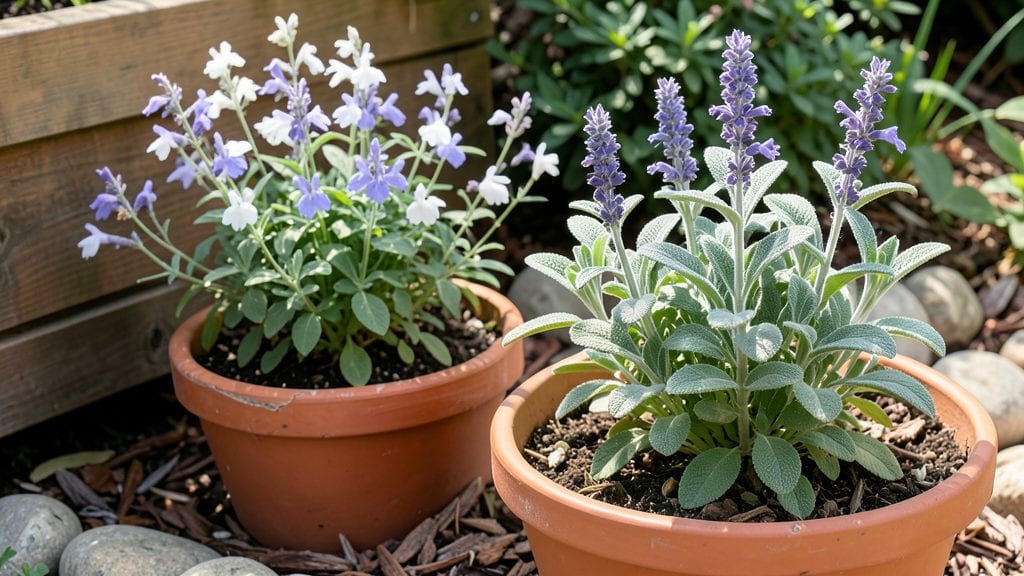
Pairing sage with flowers turns your garden into a fragrant, pollinator paradise. 🌿 I learned this after struggling with herb gardens that looked sparse and uninviting—until I wove in purple salvia and lavender.
The combination creates a sensory experience where every brush against the foliage releases sage’s earthy aroma while bees buzz between vibrant blooms.
The magic lies in balancing textures and colors: sage’s silvery-green leaves contrast beautifully with deep purple flowers like catmint or bright yellow marigolds. Plant sage in clusters of three to five plants, spacing them 12–18 inches apart, and tuck flowers around the edges for a natural, layered look.
This setup thrives in full sun and well-draining soil, making it perfect for borders or container gardens.
What you’ll end up with is a garden that’s as useful as it is beautiful. Sage repels pests like cabbage moths while attracting beneficial insects, and the flowers provide nectar for bees and butterflies all season long.
The fragrance alone makes strolling through the garden a daily pleasure—imagine snipping fresh sage for cooking while surrounded by blooms.
Works equally well in formal herb gardens or wildflower meadows. Start small with a 3-foot section and expand next year—your pollinators will thank you.
📚 In This Guide
- What you need
- Instructions
- Tips and common mistakes
- Wrapping up and next steps
What you need
- ● Sage Plants: 3–5 Salvia officinalis (common sage) plants (choose varieties like 'Berggarten,' 'Purpurascens,' or 'Tricolor' for color and texture)
- ● Salvia nemorosa (pink or purple sage) for drought tolerance and pollinator appeal (2–3 plants)
- ● Flowering Companions: Select 5–7 pollinator-friendly flowers (mix perennials and annuals for year-round interest): 1–2 Lavender (Lavandula) bushes (e.g., 'Munstead' or 'Grosso') for fragrance and drought resistance
- ● 3–5 Catmint (Nepeta) plants (e.g., 'Walker’s Low') for long blooms and bee magnetism
- ● 5–7 Coneflowers (Echinacea) in colors like purple or white (e.g., 'Magnus' or 'White Swan')
- ● 3–5 Yarrow (Achillea) for flat-topped blooms and hardiness (try 'Moonshine' for golden hues)
- ○ Optional: Bee Balm (Monarda) or Russian Sage (Perovskia) for extra height and fragrance
- ● Soil Amendments: 5–10 lbs. of compost or well-rotted manure per 10 sq. ft. of garden bed
- ● 1–2 lbs. of perlite or coarse sand (for drainage, especially in clay-heavy soil)
- ● Garden trowel (for transplanting small plants)
- ● Garden gloves (to protect your hands from thorns or rough foliage)
- ● Pruning shears (for shaping and maintaining plants)
- ● Watering can or hose with adjustable nozzle (drip irrigation is ideal for drought-tolerant plants)
- ● Measuring tape or string (to mark garden layout)
- ● Mulch (2–3 inches of wood chips, straw, or gravel to retain moisture and suppress weeds)
- ● Sunlight: A full-sun location (6+ hours of direct sunlight daily) for optimal sage and flower growth.
- ● Well-draining soil: Sage hates soggy roots—amend heavy soil with sand or gravel if needed.
- ● Spacing: Plan for mature plant sizes: Sage: 18–24 inches apart
- ● Lavender/Catmint: 12–18 inches apart
- ● Coneflowers/Yarrow: 18–24 inches apart
- ● Pollinator-friendly zone: Choose native plants if possible to support local bees, butterflies, and hummingbirds!
- ● Decorative garden stones or stepping stones to define pathways
- ● Fragrant herb markers (e.g., slate tags with plant names)
- ● Bird bath or feeder to attract even more wildlife
- ● Slow-release fertilizer (low-nitrogen, like 5-10-10, for herbs)
- ● Pest control: Neem oil or companion planting (e.g., marigolds to deter pests)
Step-by-Step instructions for designing a sage and flower pollinator garden
Here's how to create a fragrant, bee-friendly garden that pairs sage with complementary flowers.
🌱 Step 1: Plan Your Layout for Sun and Pollinator Pathways
Start by sketching your garden space on paper, marking areas that receive full sun (6+ hours daily)—this is critical since sage thrives in bright light. I like to place taller flowers like lavender or coneflowers in the back, with shorter sages and annuals like alyssum or marigolds in front. This creates natural "pollinator pathways" that guide bees from plant to plant.
Real talk: don't crowd plants. Space sage 18-24 inches apart and flowers 12-18 inches apart to allow airflow and easy access for pollinators. I always leave a 2-foot border around the perimeter for low-growing ground covers like creeping thyme, which attract tiny pollinators like hoverflies.
🌿 Step 2: Choose Complementary Flower Pairings for Sage
Sage pairs beautifully with flowers that share its drought tolerance and pollinator appeal. I recommend starting with three types of flowers to create visual interest: one tall (like bee balm or Russian sage), one medium (like catmint or salvia), and one low (like sweet alyssum or violas). These combinations ensure continuous blooms from spring through fall.
Here's my go-to trio: Russian sage for late summer color, catmint for early blooms, and sweet alyssum for spring and fall. All three attract bees, butterflies, and beneficial wasps while complementing sage's silvery foliage. Avoid heavy feeders like petunias—they'll compete with your sage for nutrients.
☀️ Step 3: Prepare the Soil for Drought-Tolerant Plants
Amend your garden soil with 2-3 inches of compost and mix in 1 part perlite to 3 parts soil to improve drainage—sage and most pollinator-friendly flowers hate soggy roots. I like to work in a slow-release organic fertilizer (like 5-5-5) at planting time to give these plants a strong start without encouraging excessive leafy growth at the expense of flowers.
Test your soil's pH—most sage varieties prefer 6.0-7.5, while flowers like lavender thrive in slightly alkaline soil (7.0-8.0). If your soil is too acidic, add crushed limestone to raise the pH gradually. The goal is soil that drains well but holds enough moisture for roots to access during dry spells.
🪴 Step 4: Plant Sage and Flowers Together for Synergy
Dig holes for your sage plants twice as wide as the root ball but only as deep. Place each plant in its hole, then backfill with native soil mixed with a handful of compost. Water deeply to settle the roots. For flowers, follow their specific spacing requirements—usually 12-18 inches apart for perennials and 6-12 inches apart for annuals.
Here's the thing—I always plant sage in clusters of three. This creates a natural focal point while providing enough foliage to attract pollinators. Space flower varieties in odd-numbered groupings (like 3, 5, or 7 plants) to create a more natural, abundant look. Water everything thoroughly after planting to help roots establish.
⏰ Step 5: Maintain for Continuous Blooms and Pollinator Visits
Water deeply once a week during the first growing season to establish roots, then taper to every 10-14 days once established—sage and most pollinator flowers are drought-tolerant once mature. I always water in the morning so foliage dries quickly, preventing fungal issues. Mulch with 2 inches of gravel or straw to retain moisture and suppress weeds.
Deadhead spent flowers regularly (especially annuals) to encourage more blooms. For perennials like catmint or Russian sage, I cut back one-third of the plant in early spring to promote bushier growth. This keeps the garden looking tidy while providing fresh foliage for pollinators. You'll notice more bees and butterflies within weeks of proper maintenance.
Tips & tricks for perfect sage and flower pollinator gardens
A few clever strategies will help your fragrant herb-flower garden thrive and become a buzzing pollinator hotspot.
Layering for Pollinator Success: In Step 1, when planning your layout, think vertically! Tall flowers like Russian sage (3-4 feet) should anchor the back, medium-height catmint (2-3 feet) should fill the middle, and low-growing sweet alyssum (6-12 inches) will cascade at the front. This creates a natural staircase for bees to follow, making it easier for them to navigate your garden. I've noticed that bees actually work more efficiently in layered gardens because they can move from plant to plant without unnecessary flying.
Soil Secrets for Drought Tolerance: When preparing your soil in Step 3, don't skimp on the perlite! The 1:3 perlite-to-soil ratio is crucial for preventing soggy roots that can rot sage and flowers. I like to add a handful of coarse sand to the mix too—this creates even better drainage while still holding enough moisture for roots. For extra insurance, work in a thin layer of biochar (about 1 inch mixed in) which helps retain moisture and improves soil structure over time. This combination mimics the well-draining conditions these Mediterranean plants thrive in.
Planting Clusters for Visual Impact: The trick in Step 4 about planting sage in clusters of three is actually based on horticultural principles. Odd-numbered groupings create visual balance and appear more natural than even numbers. For flowers, I recommend planting them in groups of five or seven—this creates enough density to attract pollinators while looking abundant rather than scattered. When planting, make sure the tallest plants are slightly offset from the center to create visual interest and prevent a "flat" look.
Maintenance Shortcuts: For Step 5's watering schedule, I've found a simple trick to save time: install a drip irrigation system on a timer set for morning watering. This ensures consistent moisture without the effort of hand-watering. When deadheading, use clean, sharp pruners and do it on a dry morning—this prevents spreading disease and makes the job quicker. I also like to collect spent blooms in a bucket and compost them; they'll make excellent fertilizer for your garden!
Pro Tips for Sage And Flowers
- A few clever strategies will help your fragrant herb-flower garden thrive and become a buzzing pollinator hotspot.
- Layering for Pollinator Success: In Step 1, when planning your layout, think vertically!
- Soil Secrets for Drought Tolerance: When preparing your soil in Step 3, don't skimp on the perlite!
Frequently asked questions
Got questions about pairing sage and flowers in your garden? You’re not alone! Here are some of the most common queries—plus quick, practical answers to help you design a thriving, pollinator-friendly space.
What flowers pair best with sage for pollinators?
Sage thrives with pollinator magnets like lavender, bee balm, coneflowers, and yarrow. These flowers attract bees, butterflies, and hummingbirds while complementing sage’s drought-resistant nature. For a fragrant combo, try rosemary + marigolds or thyme + alyssum—both love similar growing conditions!
When is the best time to plant sage and flowers together?
Plant in early spring (after the last frost) or early fall for optimal root establishment. If adding flowers later, choose fast-growing annuals like cosmos or zinnias to fill gaps quickly. Pro tip: Space sage 18–24 inches apart to avoid crowding flowers like lavender (which needs similar sunlight but less competition).
How much water do sage and flowers need together?
Sage is drought-tolerant, but flowers like delphiniums or snapdragons may need 1–1.5 inches of water weekly. Use drip irrigation to target both plants evenly, especially in hot climates. Mulch (2–3 inches of straw or wood chips) helps retain moisture for flowers while keeping sage’s roots cool.
Why aren’t bees visiting my sage-and-flower garden?
Bees love blue, purple, or white flowers—sage’s gray-green foliage alone won’t attract them. Add clusters of blooms (like salvia or phlox) and ensure flowers are accessible (not too crowded). Avoid pesticides! If bees still skip it, try planting sage near a water source (like a shallow dish with pebbles) to encourage visits.
Can I grow sage and flowers in containers?
Pair dwarf sage varieties (like ‘Berggarten’) with compact flowers like petunias or nasturtiums in a 12–14 inch pot. Use well-draining soil and a pot with drainage holes. For pollinators, add a window-box combo of sage + alyssum + sweet alyssum—it’s a bee’s dream!
Wrapping up and next steps
Creating a fragrant garden with sage and flowers isn’t just about beauty—it’s a gift to pollinators and your senses! 🌿 By blending these herb-flower pairings, you’ve designed a thriving, low-maintenance space that attracts bees, butterflies, and hummingbirds while filling your outdoor haven with natural aromas.
Whether you’re a seasoned gardener or just starting, your effort will bloom into a vibrant, eco-friendly oasis.
Ready to watch your garden flourish? Take the next step:
- 🌱 Plant your chosen pairings this weekend—spring or fall are ideal!
- 📝 Sketch a simple layout to visualize sun/shade spots for each plant.
- 💧 Set a watering reminder to keep your new pollinator paradise happy.