Flowers
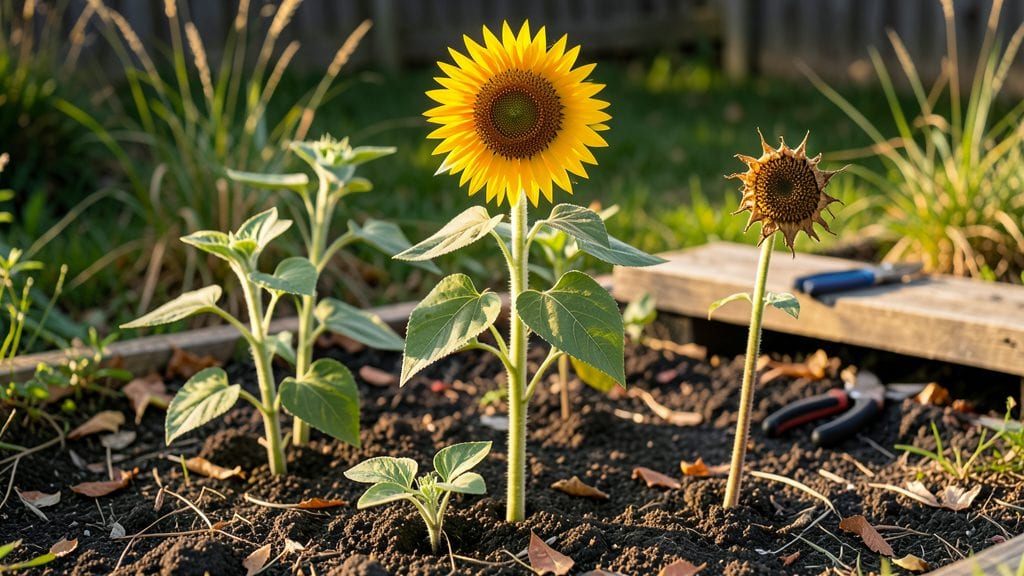
Sunflower growing stages reveal nature’s most dramatic transformation—from a tiny seed to a towering summer sentinel in just six weeks. 🌻 I’ve watched my own sunflowers go from fuzzy sprouts to 10-foot giants, and each stage has its own secrets to unlock.
The first 72 hours are the most critical, where moisture and warmth decide whether your seeds will wake up or stay dormant.
Germination happens in 3-7 days when soil stays above 70°F, and you’ll spot the first green hooks breaking through the dirt. True leaves unfurl next, signaling the plant’s energy shift from stored reserves to sunlight. This is when consistent watering—about 1 inch per week—keeps roots happy without drowning them.
By week 3, your sunflowers will be 2-3 feet tall with rough stems and jagged leaves, their faces turning toward the sun like little solar panels. This is when side dressing with compost gives them a growth boost, and staking becomes essential for windy areas to prevent flopping.
The real magic unfolds in weeks 5-6, when buds form and the velvety centers begin their dramatic color shift from green to deep brown.
Here’s where patience pays off—don’t rush to harvest seeds until the back of the bloom turns completely yellow and papery, signaling they’re ready for next year’s garden.
📚 In This Guide
- What you need
- Instructions
- Tips and common mistakes
- Wrapping up and next steps
What you need
- ● Sunflower seeds: Choose disease-resistant varieties like 'Moulin Rouge' (50-100 seeds) or 'Autumn Beauty' (25-50 seeds) for vibrant blooms.
- ● Well-draining potting mix: 10-15 lbs (for containers) or enrich garden soil with compost (2-3 lbs per sq ft).
- ● Containers or garden plot: Containers: 12-inch pots (1-2 seeds per pot) or large raised beds (6-inch spacing).
- ● Garden beds: Full sun (6+ hours/day) and loose, fertile soil (pH 6.0-7.5).
- ● Watering can or hose: With a gentle spray nozzle for seedlings.
- ● Fertilizer: Balanced 10-10-10 (1 tbsp per plant at planting) or organic options like fish emulsion.
- ● Gloves & knee pads (for comfort during planting).
- ● Plant labels & markers (to track varieties and stages).
- ● Trellis or stakes (for tall varieties like 'Russian Giant' to prevent toppling).
- ● Mulch (straw or shredded leaves to retain moisture and suppress weeds).
- ● Pest deterrents: Neem oil (for aphids) or row covers (for birds/squirrels).
- ● Pruning shears (to deadhead spent blooms and encourage regrowth).
Understanding sunflower growth: key milestones in 6 weeks
Watch your sunflowers transform from tiny seeds to towering giants in just six weeks—here's what to expect at each stage.
🌱 Step 1: Germination (Days 1-7)
Plant seeds ½ inch deep in well-drained soil, keeping it consistently moist but not soggy. You'll see the first sign of life when the seedling pushes through the soil with its cotyledons—those initial round leaves that look like tiny shields. This usually happens within 5-10 days, depending on temperature.
Real talk: Don't be tempted to water heavily right after planting. The soil should feel damp 1 inch below the surface, not wet like a sponge. Overwatering at this stage can cause seeds to rot before they sprout. Once the first leaves appear, you'll notice the stem will straighten dramatically—this is your sunflower reaching for the light.
🌿 Step 2: Early Growth (Weeks 1-2)
Within the first two weeks, your sunflower will develop its first true leaves—long, narrow, and toothy-edged. These leaves will grow rapidly, and you'll see the plant's vertical growth accelerate. This is when sunflowers start building their energy reserves for flowering.
Here's the thing—sunflowers are heavy feeders, so if you notice leaves turning yellow between the veins, it's a sign they need more nutrients. I like to add a balanced fertilizer at this stage, following package instructions. You'll also want to thin seedlings to 12-18 inches apart to give them room to grow strong stems.
☀️ Step 3: Stem Elongation (Weeks 3-4)
By week three, your sunflower will enter its most dramatic growth phase. The stem will elongate rapidly, sometimes growing 2-3 inches per day in ideal conditions. You'll see the plant develop its characteristic rough, hairy texture as it prepares for flowering. This is when sunflowers need the most sunlight—6-8 hours of direct sun daily.
Watch for the plant's growth pattern: healthy stems should be thick and sturdy, not weak or bending. If your sunflower starts leaning toward the light, rotate the pot a quarter turn daily to encourage straight growth. This is also when you'll notice the first signs of bud formation at the top of the stem.
🌼 Step 4: Bud Formation (Weeks 5-6)
The most exciting transformation happens in weeks five and six when the flower bud begins to form. You'll see a fuzzy, spherical growth at the top of the stem that will gradually open into the iconic sunflower bloom. The bud will develop protective bracts that protect the flower as it matures.
This is the stage where sunflowers need consistent moisture but careful watering. Water at the base of the plant in the morning to allow the petals to dry during the day, preventing fungal diseases. You'll know the flower is ready to open when the bud turns from green to a golden hue, and you can see the petals starting to separate.
Tips & tricks for perfect sunflower growth
A few simple tricks can make all the difference in growing healthy, vibrant sunflowers from seed to bloom.
Germination Success: To speed up germination in Step 1, soak your seeds overnight in warm water before planting. This helps soften the seed coat and can encourage sprouting within 3-5 days instead of the typical 5-10 days. Just make sure to plant them at the same ½ inch depth in well-drained soil afterward—soaking doesn't change the planting depth!
Lighting Strategy: Sunflowers need their 6-8 hours of direct sun daily starting in Week 3, but you can give them a head start. If you're growing indoors or in low-light conditions during early stages, supplement with a grow light for 12-14 hours per day. This helps prevent leggy growth before they get their full sun exposure.
Nutrient Timing: When you notice those first true leaves in Week 2, it's time to feed! Use a balanced fertilizer with equal parts nitrogen, phosphorus, and potassium. I like to apply it when I thin seedlings to 12-18 inches apart—this gives them a nutrient boost right when they need it most for stem development.
Watering Wisdom: The key to watering sunflowers is consistency without soggy soil. In Step 4 when buds form, water at the base in the morning to let petals dry during the day. A good test: stick your finger 1 inch below the surface—if it feels dry, it's time to water. Overwatering at this stage can lead to bud rot before the flower even opens.
Pro Tips for Sunflower Growing Stages
- A few simple tricks can make all the difference in growing healthy, vibrant sunflowers from seed to bloom.
- Germination Success: To speed up germination in Step 1, soak your seeds overnight in warm water before planting.
- Lighting Strategy: Sunflowers need their 6-8 hours of direct sun daily starting in Week 3, but you can give them a head start.
Frequently asked questions
Got questions about nurturing sunflowers from seed to bloom? Here are some of the most common ones—and their answers—to help you grow a thriving sunflower garden with confidence!
How long does it take for sunflowers to grow from seed to full bloom?
Most sunflower varieties reach maturity in 80–120 days after planting, depending on the type. Dwarf varieties (like 'Teddy Bear') bloom in about 60–70 days, while giant varieties (like 'Mammoth') can take 100–120 days. Warm soil (60°F+) and consistent sunlight (6+ hours/day) speed up growth!
Can sunflowers survive frost? What if they’re planted late?
Sunflowers are frost-sensitive—seeds won’t sprout in cold soil (<50°F), and young plants can be damaged by frost. If planting late, opt for fast-maturing varieties or use row covers to protect seedlings. Transplant after the last frost date in your zone for best results.
What are the most common sunflower pests, and how do I prevent them?
Watch for aphids, beetles, and birds (which love seeds!). Use neem oil or insecticidal soap for soft-bodied pests, and bird netting for seed heads. Healthy plants with proper spacing (12–24 inches apart) deter many issues naturally.
Do sunflowers need full sun? What if my garden only gets partial shade?
Sunflowers thrive in full sun (6+ hours/day), but they can tolerate partial shade (4–6 hours)—though blooms may be smaller. If shade is unavoidable, choose shade-tolerant varieties like 'Autumn Beauty' or plant in the sunniest spot possible.
How often should I water sunflowers, especially during dry spells?
Water deeply 1–2 times per week (about 1–2 inches of water) during dry periods, focusing on the root zone. Avoid overhead watering to prevent fungal diseases. Once established, sunflowers are drought-tolerant but may yield smaller blooms if stressed.
Wrapping up and next steps
Growing sunflowers from seed to bloom is a rewarding journey filled with bright colors, towering heights, and simple joy! By understanding each of the six key stages—from germination to maturity—you’ll unlock the secrets to nurturing healthy, vibrant plants.
Whether you’re a beginner or a seasoned gardener, patience and care will turn your efforts into a stunning, sun-drenched display.
Ready to watch your garden flourish? Grab your seeds, mark your calendar, and start planting—your sunflowers (and pollinators!) will thank you. 🌻✨