
Pruning
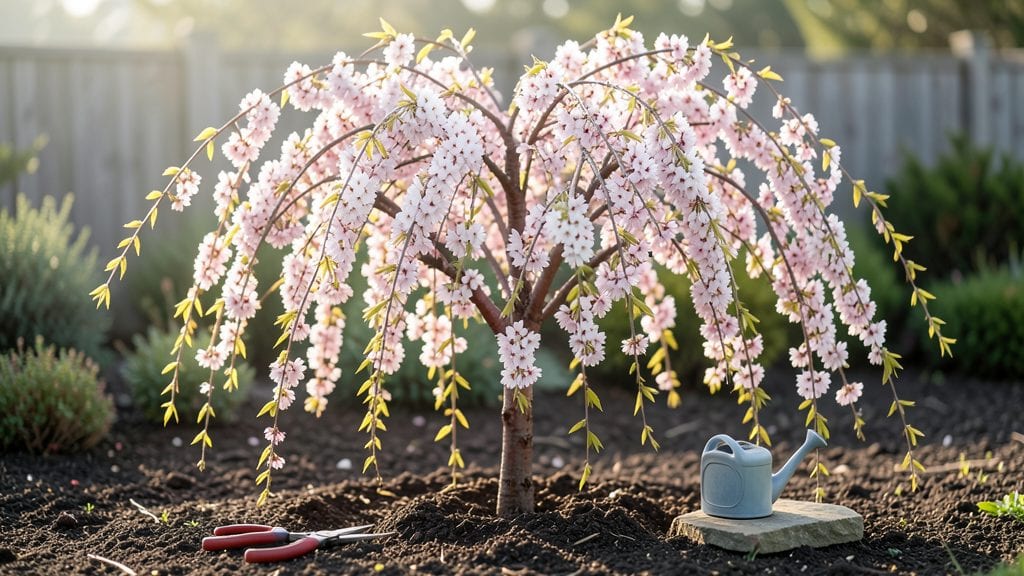
The delicate pink blooms of a weeping flower cherry tree signal that spring’s first careful pruning is at hand. A weeping flower cherry tree (Prunus serrulata 'Weeping') transforms your Pacific Northwest yard into a living waterfall of blooms—but only if you prune it right.
I learned the hard way when mine looked like a tangled mess after a single winter storm.
The secret lies in shaping its delicate branches before they become unwieldy. Start with well-draining soil and full sun, then prune in late winter to remove dead wood and open the center for airflow.
This isn’t just about aesthetics—it’s about encouraging those year-round blooms that make the tree worth its space. My tree now produces flowers from February through May, with occasional late-summer surprises.
You’ll need sharp pruners, a sturdy ladder, and patience—those branches are lighter than they look. The goal is to maintain that graceful weeping shape while keeping the tree strong enough to support its own weight.
Think of it like sculpting: too aggressive, and you’ll stunt the blooms; too gentle, and the branches sag into a tangled mess.
For Pacific Northwest gardeners, timing is everything. Prune just after the first flush of blooms fades but before new growth hardens. And if you’re worried about pests? A layer of mulch and regular inspections keep problems at bay without chemicals.
The result? A tree that looks like it belongs in a botanical garden, not just your backyard.
📚 In This Guide
- What you need
- Instructions
- Tips and common mistakes
- Wrapping up and next steps
What you need
- ● Pruning shears (bypass or anvil type) – Choose sharp, high-quality shears (e.g., Felco or Fiskars) for clean cuts. Size: 6–8 inches for small branches.
- ● Loppers – For thicker branches (½–1.5 inches in diameter). Bypass loppers are ideal for precision.
- ● Pruning saw – A curved-tooth saw for branches over 1.5 inches thick. Brand tip: Corona or Bahco models are reliable.
- ● Disinfectant (70% isopropyl alcohol or bleach solution) – Clean tools between cuts to prevent disease spread.
- ○ Pruning sealant (optional but helpful) – For large cuts (over 2 inches) to reduce sap loss and pest entry.
- ● Gloves (heavy-duty gardening gloves) – Protect your hands from thorns and sap.
- ● Ladder or step stool – Ensure stability when reaching high branches. Safety first: Use a non-slip ladder rated for your weight.
- ● Heavy-duty trash bags or bucket – For collecting pruned branches and debris.
- ● Sharpie or pruning marker – To mark branches for removal if planning ahead.
- ● Extension pole pruners – For high branches without a ladder (e.g., Fiskars 26-inch model).
- ● Tree wound dressing – Controversial but some gardeners swear by it for large cuts.
- ● Safety glasses – Protects eyes from debris, especially when using a saw.
- ● Work apron with pockets – Keeps tools and small items handy.
- ● Camera or phone – Snap before/after photos to track progress!
- ● Weather check – Prune on a dry, cloudy day to avoid stressing the tree. Early morning or late afternoon is best.
- ● Tree health assessment – Inspect for diseased or dead branches before pruning. Remove these first.
- ● Safety briefing – Clear the area of people, pets, and flammable materials before starting.
- ● Tool sharpening – Dull tools crush branches, causing damage. Sharpen shears/loppers beforehand.
Instructions for pruning a weeping flower cherry tree in the Pacific Northwest
Here’s how to keep your tree blooming beautifully while maintaining its graceful weeping shape.
Time Your Pruning for Optimal Bloom and Health
Prune your weeping flower cherry tree immediately after it finishes blooming in late spring—typically around May or early June in the Pacific Northwest. This timing ensures you don’t cut off next year’s flower buds, which form on old wood. If you prune too early, you risk removing blooms before they fully open.
Wait until all flowers have dropped before making cuts. You’ll notice the branches are bare of blossoms, but the leaves will still be lush and green. This is your cue that the tree has finished its flowering cycle and is ready for shaping.
Remove Dead, Diseased, or Weak Branches First
Start by inspecting the tree for any branches that are dead, diseased, or crossing. Use clean, sharp pruning shears to make clean cuts at a 45-degree angle just outside the branch collar—the swollen area where the branch meets the trunk. This prevents water from pooling and causing rot.
If a branch is diseased, sterilize your shears with rubbing alcohol between cuts to avoid spreading pathogens. You’ll know a branch is dead if it’s brittle, has no leaves, or peels easily when you scratch the bark. Remove these first—they’re the tree’s weak points and can invite pests.
Thin Out Interior Branches for Airflow and Light
Weeping flower cherries need good airflow to prevent fungal issues, so focus on thinning out 10-20% of the interior branches. Look for branches that grow inward or rub against others—these are prime candidates for removal. Cut them back to a lateral branch or bud that faces outward.
Thinning encourages the tree to develop a stronger structure and allows sunlight to reach the center, which promotes even blooming. You’ll see the tree’s natural weeping shape become more defined as you open up its canopy. Avoid over-thinning, though—too many cuts can stress the tree.
Shape the Tree While Preserving Its Weeping Form
To maintain the tree’s graceful weeping habit, avoid heavy pruning of the main branches. Instead, lightly trim the outer growth to encourage a more uniform shape. Use hand pruners for smaller branches and loppers for thicker stems—never remove more than a third of the tree’s foliage in one season.
Focus on lifting the lower branches slightly to create a tiered effect, which adds visual interest. You’ll want the tree to have a balanced silhouette with no heavy clusters of growth at the bottom. Step back occasionally to check your progress—this helps you see the tree as a whole rather than just individual branches.
Lightly Prune for Bloom Maintenance in Late Summer
In late August or early September, give your tree a light pruning to remove any sucker growth or water sprouts that appeared during the growing season. These are fast-growing, weak shoots that detract from the tree’s form. Cut them back to a healthy bud or branch.
This second pruning helps the tree prepare for winter and ensures it has energy to produce abundant blooms the following spring. Avoid heavy cuts—just tidy up the tree’s appearance. You’ll notice fewer unwanted shoots in the following year if you stay on top of this maintenance.
Tips & tricks for pruning a weeping flower cherry tree
These simple yet impactful tips will help you maintain your tree’s health and blooming potential while preserving its stunning weeping shape.
Timing is Everything: The late spring timing in Step 1 is absolutely critical for Pacific Northwest trees. I've seen many gardeners prune too early and end up with sparse blooms the next year. Look for those fully dropped flowers—this visual cue is your green light to start. If you're unsure, wait an extra week rather than risking cutting off next year's blossoms.
Tool Preparation: Before you begin, take 5 minutes to sharpen your pruning shears and clean them with rubbing alcohol. I learned this the hard way after accidentally spreading fungal spores between cuts. Sterilizing your tools between each branch is especially important when dealing with diseased wood. A clean cut at a 45-degree angle outside the branch collar makes all the difference in how well your tree heals.
Thinning Strategy: When thinning those interior branches in Step 3, aim to remove branches that are growing toward the center of the tree. This creates that beautiful open canopy while allowing sunlight to reach all parts. Remember the 10-20% guideline—this prevents over-stressing your tree. You'll know you've done it right when you can see sunlight reaching the trunk from above.
Seasonal Maintenance: That late summer pruning in Step 5 might seem unnecessary, but it's a game-changer for next year's blooms. I've noticed trees that skip this step often develop more water sprouts the following spring. Focus on those fast-growing shoots—cutting them back now prevents them from becoming major structural issues later.
Pro Tips for Weeping Flower Cherry Tree
- These simple yet impactful tips will help you maintain your tree’s health and blooming potential while preserving its stunning weeping shape.
- Timing is Everything: The late spring timing in Step 1 is absolutely critical for Pacific Northwest trees.
- Tool Preparation: Before you begin, take 5 minutes to sharpen your pruning shears and clean them with rubbing alcohol.
Frequently asked questions
Got questions about keeping your weeping flower cherry tree in top shape? You’re not alone! Here are some of the most common queries—plus practical answers—to help you master pruning and care for year-round blooms.
When is the best time to prune a weeping flower cherry tree?
The ideal time is late winter or early spring (February–March), just before new growth begins. This timing promotes robust blooms while avoiding the risk of frost damage. Avoid pruning in fall—it can stimulate tender growth that won’t survive winter. For light shaping, you can prune lightly after flowering, but avoid heavy cuts during this period.
Can I prune a weeping flower cherry tree in winter?
Yes, but with caution! Prune only on mild winter days (above 40°F) to prevent shock. Heavy pruning in deep freeze can stress the tree, making it vulnerable to disease. If you must prune in winter, focus on removing dead or damaged branches. Spring pruning is always the safer bet for this delicate tree.
Why isn’t my weeping flower cherry tree blooming as much as it used to?
Several factors could be at play: over-pruning (especially in late summer/fall), poor sunlight (they need full sun), or nutrient deficiencies. Check for dense foliage blocking light and thin out branches to improve airflow. A balanced fertilizer in early spring can also encourage blooms. If the tree is very old, blooms may naturally decline—but rejuvenation pruning can help!
How much can I prune a weeping flower cherry tree at once?
Never remove more than 25% of the tree’s canopy in a single session. Weeping cherries are sensitive to aggressive pruning. For young trees, light shaping is enough; mature trees may need selective thinning to maintain their graceful form. Always use clean, sharp tools to avoid tearing bark, which invites pests and disease.
What should I do if my weeping flower cherry tree gets fire blight?
Fire blight (blackened, oozing branches) is common in cherries. Act fast: Cut back to 6–12 inches below the infected area using sterilized pruners. Dispose of infected branches in the trash (not compost). Apply a copper fungicide in spring to prevent recurrence. Keep the area clean and avoid overhead watering to reduce moisture that fuels the disease.
Are there alternatives to weeping flower cherry trees for PNW gardens?
If you love the weeping form but want more disease resistance, consider Kwanzan cherry (upright but prolific blooms) or Japanese snowbell (fragrant white flowers, shade-tolerant). For a similar weeping habit, weeping hawthorn or weeping crabapple are hardy PNW options. Always check your site’s sunlight and soil conditions before swapping!
Wrapping up and next steps
Transforming your weeping flower cherry tree into a stunning year-round bloomer is all about timing, technique, and a little patience! 🌸 With the right pruning strategies—like winter shaping, spring bloom maintenance, and seasonal touch-ups—you’ll enjoy cascading pink blossoms and lush foliage for decades.
Remember, consistency is key, but don’t stress: even small adjustments make a big difference.
Ready to roll up your sleeves? Grab your tools, mark your calendar, and start with one session at a time. Whether you’re a pruning pro or a curious beginner, every cut brings you closer to that dreamy, magical Pacific Northwest garden centerpiece. Happy pruning! 🌿✂️