
Flowers
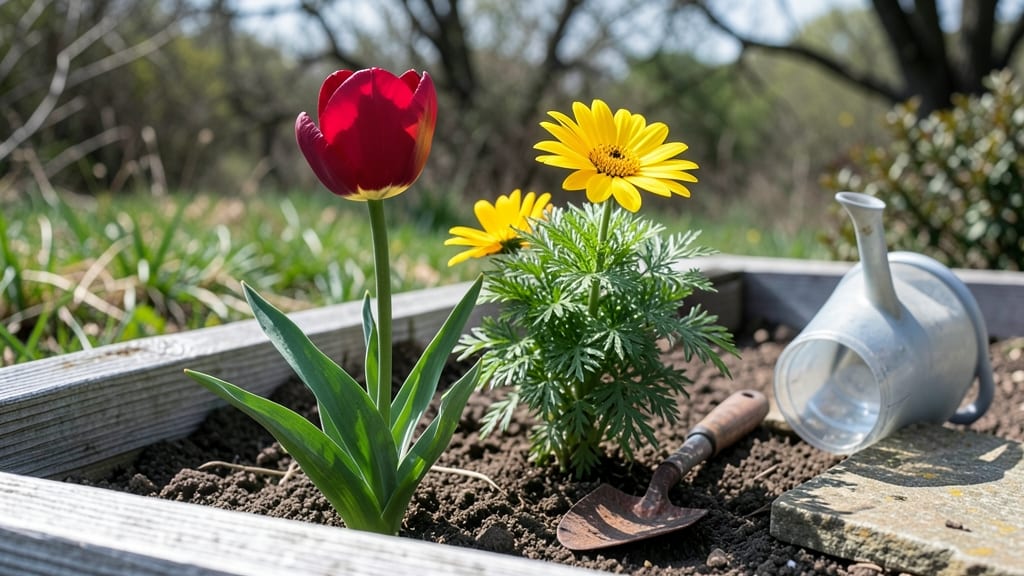
Yellow and red flowers scream summer—but the right mix turns your borders into year-round drama. 🌼 I’ve designed borders that pop from spring tulips to fall mums, using bold reds to anchor and sunny yellows to brighten.
The secret isn’t just planting them together; it’s layering heights, textures, and bloom times so something’s always showing off.
Think daylilies for summer heat, tulips for early color, and marigolds for late-season punch. Pair them with salvia or lavender for contrast, and space plants so their foliage fills gaps between blooms. A 5-foot-wide border with staggered heights keeps the eye moving—no dead zones, just nonstop interest.
By late summer, your border will be a riot of golden black-eyed Susans and crimson dahlias, while sedum takes over as the stars fade. The result? A garden that feels like a living painting, where every season has its own star turn. Ready to mix your palette?
Works for city balconies or country yards—just adjust spacing for containers. The key is confidence in color: these two hues play well together when you let them shine. Let’s build your boldest border yet.
📚 In This Guide
- What you need
- Instructions
- Tips and common mistakes
- Wrapping up and next steps
What you need
- ● Flower Seeds or Plants: 6–10 Marigold plants/seeds (yellow/orange for warmth)
- ● 5–8 Geranium plants/seeds (red/pink for contrast)
- ● 4–6 Salvia plants/seeds (red spikes for height)
- ● 3–5 Zinnia plants/seeds (red/yellow mix for pop)
- ● Soil: 1–2 bags of well-draining potting mix (or garden soil amended with compost)
- ● Fertilizer: 1 bag of balanced 10-10-10 granular fertilizer (or slow-release pellets)
- ● Mulch: 1–2 bags of organic mulch (e.g., shredded bark or straw)
- ● Gardening Tools: 1 trowel (for planting)
- ● 1 pruning shears (for shaping)
- ● 1 watering can or hose with a gentle spray nozzle
- ○ 1 pair of gardening gloves (optional but highly recommended!)
- ● Containers (if not planting in-ground): 3–5 large pots (12–16 inches wide) with drainage holes
- ○ 1–2 raised garden beds (optional, for elevated planting)
- ● Sunlight: Ensure your border gets 6+ hours of direct sunlight daily (most yellow/red flowers thrive in full sun!). ☀️
- ● Watering Schedule: Keep soil consistently moist (not soggy) for the first 2 weeks after planting.
- ● Spacing: Plant flowers 12–18 inches apart for optimal airflow and growth.
- ● Seasonal Note: Start seeds 6–8 weeks before the last frost (or buy young plants for instant color!). ⏳
- ● Decorative stones or pebbles for borders
- ● Stakes or trellises (if adding climbing plants like Cleome)
- ● Color-coordinated plant markers for easy identification
- ● Drip irrigation system (for low-maintenance watering)
How to create a stunning yellow-and-red flower border
Here's my go-to approach for designing a vibrant, low-maintenance border that blooms season after season.
🌱 Step 1: Select Complementary Flower Varieties
Choose plants that pair yellow and red hues naturally. For spring color, I rely on coreopsis (bright yellow) with salvia (red spikes) for height contrast. In summer, black-eyed Susan (golden) and coneflower (rust-red) create a bold statement. For fall, sedum (buttery yellow) with Russian sage (deep burgundy) extends the season.
I always include at least one thriller (like red hot poker), one filler (like yellow daisies), and one spiller (like creeping Jenny) for visual balance. Mix perennials with annuals—marigolds and zinnias add instant pop while filling gaps between slower-growing plants.
☀️ Step 2: Plan Sun Exposure and Soil Prep
Most yellow-and-red combos thrive in full sun (6+ hours daily), but check each variety's needs. For example, coreopsis loves heat, while impatiens (red) prefer partial shade. Amend your soil with 2-3 inches of compost before planting to ensure good drainage—waterlogged roots kill vibrant blooms.
I test soil pH with a kit (ideal range: 6.0-7.0 for most flowers). If your soil is heavy clay, add sand or perlite to improve aeration. Mark planting spots with stakes to visualize the border's flow before digging.
🪴 Step 3: Plant in Staggered Rows for Continuous Bloom
Arrange plants in 3-4 staggered rows so early bloomers (like tulips) transition into late-season stars (like chrysanthemums). Space perennials 12-18 inches apart and annuals 6-12 inches apart—crowding leads to leggy stems and fewer flowers. Plant deeper than the root ball to encourage stability.
I water deeply after planting to settle soil around roots, then mulch with 2-3 inches of shredded bark to retain moisture and suppress weeds. This keeps the border looking tidy while protecting shallow roots from temperature swings.
✂️ Step 4: Maintain with Strategic Pruning
Deadhead spent blooms weekly to encourage more flowers. For perennials like daylilies, cut back ⅓ of the foliage in early spring to promote new growth. In late summer, I leave seed heads (like coneflower) for winter interest—just remove them in early spring before new shoots emerge.
Fertilize lightly in spring with balanced 10-10-10 (½ cup per 10 sq ft) and again after mid-summer blooms. Over-fertilizing leads to lush foliage but fewer flowers—yellow-and-red borders shine when blooms take center stage.
💧 Step 5: Water Deeply and Less Frequently
Water early morning to reduce fungal risks. Aim for 1-1.5 inches per week, letting soil dry slightly between waterings. Deep watering (every 2-3 days) encourages strong root systems, while shallow sprinkling creates weak stems prone to flopping.
I check soil moisture by hand—if the top 2 inches feel dry, it's time to water. Mulch helps here by locking in moisture, so I top up with 1 inch of mulch annually. This keeps the border vibrant even during dry spells.
Tips & tricks for perfect yellow-and-red flower borders
Here's what nobody tells you about creating a border that pops with color and stays vibrant all season long.
Seasonal Layering: The secret to year-round color is layering plants with staggered bloom times. In Step 1, when selecting varieties, prioritize early spring bloomers like tulips alongside late-season stars like chrysanthemums. This creates a continuous color show—when your coreopsis fades in summer, the black-eyed Susans take over, and the sedum carries the vibrancy into fall. I've even seen heather (optional add-in) extend the show into winter with its purple-red blooms.
Soil Science: In Step 2, don't just amend your soil—think about its structure. For heavy clay soils, I mix in sand or perlite to improve drainage, but I also add coconut coir (optional) to help retain moisture during dry spells. The key is creating a loose, crumbly texture that roots can easily penetrate. Test your soil's drainage by digging a hole, filling it with water, and checking how quickly it drains—if it takes more than 30 minutes, you need more amendments.
Planting Precision: When arranging your 3-4 staggered rows in Step 3, place taller plants like red hot poker at the back and shorter spillers like creeping Jenny at the front. I use a string line to create perfectly straight rows before planting, then mark each plant's location with a stake. This ensures your border has clean lines while maintaining that natural, layered look. Pro tip: Plant perennials slightly deeper than their root balls—the extra depth encourages stronger root systems.
Maintenance Shortcuts: For Step 4's pruning, I've found that using sharp, clean pruners makes all the difference. Sterilize your tools with rubbing alcohol between cuts to prevent disease spread. When deadheading, I look for the first flower that's starting to fade and cut just above the next set of buds—this redirects the plant's energy to produce more blooms. And for that ⅓ foliage cutback in spring, I always leave some leaves to protect the crown from late frosts.
Pro Tips for Yellow And Red Flower
- Here's what nobody tells you about creating a border that pops with color and stays vibrant all season long.
- Seasonal Layering: The secret to year-round color is layering plants with staggered bloom times.
- Soil Science: In Step 2, don't just amend your soil—think about its structure.
Frequently asked questions
Got questions about adding yellow and red flowers to your garden or arrangements? You’re not alone! Here are some of the most common queries—plus quick, expert-friendly answers to help you bloom with confidence.
What are the easiest yellow and red flowers to grow for beginners?
Start with marigolds (bright yellow/orange) or salvia (red spikes) for low-maintenance color. Zinnias (both colors) are also beginner-friendly—they thrive in full sun and bloom fast. Just ensure well-draining soil and regular watering (but avoid soggy roots!).
When is the best time to plant yellow and red annual flowers?
Most annuals (like petunias or geraniums) love spring after the last frost, but check your zone! Perennials (e.g., black-eyed Susans) can go in early spring or fall. For a year-round display, stagger plantings every 2–3 weeks—this ensures continuous blooms!
How do I keep my red and yellow flowers looking vibrant all season?
Deadhead spent blooms weekly to encourage new flowers. Fertilize lightly with a balanced bloom booster every 4–6 weeks, and mulch to retain moisture. Watch for pests like aphids—spray with soapy water if needed. Morning sun + afternoon shade often works best for heat-sensitive varieties.
Can I mix yellow and red flowers in the same container or garden bed?
Pair red geraniums with yellow coreopsis for a bold contrast, or try salvia (red) + marigold (gold) for height variety. Just match their sunlight and water needs. Pro tip: Add foliage plants (like heuchera) to tie the colors together and fill gaps.
Why are my red/yellow flowers wilting or turning brown?
Brown edges? Likely underwatering or overwatering. Yellowing leaves often signal fungus (from damp soil) or nutrient deficiency. Check for pests (like spider mites) on undersides. Move potted plants to shadier spots if leaves scorch in hot weather. Adjust care and monitor for 1–2 weeks—most issues resolve quickly!
What’s a great alternative if I can’t find yellow and red flowers?
Try orange daylilies (yellow-orange) with red impatiens for a similar pop. Rudbeckia (golden cones) + red celosia also create drama. For perennials, bee balm (pink/red) + coreopsis (yellow) is a winning combo. Check local nurseries for seasonal substitutes!
Wrapping up and next steps
From vibrant yellow and red flowers like marigolds and roses to fiery poppies and cheerful sunflowers, these bold blooms bring joy, energy, and seasonal charm to any space.
Whether you're a gardening novice or a seasoned pro, incorporating them into your landscape or home decor is a game-changer—easy, impactful, and endlessly inspiring!
Ready to bloom with confidence? Start small—plant a single pot, swap out a wilted bouquet, or sketch your dream garden layout. Every bold petal is a step toward a brighter, more vibrant world. 🌸✨