
Flowers
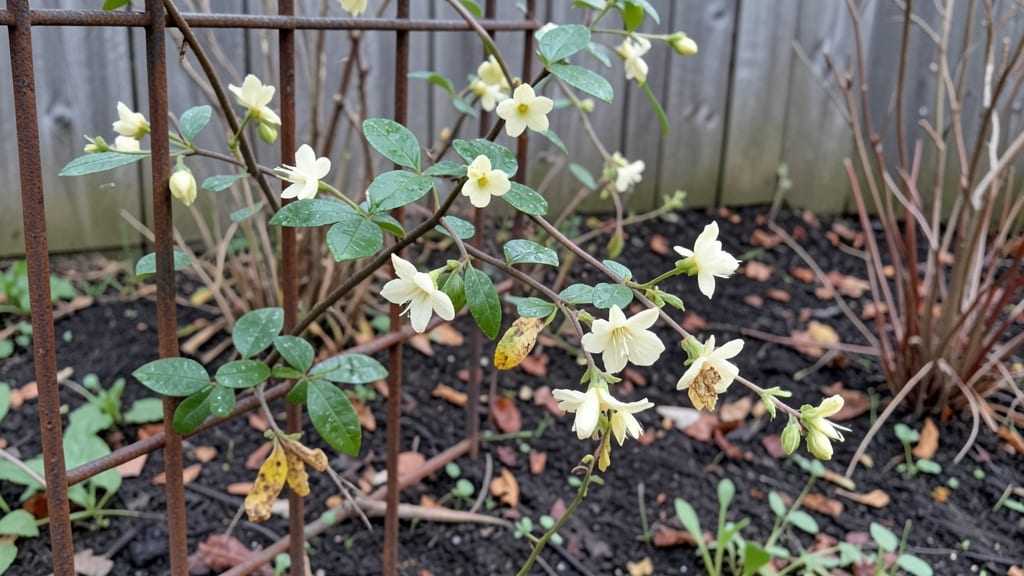
There's nothing like the intoxicating scent of yellow-flowered jasmine wafting through your garden on a warm afternoon. 🌿 I've grown both Jasminum officinale 'Aureum' and Jasminum mesnyi, and the golden blooms paired with that signature fragrance create a showstopper that's easier to grow than you'd think—even in partial shade.
The secret lies in mimicking its natural habitat: well-draining soil, consistent moisture without sogginess, and a sturdy trellis or fence for its climbing habit. Most varieties thrive in zones 7-10, but with winter protection, you can coax them along in cooler climates too.
Prune after flowering to encourage bushier growth, and watch as those glossy leaves frame clusters of bright yellow blossoms all summer long.
📚 In This Guide
- What you need
- Instructions
- Tips and common mistakes
- Wrapping up and next steps
What you need
- ● Yellow-flowered jasmine plant (e.g., Jasminum officinale ‘Primrose’ or Jasminum mesnyi): 1-2 mature plants (for established growth) or
- ● Seeds (if starting from scratch—germination can be tricky!)
- ● Well-draining potting mix or garden soil (amend with compost for nutrient-rich soil)
- ● Organic fertilizer (balanced 10-10-10 or slow-release granular)
- ● Support structure (trellis, arbor, or fence—jasmine loves to climb!)
- ● Watering can or hose with a gentle spray nozzle
- ● Pruning shears (sterilized, sharp blades for clean cuts)
- ● Gloves (to protect hands from thorns)
- ● Mulch (wood chips or straw to retain moisture)
- ● Slow-release fertilizer spikes (for hassle-free feeding)
- ● pH testing kit (ideal soil pH: 6.0–7.0)
- ● Plant ties or soft twine (to secure young vines to supports)
- ● Neem oil or insecticidal soap (preventative for pests like aphids)
Step-by-Step instructions for cultivating yellow flowered jasmine
Here's how to coax those golden blooms into your garden—partial shade is your ally, not a limitation.
🌱 Step 1: Select the Right Location and Prepare the Soil
Yellow jasmine (Jasminum officinale 'Primrose') thrives in partial shade—think 4-6 hours of morning sun with afternoon shade protection. I always choose a spot near a trellis, fence, or pergola where it can climb and spread its vines. The soil should drain well but retain moisture; amending heavy clay with 3-4 inches of compost works wonders.
Test your soil's moisture retention by squeezing a handful—it should hold together but not feel soggy. If your garden soil is sandy, mix in pearlite to improve water retention. Avoid low-lying areas where water pools after rain; yellow jasmine roots rot easily in soggy conditions. I dig a 12-inch deep hole for each plant, just wide enough to accommodate the root ball without bending roots.
🪴 Step 2: Plant and Provide Initial Support
Plant in early spring after the last frost, when soil temperatures reach 60°F or warmer. Gently remove the plant from its container and loosen any circling roots with your fingers. Place it in the hole so the top of the root ball sits 1 inch below soil level—this prevents stem rot from poor drainage.
Backfill with native soil mixed with compost, tamping lightly as you go. Immediately install a 5-6 foot trellis or obelisk within arm's reach of the planting hole. Yellow jasmine vines grow aggressively, so secure the first stems with soft plant ties or twine. Avoid metal ties—they cut into tender vines as they thicken. Water deeply right after planting to settle the soil and eliminate air pockets around roots.
☀️ Step 3: Water and Fertilize for Optimal Growth
Water 1-2 times per week during the first growing season, aiming for 1 inch of water per week. Check soil moisture by sticking your finger 2 inches deep—if it feels dry, water thoroughly. Yellow jasmine is drought-tolerant once established, but young plants need consistent moisture to develop strong roots. I water at the base in the morning to reduce evaporation and fungal risks.
Fertilize lightly in early spring with a balanced 10-10-10 fertilizer, using half the recommended dose. Too much nitrogen produces lush foliage but fewer flowers. I switch to a low-phosphorus, high-potassium fertilizer (like 5-5-10) when buds form in late spring to encourage blooming. Avoid fertilizing in fall—this stimulates tender new growth that won't survive winter.
✂️ Step 4: Prune and Train for Maximum Blooms
Prune yellow jasmine in late winter or early spring before new growth begins. Remove dead, diseased, or crossing branches first, then cut back overgrown stems by one-third to encourage bushier growth. I always prune just above a leaf node where new growth can emerge. For established plants, shape the vine by trimming leggy stems to redirect energy toward flowering.
Train vines along the trellis in a spiral pattern—this maximizes sunlight exposure and air circulation, both critical for preventing fungal diseases. Watch for yellowing leaves in late summer; this often signals powdery mildew. Spray affected areas with neem oil and improve airflow by thinning crowded vines. Deadhead spent blooms regularly to encourage continuous flowering through summer and fall.
⏰ Step 5: Winter Care for Next Year's Blooms
Yellow jasmine is semi-evergreen in mild climates but may drop leaves in freezing temperatures. In USDA zones 7 and colder, protect young plants by wrapping the trellis with burlap or a frost blanket after the first frost. Avoid plastic—it traps moisture and causes rot. In colder zones, cut back vines by half before winter to reduce winter damage.
Reduce watering in fall as growth slows, but don't let the soil dry out completely. Mulch the base with 2-3 inches of shredded bark to insulate roots. In early spring, remove winter protection and prune as described in Step 4. You'll see new growth within 2-3 weeks—a sure sign your plant is ready to bloom again. This is the moment that matters: patience in winter pays off with fragrant yellow blooms by summer.
Tips & tricks for perfect yellow flowered jasmine cultivation
Here's what nobody tells you about growing vibrant yellow jasmine that'll have your garden smelling like a Mediterranean paradise.
Location Secrets: That 4-6 hours of morning sun is non-negotiable, but here's the thing about afternoon shade—it's not just about avoiding hot sun. I've found that positioning your trellis to catch gentle afternoon breezes actually improves airflow, which is crucial for preventing fungal diseases that plague jasmine. Place your trellis near a wall that gets afternoon shade but still allows gentle air circulation.
Soil Science: The 3-4 inches of compost recommendation is just the beginning. For heavy clay soils, I mix in an additional 1-2 inches of coarse sand or perlite to create those tiny air pockets roots need. The squeeze test for moisture retention is brilliant, but I take it further by checking soil temperature too—ideal planting soil should be at least 60°F and preferably closer to 65°F. A simple soil thermometer makes this easy.
Pruning Precision: When you're cutting back those overgrown stems by one-third in Step 4, here's my game-changer: always make your cuts at a 45-degree angle just above a leaf node. This prevents water from pooling on the cut surface and creates a larger surface area for new growth. I also sterilize my pruners with rubbing alcohol between cuts to prevent spreading any potential diseases.
Winter Protection Strategy: That burlap or frost blanket recommendation is spot-on, but don't stop there. In zones 7 and colder, I add an extra layer of protection by wrapping the entire trellis structure with chicken wire first, then covering with burlap. This creates a microclimate that protects both the plant and the trellis from ice damage. The key is to leave some airflow—completely sealed protection leads to rot.
Pro Tips for Yellow Flowered Jasmine
- Here's what nobody tells you about growing vibrant yellow jasmine that'll have your garden smelling like a Mediterranean paradise.
- Location Secrets: That 4-6 hours of morning sun is non-negotiable, but here's the thing about afternoon shade—it's not just about avoiding hot sun.
- Soil Science: The 3-4 inches of compost recommendation is just the beginning.
Frequently asked questions
How fast does yellow-flowered jasmine grow?
This vigorous climber can grow 12–24 inches per year with proper care! With support (like a trellis or fence), it’ll quickly cover vertical spaces. Expect lush foliage and blooms in 2–3 years for mature plants. Pro tip: Regular pruning after flowering encourages bushier growth and more flowers!
When is the best time to plant yellow-flowered jasmine?
Plant in early spring or fall when temperatures are mild (50–70°F). Avoid extreme heat or frost, as young roots are sensitive. If planting in containers, use well-draining soil and place in partial shade until established. Bonus: Fall planting gives roots time to settle before winter!
Why aren’t my jasmine flowers opening, and how do I fix it?
Yellow-flowered jasmine may skip blooms due to too much shade, over-fertilizing, or stress. Try these fixes:
- Move to bright, indirect light (3–6 hours of sun).
- Use a balanced fertilizer (10-10-10) in spring, but avoid heavy doses.
- Check for pests like aphids or spider mites—spray with neem oil if needed.
Can I grow yellow-flowered jasmine in containers?
Choose a large container (at least 15 gallons) with drainage holes and use a mix of potting soil and perlite. Prune regularly to control size, and water when the top inch of soil is dry. Container tip: Rotate the pot occasionally for even growth, and feed with half-strength fertilizer every 4–6 weeks.
How and when should I prune my jasmine?
Prune right after flowering (late spring/early summer) to shape the plant and encourage new growth. Cut back 1/3 of the oldest stems to the nearest bud, and remove any dead or crossing branches. Safety first: Wear gloves—jasmine thorns are sharp! For climbing varieties, train vines along a trellis to prevent tangles.
What’s the difference between yellow jasmine and star jasmine?
While both are fragrant climbers, they’re not the same! Yellow jasmine (Jasminum officinale) has yellow, trumpet-shaped flowers and a strong scent, while star jasmine (Trachelospermum jasminoides) features white, star-like blooms with a lighter fragrance. Yellow jasmine is hardier in cooler climates (USDA Zones 7–10), whereas star jasmine thrives in Zones 7–11. Choose based on your climate and bloom color preference!
Wrapping up and next steps
Growing yellow flowered jasmine is a rewarding journey—its intoxicating fragrance and lush vines bring charm and serenity to any garden.
With the right soil, partial shade, and a little patience, you’ll soon enjoy its delicate blooms and sweet scent. Now’s the perfect time to plant! Grab your gloves, pick a sunny spot, and let this fragrant climber transform your space into a blooming paradise. 🌸
Next steps:
- Pick your yellow jasmine variety (like Jasminum officinale ‘Aureum’ or Jasminum polyanthum).
- Start with healthy cuttings or nursery plants.
- Monitor moisture and prune regularly for fuller growth.