Flowers
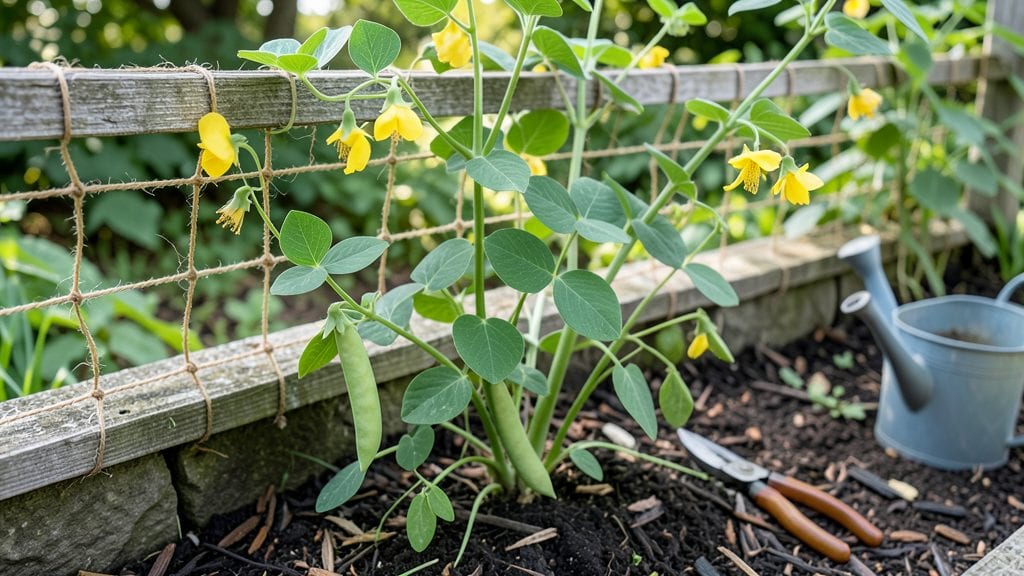
Growing yellow pea flowers from seed gives you frost-tolerant blooms that outshine store-bought cut flowers. 🌱 I've grown them in spring and fall for years, and they never fail to deliver cheerful, fragrant clusters that attract bees and butterflies.
The key is starting seeds early enough to beat the heat—these plants thrive when temperatures hover between 50°F and 70°F.
Most varieties like 'Moonlight' or 'Golden Sweet Pea' climb 5-7 feet on trellises, making them perfect for vertical gardens. They're edible too—young pods and blossoms add delicate sweetness to salads.
Just plant seeds 1 inch deep in well-draining soil with afternoon shade in hot climates, and watch them transform bare spaces into lush displays by early summer.
📚 In This Guide
- What you need
- Instructions
- Tips and common mistakes
- Wrapping up and next steps
What you need
- ● Yellow pea flower seeds – Choose a frost-resistant variety like Lathyrus odoratus (sweet pea) or Lathyrus vernus (spring pea). Aim for 10–20 seeds for a small patch or 50+ seeds for a full border.
- ● Seed-starting mix or well-draining potting soil – 5–10 lbs (for indoor starts) or 1–2 cubic feet (for direct sowing). Look for a blend with 30–40% compost for nutrient-rich growth.
- ● Containers or garden bed – Indoor starts: 4–6 inch diameter pots (1 per seedling) or seed trays with cells (50+ cells for bulk planting).
- ● Outdoor planting: A sunny, well-drained garden bed (6+ hours of sunlight daily) or raised beds (if your soil is heavy or waterlogged).
- ● Fertilizer – Balanced, slow-release fertilizer (e.g., 10-10-10 or 5-10-10) – 1–2 tbsp per 10 sq ft of soil.
- ● Organic options: Composted manure (1–2 lbs per sq ft) or worm castings (1 cup per sq ft).
- ● Hand trowel or small shovel – For planting seeds and transplanting seedlings.
- ● Spray bottle or watering can with a fine rose nozzle – Seeds need gentle, consistent moisture (avoid overwatering!).
- ● Garden twine or trellis – Yellow pea flowers are climbing vines! Use 5–6 ft tall stakes or a chicken wire trellis for support.
- ● Garden gloves – Protect your hands while handling soil and seeds.
- ● Pruning shears – For trimming dead blooms and encouraging bushier growth.
- ● Seedling heat mat – Speeds up germination if starting indoors in cool climates.
- ● Row covers or frost cloth – Protects young seedlings from late frosts (yellow pea flowers tolerate light frost but not hard freezes).
- ● Mulch (straw or shredded leaves) – Helps retain moisture and suppress weeds.
- ● Slow-release plant food – Extends nutrient supply for longer blooming seasons.
- ● Decorative stakes or labels – Keeps your garden organized and adds a cute touch!
Step-by-Step instructions for cultivating frost-resistant yellow pea flowers
Here's how I grow hardy yellow pea flowers that thrive even after light frosts—no fuss, just reliable blooms.
🌱 Step 1: Choose the Right Variety and Planting Time
Select a frost-resistant variety like 'Mammoth Melting Snow' or 'Oregon Sugar Pod'—these handle temperatures down to 20°F without damage. I plant mine 4-6 weeks before your last spring frost for early blooms, or in early fall for winter interest. The key is timing: seeds need 60-70 days to mature, so adjust based on your climate zone.
Peas dislike soggy soil, so avoid planting in low spots where water pools. A sunny location with at least 6 hours of light ensures strong stems and abundant blooms. I always test soil drainage first by digging a hole, filling it with water, and watching how quickly it drains—if it takes more than 30 minutes, amend with compost to improve aeration.
🌿 Step 2: Prepare Soil and Sow Seeds Correctly
Loosen the soil to a depth of 12 inches with a garden fork or tiller, breaking up any compacted layers. Peas thrive in well-draining, slightly acidic soil (pH 6.0-7.0). Mix in 2-3 inches of compost to provide nutrients without overfeeding—peas are light feeders and prefer lean soil to prevent leggy growth.
Sow seeds 1 inch deep and 2 inches apart in rows spaced 18 inches apart. I use a pea trellis or sturdy stakes right at planting to avoid disturbing roots later. Plant seeds in short rows (3-4 feet long) for easier trellising and harvesting. Water gently after sowing to settle the soil around seeds—don’t overwater, or they’ll rot before germinating.
☀️ Step 3: Provide Support and Maintain Consistent Moisture
As soon as seedlings reach 3-4 inches tall, gently wrap their vines around the trellis or tie them to stakes with soft plant ties. Peas need support to prevent sprawling, which weakens stems and reduces blooms. I check ties weekly—if they dig into the vine, loosen them immediately to avoid damage.
Water 1-2 inches per week, keeping soil evenly moist but never waterlogged. The secret to vibrant yellow blooms is consistent moisture—let the top 1 inch of soil dry between waterings, but never let plants wilt. Mulch with 2 inches of straw to retain moisture and suppress weeds, which compete for nutrients.
✂️ Step 4: Encourage Blooms and Extend the Season
Pinch back the first set of blooms if you want bushier plants—this redirects energy to stronger stems and more flowers later. I deadhead spent blooms regularly to encourage continuous flowering. For frost resistance, I plant a second crop in early fall (by September 1st in most zones) to enjoy blooms through winter.
Peas are self-pollinating, so no hand-pollination is needed. However, if you notice fewer pods, check for pea weevils—tiny black beetles that chew holes in flowers. I spray affected plants with neem oil in the evening to avoid harming bees. Harvest pods when they’re plump but still tender, usually 70-80 days after sowing.
⏰ Step 5: Overwintering for Next Year’s Blooms
After the first frost blackens foliage, cut back stems to 6 inches tall and mulch heavily with 4-6 inches of straw or leaves. This protects roots from freezing and allows regrowth in spring. I mark the area with stakes so I don’t disturb the soil when replanting next year.
Peas self-seed readily, so you’ll often find volunteers popping up in spring. Thin these to 3-4 inches apart for stronger plants. The key to long-term success is rotating planting locations every 2-3 years to prevent soil-borne diseases like powdery mildew.
Tips & tricks for perfect yellow pea flower cultivation
These tried-and-true strategies will help you grow vibrant, frost-hardy yellow pea flowers that keep blooming even after light frosts.
Variety Selection: While 'Mammoth Melting Snow' and 'Oregon Sugar Pod' are my top picks for frost resistance, don't overlook 'Golden Sweet'—it handles temperatures down to 20°F and produces particularly bright yellow blooms. These varieties all share the same 60-70 day maturity window, so you can confidently plant them together for consistent results. I always check seed packets for the "hardy" or "frost-tolerant" label to avoid disappointment.
Soil Preparation: The 12-inch deep soil loosening in Step 2 is crucial, but here's what nobody tells you: mix in a handful of wood ash (1 cup per 10 square feet) to naturally raise the pH slightly toward that ideal 6.0-7.0 range. This small adjustment prevents the soil from becoming too acidic, which can stunt growth. Test your soil's pH before planting—most garden centers sell inexpensive test kits.
Watering Wisdom: Those 1-2 inches per week of water should be applied consistently, but timing matters just as much. Water in the early morning to allow foliage to dry completely before evening—this prevents fungal diseases that can rot your plants. I use a rain gauge to track exactly how much water we're getting from natural rainfall, then supplement with drip irrigation for precision. The key is keeping that top 1 inch of soil consistently moist without waterlogging.
Frost Protection: For that second fall planting by September 1st, I recommend covering young plants with frost cloth when temperatures dip below 28°F. The cloth creates a 4-6°F temperature buffer, protecting your blooms. You can also create a simple frame using PVC pipes and row covers for a more permanent solution. Remember to remove covers during the day to prevent overheating—your plants still need sunlight to thrive.
Pro Tips for Yellow Pea Flower
- These tried-and-true strategies will help you grow vibrant, frost-hardy yellow pea flowers that keep blooming even after light frosts.
- These varieties all share the same 60-70 day maturity window, so you can confidently plant them together for consistent results.
- This small adjustment prevents the soil from becoming too acidic, which can stunt growth.
Frequently asked questions
Got questions about growing yellow pea flowers (Lathyrus odoratus)?
You’re not alone! Here are some of the most common queries—and their easy, practical answers to help you cultivate showstopping blooms with confidence.
When is the best time to plant yellow pea flower seeds?
For frost-resistant success, sow seeds 4–6 weeks before your last spring frost (or directly into the garden after soil warms to 50°F+). In warmer climates, plant in fall for winter blooms. Pea flowers thrive in cool weather—avoid planting in scorching summer heat!
How long does it take for yellow pea flowers to bloom?
From seed, expect 60–90 days to first bloom if planted early spring. If starting with transplants, blooms may appear in 4–6 weeks. Patience pays off—consistent watering and support (like trellises) speed up flowering. Pro tip: Deadhead spent blooms to encourage nonstop color!
Can I grow yellow pea flowers in containers or small spaces?
Choose compact varieties (like ‘Tom Thumb’) or dwarf types, and plant in 5–7 gallon containers with well-draining soil. Ensure containers have support for vining (e.g., small trellises or cages) and provide 6+ hours of sun daily. Containers dry faster—water regularly!
Why aren’t my yellow pea flowers blooming? Troubleshooting tips.
Common culprits:
- Too much nitrogen (focus on balanced fertilizer like 5-10-10).
- Overcrowding—thin seedlings to 2–3 inches apart.
- Lack of support—vines need trellises to climb.
- Heat stress—blooms may fade in >85°F. Use shade cloth if needed.
What are some alternatives to yellow pea flowers for similar color?
If you love bright yellow blooms but want variety, try:
- Sweet Peas (Lathyrus odoratus)—other colors like pink, purple, or bicolor.
- Black-Eyed Susans (Rudbeckia)—golden-yellow perennials with long bloom seasons.
- Coreopsis—drought-tolerant and cheerful in sunny gardens.
- Marigolds (Tagetes)—edible, pest-repelling, and heat-loving.
Wrapping up and next steps
The yellow pea flower is a hardy, cheerful addition to any garden, offering vibrant blooms and minimal fuss—perfect for both beginners and seasoned gardeners! 🌸 With the right soil, sunlight, and a little patience, you’ll be rewarded with stunning, frost-resistant flowers that brighten up your outdoor space.
Whether you’re growing them for their beauty or pollinator-friendly benefits, your efforts will pay off in a burst of color.
Ready to transform your garden? Start by gathering your supplies and planting those seeds—your future blooms will thank you! 🌱