
Flowers
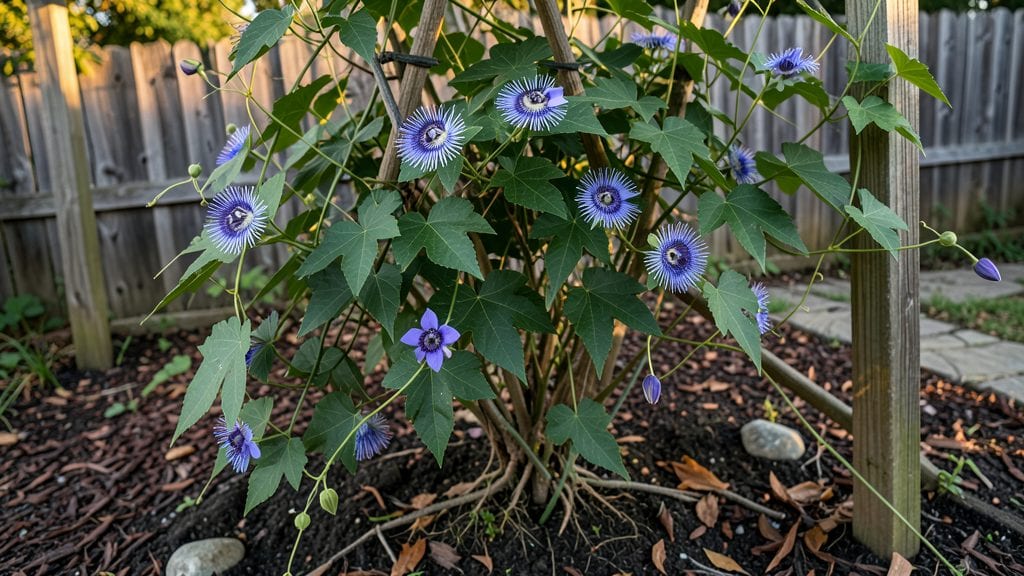
The blue passion flower climber brings bold tropical drama to Pacific Northwest gardens where other vines struggle. I planted mine last spring after years of dreaming about that electric blue flower—it thrives here better than I expected, even through our damp summers.
The secret lies in mimicking its native high-altitude habitat: bright light, well-draining soil, and a sturdy trellis to support its vigorous growth.
This vine isn’t fussy about soil as long as it drains well—my mix of compost, coconut coir, and perlite keeps it happy. Water when the top inch dries out, but don’t let it sit soggy (root rot is the enemy).
With 6-8 hours of sunlight daily, it rewards you with velvety foliage and those signature blue trumpets starting in early summer. The real magic happens when you prune back leggy growth after flowering—it forces bushier, more productive vines for next year.
What you’ll end up with is a lush, flowering wall that hummingbirds adore and neighbors envy. The blooms last weeks, and even if frost threatens, the vine’s semi-woody stems often survive winter with minimal protection.
Pair it with clematis or morning glories for a showstopping vertical garden that outperforms many PNW plants. The only challenge? Keeping it contained—this climber grows 10-15 feet annually if unchecked.
For PNW gardeners, the key is starting early—plant in spring after last frost when soil warms to 55°F. Use a 10-foot trellis or arbor to give it room to climb, and fertilize lightly with fish emulsion when buds form.
The first year is about establishing roots; by year two, you’ll have a flowering powerhouse that turns heads at every garden tour. Worth every bit of effort for that tropical punch in our cool climate.
📚 In This Guide
- What you need
- Instructions
- Tips and common mistakes
- Wrapping up and next steps
What you need
- ● Blue passion flower vine (Passiflora caerulea) – 1 healthy plant (bare-root, potted, or seeds). Pro tip: Seeds take longer to sprout, so start with a nursery-grown vine for faster results! 💡
- ● Well-draining potting mix – 5 gallons (for containers) or amended garden soil (for in-ground planting). Mix in compost (1 part compost to 3 parts soil) for nutrients.
- ○ Support structure – A trellis (6–8 ft tall), arbor, or sturdy fence. Optional: Add twine or soft ties to gently guide young vines. 🎯
- ● Organic fertilizer – Balanced 10-10-10 or fish emulsion (follow label instructions for application rates).
- ○ Mulch (optional but recommended) – Wood chips or straw (2–3 inches deep) to retain moisture and suppress weeds.
- ● Garden trowel or shovel – For planting and soil prep.
- ● Pruning shears – To trim dead or overgrown vines (sterilize with rubbing alcohol!).
- ● Gloves – Protect your hands from thorns (this plant has plenty!).
- ● Watering can or hose with gentle spray nozzle – Passion flowers hate soggy roots!
- ○ pH test kit (optional) – Ideal soil pH: 6.0–7.0. Amend with lime or sulfur if needed.
- ● Sunlight – Full sun (6+ hours/day). In the PNW, a south-facing wall or sheltered spot works best.
- ● Hardiness zone – USDA Zones 5–9. In colder PNW areas (Zone 7–8), plant in a container** for winter protection.
- ● Drainage – No standing water! Raise containers or amend clay soil with perlite/sand.
- ● Patience – Vines grow fast (10+ ft/year), but flowers may take 1–2 seasons to appear.
Step-by-Step guide to growing a thriving blue passion flower climber
Here’s how to transform your Pacific Northwest garden into a lush tropical escape with this stunning vine.
Select the Perfect Planting Location
Blue passion flowers (Passiflora caerulea) crave warmth and sunlight, so choose a spot that gets at least 6 hours of direct sun daily. In the Pacific Northwest, this means a south- or west-facing wall, trellis, or fence—where winter sun can still reach. Avoid shady spots; the plant will grow leggy and produce fewer flowers. If you must plant in partial shade, expect smaller blooms and slower growth.
I always check the site in late afternoon when the sun is low—this helps gauge how much light the area truly receives. If your garden gets heavy afternoon shade, consider a container you can move to sunnier conditions in summer. The vine’s tendrils will naturally cling to any sturdy support, so install a trellis or arbor at planting time to avoid disturbing roots later.
Prepare the Soil and Plant with Care
Passion flowers thrive in well-draining, slightly acidic soil with a pH between 6.0 and 7.0. In the Pacific Northwest’s often damp climate, amend heavy or clay soil with 2-3 inches of compost and a handful of perlite or sand to improve drainage. Avoid waterlogged soil—this plant’s roots rot easily. If planting in a container, use a mix of 50% potting soil and 50% perlite or coconut coir for optimal airflow.
Dig a hole twice as wide as the root ball but only as deep. Position the plant so the top of the root ball sits 1 inch below soil level—this prevents stem rot from sitting water. Gently loosen the roots if they’re circling and spread them outward before backfilling. Water deeply after planting to settle the soil and encourage root contact.
Provide Support and Encourage Vigorous Growth
Install a trellis, arbor, or sturdy fence at planting time—passion flowers grow 10-20 feet per season and need immediate support. I use a 5-foot tall wooden trellis for smaller gardens and a chain-link fence for larger spaces. The tendrils will latch onto any rough surface, but smooth materials like glass or metal may need twine or netting for grip.
Fertilize lightly in early spring with a balanced 10-10-10 fertilizer to jumpstart growth. Avoid high-nitrogen feeds—this promotes leafy growth at the expense of flowers. Instead, use a low-nitrogen, high-phosphorus fertilizer (like 5-10-10) when buds form to encourage blooming. Water deeply once a week during dry spells, ensuring the top 6 inches of soil stay moist but not soggy.
Prune and Maintain for Abundant Blooms
Prune in late winter or early spring before new growth begins. Remove dead or weak stems at the base, and cut back any overcrowded growth to improve airflow. I also trim back one-third of the oldest wood each year to stimulate new, flowering shoots. Never prune after mid-summer—this reduces next year’s blooms.
Watch for aphids or spider mites, common pests in Pacific Northwest gardens. Spray infested areas with neem oil or insecticidal soap at the first sign of trouble. Deadhead spent flowers regularly to encourage more blooms, but leave some seed pods if you want to propagate new plants. In colder regions, mulch heavily in fall to protect roots from freezing.
Overwinter for Next Year’s Growth
Blue passion flowers are hardy to USDA Zone 6, but Pacific Northwest winters can still be harsh. In colder microclimates, cut back the vine to 6 inches tall in late fall and mound 4-6 inches of mulch around the base. Wrap the trellis or support in burlap to protect it from wind and snow. In containers, move the pot to a garage or unheated shed and reduce watering to once every 2-3 weeks.
Resist the urge to prune too early—wait until after the last frost date in your area. New growth is delicate and won’t survive unexpected cold snaps. With proper overwintering, your passion flower will burst back to life in spring, ready to climb and bloom again.
Tips & tricks for perfect blue passion flower climber growth
These little-known tricks will help your blue passion flower thrive in Pacific Northwest conditions—turning your garden into a tropical paradise.
Sunlight Secret: The 6 hours of direct sun mentioned in Step 1 is non-negotiable, but here's the thing: morning sun is more important than afternoon in our climate. Position your vine to catch those warm morning rays first—this gives the plant the energy boost it needs to handle our often cloudy afternoons. If you're checking light conditions, do it between 10am-2pm when the sun is at its peak.
Soil Prep Pro Tip: For that perfect 6.0-7.0 pH range in Step 2, test your soil first—most Pacific Northwest gardens are naturally acidic. If your soil tests lower than 6.0, mix in a handful of crushed limestone into your planting hole. For containers, use a pre-mixed tropical blend with added perlite—it already has the right pH balance. Don't forget to water deeply after planting to help the roots establish quickly in our damp climate.
Support Strategy: When installing your trellis in Step 3, make it sturdy enough to handle that 10-20 feet of growth per season. I've seen too many flimsy trellises collapse under the weight—opt for metal or thick wooden posts if you're in windy areas. For smooth surfaces like metal fences, wrap them with burlap first to give those tendrils something to grip. And here's a bonus: install your support at a 45-degree angle if space is tight—it creates a more compact growth habit.
Winter Prep: That 4-6 inches of mulch in Step 5 is crucial, but don't just pile it on randomly. Create a donut shape around the base, leaving the center exposed to prevent rot. For container plants, move them to your garage or shed before the first frost—even Zone 6 hardiness has limits in our unpredictable winters. I always wrap the pot in bubble wrap for extra insulation during transport.
Pro Tips for Blue Passion Flower Climber
- These little-known tricks will help your blue passion flower thrive in Pacific Northwest conditions—turning your garden into a tropical paradise.
- Sunlight Secret: The 6 hours of direct sun mentioned in Step 1 is non-negotiable, but here's the thing: morning sun is more important than afternoon in our climate.
- Soil Prep Pro Tip: For that perfect 6.0-7.0 pH range in Step 2, test your soil first—most Pacific Northwest gardens are naturally acidic.
Frequently asked questions
Got questions about growing blue passion flower climbers in your Pacific Northwest garden?
You’re not alone! Here are answers to the most common queries—from planting tips to troubleshooting—so you can enjoy these stunning vines with confidence.
How fast does blue passion flower grow, and how tall can it get?
Blue passion flower (Passiflora caerulea) is a fast grower—expect 3–6 feet per year in ideal conditions! With proper support (like a trellis or arbor), it can reach 10–15 feet tall and spread 8–10 feet wide. In the PNW’s milder climate, it thrives year-round, though growth slows in winter. Pro tip: Prune in late winter to control size and encourage bushier growth!
Is blue passion flower hardy in the Pacific Northwest’s rainy climate?
This vine is USDA Zone 6–10 hardy, making it perfect for PNW gardens (including Seattle and Portland). While it loves moisture, avoid soggy soil—ensure well-draining soil and elevate containers if needed. Mulch helps retain warmth in cooler microclimates. Watch out: Heavy rain can stress young plants, so stake them until established.
What pests or diseases should I watch for with blue passion flower?
Common issues include aphids, spider mites, and passion vine hoppers. Treat mild infestations with a strong spray of water or insecticidal soap. Fungal diseases (like powdery mildew) can occur in humid conditions—improve airflow and avoid overhead watering. Preventative tip: Neem oil works wonders as a natural deterrent!
When and how should I prune my blue passion flower for best blooms?
Prune in late winter or early spring before new growth starts. Cut back 1/3 of the vine to encourage flowering and remove dead/diseased stems. Key trick: Trim just above a leaf node (bud) to redirect energy to blooms. Avoid heavy pruning in fall—let the plant store energy for winter!
Can I grow blue passion flower in containers, and what’s the best setup?
Yes! Use a large container (15+ gallons) with drainage holes and a well-draining potting mix. Choose a sunny spot (6+ hours of light) and a trellis or cage for support. Container hack: Add composted manure in spring for a nutrient boost. In winter, move pots to a sheltered area if temps drop below 20°F.
What are some low-maintenance alternatives if blue passion flower is too high-maintenance?
If you want vibrant, low-fuss climbers for the PNW, try:
- Clematis (Clematis spp.) – Hardy, drought-tolerant, and blooms prolifically.
- Honeysuckle (Lonicera) – Fragrant, fast-growing, and attracts pollinators.
- Climbing roses (Rosa spp.) – Classic, repeat-blooming, and cold-hardy.
- Star jasmine (Trachelospermum jasminoides) – Evergreen, fragrant, and thrives in shade.
Wrapping up and next steps
Transforming your Pacific Northwest garden with a blue passion flower climber isn’t just about adding beauty—it’s about embracing resilience and tropical charm in a climate that loves to challenge it. 🌿 With the right care, this stunning vine will reward you with vibrant blooms, fragrant leaves, and a lush canopy that thrives even in cooler, wetter conditions.
Whether you’re a seasoned gardener or just starting out, the key is patience, adaptability, and a little extra love.
Ready to take the next step? Start small—plant a single vine in a sunny spot, experiment with trellises, and watch your garden come alive. Before you know it, your blue passion flower climber will be the star of your outdoor space, turning heads and filling your heart with joy.
Happy gardening! 🌸