
Flowers
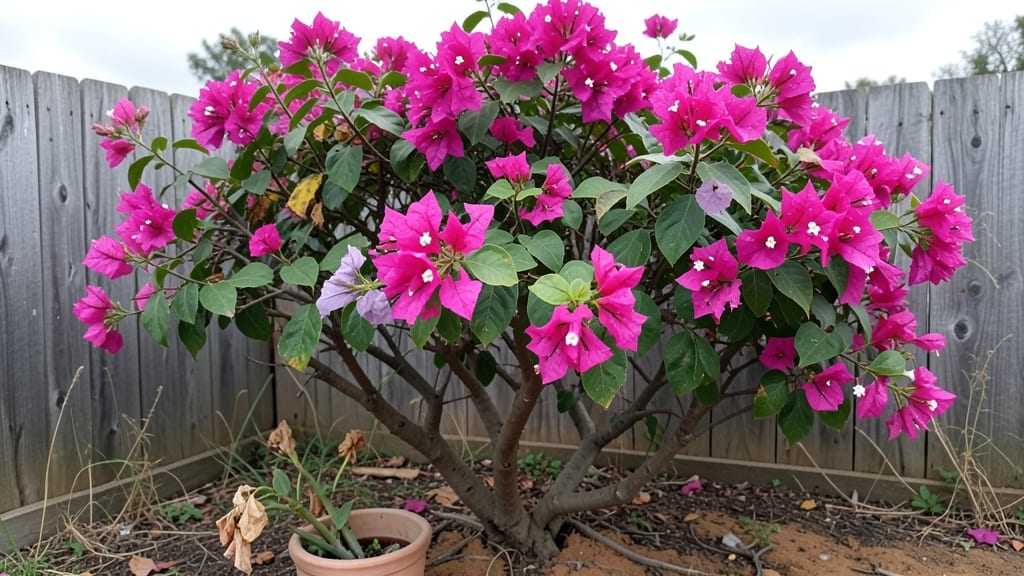
The bougainvillea flowers benefits go far beyond their bold hues—these heat-loving blooms thrive year-round, turning bare walls into vibrant art with fiery magenta, orange, or purple bracts that refuse to fade, even in summer’s peak. 🌺 brick.
The real magic? It thrives where other plants wilt, demanding less water and fuss than a cactus.
What sets bougainvillea apart is its drought-defying resilience—once established, it drinks only when it’s thirsty, making it perfect for Mediterranean climates, urban balconies, or even containers on fire escapes. It grows fast too, filling gaps in landscapes within months while attracting hummingbirds and bees that other drought-tolerant plants ignore.
The flowers last for weeks, and with proper pruning, you can coax two blooming seasons a year.
Beyond beauty, bougainvillea is a low-maintenance powerhouse for pollinators and erosion control—its sprawling vines stabilize slopes and terraces while providing shelter for beneficial insects. Plus, it’s non-toxic to pets and people, debunking the myth that it’s a high-maintenance diva.
The only catch? It needs full sun and well-draining soil, but even that’s easier than babysitting finicky annuals.
Whether you’re dressing up a fence, creating a privacy screen, or just adding color to a concrete jungle, bougainvillea delivers effortless drama with minimal effort. Here’s how to keep it blooming like a pro—no green thumb required.
📚 In This Guide
- What you need
- Instructions
- Tips and common mistakes
- Wrapping up and next steps
What you need
- ● Bougainvillea Plants: 1–3 healthy bougainvillea plants (choose drought-resistant varieties like Bougainvillea spectabilis or Bougainvillea glabra)
- ● Potted plants (4–6 inches in diameter) or bare-root seedlings for transplanting
- ● Soil & Fertilizers: Well-draining cactus or succulent mix (avoid heavy clay soil!)
- ● Slow-release balanced fertilizer (10-10-10) (1–2 tbsp per plant, 2–3 times a year)
- ● Organic compost (1 cup per plant for nutrient boost)
- ● Containers or Garden Space: Containers: 5–7 gallon pots with drainage holes (terracotta or fabric pots work best)
- ● Garden beds: Full sun exposure (6+ hours/day) and slopes or trellises for climbing varieties
- ● Watering & Care Supplies: Watering can or hose with a gentle spray nozzle (bougainvillea hates soggy roots!)
- ● Pruning shears (sterilized with rubbing alcohol)
- ● Mulch (gravel or bark chips to retain moisture and deter weeds)
- ● Epsom salt (1 tbsp/month for magnesium boost)
- ● Floral wire or trellis for training vines
- ● Slow-release time capsules for seasonal feeding
- ● Drought-resistant ground cover (like sedum) to complement your bougainvillea
How to maximize bougainvillea flowers' benefits in your garden
This vibrant plant delivers bold color, drought resistance, and year-round interest—here's how to nurture its best traits.
🌿 Step 1: Choose the Right Variety for Your Climate
Bougainvillea thrives in USDA Zones 9-11 but many varieties tolerate brief dips to 25°F with proper protection. Look for Bougainvillea glabra for heat tolerance or Bougainvillea spectabilis for its striking magenta bracts. Dwarf varieties like 'San Diego Red' work well in containers, while sprawling types need trellises or fences for support.
Here's the thing—most nurseries sell bougainvillea as mature plants, not seeds. This means you skip the germination phase entirely and can enjoy vibrant blooms within 2-3 months of planting. Just confirm the plant is labeled as "flowering" rather than "vegetative"—non-flowering plants may take a full year to produce bracts.
☀️ Step 2: Position for Maximum Sun and Airflow
Bougainvillea demands full sun exposure (6+ hours daily) to produce its signature bracts. Place it where it receives morning sun and afternoon shade in hot climates, or full sun all day in coastal areas. The plant's drought resistance comes from its ability to conserve water under intense sunlight—never compromise on light.
Watch for leggy growth or sparse blooms—these are signs of insufficient light. You'll see the healthiest plants developing thick, woody stems and vibrant bracts that last 4-6 weeks per flush. Prune back any stems growing toward shade to redirect energy to sun-exposed branches.
💧 Step 3: Water Strategically to Encourage Drought Tolerance
Water deeply once every 7-10 days during the growing season, allowing the top 2-3 inches of soil to dry completely between waterings. Overwatering causes root rot and weakens the plant's natural drought resistance. In containers, check soil moisture by inserting your finger—if it feels dry at 1 inch deep, it's time to water.
Real talk: bougainvillea's drought tolerance is legendary, but it still needs occasional deep watering to establish roots. Mulch with 2-3 inches of organic mulch (like wood chips) to retain moisture and regulate soil temperature. You'll notice fewer wilting leaves and more vigorous blooming once the roots stay consistently moist without being soggy.
✂️ Step 4: Prune for Continuous Flowering and Health
Prune bougainvillea twice yearly: once in late winter to shape the plant and again in early summer to encourage new blooms. Cut back 1/3 of the plant's length in winter, focusing on older, woody stems. In summer, trim just above a leaf node to promote branching and flower production.
This is the moment that matters: bougainvillea blooms only on new growth. If you skip pruning, you'll end up with long, bare stems and sporadic flowers. After pruning, fertilize lightly with a balanced 10-10-10 fertilizer to support regrowth. You'll see fresh, vibrant bracts emerging within 4-6 weeks of summer pruning.
🌱 Step 5: Protect and Maintain for Year-Round Benefits
In colder climates, wrap the plant in burlap or frost cloth when temperatures drop below 35°F to prevent damage. Even in warm zones, bougainvillea benefits from a light winter pruning to remove dead or weak growth. Apply a 2-inch layer of mulch around the base in winter to insulate roots.
Don't skip this (I learned the hard way): bougainvillea's thorns are sharp—wear gloves when pruning. Also, monitor for pests like spider mites or scale, which thrive in dry conditions. A weekly spray of water on the foliage during hot months deters pests and keeps leaves dust-free, ensuring the plant can photosynthesize efficiently.
Tips & tricks for maximizing bougainvillea flowers' benefits
These strategic insights will help you transform your bougainvillea into a year-round flowering powerhouse that thrives with minimal fuss.
Variety Selection Wisdom: When choosing your bougainvillea, pay special attention to the bract color intensity—some varieties like 'Bougainvillea spectabilis' produce the most vibrant magenta hues, while others offer softer pinks or purples. For container gardening, opt for dwarf varieties like 'San Diego Red' which bloom prolifically in small spaces. Remember, those labeled "flowering" will give you immediate color, while "vegetative" plants may take up to a year to produce bracts—worth the wait for dedicated growers!
Sunlight Optimization Strategy: The 6+ hours of daily sunlight requirement isn't just about quantity—it's about quality. Position your bougainvillea where it receives morning sun and afternoon shade in extreme heat zones (like desert climates) to prevent leaf scorch. In coastal areas with milder temperatures, full sun exposure all day will maximize those vibrant bracts. Pro tip: Rotate container plants quarterly to ensure even sun exposure on all sides, which prevents lopsided growth and encourages uniform flowering.
Pruning Precision: That twice-yearly pruning schedule in Step 4 is your secret weapon for continuous blooms. When you cut back 1/3 of the plant's length in winter, you're not just shaping—you're stimulating new growth that will produce flowers. The key is to trim just above a leaf node, not at a joint, to encourage branching. After summer pruning, you'll see fresh bracts emerge within 4-6 weeks, proving that strategic cuts create more blooms than random snips.
Cold Climate Protection: The 35°F threshold isn't arbitrary—it's when bougainvillea's tender stems begin to suffer frost damage. In colder zones, wrap plants with burlap or frost cloth before temperatures drop, and remember to remove the protection during the day to allow sunlight access. For extra insurance, consider planting near south-facing walls that absorb and radiate heat. Even in warm climates, that light winter pruning removes weak growth and helps the plant focus energy on producing vibrant new bracts in spring.
Pro Tips for Bougainvillea Flowers Benefits
- These strategic insights will help you transform your bougainvillea into a year-round flowering powerhouse that thrives with minimal fuss.
- For container gardening, opt for dwarf varieties like 'San Diego Red' which bloom prolifically in small spaces.
- Sunlight Optimization Strategy: The 6+ hours of daily sunlight requirement isn't just about quantity—it's about quality.
Frequently asked questions
Got questions about bougainvillea flowers? You’re not alone! Here are some of the most common queries—and their answers—to help you make the most of these vibrant, low-maintenance beauties.
Can bougainvillea flowers be eaten?
While bougainvillea flowers are technically edible, they’re not commonly consumed due to their bitter taste and potential toxicity in large quantities. The bracts (the colorful parts) are safe in moderation, but always remove the tiny, spiky calyx (the true flower) first. If you’re feeling adventurous, try them in salads or as a garnish—but stick to small amounts!
How long do bougainvillea flowers last on the plant?
Bougainvillea flowers are short-lived but prolific! Each cluster typically blooms for 2–4 weeks before fading, but the plant produces new flowers continuously if pruned correctly. With proper care (sun, water, and occasional trimming), you’ll enjoy year-round color in warm climates. In cooler months, expect a dormancy period where blooms slow down.
Do bougainvillea flowers need special watering?
Not at all! These drought-defying stars thrive on infrequent, deep watering. Water when the top 2–3 inches of soil are dry—overwatering is the #1 killer. In containers, check soil moisture daily in extreme heat. Pro tip: Mulch around the base to retain moisture and keep roots cool.
Can bougainvillea grow in pots, or do they need a garden?
Bougainvillea loves containers—just choose a pot with drainage holes and use a well-draining soil mix. Opt for 10–15 gallon pots for mature plants, and fertilize lightly during blooming season. They’re perfect for patios, balconies, or even hanging baskets! Just ensure they get 6+ hours of sun daily.
Are bougainvillea flowers good for pollinators?
Yes! While bougainvillea’s true flowers (the tiny yellow ones) attract bees and butterflies, the colorful bracts are purely for show. To boost pollinator appeal, plant bougainvillea near native flowers like lavender or salvia. Avoid pesticides, and you’ll create a bee-friendly oasis!
Why aren’t my bougainvillea flowers opening?
No blooms? Don’t panic! Common causes include:
- Too much shade: Move to a sunny spot (6+ hours/day).
- Over-fertilizing: Too much nitrogen = leafy growth, not flowers. Use a low-nitrogen, high-phosphorus fertilizer instead.
- Lack of pruning: Trim back 1/3 of the plant in early spring to encourage new growth (and blooms!).
- Stress: Check for pests, root rot, or sudden temperature drops.
Wrapping up and next steps
From their vibrant hues to their drought-resistant charm, bougainvillea flowers offer more than just beauty—they’re a low-maintenance, eco-friendly powerhouse for gardens and wellness.
Whether you’re drawn to their medicinal properties, air-purifying benefits, or versatile landscaping potential, these resilient blooms prove that nature’s best gifts don’t require much to thrive. 🌸
Ready to bring bougainvillea’s magic into your space? Start small—plant a single cutting in a sunny spot, or explore organic remedies like their flower-infused teas. Your garden (and your health) will thank you!