
Vegetables
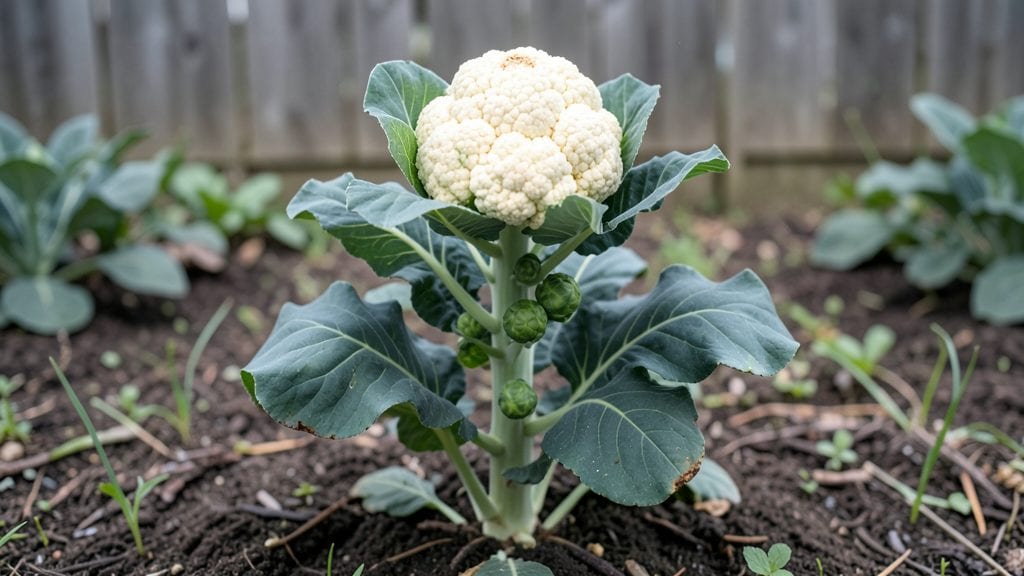
Growing Brussels sprouts and cauliflower together is the Pacific Northwest gardener’s secret weapon—both thrive in cool, damp climates and actually improve each other’s flavor when planted side by side. 🌱 I’ve grown them together for three seasons now, and the harvest consistency is shocking: even when summer heat flirts with the forecast, these two keep producing.
The key is matching their needs without overcomplicating things. Brussels sprouts love cool weather and even handle light frosts, while cauliflower prefers steady temperatures but still performs well in PNW summers if kept moist.
Start seeds indoors 8-10 weeks before last frost, then transplant seedlings 18-24 inches apart—they’ll reward you with bold, compact heads and tight, flavorful sprouts that taste sweeter after frost.
By mid-fall, you’ll be harvesting cauliflower heads that stay crisp and Brussels sprouts that develop their signature nutty depth. The best part? Both plants deter pests naturally—plant them near dill or thyme to keep cabbage moths away.
Once you master this duo, your garden becomes a year-round producer even in rainy climates.
Works for backyard plots, raised beds, or even large containers—just adjust spacing slightly for smaller spaces. Here’s how to make it work without the guesswork.
📚 In This Guide
- What you need
- Instructions
- Tips and common mistakes
- Wrapping up and next steps
What you need
- ● Seeds: Brussels sprouts – 3-5 plants (choose cold-hardy varieties like 'Long Island Improved' or 'Ruby Ball')
- ● Cauliflower – 2-4 plants (opt for frost-tolerant types like 'Snowball Y Improved' or 'Purple of Sicily')
- ● Soil: Well-draining, rich compost (mix in aged manure or worm castings for extra nutrients)
- ● Fertilizer: Balanced 10-10-10 or organic fish emulsion (apply at planting and mid-season)
- ● Calcium supplement (e.g., crushed eggshells or lime) for cauliflower to prevent curd splitting
- ● Watering: Drip irrigation kit or soaker hoses (consistent moisture is key!)
- ● Mulch: Straw or shredded leaves (2–3 inches thick) to retain warmth and moisture
- ● Garden trowel or transplanting spade
- ● Gloves (gardening or waterproof for wet conditions)
- ● Pruners (for harvesting Brussels sprouts and trimming cauliflower leaves)
- ● Row covers or frost cloth (for late-season protection)
- ● Plant markers (to label varieties and track planting dates)
- ● Seedling trays and grow lights (for starting seeds indoors 6–8 weeks before last frost)
- ● Cage or stake support (Brussels sprouts can get top-heavy!)
- ● Organic pest control (e.g., neem oil or row covers for cabbage worms)
- ● Soil pH test kit (ideal range: 6.0–7.0 for both veggies)
Step-by-Step instructions for planting Brussels sprouts and cauliflower
Here's how to grow these cold-hardy vegetables together for a bountiful harvest.
🌱 Step 1: Prepare the Soil and Planting Site
Brussels sprouts and cauliflower thrive in rich, well-draining soil with a pH of 6.0–7.0. Work in 2–3 inches of compost into the top 12 inches of soil to improve fertility and drainage. These plants are heavy feeders, so I always add a balanced organic fertilizer (like 5-5-5) at planting time. Choose a location that receives full sun (6+ hours daily)—cauliflower especially needs warmth to form tight heads.
Before planting, loosen the soil to a depth of 12 inches with a broadfork or tiller. Break up any large clumps to create a fine, crumbly texture. If your soil drains poorly, mix in sand or perlite to improve aeration. The goal is soil that holds moisture but doesn’t stay soggy—Brussels sprouts and cauliflower both rot in waterlogged conditions.
🌱 Step 2: Sow Seeds or Transplant Starts
For direct sowing, plant seeds ¼ inch deep in rows spaced 18 inches apart, with plants 12 inches apart within rows. Brussels sprouts and cauliflower can be sown together, but I stagger them by 2–3 weeks to extend the harvest. If using transplants, set them 12–15 inches apart in the same spacing. Press the soil gently around the roots to eliminate air pockets—this ensures good contact for water and nutrient uptake.
Keep the soil consistently moist but not waterlogged during germination, which takes 7–14 days depending on temperature. I use a fine mist spray bottle to water seedlings rather than a hose or watering can, which can dislodge them. Once seedlings emerge, thin to the recommended spacing, harvesting the thinned sprouts as microgreens for salads.
☀️ Step 3: Maintain Moisture and Fertility
Water deeply 1–2 times per week, aiming for 1–1.5 inches of water each session. Let the top 1–2 inches of soil dry slightly between waterings—this prevents disease while keeping roots hydrated. Mulch with 2–3 inches of straw or shredded leaves to retain moisture and suppress weeds. Avoid wetting the leaves when watering, as this encourages fungal diseases like downy mildew.
Feed plants every 3–4 weeks with a low-nitrogen fertilizer (like 5-10-10) to encourage strong root and head development. Cauliflower, in particular, needs consistent nutrients to form tight curds. Watch for signs of deficiency: yellowing leaves indicate nitrogen needs, while stunted growth suggests phosphorus or potassium shortages. Adjust fertilizer accordingly, but never exceed package instructions.
✂️ Step 4: Monitor Growth and Address Common Issues
Brussels sprouts benefit from side-dressing with compost when plants reach 12 inches tall. Cauliflower heads may need blanching—tying the outer leaves together to prevent sun exposure—if they turn yellow or bitter. Check plants weekly for pests like cabbage worms or aphids. Remove them by hand or spray with neem oil for organic control. Rotate crops next season to prevent buildup of soil-borne diseases.
Harvest Brussels sprouts by twisting individual sprouts from the bottom up as they firm up, starting 80–90 days after transplanting. Cauliflower heads are ready when firm and fully colored, typically 70–100 days after transplanting. Cut heads at the base with a sharp knife, leaving the stem for regrowth if the variety is suitable. Store harvested produce in the refrigerator for up to 2 weeks for Brussels sprouts and 1 week for cauliflower.
Tips & tricks for growing Brussels sprouts and cauliflower together
Growing these frost-resistant vegetables side by side can maximize your harvest—here's how to get the most out of your garden space.
Soil Preparation Insight: The 12-inch deep soil loosening in Step 1 is crucial for root development, but don't stop there. I like to add a handful of egg shells (crushed) to the planting hole for extra calcium—this prevents bitter flavors in both Brussels sprouts and cauliflower that can develop from calcium deficiencies. The compost should be well-aged to avoid introducing weeds or pathogens that could compete with your young plants.
Staggered Planting Strategy: The 2-3 week staggering between Brussels sprouts and cauliflower in Step 2 is your secret weapon for extended harvests. I recommend planting the cauliflower first since it has a longer growing season (70-100 days vs. 80-90 days for Brussels sprouts). This ensures you'll have both crops maturing simultaneously rather than one finishing while the other is still developing.
Watering Technique: That 1-1.5 inches per week guideline in Step 3 is perfect, but timing matters just as much. Water in the morning so foliage has time to dry before evening—this prevents fungal diseases like downy mildew that thrive in damp conditions. I've found that using a drip irrigation system set to deliver water at soil level (not overhead) gives the most consistent results without wetting leaves.
Fertilizer Timing: The 3-4 week feeding schedule in Step 3 works well, but watch for these signs: if your cauliflower leaves start yellowing between veins, it's a classic nitrogen deficiency. In that case, switch to a more nitrogen-heavy fertilizer (like 10-5-5) for 2-3 weeks, then return to the low-nitrogen formula. For Brussels sprouts, a phosphorus boost (like bone meal) when they reach 12 inches tall can encourage stronger root development and larger sprouts.
Pro Tips for Brussel Sprouts And Cauliflower
- Growing these frost-resistant vegetables side by side can maximize your harvest—here's how to get the most out of your garden space.
- Soil Preparation Insight: The 12-inch deep soil loosening in Step 1 is crucial for root development, but don't stop there.
- Staggered Planting Strategy: The 2-3 week staggering between Brussels sprouts and cauliflower in Step 2 is your secret weapon for extended harvests.
Frequently asked questions
Got questions about growing Brussels sprouts and cauliflower in the Pacific Northwest? You’re not alone! Here are some of the most common queries—and their answers—to help you cultivate a thriving garden.
Can Brussels sprouts and cauliflower grow together in the same garden bed?
Both thrive in similar conditions—cool weather, well-draining soil, and partial shade in summer. Plant them at least 18 inches apart to avoid competition for nutrients. Cauliflower matures faster, so stagger planting times for a continuous harvest.
How long does it take for Brussels sprouts and cauliflower to mature?
Cauliflower typically reaches harvest in 70–100 days, depending on the variety, while Brussels sprouts take 85–100 days. In the PNW’s cooler climate, expect slightly longer growing seasons. Start seeds indoors 6–8 weeks before last frost for optimal timing.
What should I do if my cauliflower heads are turning yellow or splitting?
Yellowing or splitting heads often signal overmaturity or heat stress. Harvest promptly if heads are firm but starting to loosen. For prevention, keep soil moist, provide shade during hot spells, and choose heat-tolerant varieties like ‘Cheddar’ or ‘Snowball Y Improved.’
Are there any easy substitutes if I can’t grow Brussels sprouts or cauliflower?
Yes! For Brussels sprouts, try broccoli rabe or kale—both love cool weather. Swap cauliflower with broccoli, kohlrabi, or green cabbage. All are frost-hardy and fit well in PNW gardens.
How do Brussels sprouts and cauliflower handle frost in the Pacific Northwest?
Both are frost-resistant! Brussels sprouts actually sweeten after light frosts, while cauliflower can tolerate temps down to 25°F. Use row covers for extra protection during hard freezes (<20°F), but they’re generally low-maintenance in the PNW’s mild winters.
Wrapping up and next steps
Brussels sprouts and cauliflower are the perfect frost-resistant powerhouses for Pacific Northwest gardens, offering year-round harvests and incredible versatility. Whether you're a seasoned gardener or just starting out, these veggies bring flavor, nutrition, and resilience to your table—no matter the weather! 🌱❄️
Ready to grow your own? Start small—pick one variety to experiment with this season, and let your green thumb shine! Plant your seeds, nurture your soil, and soon you’ll be reaping the rewards of your hard work. Happy gardening!