Flowers
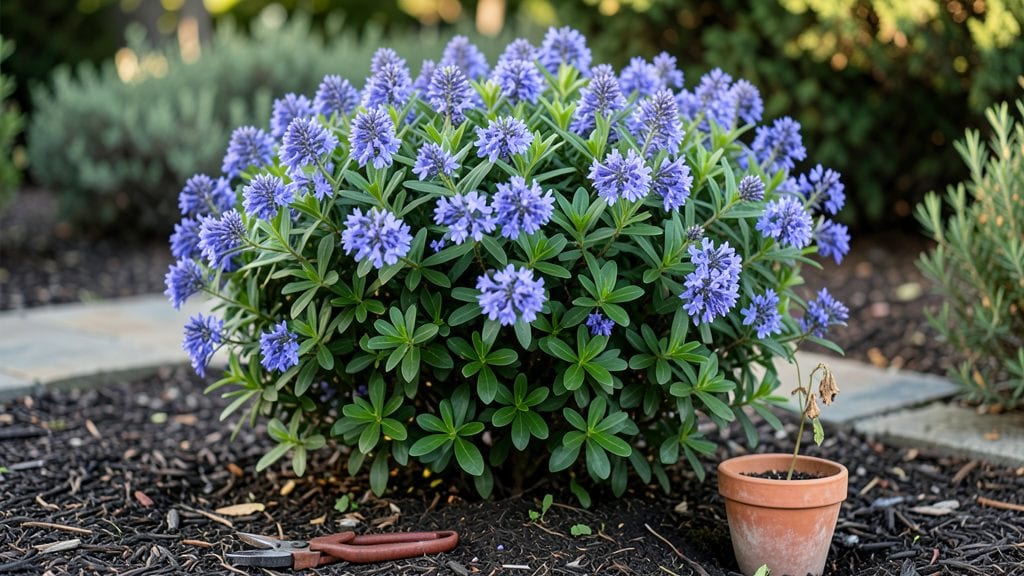
The California lilac flower’s intoxicating purple blooms bring effortless beauty to your garden—once established, these drought-resistant shrubs thrive where others falter. 🌿 I’ve watched them turn dry hillsides into clouds of fragrance.
The key isn’t just the right soil or sunlight (though those matter), but understanding how to coax their deep roots into action from the start.
These shrubs love well-draining soil and full sun, but they’re tough enough to handle poor soil if you plant them in the right spot. My first California lilac took off in a rocky slope where nothing else would grow—now it’s the star of my late-spring garden.
The secret? Watering deeply but infrequently once established, and pruning only to shape, never to revive. They reward patience with months of blooms and a fragrance that lingers in the air.
You’ll end up with a shrub that’s disease-resistant, deer-proof, and bees can’t resist—plus, it stays compact enough for small gardens. The blooms range from pale lavender to deep violet, and the foliage turns a stunning bronze in fall.
Best of all? Once planted, they need almost no maintenance beyond an occasional trim. Let’s get yours thriving!
Works in USDA zones 7-10, making it perfect for coastal gardens, foothills, or even urban yards. Whether you’re planting from seed (slow but rewarding) or cuttings (faster results), the payoff is worth the wait. Here’s how to make it happen without the guesswork.
📚 In This Guide
- What you need
- Instructions
- Tips and common mistakes
- Wrapping up and next steps
What you need
- ● California lilac seeds or plants: Seeds: 1–2 packets (500–1,000 seeds per packet) for direct sowing.
- ● Nursery-grown plants: 1–3 mature plants (3–5 feet tall, depending on variety). Popular choices: Ceanothus ‘Concha’, ‘Ray Hartman’, or ‘Yankee Point’.
- ● Well-draining soil: Native California soil mix (sandy loam preferred) or 50% native soil + 50% compost.
- ○ Optional: Gritty amendment (e.g., coarse sand or perlite) for rocky or clay-heavy soils.
- ● Sunlight access: Full sun (6+ hours/day) for optimal blooms.
- ● Water source: Drip irrigation or soaker hose (avoid overhead watering).
- ● Gardening tools: Trowel or hand shovel
- ● Pruning shears (sterilized with rubbing alcohol)
- ○ Garden gloves (optional but recommended)
- ○ Container gardening (optional): Large pots (15–20 gallons) with drainage holes.
- ● Cactus/succulent mix soil (if not using native soil).
- ● Climate: USDA Zones 7–10 (thrives in mild coastal or inland Pacific climates).
- ● Timing: Seeds: Sow in late fall or early spring (stratification helps!).
- ● Plants: Transplant in winter or early spring (avoid summer heat).
- ● Space: 4–10 feet apart (depends on variety; check plant tags).
- ● Test soil pH (ideal: 6.0–7.0); amend if needed with lime or sulfur.
- ● Mulch with wood chips (2–3 inches) to retain moisture and suppress weeds.
- ● For container growers: Top-dress with bone meal (1 tbsp/plant) at planting for phosphorus.
Step-by-step guide to planting and cultivating California lilac flowers
Here's how to achieve that fragrant purple perfection in your Pacific climate garden.
🌱 Step 1: Choose the Right Location and Prepare the Soil
California lilacs (Ceanothus spp.) thrive in full sun to partial shade, with at least 6 hours of direct sunlight daily. I always pick a spot with well-draining soil—these plants despise soggy roots. If your soil is heavy clay, amend it with 2-3 inches of coarse sand or gravel mixed into the top 12 inches of soil.
Test your soil's pH—California lilacs prefer slightly acidic to neutral (6.0-7.0). If your soil is alkaline, add elemental sulfur at planting time to lower the pH gradually. The key is patience; don’t rush this step. Healthy soil means healthy blooms, and these plants reward careful prep with years of fragrance.
🪴 Step 2: Plant at the Correct Depth and Spacing
Dig a hole twice as wide as the root ball but only as deep—planting too deep suffocates the roots. Gently loosen the roots if they’re circling tightly in the container. Space plants 3-6 feet apart, depending on the mature size of your variety. Dwarf types like Ceanothus 'Concha' need 3-4 feet, while larger shrubs like Ceanothus 'Ray Hartman' thrive with 6 feet of space.
Backfill the hole with native soil, pressing lightly to eliminate air pockets. Water deeply to settle the soil and encourage root contact. Mulch around the base with 2-3 inches of wood chips or gravel, keeping it 3 inches away from the trunk to prevent rot. This mulch layer retains moisture while allowing excess water to drain—critical for California’s variable rainfall.
☀️ Step 3: Water Deeply and Establish a Consistent Routine
Newly planted California lilacs need deep watering twice weekly for the first month, then taper to once weekly once established. You’ll know it’s time to water when the top 2 inches of soil feel dry. Overwatering is the fastest way to kill these drought-tolerant shrubs, so resist the urge to keep the soil soggy.
After the first year, your lilacs will develop deep roots and need very little supplemental water. In drought conditions, one deep watering every 2-3 weeks keeps them thriving. The secret? Let the soil dry out between waterings. You’ll see stronger stems and more vibrant blooms when you mimic their natural Mediterranean climate.
✂️ Step 4: Prune for Shape and Encourage Blooms
Prune right after flowering to maintain shape and encourage next year’s blooms. Remove dead, diseased, or crossing branches first, then trim back overly long stems by ⅓ to promote bushiness. Avoid heavy pruning in late summer—new growth won’t harden off before winter, and you’ll sacrifice next year’s flowers.
For older shrubs, you can rejuvenate by cutting back ⅓ of the oldest stems to the ground every 2-3 years. This might sound drastic, but it stimulates vigorous new growth and keeps your lilac looking youthful. Just don’t prune more than ⅓ of the plant at a time—gradual renewal prevents shock.
🌿 Step 5: Fertilize Sparingly and Monitor for Pests
California lilacs are light feeders—too much fertilizer leads to weak growth and fewer flowers. In early spring, apply a balanced, slow-release fertilizer (10-10-10) at half the recommended rate. Spread it evenly over the root zone and water it in. Skip fertilizer entirely in the first year while roots establish.
Watch for aphids or spider mites, which occasionally target stressed plants. A strong spray of water usually dislodges them, but for stubborn infestations, use neem oil as a natural deterrent. Healthy lilacs rarely attract pests, so focus on proper watering and sunlight—the best defense is a thriving plant.
Tips & tricks for perfect California lilac flower cultivation
Here's what nobody tells you about growing these fragrant beauties that'll make all the difference between a struggling shrub and a showstopper in your garden.
Soil Amendments: When amending heavy clay soil with 2-3 inches of sand or gravel, mix it into the top 12 inches—not just the surface. This creates proper drainage throughout the root zone where your lilacs will establish. Confession: I skipped this step for years and wondered why my plants struggled until I dug deeper and saw the compacted layer.
Root Ball Prep: Before planting, soak the root ball in water for 10-15 minutes to ensure thorough hydration. This helps prevent transplant shock and encourages roots to spread quickly into the surrounding soil. The key is gentle handling—don't squeeze the roots or force them into position. Let them settle naturally once in the hole.
Watering Wisdom: The twice-weekly deep watering for the first month is non-negotiable. Use a moisture meter to check the top 2 inches of soil—this is more accurate than guessing. In coastal Pacific climates, morning watering prevents fungal issues from evening moisture, and it gives roots time to absorb water before nighttime cooling.
Pruning Precision: When trimming back overly long stems by ⅓, make clean cuts just above a leaf node or outward-facing bud. This promotes bushier growth and more blooms next season. I've learned the hard way that cutting too close to the trunk or at awkward angles creates weak growth points that never flower properly.
Pro Tips for California Lilac Flower
- Here's what nobody tells you about growing these fragrant beauties that'll make all the difference between a struggling shrub and a showstopper in your garden.
- Soil Amendments: When amending heavy clay soil with 2-3 inches of sand or gravel, mix it into the top 12 inches—not just the surface.
- Root Ball Prep: Before planting, soak the root ball in water for 10-15 minutes to ensure thorough hydration.
Frequently asked questions
When is the best time to plant California lilac flowers?
The ideal planting window is late fall to early spring (October–March), when soil is cool and moist. Avoid summer heat—it stresses young roots. If you must plant in summer, water deeply and shade the area temporarily. Pro tip: Plant on a cloudy day to reduce transplant shock!
How much sunlight do California lilacs need?
These flowers thrive in full sun (6+ hours daily) but tolerate partial shade (4–6 hours), especially in hot inland areas. Too much shade? Expect fewer blooms. Watch for: Yellowing leaves = possible underwatering or overcrowding.
How often should I water California lilac flowers?
Water deeply 1–2 times per week (adjust for rain). Once established (after 2 years), they’re drought-tolerant but bloom best with consistent moisture. Troubleshoot: Wilting leaves? Check soil 2” deep—if dry, water thoroughly.
Why aren’t my California lilacs blooming?
Common culprits:
- Over-fertilizing (especially with nitrogen)—focus on low-phosphorus fertilizer in early spring.
- Pruning at the wrong time (never after June; blooms form on old wood).
- Poor drainage—amend heavy soil with compost.
What’s a good alternative if California lilacs don’t thrive in my yard?
Consider these fragrant, drought-tolerant swaps:
- Toyon (Heteromeles arbutifolia) – Native, berry-producing shrub.
- Cleveland Sage (Salvia clevelandii) – Silvery foliage, purple blooms.
- Manzanita (Arctostaphylos) – Evergreen with red bark and bell flowers.
Wrapping up and next steps
The California lilac flower brings a burst of fragrant purple beauty to Pacific gardens, thriving in coastal climates with minimal fuss. Whether you’re a seasoned gardener or a beginner, its resilience and stunning blooms make it a rewarding addition to any landscape.
Ready to transform your outdoor space? Start by selecting the perfect spot—sunny, sheltered, and well-drained—and watch your garden flourish with this coastal gem! 🌸
- Next step: Pick your favorite California lilac variety and begin planting this season!