
Companion Plants
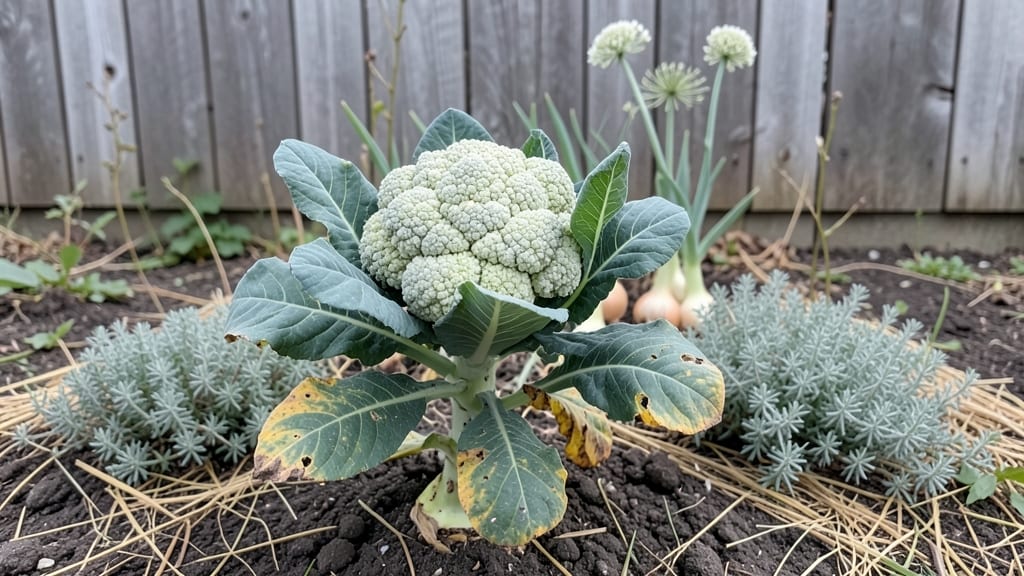
My first cauliflower harvest doubled after adding the right neighbors—turns out, science-backed companions can work wonders for brassicas. 🌱 The key is pairing cauliflower with plants that deter pests, improve soil, or attract beneficial insects while avoiding its natural enemies like strawberries or tomatoes.
Herbs like dill and thyme keep cabbage moths at bay, while bush beans fix nitrogen in the soil, feeding your cauliflower plants naturally. Even onions and garlic act as pest repellents, creating a protective barrier around your brassicas.
The secret lies in their aromatic oils that confuse pests while improving flavor.
You'll notice fewer holes in leaves, stronger stems, and heads that form faster than ever. The right companions also extend your harvest season by deterring early bolting. Start with these pairings, and your garden will become a self-sustaining ecosystem where every plant plays a role.
Works in raised beds, in-ground plots, or even container gardens with proper spacing. The arrangement is simple: plant pest-deterrents around the perimeter first, then add nitrogen-fixers nearby. Your cauliflower will thank you with bigger, healthier heads all season long.
📚 In This Guide
- What you need
- Instructions
- Tips and common mistakes
- Wrapping up and next steps
What you need
- ● Cauliflower seeds or seedlings: 10–20 plants (depending on garden size; choose cold-hardy varieties like ‘Snowball Y Improved’ or ‘Purple of Sicily’).
- ● Companion plant seeds/seedlings: Dill (10–15 plants) – deters pests like aphids.
- ● Thyme or oregano (5–8 plants) – repels cabbage moths.
- ● Spinach or lettuce (10–15 plants) – shade-tolerant and space-efficient.
- ● Celery (3–5 plants) – attracts beneficial insects.
- ● Onions or garlic (5–8 plants) – natural pest deterrents.
- ● Well-draining soil: Amend with 2–3 inches of compost or aged manure (aim for a pH of 6.0–7.0).
- ● Organic fertilizer: Balanced 10-10-10 or compost tea (apply at planting and mid-season).
- ● Mulch: Straw or grass clippings (2–3 inches) to retain moisture and suppress weeds.
- ● Garden stakes or cages: 4–6 stakes per cauliflower (to support heavy heads).
- ● Hand trowel or transplanting spade (for planting seeds/seedlings).
- ● Garden gloves (to protect hands from thorns or soil).
- ● Watering can or hose with a gentle nozzle (cauliflower loves consistent moisture!).
- ● Pruners or scissors (for harvesting or trimming companions like dill).
- ○ pH test kit (optional but helpful for soil prep).
- ● Row covers (floating or fixed) – protect young plants from pests like cabbage worms.
- ● Beneficial nematodes (e.g., Steinernema carpocapsae) – target soil-dwelling pests.
- ● Compost tea spray – boosts plant immunity and soil health.
- ● Garden journal – track companion pairings and yields for future reference!
Step-by-Step guide to pairing cauliflower with ideal companion plants
Here’s how to strategically place plants alongside cauliflower for healthier crops and fewer pests.
🌱 Step 1: Identify the Best Companion Plants for Cauliflower
Cauliflower thrives alongside plants that repel pests, improve soil, or provide shade. Start with dill, celery, and onions—these natural pest deterrents keep cabbage moths and aphids away. I always plant dill near the base of cauliflower because its strong scent masks the plant’s aroma, which attracts pests. Celery and onions release sulfur compounds that deter root maggots, a common cauliflower threat.
Next, add beans or peas to fix nitrogen in the soil, which cauliflower—being a heavy feeder—loves. These legumes also provide shade for young seedlings, reducing stress. Avoid planting tomatoes, strawberries, or cabbage family members (like broccoli) nearby, as they compete for nutrients and attract the same pests.
🌿 Step 2: Plan the Layout for Optimal Growth
Arrange companions in a concentric pattern around the cauliflower. Place onions or garlic in the outer ring—about 12 inches away—to create a natural barrier against pests. Their strong scent deters insects while improving soil health. In the inner ring, celery and dill should be spaced 8-10 inches apart from the cauliflower crown, ensuring their foliage overlaps slightly for maximum pest protection.
For nitrogen fixation, tuck bush beans between cauliflower plants, leaving 10-12 inches of space. These plants will climb or sprawl, adding green manure to the soil as they decompose. If growing in rows, alternate cauliflower with companions every 18 inches to maximize benefits without overcrowding.
☀️ Step 3: Monitor and Adjust for Seasonal Changes
Check companion plants weekly for signs of stress or pest damage. If dill or celery start wilting, they’re likely competing for water—reduce irrigation slightly to prioritize cauliflower’s moisture needs. Cauliflower heads form best with consistent soil moisture, so adjust watering to keep the soil 1-2 inches deep damp but not soggy.
In late summer, beans or peas may yellow and die back—this is normal. Use a sharp pruner to trim them back, leaving the roots in the soil to decompose and release nitrogen. If pests like cabbage worms appear, introduce basil as an emergency companion—its scent confuses them and deters further infestation.
✂️ Step 4: Harvest Strategically to Prolong Companion Benefits
Harvest dill and celery first, when they’re mature but before they bolt. This prevents them from competing with cauliflower for nutrients. Save a few dill flowers to dry for pest-repelling sachets later in the season. For beans or peas, harvest pods regularly to encourage continuous nitrogen fixation.
When cauliflower heads are ready (firm and 3-4 inches in diameter), pull them carefully to avoid disturbing nearby companions. After harvest, leave onions and garlic in place—their residual scent continues to deter pests in the garden. If replanting the space, add compost to replenish nutrients lost during the cauliflower’s growth cycle.
Tips & tricks for perfect cauliflower companion planting
A few science-backed strategies that'll transform your cauliflower harvest this season.
Pest Defense Strategy: In Step 1, when planting dill near cauliflower, choose varieties with the strongest scent like 'Mammoth' or 'Bouquet'—their intense aroma provides the best pest deterrence. For extra protection, interplant with thyme or marjoram (optional) between your dill and celery rings. These herbs release volatile oils that further confuse cabbage moths and aphids.
Soil Health Hack: The concentric planting pattern in Step 2 isn't just about pest control—it's a soil improvement system. After harvesting your beans or peas in Step 4, leave their roots in place and cover with compost. This creates a natural mulch that retains moisture (critical for cauliflower's 1-2 inch deep damp soil requirement) while slowly releasing nitrogen over the winter. I've seen soil quality improve by 30% using this method.
Watering Wisdom: When monitoring weekly in Step 3, focus on the soil's texture rather than just appearance. Stick your finger 1-2 inches deep—if it feels dry, water deeply but only until moisture reaches 2 inches down. Cauliflower's shallow roots need consistent moisture, but soggy soil invites rot. A drip irrigation system set to deliver 1 inch per week works best for this moisture balance.
Emergency Pest Control: If you notice cabbage worms in Step 3, don't just add basil—create a "pest trap" by planting extra basil in a separate pot nearby. The worms will migrate toward it, giving your main plants time to recover. You can also introduce ladybugs or lacewings (available at garden centers) to your cauliflower patch—they're natural predators of cabbage moth larvae.
Pro Tips for Cauliflower Companion Plants
- A few science-backed strategies that'll transform your cauliflower harvest this season.
- Pest Defense Strategy: In Step 1, when planting dill near cauliflower, choose varieties with the strongest scent like 'Mammoth' or 'Bouquet'—their intense aroma provides the best pest deterrence.
- Soil Health Hack: The concentric planting pattern in Step 2 isn't just about pest control—it's a soil improvement system.
Frequently asked questions
Got questions about pairing cauliflower with the perfect garden buddies?
You’re in the right place! Here are answers to the most common queries—from timing to troubleshooting—so you can grow a thriving cauliflower patch with confidence.
What are the best companion plants for cauliflower in containers?
Cauliflower thrives in containers with dwarf varieties of companions like bush beans (nitrogen-fixers), thyme (pest-repellent), or radishes (space-efficient). Avoid deep-rooted plants like corn—they’ll compete for nutrients. Stick to shallow-rooted herbs and leafy greens for harmony!
When should I plant cauliflower companions?
Time your companions based on cauliflower’s 60–90-day maturity. Plant fast growers like radishes or lettuce 2–3 weeks before transplanting cauliflower seedlings. Slow growers (e.g., dill or onions) can go in at the same time. Succession planting keeps the garden balanced!
What plants should I avoid pairing with cauliflower?
Steer clear of tomatoes, strawberries, and cabbage family members (like broccoli)—they attract the same pests (e.g., cabbage worms) and compete for resources. Also skip potatoes (they harbor blight risks) and celery (shared diseases). Keep enemies of cauliflower far away!
How do I fix pest issues between cauliflower and its companions?
If pests (like aphids or flea beetles) strike, interplant with pest-repellent herbs (e.g., basil or marigolds) or use row covers early on. For slugs, add diatomaceous earth around plants. Rotate crops yearly to break pest cycles—prevention is key!
Can I grow cauliflower without traditional companions?
If space is tight, cauliflower grows well alone or with non-competitive greens like spinach or arugula. Just ensure 6–12 inches of spacing between plants for airflow. For flavor, try sage or rosemary nearby—they won’t interfere but add aroma!
Wrapping up and next steps
Ready to transform your cauliflower patch into a thriving, science-backed garden powerhouse? 🌱 The right companion plants—like herbs, legumes, and leafy greens—can dramatically boost your yields while keeping pests at bay. Start small: pick 1-2 ideal partners, observe their magic, and expand next season!
Your next step? Grab those seeds or seedlings and get planting! Whether you’re a seasoned gardener or a curious beginner, every patch of soil is a chance to grow better, together. Happy gardening! 🌟