
Planting
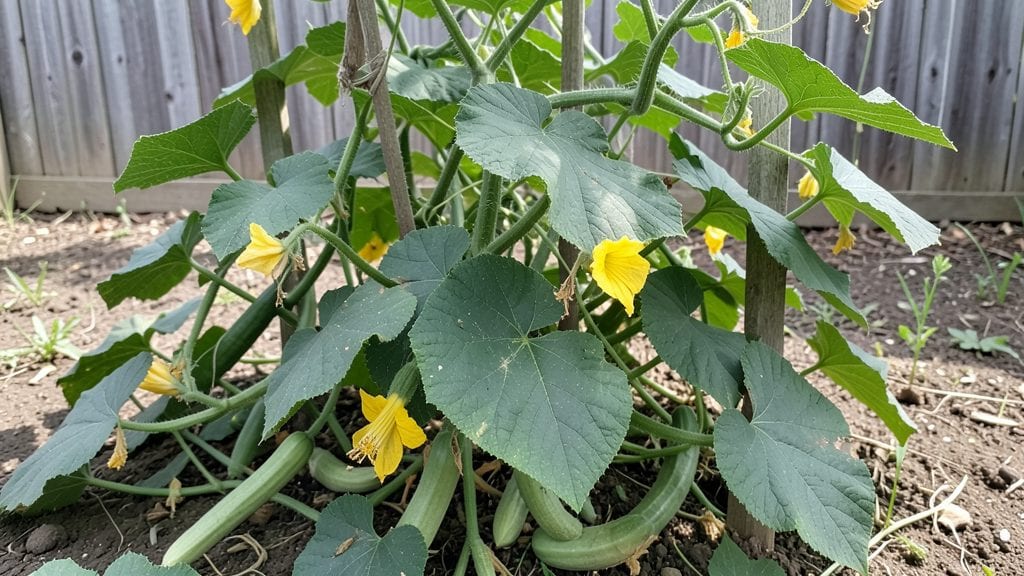
Growing flowering cucumber plants means you get two harvests in one—delicate edible blooms and lush vines that keep producing all season. 🌿 I fell for these plants after seeing their star-shaped flowers at a farmer’s market, and now I grow them every year for their beauty and unexpected culinary uses.
Unlike regular cucumbers, these varieties prioritize showy blossoms over fruit, though some still yield small, tender cucumbers you can snack on straight off the vine.
The key to success starts with warm soil and bright light—these plants thrive in full sun and need temperatures above 60°F to really shine.
I’ve found that container growing works beautifully, even on patios, as long as you use a 5-gallon pot or larger and provide sturdy trellises for their sprawling vines. The soil should drain well but stay consistently moist, which means checking it daily during dry spells.
Overwatering is the quickest way to lose those vibrant blooms, so I always stick my finger in the soil first.
What makes these plants special is how they transform your garden into a living centerpiece—imagine clusters of white, yellow, or lavender flowers that last from early summer through frost.
You can even dry the blooms for tea or garnish salads with them, though they’re not as sweet as traditional cucumber flowers. The vines grow aggressively, so regular pruning keeps them manageable and encourages more flowers.
With the right care, you’ll have a continuous display of color and texture that rivals any ornamental plant.
These flowering cucumbers adapt well to different climates, though they prefer USDA Zones 9-11 for year-round growth. In cooler areas, treat them as annuals and start seeds indoors 6-8 weeks before the last frost.
The real magic happens when you let them climb—watch as those tendrils latch onto trellises and the flowers cascade like a living waterfall. Whether you’re growing them for food, decor, or both, they’re a game-changer for any garden space.
📚 In This Guide
- What you need
- Instructions
- Tips and common mistakes
- Wrapping up and next steps
What you need
- ● Flowering cucumber seeds or seedlings: Choose a variety like 'Bush Champion' or 'Sweet Success' (3-5 plants for a small harvest, 10+ for larger yields).
- ● Containers or garden bed: For containers: 5-gallon pots or larger (at least 12" deep) with drainage holes. Use 3-5 pots per plant for vining varieties.
- ● For in-ground planting: Full-sun spot (6+ hours/day) with well-draining soil.
- ● Potting mix or garden soil: Sterile, well-draining mix (add perlite or compost for aeration). Avoid heavy clay soil.
- ● Fertilizer: Balanced fertilizer (10-10-10) or compost (mix 1 tbsp per plant into soil at planting).
- ● Organic options: Fish emulsion or worm castings (follow package rates).
- ● Trellis or support: 4-6 ft tall trellis, stakes, or cages (1 per plant for vining types).
- ○ Watering can or hose with nozzle: Drip irrigation or soaker hose (optional but ideal for consistent moisture).
- ● Pruning shears: Sharp, clean pair for trimming vines and deadheading.
- ● Mulch: Straw or shredded leaves to retain moisture and suppress weeds.
- ● Plant markers: Labels to track varieties (especially if growing multiple types).
- ● Row covers: Lightweight fabric to protect from pests or frost (if growing in cooler climates).
- ● Pollination aid: Small paintbrush to hand-pollinate flowers (useful in greenhouses or low-pollinator areas).
- ● Grow lights: LED full-spectrum bulbs (for indoor or winter growing, 12-16 hrs/day).
How to grow flowering cucumber plants for year-round edible blooms
Here's my foolproof method for coaxing those stunning, edible cucumber flowers indoors or out.
🌱 Step 1: Select the Right Variety and Start Seeds Early
Choose a compact, flowering variety like 'Sweet Success' or 'Bush Champion'—these stay manageable in containers while producing abundant blooms. I always start seeds indoors 6-8 weeks before the last frost date, or now if growing year-round under lights. Use biodegradable pots (like peat or coconut coir) to avoid disturbing roots when transplanting.
Fill the pots with sterile seed-starting mix (never garden soil—it harbors diseases). Plant 2-3 seeds per pot at a depth of ½ inch, then cover lightly with more mix. The key here is warmth: cucumbers germinate best at 75-85°F. Place the pots in a seedling heat mat or on top of your fridge until sprouts appear in 5-10 days.
☀️ Step 2: Provide Bright Light and Humidity for Healthy Growth
Once sprouts emerge, move them to a south-facing window or under grow lights for 14-16 hours daily. Without enough light, plants stretch leggy and produce weak stems. I use a full-spectrum LED grow light positioned 3-4 inches above the seedlings, adjusting the height as they grow. Watch for first true leaves (the second set after the initial cotyledons)—this is your cue to start fertilizing lightly with a balanced liquid fertilizer (5-5-5 ratio).
Cucumbers love humidity, so mist the leaves daily or place a tray of water nearby. You'll know the humidity is right when condensation forms on the leaves in the morning but disappears by midday. Avoid wetting the leaves when watering—this prevents fungal diseases like powdery mildew, which can ruin your blooms.
🪴 Step 3: Transplant Outdoors or into Larger Containers
After 4-6 weeks (when seedlings have 4-5 true leaves), it's time to transplant. If growing outdoors, wait until nighttime temperatures stay above 55°F—cucumbers are frost-sensitive. Bury the biodegradable pots 1 inch deep to encourage root growth. Space plants 18-24 inches apart in rows 3-4 feet apart for airflow, which is critical for preventing disease.
For container growing, choose 5-gallon pots or larger with drainage holes. Fill with a mix of 50% potting soil and 50% compost to give roots plenty of nutrients. Water deeply after transplanting to settle the soil around the roots. Mulch with straw or shredded leaves to retain moisture and keep roots cool—this encourages more vigorous flowering.
💧 Step 4: Train Vines and Maintain Consistent Care for Blooms
Cucumbers are vining plants, so provide a trellis, cage, or stakes to guide their growth. I use galvanized wire trellises because they last years and give vines plenty of support. Train the main stem along the trellis, pruning side shoots to 6 inches to encourage stronger central growth. This redirecting of energy leads to more abundant, showier blooms.
Water deeply 2-3 times per week, aiming for 1-1.5 inches of water total. Let the soil dry slightly between waterings—consistent moisture prevents bitter-tasting fruit and encourages steady blooming. Feed plants every 2 weeks with a low-nitrogen, high-phosphorus fertilizer (like 3-6-6) to boost flowering. You'll notice blooms appear 4-6 weeks after transplanting, starting with male flowers (long stems, no fruit) followed by female flowers (small fruits at the base).
✂️ Step 5: Harvest Blooms and Fruit for Continuous Production
Edible cucumber blooms are delicate and best picked in the morning when they're fully open but still tight. Use clean scissors to snip the stems just above a leaf node. You can eat them fresh in salads or infuse them into simple syrups. For the fruit, harvest male flowers first—they don’t produce fruit but help pollinate female flowers. Female flowers will develop into mini cucumbers—pick these when they're 3-5 inches long for the best flavor.
To keep plants producing, prune regularly: remove any yellowed or diseased leaves immediately, and trim back overgrown vines to encourage new growth. In cooler months, bring containers indoors near a sunny window or under grow lights, reducing water slightly but keeping the soil moist. With this care, you'll enjoy continuous blooms and harvests for months.
Tips & tricks for perfect flowering cucumber plants
These simple strategies will help you maximize blooms and keep your edible vines thriving year-round.
Germination Warmth: That 75-85°F temperature range for germination is non-negotiable—cucumbers won't sprout reliably in cooler conditions. I've found that placing pots on top of the fridge (where it stays warm) works perfectly when you don't have a heat mat. If your kitchen stays below 70°F, consider using a small greenhouse dome or clear plastic wrap to trap warmth around the pots.
Lighting Secrets: The 14-16 hours of daily light in Step 2 is crucial for preventing leggy seedlings. If you're using grow lights, keep them 3-4 inches above the plants and adjust as they grow—too close causes burning, too far makes them stretch. I've had great success with simple LED shop lights on a timer for consistent results without buying expensive equipment.
Transplanting Hack: When transplanting after 4-6 weeks, bury those biodegradable pots 1 inch deep—this encourages roots to grow outward instead of just downward. For container growing, I always add a handful of worm castings to the 50% compost mix before transplanting. The extra nutrients give plants a boost without overpowering them.
Bloom Boost: To encourage more female flowers (which produce fruit), pinch off the first few male flowers that appear. This redirects the plant's energy toward developing female flowers later. I also rotate my containers every few days to ensure even light exposure, which prevents lopsided growth and more abundant blooms.
Pro Tips for Flowering Cucumber Plant
- These simple strategies will help you maximize blooms and keep your edible vines thriving year-round.
- Germination Warmth: That 75-85°F temperature range for germination is non-negotiable—cucumbers won't sprout reliably in cooler conditions.
- Lighting Secrets: The 14-16 hours of daily light in Step 2 is crucial for preventing leggy seedlings.
Frequently asked questions
Got questions about growing and enjoying flowering cucumber plants? Here are answers to some of the most common queries to help you cultivate these vibrant vines with confidence!
When do flowering cucumber plants start producing blooms?
Flowering cucumbers typically begin producing blooms 6–8 weeks after planting, depending on your climate and growing conditions. In warmer regions, you might see flowers as early as 4–6 weeks. For cooler climates, start seeds indoors or use row covers to speed up the process. Choose varieties like 'Bush Champion' or 'Sweet Success' for faster flowering!
Can I eat the flowers from any cucumber plant?
Not all cucumber varieties are edible-flowered! Only specific types, like 'Bush Champion,' 'Sweet Success,' or 'Armenian cucumbers,' produce safe, flavorful blooms. Always check the seed packet or plant label. Never eat flowers from regular slicing cucumbers—they can be bitter or toxic. When in doubt, stick to certified edible varieties!
How long does it take for flowering cucumbers to bear fruit?
After pollination (usually via bees or hand-pollination), flowering cucumbers take 10–14 days to produce tiny, edible fruits. The blooms themselves are ready to harvest 1–2 days before the fruit appears. For continuous harvests, pick flowers and fruits regularly to encourage more blooms. Pro tip: Harvest in the morning for the freshest flavor!
What should I do if my flowering cucumber plant isn’t blooming?
Several factors can delay blooming, but don’t worry—there’s usually a fix! Check for:
- Insufficient sunlight: Flowering cucumbers need 6–8+ hours of direct sun daily.
- Overcrowding: Thin plants to 12–24 inches apart (depending on variety).
- Nutrient imbalance: Use a balanced fertilizer (like 10-10-10) and avoid overfeeding nitrogen.
- Temperature stress: Ideal temps are 70–90°F; extremes can stunt growth.
Can I grow flowering cucumbers indoors or in containers?
Compact varieties like 'Sweet Success' thrive in 5-gallon containers with proper care. Use a lightweight potting mix, ensure the pot has drainage holes, and place it near a south-facing window or under grow lights (12–16 hours/day). For pollination, gently shake the plant or use a small brush to transfer pollen. Indoor growers often pair flowering cucumbers with herbs like basil to attract pollinators!
How do I hand-pollinate flowering cucumber blooms if there are no bees?
Hand-pollination is easy! Use a soft paintbrush or cotton swab to transfer pollen from the male flower (smaller, with a stem) to the female flower (larger, with a tiny cucumber at the base). Do this in the morning when blooms are fresh. Repeat every 2–3 days for continuous fruit set. Pro tip: Label your plants to track male and female flowers!
Wrapping up and next steps
Growing flowering cucumber plants is a rewarding way to enjoy fresh, edible blooms and productive vines year-round—whether you're a seasoned gardener or just starting out! 🌱 With the right variety, soil, and care, you’ll unlock a harvest of delicate flowers and crisp cucumbers that add beauty and flavor to your garden.
Now that you’re equipped with the essentials, why not plant a few vines this week? Start small, experiment with different varieties, and watch your garden transform into a fragrant, edible paradise. Happy growing! 🌸