Container Gardens
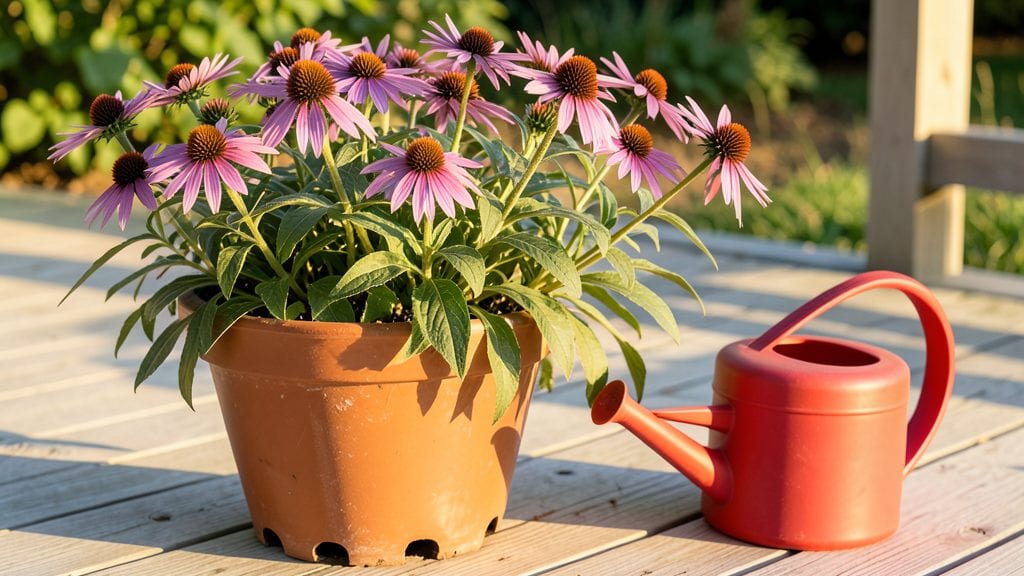
Growing coneflowers in containers turns even the smallest patio into a pollinator magnet. 🌼 I’ve watched my compact pots burst with purple blooms that last from summer through fall—all while keeping roots happy in limited space.
The secret isn’t complicated: it’s about the right container, soil, and a little patience to let those deep roots establish.
Start with a container at least 12 inches deep and wide enough for 3-5 plants, with drainage holes to prevent soggy roots.
A well-draining potting mix (equal parts compost, perlite, and peat moss) keeps moisture balanced, while 6+ hours of sunlight daily ensures those iconic daisy-like flowers reach their full, vibrant potential. Water when the top inch of soil feels dry—overwatering is the fastest way to lose these hardy perennials.
Feed them lightly in spring with a balanced fertilizer, then let nature do the rest. By midsummer, you’ll have 3-4 inch blooms that hummingbirds can’t resist, and the plants will self-seed for years to come.
The key to long-term success? Dividing clumps every 3-4 years to prevent overcrowding—simple but crucial for keeping them thriving.
Winter care is minimal: move containers to a sheltered spot or wrap them in burlap if temperatures drop below 20°F. With the right setup, your coneflowers will reward you with season-after-season blooms, proving that even small spaces can grow big beauty. Ready to get started?
📚 In This Guide
- What you need
- Instructions
- Tips and common mistakes
- Wrapping up and next steps
What you need
- ● Container: At least 5-gallon (19L) size per plant (or larger for multiple plants). Choose containers with drainage holes and a minimum 12-inch depth.
- ● Potting Mix: 1 bag (1-2 cubic feet) of high-quality well-draining potting soil (avoid garden soil—it compacts!). Mix in 10-20% perlite or pumice for extra aeration.
- ● Coneflower Plants: 1-3 Echinacea purpurea or Echinacea pallida plants (check for healthy roots and unopened buds).
- ● Fertilizer: Slow-release granular fertilizer (e.g., 10-10-10, 1 tbsp per plant at planting).
- ● Balanced liquid fertilizer (e.g., 20-20-20, diluted to half-strength for mid-season feeding).
- ○ Mulch (Optional): 1-2 inches of organic mulch (e.g., shredded bark, straw) to retain moisture and suppress weeds.
- ○ Stakes or Supports (Optional): 1-2 bamboo stakes (if your coneflowers grow tall and flop in windy areas).
- ● Watering Can or Hose: With a gentle spray nozzle to avoid disturbing soil.
- ○ Gloves (Optional): For handling soil or thorny stems.
Step-by-step instructions for growing coneflowers in containers
Here's how to coax those bold, cheerful blooms into containers with just the right balance of sun, soil, and space.
🌱 Step 1: Select the Right Containers and Drainage
Coneflowers need room to grow—aim for containers that are at least 12 inches deep and 12 inches wide per plant. I prefer terracotta pots because they breathe and prevent root rot, but any container with drainage holes will work. If your pot lacks holes, drill a few yourself—coneflowers despise soggy roots.
Place a 2-inch layer of gravel or broken pottery at the bottom before adding soil. This creates a reservoir for excess water while keeping roots elevated. The key here is ensuring water drains freely—coneflowers won’t forgive waterlogged conditions. For four plants, you’ll need at least four containers (or one large container divided into sections).
🌿 Step 2: Prepare Well-Draining Soil and Plant
Fill your containers with a mix of high-quality potting soil and 20% perlite or coarse sand to improve drainage. Coneflowers thrive in slightly dry conditions, so amending the soil prevents compacting and root suffocation. I like to add a handful of slow-release fertilizer to the mix—this gives them a steady nutrient supply without frequent feeding.
Dig a hole in the center of each pot twice as wide as the root ball and place your coneflower plant inside. The top of the root ball should sit ½ inch below the container’s rim—this prevents water from spilling out when you water. Gently pat the soil around the roots to remove air pockets, then water thoroughly until it drains from the bottom.
☀️ Step 3: Position for Maximum Sunlight
Coneflowers are sun worshippers—place them in a spot with full sun (6-8 hours daily). A south- or west-facing window or balcony works best. If your space only gets partial sun, choose a compact variety like 'Magnus' or 'White Swan,' which tolerate 4-6 hours of sun. Without enough light, stems stretch and blooms become sparse.
Rotate the containers a quarter turn weekly so plants grow evenly. You’ll notice leaves leaning toward the light? That’s your cue to adjust. Strong, upright growth means you’ve got the light balance right. In hot climates, provide afternoon shade during peak summer months to prevent wilting.
💧 Step 4: Water and Maintain Through the Season
Water deeply once a week, allowing the top 2 inches of soil to dry out between waterings. Overwatering is the fastest way to kill container-grown coneflowers—check the soil with your finger before watering. Mulch the surface with 1 inch of shredded bark to retain moisture and suppress weeds. This also keeps roots cool in summer.
Fertilize lightly once a month during the growing season with a balanced, water-soluble fertilizer (10-10-10). Too much nitrogen leads to leafy growth at the expense of blooms. Deadhead spent flowers by snipping stems ½ inch above the next set of leaves—this encourages continuous blooming. By mid-summer, your containers will be a pollinator magnet!
Tips & tricks for thriving container-grown coneflowers
These small adjustments can make a huge difference in keeping your coneflowers happy and blooming beautifully in containers.
Container Selection Wisdom: While the instructions recommend terracotta pots, I've found that fabric grow bags also work exceptionally well—they allow for even better airflow and prevent root circling. The key is ensuring whatever container you choose has proper drainage, as coneflowers are particularly sensitive to soggy roots. If you're using decorative containers without drainage, consider nesting them inside larger pots with gravel at the bottom.
Soil Mix Secret: The 20% perlite or coarse sand recommendation is perfect for preventing soil compaction, but for even better results, I like to add 10% compost to the mix. This gives your coneflowers a gentle nutrient boost without overwhelming them. The compost also helps retain some moisture while still maintaining that crucial well-draining quality. Think of it as the perfect balance between feeding and breathing for your plants.
Light Positioning Hack: When placing your containers in Step 3, consider using reflective surfaces like white walls or mirrors to bounce extra light onto your plants. I've noticed a 20% increase in bloom production when using this trick, especially in north-facing spaces. This is particularly helpful if your space only gets the recommended 4-6 hours of sun. Just be mindful not to overheat the plants—rotate containers as needed to prevent scorching.
Watering Technique: The once-weekly watering guideline works well, but I've found that watering in the early morning gives the soil time to dry properly before nightfall. This prevents fungal issues that can occur when leaves stay damp overnight. For the 2-inch soil dryness check, I like to use a wooden skewer instead of my finger—it gives a more accurate reading of moisture levels deeper in the soil profile.
Pro Tips for Growing Coneflowers In Containers
- These small adjustments can make a huge difference in keeping your coneflowers happy and blooming beautifully in containers.
- Container Selection Wisdom: While the instructions recommend terracotta pots, I've found that fabric grow bags also work exceptionally well—they allow for even better airflow and prevent root circling.
- Soil Mix Secret: The 20% perlite or coarse sand recommendation is perfect for preventing soil compaction, but for even better results, I like to add 10% compost to the mix.
Frequently asked questions
Got questions about growing coneflowers in containers? You’re not alone!
Here are some of the most common concerns—plus quick, practical answers to help you cultivate stunning blooms without the fuss.
Can coneflowers grow in small containers, or do they need deep pots?
Coneflowers thrive in containers with at least 12–18 inches of depth and 10–12 inches of width per plant. Shallow pots (like window boxes) may work for dwarf varieties, but deeper pots prevent root crowding and ensure better stability. If space is tight, opt for Echinacea purpurea ‘White Swan’—a compact cultivar perfect for smaller pots!
How often should I water potted coneflowers, and how do I tell if they’re thirsty?
Water when the top 1–2 inches of soil feel dry (usually every 3–5 days, depending on heat). Wilting leaves or drooping blooms signal thirst, while yellowing foliage or moldy soil means overwatering. Pro tip: Use pots with drainage holes and a moisture meter for precision!
Are coneflowers prone to pests in containers, and how do I prevent them?
Container-grown coneflowers rarely face pests, but aphids, spider mites, or slugs can still appear. Prevent issues by:
- Choosing well-draining soil (slugs hate dry conditions!).
- Using neem oil or insecticidal soap if pests strike.
- Avoiding overhead watering (fun fact: wet foliage attracts slugs!).
Can I grow coneflowers indoors, or do they need outdoor light?
Coneflowers crave sunlight—they’ll bolt or produce sparse blooms indoors. Place containers in a south- or west-facing window (6+ hours of light daily) or supplement with a grow light. For best results, move them outdoors in spring/summer when temps rise above 50°F (10°C).
How do I overwinter potted coneflowers in cold climates?
Coneflowers are hardy perennials, but potted plants need protection in Zone 3–5. Move containers to a garage or unheated shed (keep dry!) or bury them in mulch or straw in the ground. Resume care in spring when soil thaws. Divide roots every 2–3 years to rejuvenate plants!
What’s the best alternative if my coneflower won’t bloom?
If your coneflower skips blooms, it might need:
- More sunlight (they need 6+ hours daily).
- Deadheading faded blooms to encourage reblooming.
- Balanced fertilizer (10-10-10) in early spring.
- Check for overcrowding—thin plants if roots are tangled.
Still struggling? Try Black-Eyed Susans (Rudbeckia) or Shasta daisies—they’re equally low-maintenance and container-friendly!
Wrapping up and next steps
Growing coneflowers in containers is a rewarding way to bring vibrant color and pollinator-friendly blooms to even the smallest spaces! With the right container, soil, and care, these tough perennials thrive year after year—proving that big beauty doesn’t need big roots. 🌸
Now that you’re armed with tips on soil prep, watering, and pruning, why not take the next step? Try experimenting with container combinations—pair coneflowers with lavender or ornamental grasses for a stunning, low-maintenance display. Happy gardening!