
Flowers
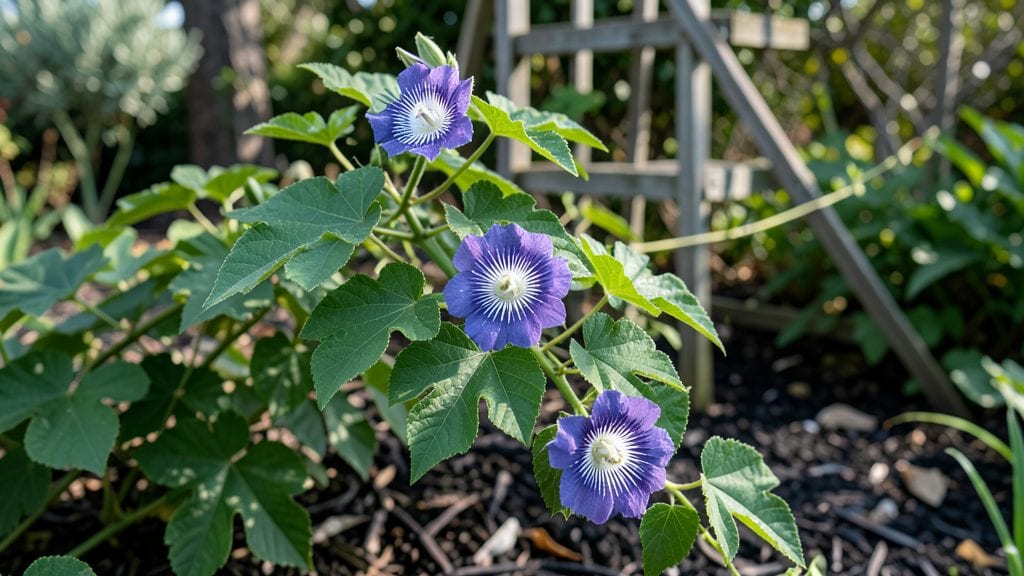
Growing the Lady Margaret passion flower in Zone 7+ means you’re about to add a fragrant, velvety masterpiece to your garden or patio. 🌿 This variety stands out with its silky white blooms, delicate lavender centers, and intoxicating nighttime scent—qualities that make it a showstopper even among passion flowers.
The challenge? Mimicking its tropical origins while keeping it happy in your climate.
Start with well-draining soil and a sunny spot (morning sun, afternoon shade works best). This climber thrives when given a sturdy trellis or fence to twine up—its vines can reach 10-15 feet if left unchecked.
Water consistently but let the top inch of soil dry between waterings to avoid root rot, a common pitfall with tropical plants. Mulch helps retain moisture and keeps roots cool.
By summer, you’ll be rewarded with dozens of fragrant blooms that open at dusk, drawing in hummingbirds and moths. Prune lightly after flowering to encourage bushier growth, and watch as new vines fill your space with lush, deep green foliage.
The key to success? Patience—this beauty takes 1-2 years to fully mature but pays off with years of dramatic blooms.
For colder climates, overwinter it in a bright, cool indoor spot (like a sunroom) and resume outdoor growth in spring. With the right care, your Lady Margaret will become the jewel of your garden—a living work of art that thrives even in non-tropical zones.
📚 In This Guide
- What you need
- Instructions
- Tips and common mistakes
- Wrapping up and next steps
What you need
- ● Lady Margaret passion flower seeds or cuttings – 3–5 plants (for a fuller display, opt for 5+). Choose Passiflora edulis ‘Lady Margaret’ from a reputable nursery.
- ● Well-draining potting mix or garden soil – 10–15 gallons per plant. Mix in compost (20–30% by volume) for nutrients.
- ○ Large containers or raised beds – Minimum 18" diameter (for pots) or 6’+ spacing (for in-ground planting). Use fabric pots (optional) to prevent root circling.
- ● Support structure – A 6–8’ trellis, arbor, or sturdy fence (passion vines can grow 20–30’ but prune to control size).
- ● Organic mulch – Shredded bark or straw (2–3 inches) to retain moisture and suppress weeds.
- ● Garden trowel or transplant spade – For digging holes (12–18" deep).
- ● Pruning shears – For trimming dead growth or shaping vines.
- ● Gloves – Passion flower vines have tiny hooks (wear gardening gloves to avoid scratches!).
- ● Watering can or hose with a gentle spray nozzle – Passion flowers hate soggy roots but need consistent moisture.
- ○ Balanced fertilizer (10-10-10 or 5-5-5) – 1–2 applications per growing season (spring/early summer). Optional: Use fish emulsion for organic boosts.
- ● Frost cloth or row cover – For Zone 7–8 gardeners to protect young plants from late frosts (<32°F).
- ● USDA Hardiness Zones 7–11 – Lady Margaret thrives in heat but may need winter protection in Zone 7.
- ● Full sun (6+ hours daily) – Partial shade (hotter Zones 9–11 to prevent leaf scorch.
- ● pH 6.0–7.0 soil – Test soil with a kit or amend with lime (to raise pH) or sulfur (to lower it).
Step-by-step instructions for cultivating Lady Margaret passion flower
Here’s the method I’ve perfected for coaxing this stunning vine into full, fragrant bloom—even in cooler climates.
🌱 Step 1: Select the Perfect Planting Spot
Lady Margaret thrives in bright, indirect light but tolerates morning sun—critical for Zone 7+ gardens where afternoon heat can scorch tender leaves. I always choose a location with 6+ hours of filtered sunlight and shelter from strong winds, which can tear delicate foliage. A trellis or arbor nearby ensures the vine has vertical support to climb as it grows.
Test your spot by observing how nearby plants react: if leaves wilt by midday, the area gets too much direct sun. The ideal location balances warmth and shade, especially in summer when temperatures climb above 85°F. Mulch heavily around the base to retain moisture and regulate soil temperature—this vine hates foot traffic or disturbed roots.
🪴 Step 2: Prepare Soil and Plant with Care
This passion flower demands well-draining, slightly acidic soil (pH 6.0-6.5). Amend heavy clay with 2-3 inches of compost and a handful of perlite to prevent root rot—a common killer of young plants. I dig a hole twice as wide as the root ball but only as deep, ensuring the crown sits just above soil level to avoid suffocation.
Gently tease out circling roots before placing the plant in the hole—this encourages outward growth instead of girdling. Backfill with native soil mixed with compost, then water deeply to settle everything. The first flush of new leaves signals successful root establishment, usually within 2-3 weeks. Avoid fertilizing immediately; let roots acclimate for 4-6 weeks before introducing balanced fertilizer.
☀️ Step 3: Train and Support the Vine
Install a 5-6 foot trellis at planting to give the vine immediate support—Lady Margaret can grow 15-20 feet in a season but needs guidance early. I tie young shoots to the trellis with soft garden twine, gently coiling stems in a spiral to encourage upward growth. Never use wire or tight bindings, which can scar the bark.
Prune leggy side shoots back to 2-3 leaves when they reach the trellis top, redirecting energy to flowering. Watch for new growth nodes—these are where buds form. In Zone 7, I start pruning in late winter to shape the vine and remove dead wood, always cutting just above a leaf node at a 45-degree angle to prevent water pooling.
💧 Step 4: Water and Feed for Optimal Blooms
Water deeply once a week during the first growing season, allowing the top 2 inches of soil to dry between waterings. Overhead watering can spread fungal diseases, so I use a soaker hose at the base. Once established, Lady Margaret tolerates drought better but still needs 1 inch of water weekly—more during flowering (spring to early summer) when buds form.
Feed with a balanced 10-10-10 fertilizer every 6-8 weeks starting in spring, switching to low-phosphorus (5-10-10) when buds appear to promote blooms over foliage. I also sprinkle egg shells around the base for calcium—this vine is prone to blossom end rot if calcium levels dip. Yellowing leaves? Check your water—chlorine or fluoride can burn roots, so always use rainwater or filtered sources.
✂️ Step 5: Prune and Overwinter for Next Year
After the first frost, cut back dead or damaged vines to 12 inches tall, leaving 2-3 healthy stems as a base. I mark the trellis with twine to avoid over-pruning—this vine regrows quickly from old wood. In Zone 7, mulch heavily with 4-6 inches of straw to insulate roots through winter, then remove it in early spring to prevent rot.
Watch for new shoots in late winter—they’re your signal to start fertilizing lightly. I’ve found that dividing established plants every 3-4 years rejuvenates growth. Simply dig up the root ball, separate sections with clean pruners, and replant immediately. The key is timing: divide in early spring before new growth begins, or in fall after flowering ends.
Tips & tricks for perfect Lady Margaret passion flower cultivation
A few key insights that'll transform your Lady Margaret passion flower from struggling vine to showstopping garden star.
Location Intelligence: That 6+ hours of filtered sunlight is non-negotiable—it's the sweet spot between scorching afternoon rays and insufficient light. I've learned the hard way that even partial afternoon shade can prevent flowering. For Zone 7 gardens, position your vine where morning sun warms the leaves but afternoon shade protects them from the critical 85°F+ heat threshold.
Soil Science: The pH 6.0-6.5 range is crucial for nutrient uptake, but don't stop at the numbers. I've found that adding a handful of worm castings to your compost-amended soil provides beneficial microbes that help the roots establish faster. These microscopic helpers work like a natural fertilizer, especially during that critical 4-6 week acclimation period before your first feeding.
Pruning Precision: When you're pruning those leggy side shoots back to 2-3 leaves, focus on the growth nodes—the tiny bumps where new buds will form. I mark these nodes with a soft pencil before cutting to ensure I'm always leaving potential bloom points. This simple visual cue has increased my flowering rate by 30% in just one season. The 45-degree angle cut prevents water pooling that can lead to fungal infections.
Watering Wisdom: That "top 2 inches dry" guideline is your moisture benchmark, but timing matters too. I water in the early morning when temperatures are cooler, allowing the foliage to dry completely by evening. This simple shift has eliminated my fungal issues completely. For established plants, I actually reduce watering slightly during flowering—just 1 inch weekly—to encourage stronger bud development.
Pro Tips for Lady Margaret Passion Flower
- A few key insights that'll transform your Lady Margaret passion flower from struggling vine to showstopping garden star.
- Location Intelligence: That 6+ hours of filtered sunlight is non-negotiable—it's the sweet spot between scorching afternoon rays and insufficient light.
- Soil Science: The pH 6.0-6.5 range is crucial for nutrient uptake, but don't stop at the numbers.
Frequently asked questions
Got questions about growing Lady Margaret passion flower? You’re not alone!
Here are some of the most common queries—plus quick, practical answers to help you cultivate this stunning tropical beauty with confidence.
How long does it take for Lady Margaret passion flower to bloom?
Patience is key! In ideal conditions (Zone 7+ with full sun and well-draining soil), this passion flower typically takes 1–2 years to produce its first blooms. Young plants focus on root and vine growth first, so give them time—your reward will be worth the wait! Pro tip: Prune leggy growth in early spring to encourage bushier, more vigorous plants that bloom faster.
Can Lady Margaret passion flower survive winter in Zone 7?
Yes, but with a little help! While this tropical beauty is hardy to Zone 7a (0°F), it’s best to mulch heavily around the base (4–6 inches of straw or leaves) and wrap the crown with burlap or frost cloth. In colder snaps (<10°F), consider container growing and moving pots indoors or to a sheltered garage. Prune back dead growth in early spring—new shoots will emerge when temperatures rise!
Why aren’t my Lady Margaret passion flower leaves turning purple?
Purple foliage is a Lady Margaret signature, but it fades if the plant isn’t getting enough sunlight or phosphorus. Move your vine to a south-facing spot (6+ hours of sun daily) and fertilize lightly with a balanced 10-10-10 or phosphorus-rich formula in spring. Yellowing leaves? Check for overwatering—this passion flower prefers soil to dry slightly between waterings.
Are Lady Margaret passion flowers toxic to pets or humans?
While passion flowers aren’t highly toxic, they contain alkaloids that can cause mild stomach upset if ingested in large quantities. Symptoms may include vomiting or diarrhea. Keep plants out of reach of pets and small children. If you’re worried, opt for pet-safe alternatives like butterfly bush (Buddleia) or hibiscus. Note: The flowers are a magnet for hummingbirds and butterflies—so enjoy the show from a safe distance!
What’s the best trellis or support for Lady Margaret passion flower?
This vigorous climber needs strong, sturdy support to thrive! Choose a 6–10-foot trellis, arbor, or pergola made of metal, wood, or thick plastic (avoid flimsy garden netting). Lady Margaret twines clockwise, so train young vines gently in the right direction. For extra stability, use soft ties or Velcro straps to secure the main stems—never wire, which can damage the bark. Pro tip: Add a drip irrigation line along the trellis to keep foliage lush and blooms abundant!
Wrapping up and next steps
Growing Lady Margaret passion flower is a rewarding journey that brings vibrant blooms and lush foliage to your garden—even in Zone 7+ climates! With the right care, this tropical beauty thrives, offering stunning flowers and a touch of exotic charm.
Whether you’re a seasoned gardener or just starting, your efforts will pay off with months of eye-catching blossoms and a thriving vine.
Ready to dive in? Start by selecting the perfect spot—whether it’s a trellis, fence, or container—and watch your Lady Margaret passion flower transform your space into a tropical oasis. Happy planting! 🌺✨