
Flowers
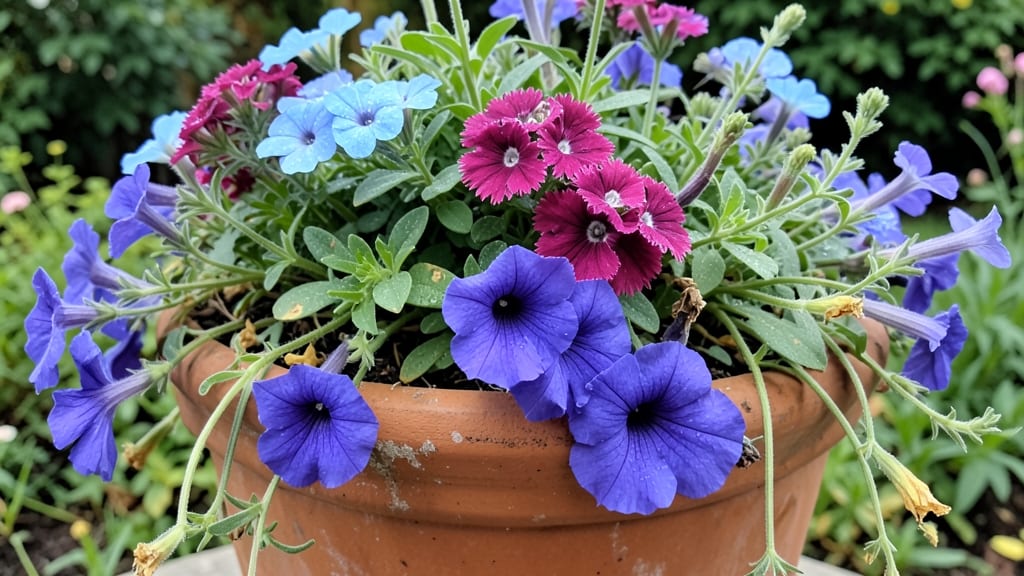
Mixed flowers in pots bring color to patios even when winter chills the air. 🌿 I’ve designed frost-resistant combinations that thrive in containers from spring through fall, with some holding their blooms well into winter’s first frost.
The trick is pairing hardy annuals with cold-tolerant perennials—think snapdragons with pansies or dusty miller with hellebores.
You’ll need containers with drainage, a well-draining potting mix, and plants that complement each other in height and bloom time. A 14-inch pot works for 3-5 plants, while larger 18-inch containers can handle bold combinations like salvia, coreopsis, and ornamental grasses.
The key is grouping plants with similar water needs to keep maintenance simple.
By late summer, your pots will burst with vibrant blooms that attract pollinators and turn heads. The best part? These varieties bounce back after light frosts, so you can enjoy color even when the garden beds are dormant. Swap out finicky annuals for cold-hardy replacements as seasons shift.
Works for city balconies, rural porches, or garden beds—just adjust plant choices for your climate zone. Let’s create a container garden that stays stunning no matter what the weather brings!
📚 In This Guide
- What you need
- Instructions
- Tips and common mistakes
- Wrapping up and next steps
What you need
- ● Flower varieties: Choose 3-5 frost-resistant types like pansies (Viola × wittrockiana), hellebores (Helleborus), dusty miller (Jacobaea maritima), and ornamental kale (Brassica oleracea). Aim for 3-5 plants per pot (adjust based on pot size).
- ● Containers: 1-3 pots with drainage holes (10-12" diameter for medium pots, 14"+ for large displays). Opt for terracotta, ceramic, or fiberglass for durability.
- ● Potting mix: 1 bag (1-2 cubic feet) of well-draining, peat-based mix (e.g., 60% peat, 30% perlite, 10% compost).
- ● Mulch: 1-2 inches of pine bark fines or shredded leaves to insulate roots.
- ● Garden trowel or small shovel for planting.
- ○ Gloves (optional, for comfort).
- ● Watering can with a rose nozzle (for gentle watering).
- ● Slow-release fertilizer (e.g., Osmocote, 1 tbsp per pot).
- ○ Decorative elements (optional): Pebbles or moss for visual appeal.
- ● Miniature stakes or spikes for tall flowers.
- ● Burlap or frost cloth (to wrap pots during light freezes).
- ● Insulating sleeves (for extreme cold, -10°F or lower).
- ○ Heat mat (optional, for container gardens in Zone 5-6).
Step-by-Step guide to planting frost-resistant mixed flowers in pots
Here’s how to create vibrant, cold-hardy container gardens that thrive through multiple seasons.
🪴 Step 1: Select Frost-Resistant Flower Varieties and Containers
Choose a mix of pansies, violas, snapdragons, and dusty miller—these tolerate light frosts and bloom prolifically. I pair them with heuchera for foliage contrast and ornamental grasses for texture. Use 14-16 inch pots (one per plant) with multiple drainage holes—frost-sensitive roots need excellent drainage to avoid rot.
Select pots made of terracotta or fiberglass—they insulate roots better than plastic in cold snaps. Group pots together to create a microclimate that retains warmth. Avoid black containers; they absorb heat during the day but radiate it away at night, stressing frost-tolerant plants.
🌱 Step 2: Prepare Soil and Plant for Cold-Weather Success
Fill pots with a sterile potting mix blended with 20% perlite for aeration. I add a slow-release fertilizer (10-10-10) at planting time—frost-resistant flowers need steady nutrients to bounce back after cold snaps. Press the mix down lightly to eliminate air pockets, then water until moisture runs freely from the drainage holes.
Plant pansies and violas first—they establish quickly and act as a living mulch for slower starters like snapdragons. Space plants 6-8 inches apart to allow airflow, which prevents fungal diseases that thrive in damp, chilly conditions. Bury stems slightly deeper than in the nursery pot to stabilize them in windy or wet weather.
☀️ Step 3: Position Pots for Year-Round Sunlight and Shelter
Place containers in full sun (6+ hours daily) but move them to partial shade during peak afternoon heat in summer. I use a wheelbarrow dolly to relocate pots easily—frost-resistant flowers need morning sun and afternoon shade to avoid stress. Group pots against a south-facing wall or under a small patio awning for extra winter protection.
Add a 1-inch layer of mulch (cypress or pine straw) around the soil surface after planting. This insulates roots during frosts and retains moisture during dry spells. Water deeply every 3-4 days in summer, but reduce to once weekly in winter—overwatering in cold weather suffocates roots.
✂️ Step 4: Prune and Maintain for Continuous Blooms
Deadhead spent blooms weekly to encourage new flowers—even frost-resistant varieties need this prompt. I snip stems just above the first set of healthy leaves to redirect energy into growth. In late summer, trim leggy stems by one-third to promote bushier, more compact plants that handle winter better.
Fertilize every 6 weeks with a balanced liquid feed (5-5-5) during the growing season. Switch to a low-nitrogen, high-phosphorus formula (like 3-6-3) in fall to strengthen root systems before winter. In early spring, top-dress with compost to replenish nutrients lost over the cold months.
🌿 Step 5: Protect Pots During Freezes and Winter Dormancy
When temperatures drop below 20°F, move pots to a sheltered location (garage, porch, or against a wall). Wrap large pots in bubble wrap or frost cloth—this prevents soil from freezing solid, which can kill roots. Smaller pots (under 10 inches) stay safe on a raised shelf or insulated tray filled with straw or leaves.
Check soil moisture monthly in winter—it rarely needs water, but a light misting keeps roots from drying out. Resume regular care in early spring when pansies and violas start pushing new growth. By late March, you’ll see bold new foliage and buds forming—proof your frost-resistant mix is ready for another season.
Tips & tricks for perfect mixed flowers in pots
A few strategic moves will help your frost-resistant container garden thrive year after year—and here's what nobody tells you about keeping those winter blooms happy.
Root Insulation Matters: The 20°F threshold isn't just a random number—it's when soil begins freezing solid. For pots larger than 10 inches, wrap the entire container (not just the top) in bubble wrap or frost cloth. This creates an insulating barrier that maintains root zone temperatures above freezing. I've seen snapdragons survive down to 15°F when properly insulated, though they'll look dormant until spring.
Planting Order Strategy: In Step 2, planting pansies and violas first isn't just about timing—it's about creating a protective canopy. Their low-growing habit helps shade snapdragon roots during summer's peak heat while their early establishment gives you a visual cue when the soil's ready for the slower starters. This layered approach mimics natural forest understory dynamics.
Mulch Depth Science: That 1-inch mulch layer in Step 3 is your winter insulation blanket, but here's the secret: refresh it annually. Organic mulch breaks down over time, losing its insulating properties. I top-dress with fresh cypress mulch every fall—it doubles as a slow-release fertilizer as it decomposes, giving your frost-resistant flowers a nutrient boost when they need it most.
Container Material Hack: While terracotta and fiberglass are ideal, don't discard those black plastic pots just yet. Paint them white with acrylic exterior paint before your first frost. The white surface reflects heat back to the roots during winter days while preventing the heat absorption that causes nighttime temperature swings. This simple modification extends the usable life of any container material.
Pro Tips for Mixed Flowers In Pots
- A few strategic moves will help your frost-resistant container garden thrive year after year—and here's what nobody tells you about keeping those winter blooms happy.
- Root Insulation Matters: The 20°F threshold isn't just a random number—it's when soil begins freezing solid.
- Planting Order Strategy: In Step 2, planting pansies and violas first isn't just about timing—it's about creating a protective canopy.
Frequently asked questions
Which frost-resistant flowers mix best in pots?
Opt for hardy annuals like pansies, snapdragons, and calendulas, or perennials such as heuchera (coral bells) and sedum. Pair them with evergreens like hebe or boxwood for year-round structure. Pro tip: Choose varieties with similar sunlight and water needs to simplify care!
How do I protect potted mixed flowers from frost?
Move pots to a sheltered spot (like a garage or porch) before temps drop below 25°F. Wrap them in burlap or use frost cloth for extra insulation. Avoid heavy mulch—it can retain too much moisture. Bonus: Elevate pots slightly to prevent freezing from cold ground.
How often should I water mixed flowers in pots during winter?
Water only when the soil feels dry 1–2 inches down—overwatering can drown roots in cold soil. Reduce frequency in freezing temps; aim for every 1–2 weeks unless pots are in windy or sunny spots. Watch for: Wilting or crispy leaves as signs of stress.
Can I reuse the same soil for mixed flowers year after year?
Not ideal! Soil depletes nutrients and compacts over time. Refresh pots with 50% new potting mix (add compost or slow-release fertilizer) before spring. Skip garden soil—it’s too dense and may harbor pests. Tip: Sterilize old pots with bleach if reusing!
What’s the easiest way to revive wilted mixed flowers in pots?
Check for root rot (smelly, mushy roots = replace soil). Trim dead foliage, then water deeply but only if soil is dry. Move to indirect light and avoid fertilizing until new growth appears. Quick fix: A lukewarm water + hydrogen peroxide (1 tbsp/gal) soak can revive stressed roots!
Are there low-maintenance alternatives to mixed flower pots?
Yes! Try succulent or herb gardens (e.g., rosemary + thyme) for drought tolerance, or ornamental grasses like fountain grass mixed with heuchera. Both thrive in pots and handle frost better than many flowers. Win-win: Less watering + year-round texture!
Wrapping up and next steps
Growing mixed flowers in pots is a rewarding way to bring vibrant color to your space—even in chilly months! Frost-resistant varieties like pansies, hellebores, and ornamental kale thrive in containers, offering year-round beauty with minimal fuss.
Whether you’re a seasoned gardener or just starting out, these hardy blooms make it easy to enjoy nature’s splendor on your porch, patio, or balcony.
Ready to transform your outdoor area? Start small—pick a sunny or partially shaded spot, gather your favorite frost-loving flowers, and let your creativity bloom! 🌸 With the right care, your potted garden will keep surprising you with color, season after season.