
Container Gardens
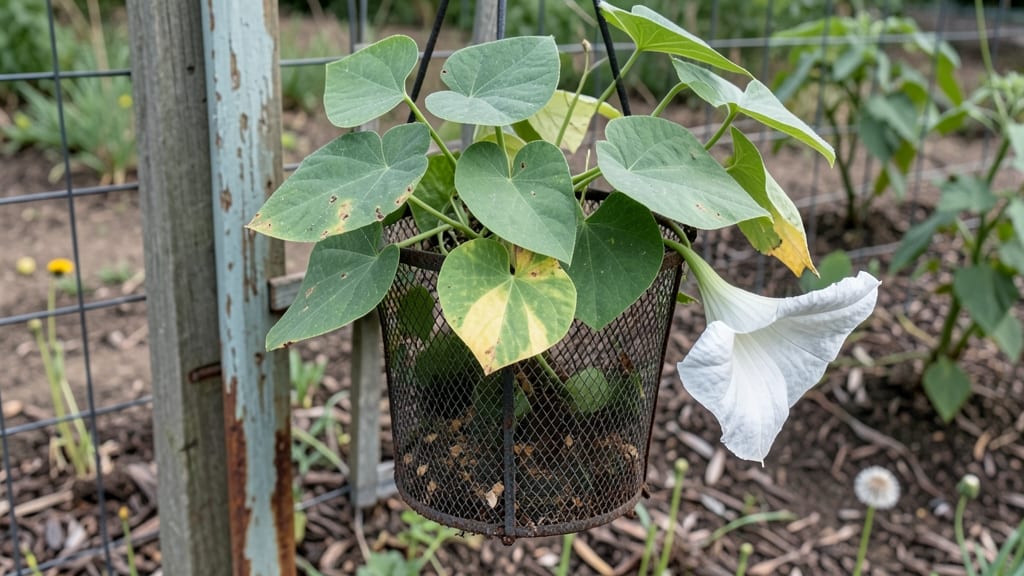
Moonflower hanging baskets transform your porch into a twilight spectacle that hummingbirds can't resist. 🌙 The sheer, white blooms unfurl at dusk, creating a dramatic display that lasts until morning—something store-bought flowers can never match.
My first basket took just 10 minutes to assemble, and within weeks, it became the centerpiece of my summer evenings.
These fast-growing vines thrive in 12- to 14-inch hanging baskets, where their trailing habit cascades beautifully. Pair them with trailing sweet potato vine for lush green contrast or nasturtiums for poppy blooms that complement the moonflowers' ethereal glow.
The key is keeping the soil consistently moist but well-draining—moonflowers hate soggy roots.
By midsummer, you'll have a living lantern that hummingbirds flock to at sunset. The scent is subtle but intoxicating, and the sheer, velvety petals add a touch of magic to any patio or balcony. Just be ready for compliments—neighbors will ask how you pulled off this enchanting display.
Works in partial shade or full sun, making it perfect for porches, decks, or even under tree canopies. The best part? You can start with just one basket and expand next year. Let's get yours blooming!
📚 In This Guide
- What you need
- Instructions
- Tips and common mistakes
- Wrapping up and next steps
What you need
- ● Moonflower seeds (Ipomoea alba) – 1 packet (approx. 50-100 seeds) or 3-5 healthy seedlings (ensure they’re disease-free).
- ● Hanging basket – 14-18 inches in diameter, with drainage holes (plastic, fabric, or coconut fiber).
- ● High-quality potting mix – 10-12 liters, well-draining and rich in organic matter (e.g., 60% peat/compost, 30% perlite, 10% vermiculite).
- ● Slow-release fertilizer – 1-2 tbsp (10-10-10 NPK ratio) or organic compost (e.g., worm castings).
- ● Support structure – 1-2 bamboo stakes or trellis rings (6-8 inches tall) for vining guidance.
- ○ Gloves (optional but recommended for handling soil/seeds).
- ● Trowel or small shovel for planting.
- ● Spray bottle (for misting seedlings).
- ● Watering can with a fine rose (to avoid displacing soil).
- ○ Mulch (optional) – Shredded bark or coconut coir (1 cup) to retain moisture.
- ○ Hummingbird-friendly accessories (optional) – Decorative wind chimes or a small feeder to enhance the ambiance!
- ● Sunlight access – 6+ hours of direct sun daily (partial shade in scorching climates).
- ● Watering routine – Commit to daily watering (or self-watering basket) until established.
- ● Patience – Moonflowers take 60-90 days to bloom from seed!
How to create stunning moonflower hanging baskets
Moonflowers bring magic to any garden with their dramatic evening blooms. Here’s how to grow them in hanging baskets for a showstopping display.
🪴 Step 1: Choose the Right Hanging Baskets and Supplies
Select 12-18 inch diameter hanging baskets with sturdy, durable material—plastic or coconut coir works best. Line the bottom with sphagnum moss to prevent soil from spilling out while allowing drainage. I like to add a slow-release fertilizer pellet at the bottom of each basket to feed the roots for weeks.
Fill each basket halfway with lightweight potting mix designed for containers. Moonflowers need well-draining soil to prevent root rot, so mix in perlite or vermiculite (about 1 part perlite to 4 parts soil) for extra aeration. This ensures roots stay healthy even as the vines grow heavy with blooms.
🌱 Step 2: Plant Moonflower Seeds or Transplants
Moonflowers grow from seeds or young plants, but I recommend starting with transplants for faster blooms. Plant 1-2 moonflower seedlings per basket, spacing them 6-8 inches apart. Dig a hole just deep enough to cover the roots without burying the stem too deeply—this prevents rot and encourages strong growth.
If using seeds, sow them ½ inch deep in the soil and keep them moist until germination (usually 7-14 days). I’ve found that planting seeds in baskets works best if done 4-6 weeks before the last frost, giving them time to establish before warm weather arrives.
☀️ Step 3: Position Baskets for Maximum Blooms
Moonflowers thrive in full sun (6+ hours daily), but they’ll also tolerate partial shade (4-6 hours) if you live in a hot climate. Hang baskets where they’ll receive morning sun and afternoon shade to prevent wilting. The vines will trail beautifully, so attach them to a trellis or hook for support.
Water baskets deeply every 2-3 days, ensuring the soil stays evenly moist but not soggy. I like to check moisture by sticking my finger 1 inch into the soil—if it feels dry, it’s time to water. Overwatering is the biggest mistake here, as moonflowers are sensitive to root rot.
💧 Step 4: Fertilize and Encourage Vigorous Growth
Feed moonflowers with a balanced liquid fertilizer (10-10-10) every 2-3 weeks once blooms appear. I dilute it to half-strength to avoid burning the roots. This keeps the vines strong and the flowers abundant. If you used slow-release pellets, you can skip the first feeding until new growth appears.
Watch for yellowing leaves, which usually means the plant needs more nutrients or water. If the soil feels dry at the surface but damp below, water lightly and fertilize next time. Moonflowers are heavy feeders, so consistent care pays off with dramatic evening blooms that hummingbirds adore.
✂️ Step 5: Prune and Maintain for Long-Lasting Blooms
Deadhead spent blooms weekly to encourage more flowers. Simply pinch off the faded blossoms at the base—this redirects energy into new growth. I also trim back any leggy vines in early summer to keep the plant compact and bushy.
By late summer, moonflowers may slow down as temperatures rise. If this happens, move baskets to a cooler, shaded spot for a few weeks to refresh the plant. With proper care, your baskets will continue producing large, fragrant white blooms well into fall.
Tips & tricks for perfect moonflower hanging baskets
A few simple strategies will help you grow moonflowers that burst into dramatic evening blooms—here's what I've learned from years of growing these twilight stars.
Soil Mix Secret: Don't skimp on the perlite or vermiculite in Step 1. That 1:4 ratio with potting mix is crucial—it prevents root rot while keeping the soil light enough for those heavy vines. I've seen baskets collapse when roots can't breathe properly, so take this step seriously. The extra effort pays off with plants that stay upright and produce blooms all season.
Transplant Timing: When planting those 1-2 seedlings in Step 2, give them a little extra space if you're in a humid climate. The 6-8 inch spacing works great in average conditions, but in muggy areas, spread them to 10 inches apart. This prevents fungal issues that can kill young plants before they even bloom. Trust me on this—crowded roots lead to crowded problems.
Watering Wisdom: The "deeply every 2-3 days" rule in Step 3 is perfect for most climates, but here's the thing: morning watering is key. Wet leaves in evening sun can invite fungal diseases, and moonflowers are particularly sensitive. Water at the base rather than overhead, and always check that 1-inch soil depth—if it's damp, wait another day. Overwatering is the silent killer of these dramatic bloomers.
Fertilizer Flexibility: That 10-10-10 liquid fertilizer in Step 4 works wonders, but here's my pro move: alternate between liquid feeds and a foliar spray every other application. The spray helps prevent salt buildup in the soil that can happen with frequent liquid feeding. And if you notice those yellow leaves mentioned in the instructions, it's usually a sign to switch to a chelated iron supplement for 2-3 weeks—moonflowers love that iron boost for vibrant growth.
Pro Tips for Moonflower Hanging Baskets
- A few simple strategies will help you grow moonflowers that burst into dramatic evening blooms—here's what I've learned from years of growing these twilight stars.
- Soil Mix Secret: Don't skimp on the perlite or vermiculite in Step 1.
- Transplant Timing: When planting those 1-2 seedlings in Step 2, give them a little extra space if you're in a humid climate.
Frequently asked questions
Got questions about moonflower hanging baskets?
You’re not alone! Here are some of the most common ones—and their answers—to help you grow these stunning night-bloomers with confidence.
When do moonflowers start blooming in hanging baskets?
Moonflowers typically bloom 60–90 days after planting if given full sun (6+ hours daily) and well-draining soil. In hanging baskets, they may take slightly longer due to limited root space. Pro tip: Deadhead spent blooms to encourage more flowers!
Why aren’t hummingbirds visiting my moonflower baskets?
Hummingbirds love moonflowers—but if they’re skipping yours, check these fixes:
- Timing: They’re most active at dawn/dusk (when moonflowers open).
- Location: Place baskets near feeders or other flowers (like salvia or bee balm).
- Scent: Moonflowers have a mild fragrance; add stronger-scented flowers (e.g., honeysuckle) nearby.
Can I grow moonflowers in hanging baskets year-round?
Moonflowers (Ipomoea alba) are annuals in most climates (USDA Zones 2–11). In cold zones, plant baskets after the last frost (spring) and enjoy them until frost kills them. In warm zones, they’ll self-seed! For winter interest, try alternatives like morning glories or evening primrose in baskets.
How often should I water moonflower hanging baskets?
Water daily in hot weather—hanging baskets dry out fast! Aim for 1–2 inches of water per week, but check soil moisture (stick your finger in: if top 1" is dry, water). Morning watering prevents fungal issues. Pro tip: Use self-watering baskets or add sphagnum moss to retain moisture.
Why are my moonflower leaves turning yellow?
Yellow leaves usually mean overwatering or nutrient deficiency. Try this:
- Check drainage: Ensure baskets have holes and use well-draining soil (add perlite).
- Fertilize: Feed with balanced liquid fertilizer (20-20-20) every 2–3 weeks.
- Pests: Inspect for aphids or spider mites (spray with neem oil if needed).
What’s a good alternative if moonflowers don’t thrive in my climate?
Try these night-blooming or hummingbird-friendly basket stars:
- Evening primrose (Oenothera) – Fragrant, drought-tolerant.
- Angel’s trumpet (Brugmansia) – Stunning trumpet blooms (toxic; wear gloves!).
- Four o’clocks (Mirabilis jalapa) – Vibrant, long-lasting.
- Nicotiana – Sweet-scented, great for containers.
Wrapping up and next steps
Transforming your space with moonflower hanging baskets is a dreamy way to invite hummingbirds and nighttime magic into your garden. 🌙 These stunning, fragrant blooms aren’t just beautiful—they’re easy to grow and packed with charm!
Whether you’re a seasoned gardener or just starting out, this twilight spectacle is well within reach.
Ready to bask in the glow? Grab your supplies, follow the steps, and soon you’ll be rewarded with a dramatic, fragrant display that hummingbirds will adore. Happy planting—your garden’s next masterpiece awaits! 🌸