
Flowers
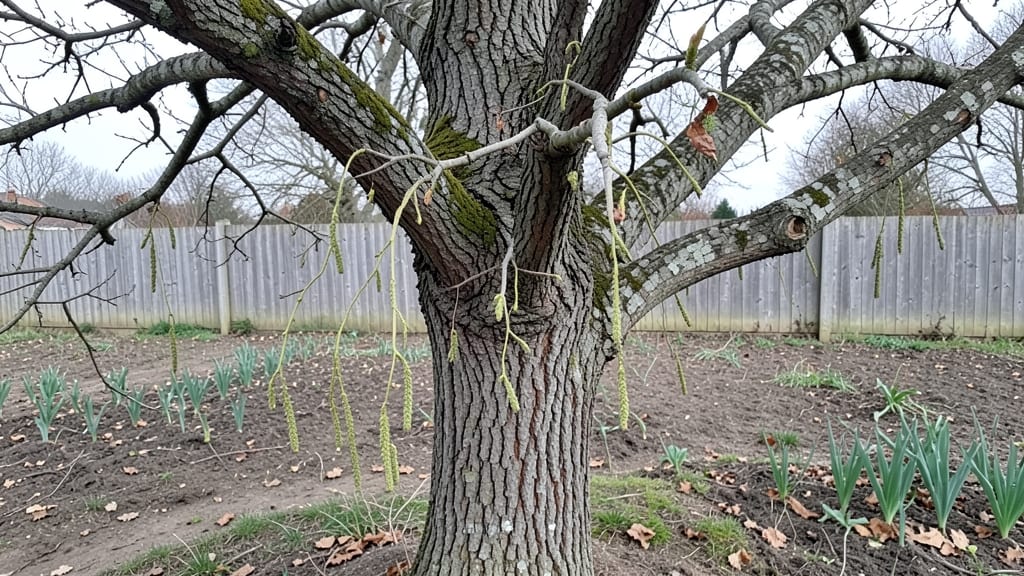
Those fuzzy, dangling oak female flowers—catkins—are the unsung heroes of Pacific Northwest forests. 🌿 I’ve spent years watching them sway in spring breezes, knowing they hold the key to mighty oak trees’ survival.
These tiny blooms aren’t just pretty; they’re the foundation of entire ecosystems, feeding bees, butterflies, and even birds before they even become acorns.
The secret to encouraging more of them lies in pruning with purpose. Oak trees reward careful cuts with denser foliage and more catkins next season. Start by removing dead branches first—then shape the tree to let light reach the inner branches where those fuzzy flowers love to grow.
The best time? Late winter or early spring, when the tree’s still dormant but the catkins are just waking up.
What you’ll get is a tree that’s not just strong but bursting with life. More catkins mean more pollinators, more acorns, and a landscape that thrives long after the blooms fade.
It’s how you turn a single oak into a neighborhood food source for wildlife. Let’s get those pruners ready—this is how you grow a forest, one cut at a time.
Works for red, white, or garry oaks—just adjust the timing to match your local frost dates. And here’s the kicker: the more you prune, the more the tree rewards you with those fuzzy, life-giving catkins. It’s a partnership, not a chore.
📚 In This Guide
- What you need
- Instructions
- Tips and common mistakes
- Wrapping up and next steps
What you need
- ● Pruning shears: Bypass pruners (for small branches, 4–6" blades, stainless steel or high-carbon steel for durability). Quantity: 1 pair.
- ● Loppers: Long-handled (24–36") for thicker branches (up to 2" diameter). Quantity: 1 pair.
- ● Pruning saw: Curved-tooth saw for branches >2" in diameter. Quantity: 1.
- ○ Extension pole: 10–15 ft telescoping pole with pruning attachment (for high branches). Optional but helpful!
- ● Disposable gloves: Nitrile or leather (thick enough to protect from thorns/oak spines). Quantity: 1–2 pairs.
- ● Sharpie or marker: Permanent marker for labeling cuts (if needed). Quantity: 1.
- ● Cleaning supplies: 70% isopropyl alcohol or rubbing alcohol (for sterilizing tools).
- ● Rag or paper towels.
- ● Weather check: Prune on a dry, calm day (avoid wind or rain).
- ● Personal protective equipment (PPE): Safety glasses (to shield from debris).
- ● Long sleeves/pants (oak bark can be rough!).
- ● Closed-toe shoes or boots.
- ● Tree knowledge: Confirm the oak species (e.g., Quercus garryana for PNW) to avoid stressing female flowers prematurely.
- ○ First-aid kit: Bandages, antiseptic wipes (for minor cuts). Optional but smart!
- ● 🔥 Sharpen your tools! Dull blades tear bark—sterilize and sharpen pruners/saws before starting.
- ● 🌡️ Timing matters: Prune oak female flowers in late winter/early spring (before new growth). Avoid summer pruning!
- ● ✨ Disposal plan: Bag and remove pruned branches to prevent sudden oak death (common in PNW).
How to prune oak trees for healthy female flower production in the Pacific Northwest
Pruning isn’t just about shaping—it’s about encouraging those prized acorn-producing female flowers. Here’s how to do it right for PNW oaks.
🌿 Step 1: Identify the Right Time to Prune
Timing matters most for female flower health. In the Pacific Northwest, prune late winter to early spring—just as buds swell but before new growth begins. This minimizes stress on the tree and aligns with its natural growth cycle. I avoid pruning in fall or summer because late-season cuts can stimulate weak growth that won’t harden off before winter.
Look for swollen buds (about the size of a pea) as your cue. These indicate the tree is preparing to grow, but hasn’t yet expended energy on new leaves. Pruning too early risks dormancy stress, while waiting too long can delay female flower development. If you miss the window, wait until early summer—but avoid heavy pruning then, as it can reduce next year’s flower production.
✂️ Step 2: Remove Dead, Diseased, or Crossing Branches First
Start with dead, diseased, or crossing branches—these take priority over structural pruning. Use clean, sharp pruners (sterilized with rubbing alcohol) to make cuts at a 45-degree angle, just outside the branch collar. The collar is that swollen area where the branch meets the trunk—it’s the tree’s natural healing zone.
For branches thicker than 2 inches, use a pruning saw with a fine-tooth blade to avoid tearing the bark. I always step back after each cut to check the tree’s balance. Removing crossing branches opens the canopy, letting sunlight reach lower limbs where female flowers often develop. Never remove more than 25% of the tree’s foliage in one season—PNW oaks are sensitive to over-pruning.
☀️ Step 3: Thin the Canopy for Better Light Penetration
Female oak flowers thrive where light reaches the inner branches. Aim to open the canopy by 30-40% by selectively removing branches that block sunlight. Focus on the lower third of the tree, where female flowers often appear. I target branches growing inward or upward—these are the ones stealing light from potential flower sites.
Make your cuts just above an outward-facing bud or lateral branch. This encourages growth in the right direction. If you’re unsure which bud to leave, look for the one that faces away from the trunk—it’ll grow outward, improving airflow and reducing disease risk. Avoid "heading back" (cutting back to a stub)—this creates weak growth and invites pests.
🌱 Step 4: Encourage Female Flower Growth with Strategic Cuts
To boost female flower production, prioritize branches that already show signs of flowering. Look for small clusters of catkins (the fuzzy, early-season flowers) or last year’s acorn scars. Prune just beyond these areas to stimulate new growth in the same spot. I like to make small, precise cuts rather than heavy reductions—think of it as a haircut, not a buzz cut.
If your oak is young (under 20 years old), limit pruning to structural shaping only. Mature trees (30+ years) can handle more aggressive thinning. After pruning, water deeply at the drip line (the edge of the canopy) to help the tree recover. Female flowers need consistent moisture, so mulch with 3-4 inches of wood chips to retain soil moisture and regulate temperature.
⏰ Step 5: Monitor and Adjust for Next Year’s Flowers
Check the tree in early spring to see where new female flowers emerge. If you notice clusters forming on branches you pruned last year, you’re on the right track! If not, next year’s cuts should focus on removing competing branches that might be shading those areas. I keep a simple sketch of the tree’s structure each year to track progress.
Watch for suckers (shoots growing from the base or trunk) and remove them promptly—they divert energy from flower production. A well-pruned PNW oak should show gradual, balanced growth with female flowers appearing 2-3 years after major pruning. If you see excessive leaf drop or weak growth after pruning, you went too heavy—scale back next time.
Tips & tricks for pruning oak trees for female flower production
These simple but powerful tips will help you maximize acorn production while keeping your Pacific Northwest oak healthy and thriving.
Timing is Everything: That late winter to early spring window is critical because it aligns with the tree's natural growth cycle. If you're unsure about the exact timing, check for swollen buds about the size of a pea—this is your perfect cue. Real talk: I've missed this window before and ended up with fewer female flowers the next year. The PNW climate can be tricky, so if you're in a cooler microclimate, don't wait until buds are fully swollen—act when you see the first signs of swelling.
Tool Prep Makes All the Difference: Sterilizing your pruners with rubbing alcohol isn't just about hygiene—it prevents disease transmission between cuts. I learned this the hard way after seeing fungal infections spread through my oak's branches. For branches over 2 inches thick, invest in a good pruning saw with fine teeth. The right tool makes the difference between a clean cut and one that tears the bark, which can invite pests and diseases. Always make your cuts just outside the branch collar—this natural healing zone helps the tree recover faster.
Canopy Light Strategy: When you're thinning the canopy, focus on opening up the lower third where female flowers often develop. I like to visualize the tree as a layered cake—each layer needs its light. Aim for 30-40% openness overall, but prioritize removing branches that grow inward or upward. These are the ones stealing light from potential flower sites. If you're unsure which bud to leave after cutting, look for the one facing away from the trunk—it'll grow outward naturally, improving airflow and reducing disease risk.
Monitoring Pays Off: Keep that simple sketch I mentioned in Step 5—it's worth the 10 minutes it takes. I've found that tracking progress year after year helps me see patterns in where female flowers develop. If you notice suckers (those shoots from the base) appearing, remove them promptly—they're energy vampires that divert resources from flower production. And here's a pro move: after pruning, water deeply at the drip line (the edge of the canopy) to help the tree recover. Female flowers need consistent moisture, so that 3-4 inches of wood chips isn't just for looks—it's crucial for retaining moisture and regulating temperature.
Pro Tips for Oak Female Flower
- These simple but powerful tips will help you maximize acorn production while keeping your Pacific Northwest oak healthy and thriving.
- Timing is Everything: That late winter to early spring window is critical because it aligns with the tree's natural growth cycle.
- Tool Prep Makes All the Difference: Sterilizing your pruners with rubbing alcohol isn't just about hygiene—it prevents disease transmission between cuts.
Frequently asked questions
When is the best time to prune oak trees with female flowers?
Prune oak trees with female flowers during late winter or early spring (before bud break) to avoid oak wilt risk. Never prune in late spring or summer—this is when oak wilt fungus spreads most aggressively. For the Pacific Northwest’s mild climate, aim for February to March for optimal results.
How do I tell if my oak tree has female flowers (catkins)?
Oak female flowers (catkins) appear as small, fuzzy, reddish-brown clusters on branch tips in early spring. They’re not the same as male catkins (longer, dangling, and yellow-green). Look for these 1–3 inch-long structures—if you spot them, your tree is ready for careful pruning to encourage healthy blooms.
What should I do if I accidentally prune at the wrong time?
If you prune during late spring/summer, act fast to minimize oak wilt risk:
- Seal cuts immediately with pruning sealant (or clean tree wound dressing).
- Remove all pruned branches from the site to prevent fungus spread.
- Water the tree deeply to stress-proof it.
- Monitor for wilting leaves or dieback—contact a certified arborist if symptoms appear.
Can I prune oak female flowers to encourage more blooms?
Yes! Selective pruning of crowded or diseased branches stimulates female flower production by improving airflow and sunlight. Focus on:
- Removing dead, crossing, or rubbing branches.
- Avoiding heavy topping—it stresses the tree and reduces blooms.
- Pruning only 10–15% of the canopy per year.
Does Pacific Northwest rain affect oak female flower pruning?
Rain can delay wound sealing and increase fungal risks, but don’t let it stop you! Prune on dry, calm days (even if rain is forecast soon). Use a sharp bypass pruner for clean cuts, and apply sealant within 20 minutes of pruning. Winter rain (when trees are dormant) is less risky than spring showers.
| Quick Troubleshooting Guide |
|---|
|
Problem: No female flowers after pruning Fix: Ensure full sun (6+ hours/day) and well-draining soil. Fertilize lightly with oak-specific compost in early spring. |
|
Problem: Wilting leaves post-pruning Fix: Overwatering or shock—reduce watering and apply mycorrhizal fungi to aid recovery. |
Wrapping up and next steps
Pruning the oak female flower in your Pacific Northwest garden doesn’t have to be intimidating—it’s all about timing, technique, and a little patience! 🌿 By mastering the art of selective trimming, you’ll encourage healthier growth, stunning blooms, and a thriving landscape that stands out in the region’s lush scenery.
Whether you’re a seasoned gardener or just starting, every snip brings you closer to a garden that’s both beautiful and resilient.
Ready to take the next step? Grab your pruners, mark your calendar for early spring or late winter, and start small—confidence grows with practice! For extra inspiration, sketch a simple pruning map of your oak tree before diving in. Happy gardening! 🌱✨