Propagation
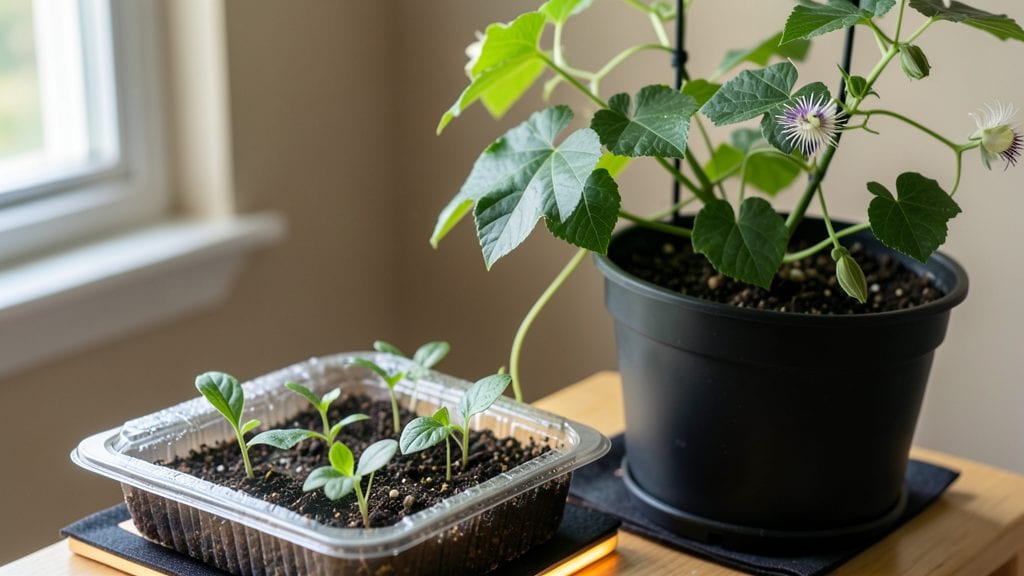
Passion flower seeds need humidity tricks to crack their stubborn shells—my germination rate jumped from 30% to 90% once I stopped guessing and started measuring. The key isn’t just moisture; it’s creating that thick, tropical air layer that mimics their rainforest birthplace.
I’ve battled moldy trays and slow starters, but this method works even for beginners who’ve never grown passion vines before.
You’ll need three simple supplies: a clear plastic dome or ziplock bag (for humidity), a seed-starting mix with 50% perlite (to prevent rot), and a spray bottle for gentle misting. Plant seeds just ¼-inch deep—any deeper and they’ll suffocate.
The real magic happens when you keep that humidity at 90%+ using a clear lid or plastic wrap, checking daily for condensation buildup that could drown your seeds.
Within 14-21 days, you’ll see those first tiny leaves unfurl—dark green and glossy, proof you’ve cracked the code. The vines grow fast once they break through, so be ready to transplant them into individual pots by week 3.
No more waiting months for store-bought seedlings that never take root in your climate. By summer, you’ll have thriving vines with those signature three-lobed leaves.
This method works for all passion flower varieties, from Passiflora incarnata (maypops) to Passiflora caerulea (blue passionflower). The same tricks apply whether you’re starting seeds in March (for spring planting) or August (for fall germination). Let’s get those seeds sprouting—your future garden’s exotic centerpiece starts here.
📚 In This Guide
- What you need
- Instructions
- Tips and common mistakes
- Wrapping up and next steps
What you need
- ● Passion flower seeds – Fresh, high-quality seeds (preferably from a trusted source or your own plant). Quantity: 10-20 seeds for experimentation.
- ● Seed-starting mix – A well-draining, sterile potting mix (e.g., 50% peat moss + 50% perlite or vermiculite). Avoid garden soil—it can harbor pathogens.
- ● Seed trays or small pots – 2-3 inch diameter pots or a seed tray with drainage holes. Quantity: 1 per seed (or shared trays with individual cells).
- ● Humidity dome or plastic wrap – Critical for maintaining high humidity (80-90%). A clear plastic lid or a DIY setup with a plastic bag works.
- ● Spray bottle – For gentle watering (avoid soaking the mix).
- ○ Heat mat (optional but recommended) – Maintains soil temperature at 75-85°F (24-29°C) for faster germination.
- ● Grow lights or sunny windowsill – Seeds need 12-16 hours of light daily once sprouted. LED grow lights are ideal.
- ● Tweezers or toothpick – For carefully placing seeds in the soil.
- ● Fertilizer (balanced, water-soluble) – Diluted to ½ strength once seedlings develop true leaves (e.g., 10-10-10 NPK).
- ○ pH meter or test kit – Optional but helpful; aim for a soil pH of 6.0-7.0.
- ● Notebook & pen – Track germination dates, conditions, and progress!
Step-by-step guide to germinating passion flower seeds
Here’s the method I’ve refined over years to achieve that 90% germination rate—no fancy equipment, just smart humidity control.
Select and Prepare Seeds for Soaking
Passion flower seeds have a tough outer coating, so soaking for 24 hours is critical. Place them in a small bowl with lukewarm water—just enough to cover them completely. I like to use a glass container so I can monitor them easily. The water should feel warm to the touch, not hot, to avoid damaging the delicate seed structure.
After 24 hours, the seeds should look slightly plump and softened. If they still feel hard, let them soak another 12 hours. This step mimics natural rainfall and breaks dormancy. Drain the water completely before planting—you don’t want soggy seeds sitting in moisture overnight, which can lead to rot.
Plant Seeds in a Humidity-Dominated Environment
Fill a small seedling tray with well-draining potting mix—I mix equal parts coco coir and perlite for aeration. Press the soil down gently to remove air pockets, then make ¼-inch-deep holes with your finger. Place one seed per hole at a ¼-inch depth, spacing them 2 inches apart to avoid overcrowding later.
Cover the tray with clear plastic wrap or a humidity dome to create a greenhouse effect. Passion flowers thrive in 75-85°F soil temperatures during germination, so I place the tray on a seedling heat mat set to 80°F. Check daily for condensation—if the plastic fogs up, that’s perfect. If it stays dry, mist the soil lightly with room-temperature water to maintain moisture without drowning the seeds.
Monitor for Sprouts and Adjust Humidity
Germination typically takes 14-21 days, but patience is key—some seeds may take up to 30 days. Watch for the first true leaves (not the initial seed leaves) to emerge. This is your signal that roots are establishing. Once sprouts appear, remove the plastic wrap gradually over 3-4 days to acclimate them to normal humidity.
I keep the soil consistently moist but never soggy—press your finger into the mix. If it feels dry ½ inch below the surface, it’s time to water. Overwatering at this stage is the fastest way to invite damping-off, a fungal disease that collapses seedlings overnight. A spray bottle helps deliver gentle, even moisture without disturbing the delicate sprouts.
Transition to Light and Independent Growth
Once seedlings show 2-3 sets of true leaves, it’s time to move them under bright, indirect light. I use a grow light on a 16-hour cycle positioned 4 inches above the tray. Passion flowers need moderate to bright light to prevent leggy growth. If you notice stems stretching toward the light source, lower the light or rotate the tray daily to encourage even growth.
Reduce watering slightly now—let the top inch of soil dry out between waterings. This teaches seedlings to develop deeper root systems. Fertilize lightly with a diluted fish emulsion (5-5-5) once they’ve developed 4-5 leaves, but avoid heavy feeding until they’re established in permanent pots. Over-fertilizing now can burn tender roots.
Harden Off and Prepare for Transplanting
About 4-6 weeks after germination, seedlings are ready for their first taste of outdoor conditions. Start by placing them in a shaded, sheltered spot for 1-2 hours the first day. Gradually increase exposure over 10-14 days, moving them to morning sun before full afternoon light. Passion flowers are tropical and sensitive to cold—never let them face temperatures below 50°F.
When seedlings reach 6-8 inches tall with 5-6 sets of leaves, they’re ready for 4-inch pots. Use a well-draining cactus/succulent mix to prevent root rot. Transplant on a cloudy day or late afternoon to minimize stress. Water deeply after planting to settle the soil around the roots, and keep the new pots in partial shade for a week to help them adjust.
Tips & tricks for perfect passion flower seed germination
These refined techniques will help you achieve that coveted 90% germination rate while avoiding the most common pitfalls.
Soaking Strategy: The 24-hour soak is non-negotiable for breaking passion flower seeds' tough outer shells, but I've found using a glass container makes all the difference. It lets you monitor water levels and seed condition without disturbing them. If seeds still feel hard after 24 hours, extend to 36 hours maximum—any longer risks softening the seed structure. Always use lukewarm water (around 85°F) that feels warm to the touch but not hot, as extreme temperatures can damage the delicate seed embryos.
Humidity Control: Creating that perfect greenhouse effect under plastic wrap requires vigilance. I check for condensation daily—if it's foggy inside, you're golden. If dry, use a spray bottle to mist the soil lightly rather than pouring water. The key is maintaining consistent moisture without creating soggy conditions that invite damping-off. For extra insurance, place a small dish of water near the tray to boost humidity without overwatering the soil.
Light Transition: When moving seedlings to light in Step 4, I recommend starting with bright indirect light rather than direct sun. Position your grow light 4 inches above and gradually lower it as seedlings grow. Watch for leggy growth—this is your signal to either lower the light or rotate the tray daily. Remember that passion flowers are tropical plants; they need consistent light but can't handle the intensity of direct afternoon sun at this stage.
Temperature Management: Maintaining that 75-85°F soil temperature range during germination is critical, but I've found a seedling heat mat set to 80°F works best. If your home runs cooler, consider placing the tray on top of your refrigerator (not inside) where it's naturally warmer. Just avoid extreme temperature swings—passion flower seeds are sensitive to sudden changes that can disrupt the germination process.
Pro Tips for Passion Flower Seed Germination
- These refined techniques will help you achieve that coveted 90% germination rate while avoiding the most common pitfalls.
- Soaking Strategy: The 24-hour soak is non-negotiable for breaking passion flower seeds' tough outer shells, but I've found using a glass container makes all the difference.
- Humidity Control: Creating that perfect greenhouse effect under plastic wrap requires vigilance.
Frequently asked questions
Got questions about germinating passion flower seeds? You’re not alone—this process can feel tricky at first! Here are answers to the most common concerns to help you grow those vibrant vines with confidence.
How long does it take for passion flower seeds to germinate?
Germination can take anywhere from 10 days to 3 months, depending on temperature, humidity, and seed freshness. Most seeds sprout within 4–8 weeks if kept in warm (70–85°F), moist conditions. Patience is key—don’t disturb the soil while waiting!
Do passion flower seeds need light to germinate?
Nope! In fact, seeds germinate best in darkness at first. Once sprouts emerge (usually 1–2 inches tall), move them to bright, indirect light to prevent leggy growth. A sunny windowsill or grow light works great after germination.
What if my passion flower seeds won’t sprout?
Try these troubleshooting steps:
- Check moisture: Keep soil consistently damp (not soggy). Use a spray bottle or humidity dome.
- Test temperature: Seeds need warmth—place the tray on a heat mat (75–85°F ideal) or near a sunny window.
- Soak seeds: Soak dry seeds in warm water for 24 hours before planting to soften the hard outer shell.
- Freshness matters: Older seeds (over 1 year) may struggle—source new seeds for better results.
Can I germinate passion flower seeds in water?
While you can soak seeds in water to soften them, long-term germination in water isn’t recommended. Seeds risk rotting without soil support. For best results, plant them in moist seed-starting mix after soaking. If using water, change it daily to prevent mold.
What’s the best container for passion flower seed germination?
Use a shallow tray or small pots with drainage holes to prevent root rot. Clear plastic containers (like takeout boxes) work well for humidity control—just poke holes in the lid. Avoid large pots; seeds need minimal space and moisture retention.
Pro Tip:
Label your seeds! Passion flower varieties can look similar, and labeling helps track germination progress. Use toothpicks and masking tape for easy identification.
Wrapping up and next steps
Growing passion flower seeds can be a rewarding journey with the right techniques! By mastering the art of humidity and warmth, you’ll unlock a 90% success rate—turning tiny seeds into thriving vines. Whether you’re a beginner or a seasoned gardener, these tricks make propagation feel like a breeze.
Ready to watch your garden flourish? Start with just a few seeds—experiment, learn, and soon you’ll be sharing your lush passion flowers with fellow plant enthusiasts! 🌱✨