
Pruning
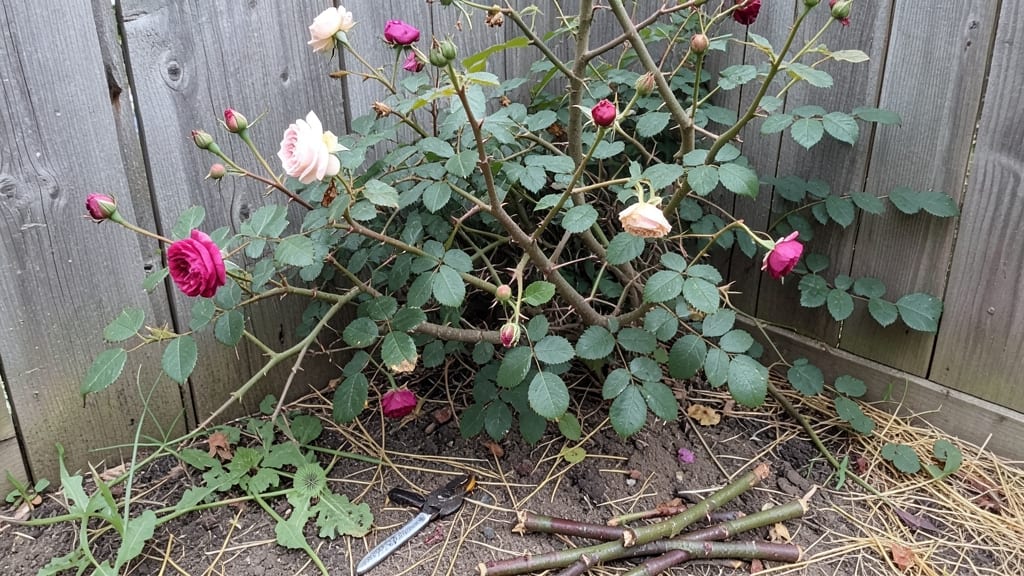
Pruning roses after flowering isn’t just about cleaning up—it’s the secret to next year’s showstopping blooms and stronger stems. I learned this the hard way when my hybrid teas produced half as many flowers after skipping this step.
The right cuts now mean I get vibrant, healthy growth that keeps blooming well into fall.
Timing matters most: wait until late summer or early fall when flowers fade, but before frost. You’ll need sharp pruners, rubbing alcohol for sterilizing, and a clear day to avoid spreading disease.
The goal is to remove dead, crossing, or weak canes while leaving sturdy stems—think of it as giving your roses a fresh start for winter.
What you’ll end up with is a bush that looks neater, grows fuller, and flowers even more prolifically next season. I’ve seen roses that once produced 20 blooms now yielding 50+ after consistent after-flowering pruning.
The key is making clean cuts at a 45-degree angle, just above an outward-facing bud.
This method works for hybrid teas, floribundas, and shrub roses alike, though climates vary—zone 7+ gardeners can prune later than those in cooler areas. The biggest mistake? Cutting too late or too aggressively. Let’s get those roses ready for their next big show.
📚 In This Guide
- What you need
- Instructions
- Tips and common mistakes
- Wrapping up and next steps
What you need
- ● Bypass pruners: Sharp, clean pair (10–12" blades) for clean cuts. Pro tip: Disinfect with rubbing alcohol between cuts to prevent disease! 💡
- ● Loppers: Heavy-duty (12–18" blades) for thicker stems (½"–1½" diameter).
- ● Pruning saw: For stubborn, woody stems (20" blade).
- ● Garden gloves: Heavy-duty, cut-resistant (e.g., Mechanix or rose-specific).
- ● Disposable pruning bags: 2–3 large bags (13-gallon) for collecting debris.
- ● Rake or leaf blower: To clear fallen petals and clippings.
- ● Hand pruners: Compact pair for precision trimming.
- ● Sealer (e.g., pruning paint): For large cuts (½" or wider) to prevent disease.
- ● Knee pad or stool: For comfort if roses are tall or dense.
- ● Spray bottle with soapy water: For cleaning tools mid-prune.
- ● Label markers: To tag pruned stems if training new growth.
- ● Timing: Prune after 80–90% of blooms have faded (late summer/early fall for most roses).
- ● Weather: Choose a dry, overcast day to avoid stressing the plant.
- ● Safety: Wear long sleeves/pants to protect from thorns.
Step-by-Step guide for pruning roses after flowering
Reviving your roses after they've finished blooming is all about strategic cuts and timing.
Wait Until After the Final Bloom
Never prune until the rose bushes have finished their last flush of flowers for the season. This ensures you don’t accidentally remove next year’s buds, which form on new growth after flowering. Look for the last spent bloom on each stem and wait until it’s completely faded and browned before touching your shears. In most climates, this occurs naturally in late summer or early fall, but cooler regions may need to wait until after the first frost.
If you’re unsure, check the stems carefully—new buds will appear as small, tight clusters at the base of the cane. Pruning too early risks removing these potential blooms. I always mark my calendar with the last bloom date to avoid rushing the process.
Remove Dead, Diseased, or Weak Canes
Start by inspecting each cane for signs of disease, dead wood, or weak growth. Dead canes are hollow, brittle, and snap easily when bent. Diseased canes often have black spots, mold, or oozing sap. Weak canes are thin, spindly, and rarely produce strong blooms. Use clean, sharp pruners to cut these out at their base, making the cut just above an outward-facing bud or a healthy branch.
Don’t leave stubs—cutting flush with the main stem invites disease. I sterilize my pruners with rubbing alcohol between cuts to prevent spreading any pathogens. This step is non-negotiable for keeping your roses healthy.
Thin Out Crowded Canes for Better Airflow
Roses need good airflow to prevent fungal diseases like black spot and powdery mildew. If canes are growing too close together, select the strongest, healthiest canes and remove the weaker ones. Aim to leave about 4-6 strong canes per bush, spaced evenly around the center. This opens up the bush and allows sunlight to reach the interior, which encourages stronger growth and more blooms next season.
When thinning, make your cuts at a 45-degree angle about ¼ inch above an outward-facing bud. This angle helps water run off the cut and reduces the risk of rot. If you’re unsure which canes to keep, prioritize those that are thick, straight, and free of blemishes.
Shorten Remaining Canes to Encourage New Growth
Once you’ve removed the dead, diseased, and crowded canes, shorten the remaining ones by about one-third. This promotes bushier growth and stronger blooms next year. Look for the first set of 5-leaf clusters (leaflets) from the base of the cane and make your cut just above the fifth leaf. This ensures you’re pruning above a strong bud that will produce new growth.
For hybrid teas and grandifloras, aim for a height of 18-24 inches after pruning. For floribundas and shrub roses, you can leave them slightly taller, around 24-30 inches. Avoid over-pruning—you’re not trying to create a topiary, just stimulating healthy regrowth.
Clean Up and Prepare for Winter
After pruning, rake up and dispose of all clippings—especially diseased ones—to prevent reinfection. I like to mulch the base of the rose with 2-3 inches of organic mulch, like shredded bark or compost, to protect the roots from freezing temperatures. This also helps retain moisture and suppress weeds.
Finally, give your roses a light feeding with a balanced fertilizer (10-10-10) to support root development over winter. Avoid heavy fertilizing now—you want the plant to focus on root growth, not new top growth, before dormancy.
Tips & tricks for pruning roses after flowering
These essential techniques will help you transform your roses into healthier, more vibrant plants for next season.
Timing is Everything: The critical window for pruning roses after flowering is after the last bloom has completely faded and turned brown. This typically occurs in late summer to early fall, but in cooler climates, waiting until after the first frost ensures you don't accidentally remove next year's buds. I've found that marking my calendar with the last bloom date prevents me from rushing the process—patience here is key to long-term success.
The 45-Degree Angle Secret: When making your cuts in Step 3, that 45-degree angle isn't just decorative—it's functional. The sloped cut helps water run off the stem, reducing the risk of rot. Make sure to cut about ¼ inch above an outward-facing bud, which ensures new growth will emerge in the right direction. I always visualize a small smile on the cut: the top of the smile is where the cut ends, and the bottom points toward the bud you're targeting.
One-Third Rule for Canes: Shortening remaining canes by about one-third in Step 4 might seem drastic, but it's what stimulates bushier growth and stronger blooms next year. Look for the first set of 5-leaf clusters from the base and make your cut just above the fifth leaf. This ensures you're pruning above a strong bud that will produce vigorous new growth. For hybrid teas, I aim for 18-24 inches post-pruning, while floribundas can be left slightly taller at 24-30 inches.
Disease Prevention Protocol: Never skip Step 2's disease prevention measures. Sterilizing your pruners with rubbing alcohol between cuts prevents spreading pathogens, and disposing of diseased clippings removes potential infection sources. After pruning, I always rake up all debris—especially diseased material—and avoid composting it. The mulch layer you add in Step 5 acts as an additional barrier against soil-borne diseases while protecting roots from winter cold.
Pro Tips for Pruning Roses After Flowering
- These essential techniques will help you transform your roses into healthier, more vibrant plants for next season.
- Timing is Everything: The critical window for pruning roses after flowering is after the last bloom has completely faded and turned brown.
- The 45-Degree Angle Secret: When making your cuts in Step 3, that 45-degree angle isn't just decorative—it's functional.
Frequently asked questions
Got questions about pruning roses after they’ve bloomed?
You’re not alone! Here are answers to the most common concerns to help you prune with confidence and keep your roses thriving.
When is the exact best time to prune roses after flowering?
Prune hybrid teas and floribundas right after their main bloom cycle (late spring to early summer) to encourage a second flush. For climbers and shrub roses, wait until after their final bloom of the season (late summer to early fall). Avoid pruning in extreme heat or cold—aim for mild, dry days!
How much should I cut back? Can I prune too aggressively?
For most roses, remove one-third to half of the plant’s height, focusing on:
- Dead, diseased, or crossing branches
- Weak stems growing inward
- Shoots without buds
What if I miss the window? Can I still prune later?
Yes! While light pruning (removing deadwood or crossing branches) can happen anytime, major pruning should ideally be done before late summer. If you wait too long, focus on shaping and removing dead growth to prep for winter. Roses are resilient—just be gentle!
Do I need to sterilize my pruners between cuts?
Absolutely!
Sterilizing tools with rubbing alcohol (70%+) or a 10% bleach solution prevents spreading fungal diseases (like black spot) between cuts. Wipe blades before and after each rose—and after every 3–4 cuts. A quick spray bottle of disinfectant makes this easy!
Will pruning now affect next year’s flowers?
Done correctly, pruning boosts next year’s blooms by redirecting energy to stronger growth. Focus on:
- Leaving 5–7 healthy buds per stem (cut above a bud at a 45° angle).
- Avoiding “topping” (cutting back to a bare stem).
Wrapping up and next steps
Pruning your roses after flowering isn’t just about tidying up—it’s the secret to healthier plants and stunning blooms next season! 🌹 With the right tools, timing, and technique, you’ll encourage stronger growth, prevent diseases, and keep your garden thriving.
Now that you’re armed with tips and answers to common questions, grab those shears and get pruning—your roses will thank you with vibrant, long-lasting flowers!
Ready to take it further? Plan your next steps:
- 📅 Mark your calendar for seasonal pruning reminders.
- 🌱 Experiment with different rose varieties to refine your technique.
- 📸 Snap before-and-after photos to track your progress!