
Succulent
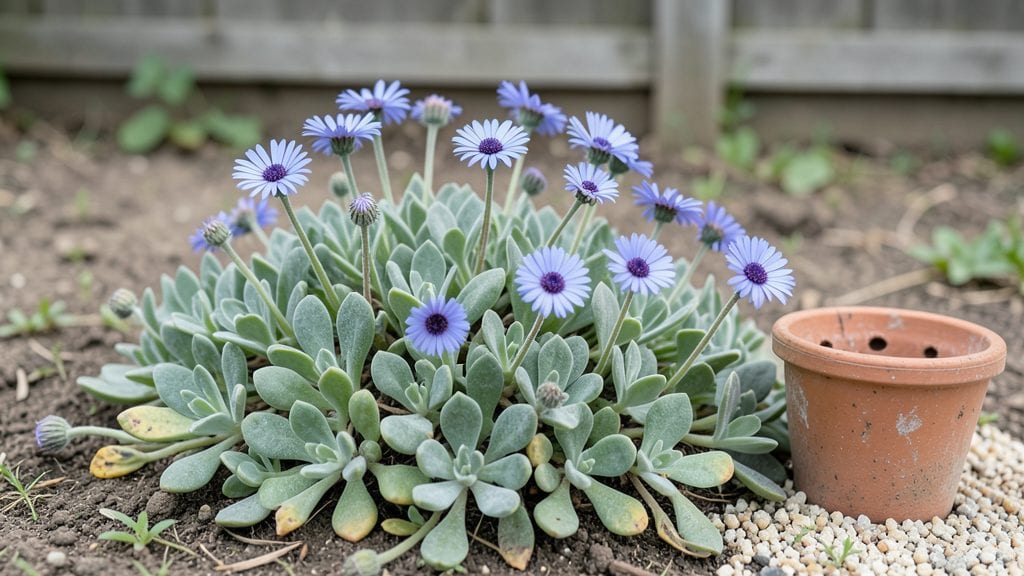
Finding succulents with blue flowers feels like discovering hidden treasure in the desert. 🌵 These rare beauties—like the striking Stapelia gigantea with its deep purple-blue blooms or Agave parryi with its soft blue-green foliage—bring unexpected drama to arid landscapes.
They're the kind of plants that make neighbors double-take and ask, "What is that?"
Most people assume succulents are all about spiky green leaves, but these blue-flowering varieties add a whole new dimension to your garden. Pair them with warm-toned agaves or dusty miller for a high-contrast look, or tuck them into containers with trailing echeverias for a cascading effect.
They thrive in full sun and dry soil—perfect for low-water desert designs where every plant needs to pull its weight.
Imagine your patio bursting with Echeveria 'Blue Cushion' blooming in spring, its lavender-blue flowers standing out against silver foliage. Or picture Senecio serpens with its sky-blue star-shaped blooms adding a splash of color to a rock garden.
These plants aren't just pretty—they're conversation starters that make your outdoor space feel like a curated art piece.
Whether you're designing a full xeriscape or just want to add a striking pop of color to a container, these blue-flowering succulents deliver drama with minimal fuss. Let's explore how to make them the stars of your desert-inspired garden.
📚 In This Guide
- What you need
- Instructions
- Tips and common mistakes
- Wrapping up and next steps
What you need
- ● Succulents with blue flowers: 1–3 plants of Echeveria agavoides 'Lilacina' (lavender-blue blooms)
- ● 1–2 plants of Graptopetalum paraguayense 'Opalina' (pink-blue flowers)
- ● 1 plant of Dudleya 'Royal Red' (rare blue-green buds)
- ● 1 plant of Sedum morganianum 'Burro’s Tail' (trailing stems with occasional blue-tinged blooms)
- ● Well-draining soil: 1–2 bags of cactus/succulent mix (or DIY: 60% potting soil + 40% perlite/pumice)
- ● Containers: 1–3 shallow pots (4–6 inches deep) with drainage holes
- ○ Optional: Terracotta pots (retain heat well for desert plants)
- ● Growing medium: 1 bag of coarse sand or grit (for extra drainage)
- ● Fertilizer: 1 bottle of balanced liquid fertilizer (5-5-5 or 10-10-10) or slow-release granules
- ● Watering can: 1 with a narrow spout (to avoid overwatering)
- ● Gloves: 1 pair (succulents can have mild irritants)
- ● Sunlight: Grow lights (LED full-spectrum, 12–16 hours/day for indoor setups)
- ● Humidity tray: 1 pebble tray + water (for Dudleya or cooler climates)
- ● Decorative stones: 1–2 lbs of river rocks or lava rock (for aesthetic + drainage)
- ● Plant labels: 5–10 waterproof tags (to track varieties)
- ● Pruning shears: 1 pair (sterilized for trimming dead blooms)
How to incorporate blue-flowering succulents into desert landscapes
Here's how to create bold, low-maintenance contrast using these striking desert plants.
🌱 Step 1: Select the Right Blue-Blooming Succulents
Start with 4 varieties of blue-flowering succulents that thrive in desert conditions. My top picks are Agave parryi 'Blue Glow' (with its dramatic blue-green foliage), Echeveria 'Blue Cheddar' (compact rosettes with powder-blue tips), Sedum 'Blue Spruce' (mounding habit with icy-blue flowers), and Kalanchoe 'Blue Dawn' (long-blooming clusters of lavender-blue blooms). Each brings a different texture and bloom time for year-round interest.
Check plant tags for mature size—some like Agave grow 3-4 feet wide, while Echeveria stays under 1 foot. Place larger varieties at the back of beds and smaller ones near pathways where their color will pop against gravel. I always group odd numbers (3 or 5) of each type to create natural-looking drifts rather than rigid rows.
☀️ Step 2: Prepare the Desert Soil for Optimal Drainage
Desert landscapes need fast-draining soil to prevent succulent root rot. Amend native soil with 50% coarse sand or pumice and 30% cactus/succulent mix (use the 4 cubic yards you’ve prepared). Mix these thoroughly in a 6-inch deep layer where plants will sit. This ensures water drains within 10 minutes of watering rather than pooling around roots.
Test your mix by squeezing a handful—it should crumble easily when dry but hold shape when damp. If it forms a tight ball, add more sand. I like to work in 2-foot sections at a time, spreading the amended soil and raking it smooth before planting. This prevents compaction from walking on freshly turned beds.
🪴 Step 3: Plant with Strategic Spacing for Visual Impact
Dig holes twice as wide as each plant’s root ball but only as deep as the container’s drainage holes show. Gently remove plants from pots and loosen any circling roots with your fingers—succulents hate being root-bound. Place each plant so the top of the root ball sits just below soil level; burying the stem too deep causes rot.
Space Agave and Sedum 3-4 feet apart, while Echeveria and Kalanchoe can go 18-24 inches apart. Arrange them so blue foliage and flowers create vertical layers—taller varieties at the back, mid-height in the middle, and trailing types like Sedum 'Blue Spruce' at the front. I always step back every few plants to check for balanced color distribution.
💧 Step 4: Water Deeply and Establish a Drought-Tolerant Routine
Water deeply once a week for the first 4 weeks after planting, applying 1 gallon per plant to encourage root spread. Use a soaker hose set at the base to avoid wetting foliage, which attracts fungal diseases. After this period, reduce to every 2-3 weeks—succulents store water in their leaves, so they’re built for drought once established.
Check moisture by sticking your finger 2 inches into the soil. If it feels dry, water; if damp, wait. Overwatering is the #1 killer of desert succulents, so I set a reminder on my phone for the first month to avoid slipping into a routine. Mulch with 1 inch of gravel (not organic mulch) around each plant to reflect sunlight and prevent soil evaporation.
✂️ Step 5: Prune and Maintain for Long-Term Blue Blooms
Deadhead spent flowers by snipping stems ¼ inch above the base with clean, sharp shears. This encourages Kalanchoe and Sedum to rebloom. For Agave, remove dried leaves by twisting them off gently—never cut, as the sap can irritate skin. Wear gloves when handling Agave varieties, as their sap contains mild irritants.
Fertilize lightly once in spring with a balanced 10-10-10 fertilizer diluted to half strength. Too much nitrogen causes leggy growth and fewer blooms. I also rotate plants every 2-3 years to prevent soil depletion and keep their striking colors vibrant. In winter, reduce watering to once a month unless temperatures drop below 40°F, when you should hold off entirely.
Tips & tricks for perfect blue-flowering succulent landscapes
These pro tips will help you create a stunning desert garden that thrives with minimal effort—and avoids the common pitfalls that turn blue blooms into brown disappointment.
Soil Test Before Planting: Don't assume your native soil drains properly—test it by squeezing a handful. If it forms a tight ball, you need more sand or pumice. I've seen beautiful blue-flowering succulents die within weeks because the soil was too dense. That 6-inch deep amended layer in Step 2 is non-negotiable for preventing root rot, especially with moisture-loving varieties like Kalanchoe 'Blue Dawn'.
Planting Depth Matters: The top of each root ball should sit just below soil level—never bury the stem. I learned this the hard way when my first Agave parryi 'Blue Glow' developed rot from being planted too deep. For the smaller Echeveria 'Blue Cheddar', use your finger to create a shallow dimple in the soil to cradle the root ball properly.
Watering Wisdom: That 10-minute drainage test in Step 2 is crucial. If water pools in the hole after 10 minutes, you need more sand. And remember—overwatering is the silent killer. I set phone reminders for the first month to avoid slipping into my old habit of watering too frequently. The 1-gallon-per-plant rule during the first 4 weeks ensures proper root establishment without drowning them.
Color Layering Secret: For maximum visual impact, arrange plants by height—tallest at the back, mid-height in the middle, and trailing varieties like Sedum 'Blue Spruce' at the front. I always step back every 3-4 plants to check for balanced color distribution. This creates that "wow" factor that makes your desert landscape truly stand out.
Pro Tips for Succulents With Blue Flowers
- These pro tips will help you create a stunning desert garden that thrives with minimal effort—and avoids the common pitfalls that turn blue blooms into brown disappointment.
- Soil Test Before Planting: Don't assume your native soil drains properly—test it by squeezing a handful.
- Planting Depth Matters: The top of each root ball should sit just below soil level—never bury the stem.
Frequently asked questions
Are there actually blue-flowered succulents, or is it just a trick of the light?
While true blue flowers are rare in nature (thanks, pigment chemistry!), some succulents like Senecio serpens (Blue Chalksticks) or Delosperma species produce vibrant blue-purple blooms that look like blue. Others, like Echeveria ‘Blue Cheddar’, have striking blue-gray foliage that contrasts with their flowers—creating a blue-ish effect. Think of it as nature’s way of tricking your eyes!
How long does it take for these succulents to flower?
Patience is key! Most blue-flowering succulents take 1–3 years to mature enough for blooms, depending on the species. For example:
- Delosperma (Ice Plant): Often flowers in its first year if given enough sun.
- Senecio serpens: May take 2–3 years to produce those iconic blue-green stems and tiny yellow/blue flowers.
- Echeveria: Some hybrids (like ‘Blue Cheddar’) flower in 2 years, but others wait until they’re 3+ years old.
Why won’t my blue-flowering succulent bloom?
No flowers? Don’t panic! Here’s the troubleshooting checklist:
- Not enough light: Most blue-flowering succulents (like Delosperma) need 6+ hours of direct sun daily. Move them to a sunnier spot or supplement with a grow light.
- Overwatering: Soggy soil = stressed plant = no blooms. Let soil dry completely between waterings.
- Too young: As mentioned, some need time to mature. Check your plant’s care tags for age-specific tips.
- Nutrient deficiency: A balanced succulent fertilizer (low in nitrogen) in spring can encourage flowering.
What are some easy-to-grow blue-flowering succulents for beginners?
If you’re new to succulents, start with these low-maintenance blue-hued beauties:
Many blue-flowering succulents are tender perennials (they die back in frost but regrow from roots). Here’s how to cheat winter:
Succulent
Blue Feature
Care Level
Delosperma (Ice Plant)
Bright blue-purple flowers (spring–fall)
(Easy! Drought-tolerant)
Senecio serpens (Blue Chalksticks)
Blue-gray stems + tiny yellow/blue flowers
(Moderate—needs well-draining soil)
Echeveria ‘Blue Cheddar’
Blue-gray rosettes + pink flowers
(Beginner-friendly, slow-growing)
Crassula ‘Campfire’ (variegated)
Blue-green foliage with red tips
(Super easy, great for containers)
Can I grow blue-flowering succulents outdoors in cold climates?
Pro move: If you love the look, opt for blue-gray foliage succulents (like Sempervivum)—they’re hardier and still add that cool contrast!
Wrapping up and next steps
Ready to transform your space with a pop of blue magic? These rare succulents with blue flowers aren’t just stunning—they’re low-maintenance and perfect for adding a desert-inspired twist to your garden or home. Whether you’re a seasoned plant parent or just starting out, their unique hues will bring joy and conversation to any setting. 🌵✨
Now that you’ve learned about the best blue-flowered succulents and how to care for them, why not take the next step? Start with one of these beauties, experiment with placement, and watch your collection grow—both in size and in that oh-so-satisfying blue contrast! Happy planting! 🌸