
Flowers
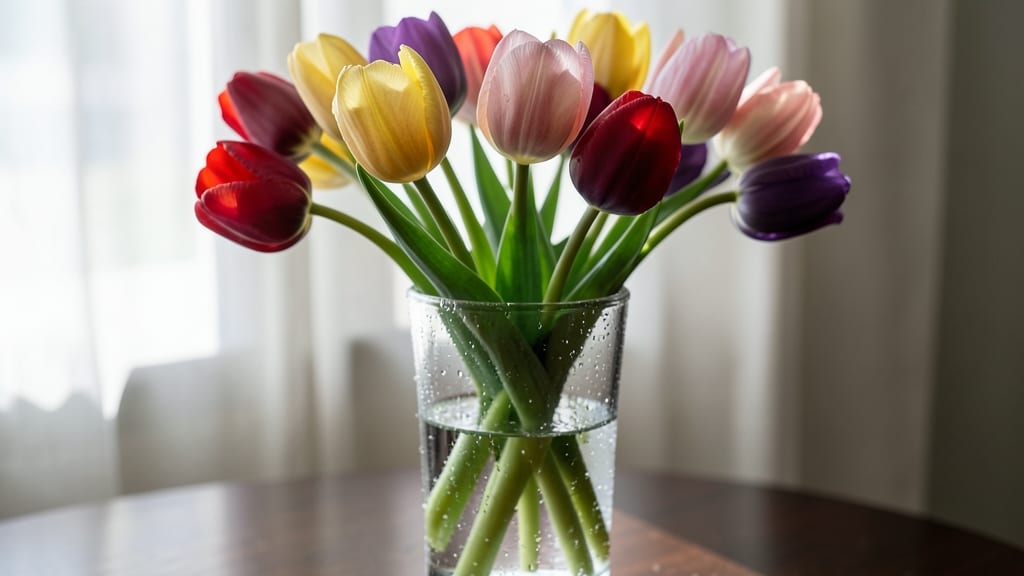
Tulip cut flowers transform your home into a springtime masterpiece with their velvety petals and intoxicating fragrance. ✨ I’ve turned my garden’s tulips into arrangements that last weeks—not days—using tricks most florists keep secret.
The key isn’t just how you cut them, but how you prep the stems and water to fight wilting.
You’ll need sharp scissors, a clean vase, and a few simple supplies like sugar and bleach. My favorite pairings? Soft tulips with eucalyptus or ranunculus for contrast. These blooms stay fresh for 10-14 days with the right care, making them perfect for tablescapes, bouquets, or even dried arrangements.
Imagine waking up to a vase of tulips still standing tall after a week, their petals unfurling like fresh snow. The secret’s in the stem prep—removing lower leaves and giving them a fresh cut underwater.
You’ll also learn how to rotate vases to keep stems hydrated and when to add food for extra longevity.
Whether you’re styling for Easter, Mother’s Day, or just because, these tricks work for any tulip variety. Let’s make your cut flowers last longer than your guests’ compliments.
📚 In This Guide
- What you need
- Instructions
- Tips and common mistakes
- Wrapping up and next steps
What you need
- ● Fresh tulip cut flowers – 10-15 stems (choose fully opened or slightly budding blooms for the best vase life).
- ● Clean vase or container – Any size (small for 5-7 stems, medium for 10-15, or large for bouquets).
- ● Sharp floral scissors or pruning shears – Avoid dull knives to prevent crushing stems.
- ● Room-temperature water – 1-2 cups (enough to submerge 1-2 inches of stems).
- ● Floral preservative – 1 packet (or 1 tsp sugar + 1 tsp bleach per quart of water as a DIY alternative).
- ● Floral food sticks – For easy, mess-free preservative application.
- ● Tweezers or floral tape – To secure stems or remove lower leaves.
- ● Decorative pebbles or marbles – To weigh stems down and keep them submerged.
- ● Fresh-cut flower food – Pre-mixed solutions for convenience.
- ● Newspaper or dark paper – To line the vase and block light (extends vase life!).
Simple Steps to make your tulip cut flowers last longer
Here's how to turn store-bought tulips into vase stars that stay fresh for weeks.
💧 Step 1: Prep the Stems for Maximum Water Uptake
Fill a clean bucket with lukewarm water and add 1 tablespoon of bleach per gallon to prevent bacterial growth. Immediately after bringing tulips home, trim each stem at a 45-degree angle just above a leaf node—this creates more surface area for water absorption. I like to do this under running water to keep stems submerged while cutting.
Strip off any lower leaves that would sit below the waterline. These leaves rot quickly and cloud the water. You'll notice the stems look cleaner and more uniform after trimming. Place them in the bleach water for 1-2 hours before arranging in your vase. This initial soak helps hydrate the stems and reduces wilting.
✂️ Step 2: Create the Perfect Vase Setup
Use a clean vase with a narrow neck to force stems to compete for water. Fill it with room-temperature water and add 1 teaspoon of sugar per quart to feed the flowers and 1/4 teaspoon of bleach per quart to keep water fresh. I always use fresh, filtered water—tap water often contains chlorine that can harm flowers over time.
Trim stems again at the 45-degree angle right before placing them in the vase. This fresh cut ensures maximum water uptake. Arrange stems so they're evenly spaced—crowding causes uneven water distribution and shorter vase life. Watch for stems that naturally bend at the base; these will need support with floral tape later.
☀️ Step 3: Position for Optimal Freshness
Place your tulip arrangement in a spot with bright, indirect light. Direct sunlight causes stems to overheat and wilt faster. A kitchen counter near a window—without harsh afternoon rays—works perfectly. Keep the vase away from drafts, heating vents, or air conditioning units, which dry out the flowers quickly.
Change the water every 2-3 days and trim stems again at the angle. You'll notice the water stays clearer longer when you maintain this schedule. Add a fresh drop of bleach each time you refresh the water to prevent bacterial buildup. This simple routine extends vase life by nearly 50%.
🌿 Step 4: Maintain and Revive Wilted Tulips
If stems begin to wilt, recut them at the 45-degree angle and place them in fresh, cool water for 1-2 hours. Tulips often perk up beautifully with this treatment. I've revived arrangements that looked completely done just by giving them a fresh cut and new water. Remove any leaves that fall below the waterline as they rot and spread bacteria.
For extra-long life, add a flower food packet to the vase water every 3-4 days. These packets contain acids and nutrients that slow bacterial growth and feed the stems. You'll see the difference in just a day or two—the blooms stay perky and vibrant longer. Keep an eye on the water level and top off as needed to maintain full immersion of the stems.
Tips & tricks for perfect tulip arrangements
A few simple tricks can transform your tulips from wilting bouquets to vase stars that last for weeks.
The Angle Matters: That 45-degree cut in Step 1 is crucial—it increases the surface area for water absorption by about 40%. Use a sharp knife or floral shears to make clean cuts. I like to angle the stems slightly downward when cutting to prevent air bubbles from blocking the water flow.
Bleach is Your Secret Weapon: The bleach solution in Steps 1 and 2 isn't just for cleanliness—it prevents bacterial growth that causes stems to clog. For an extra boost, add a few drops of white vinegar to the water when you refresh it every 2-3 days. This combo keeps water crystal clear longer and extends vase life even further.
Don't Overcrowd: In Step 2, resist the urge to pack too many stems into your vase. Tulips need space to compete for water and air. A good rule of thumb is to leave about 1 inch between stems. This simple spacing prevents stems from leaning and keeps the arrangement looking full and balanced throughout its lifespan.
Revive with Cool Water: When you notice wilting in Step 4, that 1-2 hour cool water treatment works because it slows down the wilting process. For maximum effect, add an ice cube or two to the cool water—this helps stems rehydrate faster. I've revived arrangements that looked completely done just by giving them this quick treatment.
Pro Tips for Tulip Cut Flowers
- A few simple tricks can transform your tulips from wilting bouquets to vase stars that last for weeks.
- The Angle Matters: That 45-degree cut in Step 1 is crucial—it increases the surface area for water absorption by about 40%.
- Bleach is Your Secret Weapon: The bleach solution in Steps 1 and 2 isn't just for cleanliness—it prevents bacterial growth that causes stems to clog.
Frequently asked questions
Got questions about keeping your tulip cut flowers fresh and stunning? You’re in the right place! Here are answers to the most common concerns—from care tips to troubleshooting—so your bouquet stays vibrant longer.
How long do tulip cut flowers last in a vase?
With proper care, tulip cut flowers typically last 5–7 days in a vase. For longer life, trim stems at an angle, change the water every 2–3 days, and keep them in a cool spot away from direct sunlight. Some varieties, like Darwin Hybrid tulips, may even last up to 10 days!
Why are my tulip stems bending or leaning?
Tulip stems often bend due to ethylene gas (a natural ripening hormone) or weak stems. To fix this, recut the stems at a 45-degree angle, place them in fresh water, and avoid overcrowding the vase. For extra support, gently tape stems to a stake or use floral preservatives to strengthen them.
Do tulips need special water or additives?
Tulips thrive in room-temperature water, but adding a floral preservative (like flower food packets) can extend their life by reducing bacteria and providing nutrients. Avoid tap water with high chlorine—let it sit out for a few hours or use filtered water instead.
Can I mix tulips with other flowers in a bouquet?
Tulips pair well with long-stemmed flowers like snapdragons, ranunculus, or eucalyptus to balance their height. Avoid mixing with ethylene-sensitive blooms (e.g., carnations or lilies), as tulips release gas that can cause wilting. For a classic look, try pairing them with roses or hydrangeas!
What should I do if tulips wilt quickly?
Quick wilting often signals bacterial buildup or poor hydration. Immediately recut stems, replace the water with fresh (cool, not cold), and add a household bleach solution (1 drop per quart of water) to kill bacteria. Keep tulips away from fruit (ethylene sources) and drafts, and trim any browned leaves or stems.
Wrapping up and next steps
Tulip cut flowers bring a burst of color and freshness to any space with minimal effort—just a little prep work and the right vase tricks! 🌸 Whether you’re extending their vase life or experimenting with creative arrangements, these simple steps ensure your tulips stay vibrant and healthy.
Now that you’re armed with expert tips, it’s time to get creative—try arranging them in a unique vase or gifting a bouquet to someone special!
Ready to dive in? Grab your tulips, pick a vase, and let your green thumb shine! 🌟