Flowers
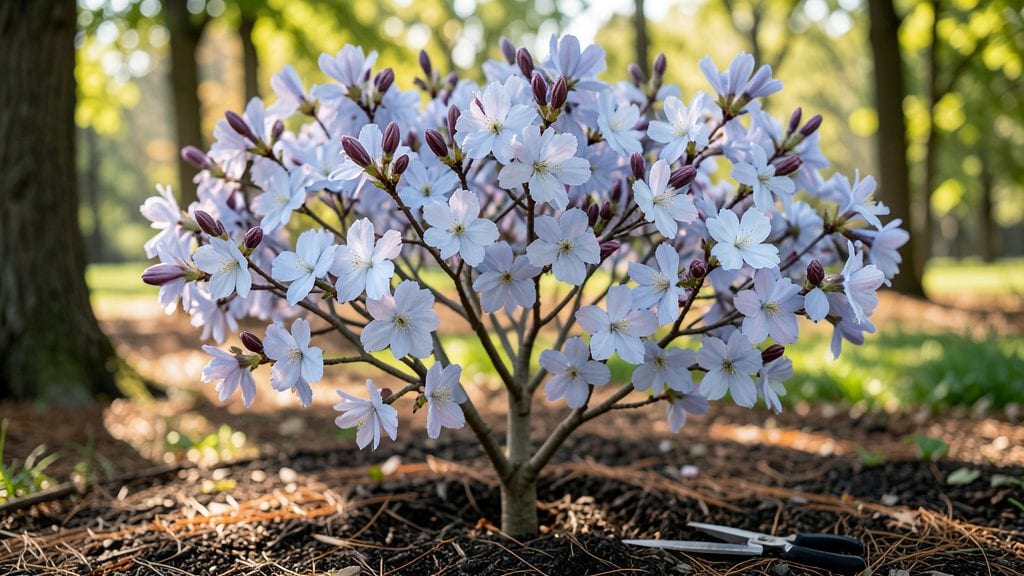
Blue dogwood flowers turn Pacific Northwest gardens into living art. 🌿 Their soft blue blooms create a dreamy contrast against evergreen shrubs, while their layered foliage adds depth year-round. I planted mine near a stone path, and the way sunlight filters through the branches in spring feels like magic.
The real secret is pairing them with the right companions. Try white heuchera for a crisp contrast, or add purple coneflowers to echo the blue tones naturally. These plants thrive in partial shade, making them perfect for understory plantings or woodland gardens where other flowers struggle.
What you’ll love most is how they transform your space seasonally—spring blooms, summer berries, and fiery fall foliage. The berries even attract birds, adding life to your garden ecosystem. Plant them as a focal point or along borders for a cohesive, low-maintenance look.
For best results, group three or five together to create impact without overwhelming the space. Their slow, steady growth makes them a long-term investment that pays off in beauty and pollinator support.
📚 In This Guide
- What you need
- Instructions
- Tips and common mistakes
- Wrapping up and next steps
What you need
- ● Blue Dogwood Plants: 1–3 Cornus florida ‘Blue Cloud’ or Cornus sericea (Red Osier Dogwood) saplings (check local nurseries for PNW-adapted varieties).
- ● OR Seeds (if propagating from scratch—germination is slow!)
- ● Planting Site: Partial to full shade (dappled sunlight ideal).
- ● Well-draining, moist (but not soggy) soil with pH 5.0–6.5 (acidic to slightly acidic).
- ● Soil Amendments (if needed): 1 part peat moss or compost per 3 parts native soil (for moisture retention).
- ○ Optional: Slow-release fertilizer (10-10-10 ratio, 1 tbsp per plant).
- ● Tools: Trowel or shovel (for digging).
- ● Garden gloves (to protect your hands!).
- ● Watering can or hose with a gentle spray nozzle.
- ● Mulch (2–3 inches of wood chips or pine needles to retain moisture and suppress weeds).
- ● Pruning shears (for shaping or removing dead branches in late winter).
- ● Pollinator-friendly companion plants (e.g., salal, sword ferns, or native wildflowers).
- ● Epsom salt (1 tbsp dissolved in 1 gallon of water, applied monthly for magnesium boost).
How to plant and care for blue dogwood flowers in the Pacific Northwest
Here's how I've grown thriving blue dogwoods that bring color and life to gardens year-round.
🪴 Step 1: Choose the Right Location and Prepare the Soil
Blue dogwoods (Cornus florida 'Blue Shadow' or Cornus glaucus) thrive in partial shade—think 4-6 hours of morning sun with afternoon shade protection. In the Pacific Northwest's mild climate, they handle both sun and shade, but too much direct afternoon sun can scorch their delicate blooms. Test your spot by watching how sunlight moves through the day before planting.
Amend your native soil with 2-3 inches of organic compost and a handful of slow-release fertilizer (like 10-10-10) mixed into the top 12 inches of soil. Dogwoods prefer slightly acidic to neutral soil (pH 5.0-6.5). If your soil is heavy clay, mix in 1 part perlite to 3 parts soil to improve drainage. I always dig a hole twice as wide as the root ball but only as deep—dogwoods hate having their roots buried too deeply.
🌱 Step 2: Plant at the Correct Depth and Stake for Support
Remove the plant from its container and gently loosen the roots if they're circling. Place it in the hole so the top of the root ball sits level with the surrounding soil—dogwoods rot if planted too deep. Backfill with native soil mixed with compost, tamping lightly every 2 inches to remove air pockets. Water deeply to settle the soil.
Stake young dogwoods with 2-3 stakes (about 1/2 inch diameter) placed 3-4 inches from the trunk in a triangle formation. Use soft plant ties (never wire) to secure the trunk without constricting it. This prevents wind rock, especially in exposed sites. I always water again after staking to help roots settle into place.
☀️ Step 3: Water Deeply and Mulch for Moisture Retention
Water deeply once a week (about 1-2 gallons per plant) during the first growing season, ensuring moisture reaches 12 inches down. Dogwoods are drought-tolerant once established, but young plants need consistent moisture. You'll know you're watering right when the top 2 inches of soil feel damp but not soggy.
Spread 3-4 inches of wood chips or shredded bark mulch over the soil surface, keeping it 3 inches away from the trunk to prevent rot. Mulch helps retain moisture, suppresses weeds, and regulates soil temperature. Replenish mulch annually—it breaks down faster in the Pacific Northwest's wet climate. Avoid fresh wood chips, which can rob nitrogen from the soil.
✂️ Step 4: Prune for Shape and Health in Late Winter
Prune blue dogwoods in late winter (February-March) before new growth begins. Remove dead, diseased, or crossing branches first—these are easy to spot as they lack buds or have dark, shriveled wood. Then, shape the plant by cutting back overly long branches to maintain a natural, open form. Never remove more than 1/3 of the plant's foliage in one season.
Watch for powdery mildew (white fungal growth) on leaves—this is common in humid PNW summers. Improve airflow by thinning dense branches and apply neem oil spray if needed. I also deadhead spent flowers in early summer to encourage a second flush of blooms. Dogwoods reward careful pruning with longer branches and more vibrant flowers the following year.
🌿 Step 5: Monitor for Pests and Seasonal Care
Dogwoods rarely have pest issues, but keep an eye out for dogwood borers (small holes in stems) or scale insects (sticky residue on leaves). If you see signs, prune affected areas immediately and dispose of them. For scale, a soapy water spray (1 tsp mild soap per gallon of water) works well. Healthy dogwoods are resilient—focus on balanced watering and mulching to prevent stress.
In fall, apply a 1-inch layer of compost around the base (but not touching the trunk) to replenish nutrients. Dogwoods are evergreen in mild PNW winters, but their leaves may yellow if they're thirsty. Water lightly in winter if there's no rain for 4-6 weeks. By spring, you'll see new growth and buds—a sure sign your plant is thriving.
Tips & tricks for perfect blue dogwood planting and care
A few simple tricks will help your blue dogwoods thrive for years to come in the Pacific Northwest.
Location Scout Like a Pro: Before planting, observe your garden throughout the day to find that perfect 4-6 hours of morning sun spot. I always check for afternoon shade by watching how sunlight moves—this prevents those telltale scorched leaves on delicate dogwood blooms. A north-facing spot with some tree canopy overhead works beautifully in most PNW yards.
Soil Prep Secret: When amending your soil with 2-3 inches of compost, mix in a handful of coffee grounds if you have them—they help lower pH slightly for that slightly acidic soil dogwoods prefer. I also recommend testing your soil pH before planting; if it's above 6.5, add sulfur to adjust it gradually over a few months. The goal is that perfect 5.0-6.5 range.
Staking Strategy: For young dogwoods, use three stakes placed in a triangle formation rather than just two. This creates a more stable support system that prevents wind rock in exposed sites. I've seen too many newly planted dogwoods lean dramatically after just one strong PNW windstorm—this simple tweak makes all the difference. Remember to use soft plant ties that won't constrict as the trunk grows.
Winter Watering Wisdom: In our wet PNW climate, winter watering is often overlooked, but it's crucial. If you notice yellowing leaves during dry winter spells (no rain for 4-6 weeks), give your dogwoods a light drink—just enough to keep the soil slightly moist. This prevents winter stress that can lead to poor spring growth. I always check the top 2 inches of soil with my finger before deciding whether to water.
Pro Tips for Blue Dogwood Flowers
- A few simple tricks will help your blue dogwoods thrive for years to come in the Pacific Northwest.
- Location Scout Like a Pro: Before planting, observe your garden throughout the day to find that perfect 4-6 hours of morning sun spot.
- Soil Prep Secret: When amending your soil with 2-3 inches of compost, mix in a handful of coffee grounds if you have them—they help lower pH slightly for that slightly acidic soil dogwoods prefer.
Frequently asked questions
Got questions about blue dogwood flowers? You’re not alone! Whether you’re dreaming of planting these Pacific Northwest beauties or troubleshooting a tricky spot in your garden, we’ve got answers. Here are the most common questions—and expert tips to help you grow with confidence.
When do blue dogwood flowers bloom, and how long do they last?
Most Cornus florida varieties bloom in late spring to early summer (April–June), but blue dogwoods (like Cornus sericea or Cornus glabra) often produce insignificant spring flowers—their real showstopper is their striking blue-green foliage and vibrant red winter stems. Some cultivars (e.g., ‘Kelseyi’) may have pale pink or white spring blooms, but the year-round interest comes from bark, berries, and foliage.
Are blue dogwood flowers cold-hardy? Can they survive winter in the PNW?
Absolutely!
Blue dogwoods thrive in the Pacific Northwest’s USDA Zones 3–8, making them perfect for Seattle, Portland, and beyond. Their tough, multi-stemmed growth habit resists wind and snow, and their red winter stems add holiday cheer. Just plant in well-draining soil and avoid soggy spots—root rot is their only weak spot.
What’s the difference between blue dogwood flowers and regular dogwood flowers?
Classic dogwoods (like Cornus florida)
are famous for their large, showy white or pink spring blooms, while blue dogwoods (often Cornus sericea or Cornus glabra) focus on foliage, bark, and berries. Blue dogwoods have small, insignificant flowers but vibrant blue-green leaves and red winter stems—plus, they’re pollinator magnets for birds and bees!
How do I encourage more blue dogwood flowers (or berries) in my garden?
If you’re after more flowers or berries, focus on these tips:
- Prune in late winter to remove dead wood and shape the shrub.
- Water deeply but infrequently—blue dogwoods hate soggy roots.
- Plant in full sun to partial shade (they tolerate shade but may produce fewer berries).
- Skip pesticides—pollinators (like bees and hummingbirds) help set berries!
Pro tip: If your dogwood isn’t berrying, it might be male—some varieties need both male and female plants for fruit!
What are some great blue dogwood alternatives if I can’t find them locally?
If blue dogwoods are hard to source, try these PNW-friendly alternatives with similar color, texture, and pollinator appeal:
- ‘Midwinter Fire’ dogwood – Red winter stems + white spring flowers.
- Oregon grape (Mahonia aquifolium) – Yellow flowers, blue berries, evergreen.
- ‘Apollo’ ninebark – White flowers, blue-green foliage, tough as nails.
- ‘Blue Mist’ shrub spirea – Soft blue foliage, pink flowers, great for pollinators.
Check local nurseries for native PNW plants—they’ll often carry these!
Wrapping up and next steps
Blue dogwood flowers aren’t just a Pacific Northwest treasure—they’re a year-round magnet for pollinators and a stunning addition to any garden. Their unique beauty, resilience, and ecological benefits make them a must-have for nature lovers and gardeners alike.
Whether you’re planting them for the first time or simply admiring their charm, these blooms prove that small flowers can make a big impact.
Ready to bring blue dogwood magic to your space? Start by researching local nurseries or native plant suppliers, then sketch a simple garden plan to highlight their seasonal interest. Your pollinator friends—and your neighbors—will thank you!