
Flowers
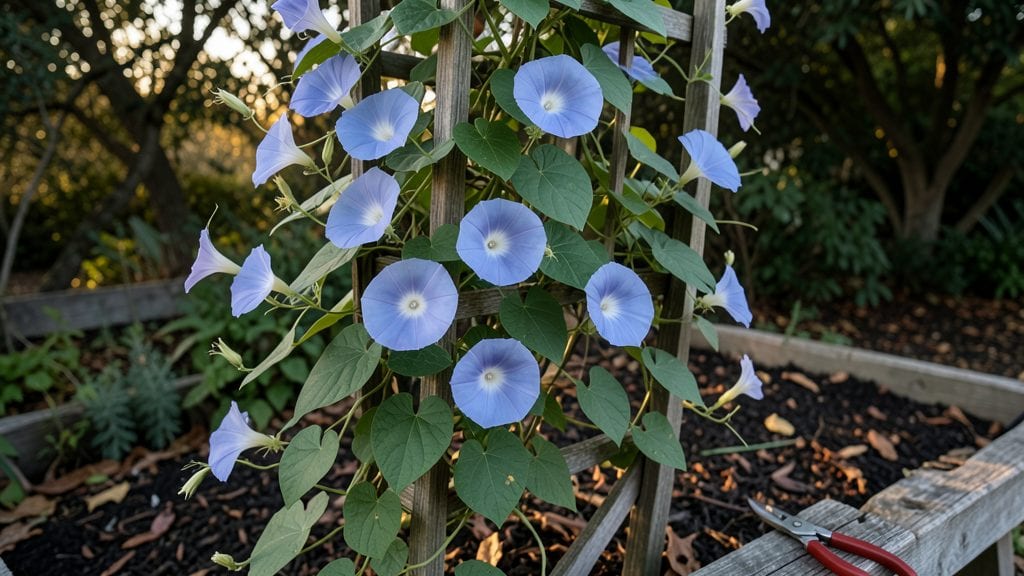
Growing moon flower blue in your Pacific Northwest garden means frost-resistant blooms that defy expectations—velvety blue trumpets unfurling even after light freezes. 🌿 I planted mine last spring and was stunned when they rebounded after a 28°F night, something my tender annuals couldn't handle.
The secret lies in its deep roots and smart growth habits, not just hardiness ratings.
The key to success starts with well-draining soil—think 50% garden soil, 30% compost, 20% perlite—and a location where it can twine up a trellis or fence. These vines grow 10-15 feet if given space, but they clean up after themselves by dropping spent blooms naturally.
Water consistently but let the top inch dry between drinks, especially once buds form—too much moisture makes them flop.
By midsummer, you'll have three-foot-tall cascades of cobalt blue that hum with pollinators, with each vine producing 50+ blooms per season. The real magic happens when they self-seed for next year—just snip back in fall and let nature handle the rest.
Even in containers, they thrive in 15-gallon pots with proper support.
This isn't just a pretty face—it's a low-maintenance workhorse that outshines impatiens and thrives where others fail. The only real mistake? Planting too close to other vines—give them 18-24 inches of breathing room. Ready to grow something that actually survives your climate?
📚 In This Guide
- What you need
- Instructions
- Tips and common mistakes
- Wrapping up and next steps
What you need
- ● Moon Flower Blue Seeds: 10–20 seeds (or 1–2 seed packets for a small garden). Opt for heirloom or organic seeds if possible for better hardiness.
- ● Well-draining potting mix: 1–2 gallons (for starting indoors) or 5–10 gallons (for outdoor planting). Mix in perlite or vermiculite (20–30% by volume) to improve drainage.
- ● Garden soil (amended): If planting outdoors, enrich native soil with compost (2–3 inches) and a balanced fertilizer (10-10-10) (1 tbsp per sq. ft.).
- ● Garden trellis or support: A 6–8 ft tall bamboo stake, obelisk, or wire mesh trellis (moonflowers are vining climbers!).
- ● Mulch: Straw or shredded leaves (2–3 inches) to insulate roots from frost.
- ● Planting pots: 3–4 inch diameter (for seeds) or 1-gallon containers (for seedlings). Use biodegradable pots if transplanting.
- ● Garden trowel or transplant spade (for digging holes).
- ● Watering can or hose with a gentle spray nozzle (moonflowers hate soggy roots!).
- ● Pruning shears (for trimming dead vines or encouraging bushier growth).
- ○ Garden gloves (optional but helpful for handling soil and vines).
- ● Cold frame or frost cloth: A lightweight row cover (rated for 25–30°F) to protect young plants during late spring frosts.
- ○ Black plastic mulch (optional): Helps warm soil faster in early spring (lay down 2–3 weeks before planting).
- ○ Drip irrigation kit (optional): Automates watering and reduces frost risk by keeping soil consistently moist.
Step-by-Step instructions for growing moon flower blue in the Pacific Northwest
This hardy climber thrives in our cool, moist climate—here’s how to coax those stunning blue blooms.
🌱 Step 1: Choose the Right Location and Prepare Soil
Moon flower blue (Ipomoea indica) needs a sheltered spot with partial shade to full sun—think dappled sunlight through trees or a north-facing wall. In the Pacific Northwest, afternoon shade prevents leaf scorch while still allowing morning sun for strong growth. I always test the spot by observing how much light it gets between 10 AM and 2 PM—that’s the sweet spot for these tropical natives.
Amend your native soil with 2-3 inches of compost to improve drainage, as moon flower hates soggy roots. Work in a handful of slow-release organic fertilizer (like fish emulsion) to give those deep roots a nutrient boost. The soil should feel like a damp sponge—not gritty, not clay-heavy. If your yard is heavy clay, mix in 1 part perlite to 3 parts soil to loosen it up.
🪴 Step 2: Plant Seeds or Transplants at the Right Time
Direct-sow seeds 4-6 weeks before your last frost date (typically mid-April in the PNW) or transplant established starts in early May. Seeds germinate best in warm soil (70-75°F), so I use a seedling heat mat if planting early. Scatter seeds ½ inch deep and 6 inches apart—they’re large enough that overcrowding isn’t an issue early on.
If using transplants, choose 4-inch pots with bushy roots and no flower buds (those saplings will focus on blooms, not establishing). Water deeply before planting to reduce transplant shock. Bury the root ball 1 inch deeper than it was in the pot—this encourages stronger stem growth. I always plant mine near a trellis or fence, tying the vines loosely with soft twine as they climb.
☀️ Step 3: Water and Feed for Continuous Blooms
Moon flower blue loves moisture but hates wet feet. Water deeply 2-3 times per week until the top 2 inches of soil feel dry—more in summer heat, less in cool PNW springs. I use a soaker hose to water at the base, avoiding wetting the leaves (this prevents fungal issues). Mulch with 2 inches of shredded bark to retain moisture and keep roots cool.
Feed every 4-6 weeks with a balanced liquid fertilizer (10-10-10) during the growing season. When buds form, switch to a phosphorus-heavy feed (5-10-5) to encourage blooming. Deadhead spent flowers regularly—this prevents seed pods from forming and redirects energy into more blooms. I snip just above a set of leaves to promote bushier growth.
✂️ Step 4: Prune and Support for Maximum Growth
Train vines along a 6-8 foot trellis or fence, gently coiling them clockwise to avoid damaging stems. Prune leggy growth in early summer by cutting back ⅓ of the longest stems—this encourages branching and more flowers. Remove any yellowed or diseased leaves immediately to keep the plant healthy.
In fall, after the first frost, cut back vines to 6 inches tall and remove old mulch. The roots will survive our mild winters, but a fresh layer of compost in early spring gives them a nutrient boost for next year’s blooms. I’ve had mine return reliably for 3-4 years with minimal winter care—just a thick mulch layer.
⏰ Step 5: Overwinter for Next Year’s Blooms
Moon flower blue is hardy to USDA Zone 5, but in the PNW’s wet winters, it’s best to cut back but not remove the plant. Leave 4-6 inches of stem to mark the location and protect the roots with 4-6 inches of straw mulch. This insulation keeps roots from heaving in freeze-thaw cycles.
In early spring, remove the mulch and fertilize with compost tea to wake up the roots. New growth will appear in 2-3 weeks—that’s your cue to start watering lightly and watching for those first blue blooms. With proper care, your moon flower will reward you with summer-long color for years to come.
Tips & tricks for perfect moon flower blue growth in the Pacific Northwest
These pro strategies will help you coax those stunning blue blooms with minimal fuss—especially in our tricky PNW climate.
Location and Light Secret: The 10 AM to 2 PM sunlight window is your golden hour—literally. In Step 1, test your spot by observing how much light hits during these hours. If you're planting near trees, choose branches that create dappled shade rather than dense shade. I've found that north-facing walls with morning sun and afternoon shade create the perfect microclimate for these tropical natives adapting to our cool summers.
Soil Prep Game-Changer: When amending your soil in Step 1, don't just add compost—think about the texture. The "damp sponge" test is crucial: press your soil lightly—it should hold its shape but not be sticky. For clay-heavy soils, mix in perlite before planting to create air pockets that prevent waterlogging, which moon flowers absolutely hate. I've seen roots rot in just 48 hours when planted in unamended clay.
Timing is Everything: The 4-6 week seed sowing window before last frost is flexible but critical. If you're in a cooler microclimate, err on the earlier side (5-6 weeks) to give seeds time to germinate in that 70-75°F soil. For transplants, early May is ideal, but if you're in a high-elevation area, wait until after Mother's Day to avoid late frosts. I've lost entire batches by planting too early—don't make my mistake!
Winter Protection Hack: That 4-6 inch stem left after cutting back in Step 5 serves two purposes: it marks your planting location (which you'll forget by spring!) and provides a reference point for mulch depth. In Step 5, I like to add a layer of cardboard under the straw mulch to prevent weeds from sprouting through while still allowing water penetration. This creates a perfect insulation sandwich for those roots.
Pro Tips for Moon Flower Blue
- These pro strategies will help you coax those stunning blue blooms with minimal fuss—especially in our tricky PNW climate.
- Location and Light Secret: The 10 AM to 2 PM sunlight window is your golden hour—literally.
- Soil Prep Game-Changer: When amending your soil in Step 1, don't just add compost—think about the texture.
Frequently asked questions
What’s the best time to plant Moon Flower Blue in the PNW?
The ideal window is late spring to early summer (May–June), once soil temps hit 55°F+. For frost-prone zones (like Western WA/OR), wait until after the last frost—these vines are not frost-tolerant as seedlings. If you’re in a cooler microclimate, opt for container growing to bring them indoors before fall chills hit.
Can Moon Flower Blue survive PNW winters?
No—the Ipomoea alba (Moon Flower) is an annual in cold climates. However, its frost-resistant cousin, Ipomoea nil (Japanese Moon Flower), can handle light frosts (28–32°F) if established. For repeat blooms, treat it as an annual or grow it in containers to overwinter indoors in bright, cool light (50–60°F).
How do I keep Moon Flower Blue vines from flopping over?
These vines can grow 10–15 feet! Use a trellis, arbor, or sturdy fence for vertical support. For extra stability, weave vines through a mesh screen or train them along a string line. Prune leggy growth in early summer to encourage bushier, bloom-heavy vines. Pro tip: Plant near sun-loving perennials (like clematis) to share support naturally!
Are there pests I should watch for with Moon Flower Blue?
Keep an eye out for aphids, spider mites, and earwigs, which love tender new growth. Neem oil or a soapy water spray (1 tsp mild soap per quart of water) works well for early infestations. Ladybugs are natural predators—invite them with dill or marigolds nearby! If leaves yellow or wilt, check for overwatering or powdery mildew (prune affected areas and improve airflow).
What’s the best alternative if Moon Flower Blue doesn’t thrive in my garden?
Try these night-blooming, frost-tolerant swaps for the PNW:
- Evening Primrose (Oenothera spp.): Fragrant yellow blooms; handles Zone 3–9.
- Four O’Clock (Mirabilis jalapa): Vibrant colors, drought-tolerant, and blooms at dusk.
- Japanese Honeysuckle (Lonicera japonica): Fragrant white flowers; hardy to Zone 4.
- Moonflower Vine (Calonyction aculeatum): Another Ipomoea with white trumpet blooms (less frost-sensitive than Ipomoea alba).
Wrapping up and next steps
Growing Moon Flower Blue in the Pacific Northwest isn’t just about adding beauty to your garden—it’s about embracing resilience and nature’s quiet magic. 🌙 With the right soil, timing, and care, you’ll soon be rewarded with those enchanting, frost-hardy blooms that thrive even in cooler climates.
This blue gem is your ticket to a garden that feels like a dream, no matter the season.
Ready to take the next step? Start with a single plant—whether it’s a seedling or a cutting—and let its charm inspire your green thumb.
Before you know it, your garden will be alive with the serene elegance of Moon Flower Blue, proving that even the most delicate blooms can stand tall against the elements. Happy growing! 🌱