
Flowers
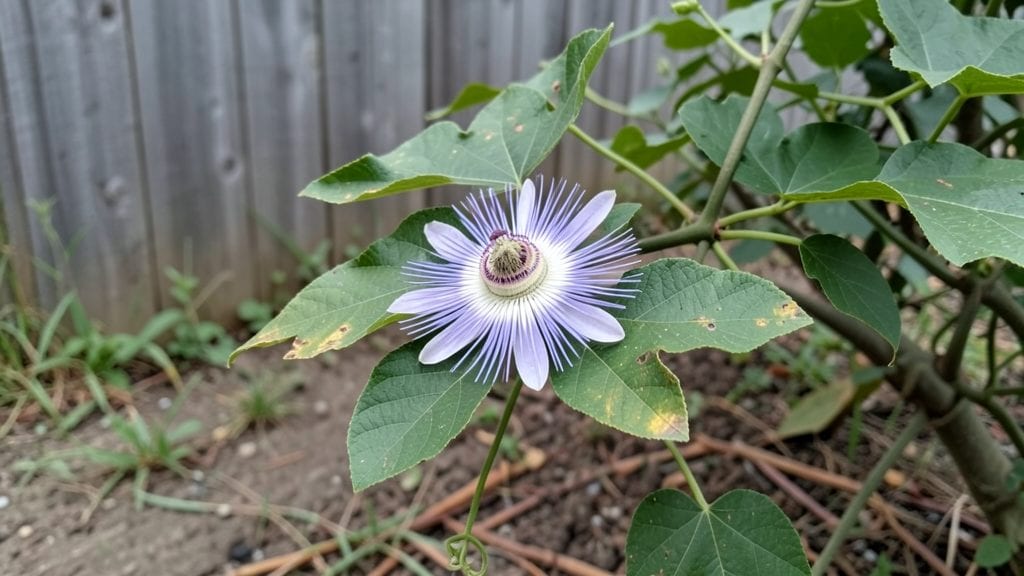
The delicate passion fruit flower of the Passiflora vine is worth cultivating—even in cooler climates—since frost-resistant varieties like Passiflora edulis can thrive in zones 7-11 with the right care. 🌿 I’ve grown these vines for years.
The key isn’t just sunlight or soil—it’s understanding how their unique flowers transform into edible passion fruit.
You’ll need a sturdy trellis or fence for their vigorous growth, well-draining soil mixed with compost, and a spot with at least 6 hours of sunlight daily. Water consistently but avoid soggy roots, and watch for pests like spider mites that love the tropical leaves.
The real magic happens when those intricate, lavender-blue flowers open—each one a promise of fruit.
With proper pruning (cutting back after harvest), your vines will produce abundant blooms and fruit year after year. The flowers aren’t just beautiful—they’re edible too, adding a floral twist to salads or teas. Plus, bees and hummingbirds will flock to your garden, making it a living ecosystem.
Whether you’re in a mild climate or pushing the limits with frost protection, this guide covers everything from planting to troubleshooting. Let’s get those vines growing—and soon, you’ll be harvesting your own passion fruit!
📚 In This Guide
- What you need
- Instructions
- Tips and common mistakes
- Wrapping up and next steps
What you need
- ● Passiflora seeds or cuttings: Choose frost-resistant varieties like Passiflora edulis (purple passion fruit) or Passiflora caerulea (blue passion flower). Start with 2-3 seeds or 1-2 healthy cuttings for beginners.
- ● Well-draining potting mix: A blend of 60% peat moss or coconut coir, 30% perlite or vermiculite, and 10% compost (1-2 bags, ~10-15 lbs total). Avoid heavy garden soil!
- ● Containers or garden space: Containers: 5-gallon pots or larger (at least 12-18" deep) with drainage holes. Use 2-3 containers if growing multiple plants.
- ● Garden beds: Full sun (6+ hours/day) and sheltered from strong winds. Amend soil with compost for better drainage.
- ● Fertilizer: A balanced, slow-release fertilizer (10-10-10 or 20-20-20) or organic options like fish emulsion. Use 1 tbsp per plant every 4-6 weeks during growing season.
- ○ Basic gardening tools: Trowel, pruning shears, and gloves (optional but helpful!).
- ● Mulch: Straw or wood chips to retain moisture and regulate soil temperature (1-2 bags).
- ● Support structure: Trellis, stakes, or cages (for vining varieties). Aim for 6-8 feet tall to encourage climbing.
- ● Watering can or hose with nozzle: Drip irrigation works best for consistent moisture.
- ○ Optional but handy: Grow lights (if starting indoors in low-light areas).
- ● Soil moisture meter (to avoid over/under-watering).
- ● Frost cloth (for young plants in colder climates).
Step-by-Step instructions for cultivating frost-resistant Passiflora
Here's how to grow hardy passion vines that thrive in cooler climates and reward you with stunning flowers.
🌱 Step 1: Select and Prepare the Right Variety
Choose frost-resistant passiflora varieties like Passiflora incarnata (maypop) or Passiflora caerulea (blue passionflower), which tolerate temperatures down to 10°F. These species have evolved to survive mild freezes, unlike tropical passion fruits that die in frost. I always buy established plants from reputable nurseries—they're more resilient than seeds and flower faster.
Inspect the roots before planting. Healthy roots should be white or light tan, not brown or mushy. If you're growing from seed, start indoors 8-10 weeks before your last frost date. Seeds need warmth (75-80°F) and bright indirect light to germinate—don't rush this step, as seedlings are delicate.
☀️ Step 2: Choose the Perfect Location and Soil
Passiflora needs full sun (6-8 hours daily) but appreciates afternoon shade in hotter climates. I plant mine along a south-facing fence or trellis where they get morning sun and afternoon relief. The soil should be well-draining but moisture-retentive—amend heavy clay with 2-3 inches of compost and 1 inch of perlite to improve aeration.
Passiflora roots spread aggressively, so plant in a location where vines can climb 15-20 feet without obstruction. A sturdy trellis or arbor works best. If you're in a frost-prone area, position the plant near a sunny wall to absorb and reflect heat back to the vine during cold snaps.
💧 Step 3: Plant and Establish for Frost Hardiness
Dig a hole twice as wide as the root ball but only as deep. This encourages roots to spread horizontally, making the plant more stable and cold-resistant. Water the hole thoroughly before planting to settle the soil. Place the plant so the crown sits 1-2 inches above soil level—this prevents rot and helps with drainage.
Backfill with native soil mixed with 1 cup of bone meal (for phosphorus) and 1 cup of compost. Water deeply until the soil is 6 inches moist and mulch with 2-3 inches of shredded bark to insulate roots. In frost-prone zones, I wrap young plants with frost cloth the first winter to help them establish.
✂️ Step 4: Prune and Train for Frost Survival
Prune in early spring before new growth begins. Remove dead, diseased, or crossing branches, then cut back remaining stems by one-third to encourage bushier growth. This reduces the plant's surface area, helping it retain heat better in winter. I also trim back any leggy growth that formed the previous season—it's weaker and less cold-hardy.
Train vines along the trellis in a spiral pattern to maximize air circulation. Good airflow reduces humidity around leaves, which lowers the risk of fungal diseases that weaken plants before winter. In fall, stop fertilizing 6-8 weeks before the first frost to harden off the plant—this encourages root development over top growth.
⏰ Step 5: Winterize for Frost Resistance
Before the first frost, apply a 3-inch layer of mulch around the base of the plant. I use straw or pine needles, which insulate better than wood chips. Water the plant deeply 2-3 weeks before frost to encourage root growth—thicker roots store more energy for spring regrowth. If your variety is only marginally frost-hardy, mound soil around the base up to the crown level for extra protection.
In areas with hard freezes (below 10°F), cover the plant with burlap or frost cloth and secure it with stakes. Avoid plastic, which traps moisture and causes rot. Remove the cover on sunny days to prevent overheating. With proper winter care, your passiflora will rebound vigorously in spring, often flowering by late May or early June.
Tips & tricks for perfect Passiflora cultivation
A few key strategies will help your frost-resistant passiflora thrive and reward you with spectacular blooms year after year.
The Variety Factor: While Passiflora incarnata and Passiflora caerulea are your best bets for cold climates, don't overlook Passiflora lutea (yellow passionflower) which handles 5°F temperatures. For maximum hardiness, look for plants labeled "cold-hardy" at specialty nurseries—they've often been selected for winter resilience. I've found that container-grown specimens (even in 5-gallon pots) transplant beautifully and establish faster than field-grown ones.
Root Inspection Secret: When selecting plants, gently tug on the root ball—healthy roots should resist slightly and have a firm, fibrous texture. In Step 1, if you're starting from seed, maintain consistent 75-80°F soil temperatures using a seedling heat mat. The germination process is delicate, and temperature fluctuations are the #1 reason seeds fail to sprout. I've had best success with a dedicated germination station rather than relying on my kitchen counter.
Soil Science: The 2-3 inches of compost and 1 inch of perlite in Step 2 create the perfect moisture-retentive yet well-draining medium. For heavy clay soils, I recommend adding an additional 1 inch of coarse sand to improve drainage—passiflora roots rot quickly in soggy conditions. Test your soil's pH before planting; these vines prefer slightly acidic conditions (pH 6.0-6.5). You can adjust with elemental sulfur if needed.
Winter Protection Pro Tip: In Step 5, when applying the 3-inch mulch layer, avoid using cedar chips—they release oils that inhibit root growth. Instead, opt for straw or pine needles which provide excellent insulation while allowing moisture to penetrate. For varieties at the edge of their hardiness (like Passiflora caerulea in below 10°F zones), I create a mini greenhouse effect by placing a clear plastic dome over the frost cloth during extreme cold snaps—just remember to remove it during the day to prevent overheating.
Pro Tips for Passion Fruit Flower Passiflora
- A few key strategies will help your frost-resistant passiflora thrive and reward you with spectacular blooms year after year.
- The Variety Factor: While Passiflora incarnata and Passiflora caerulea are your best bets for cold climates, don't overlook Passiflora lutea (yellow passionflower) which handles 5°F temperatures.
- Root Inspection Secret: When selecting plants, gently tug on the root ball—healthy roots should resist slightly and have a firm, fibrous texture.
Frequently asked questions
Got questions about growing Passiflora (passion fruit flowers)?
Here are some of the most common ones—plus quick answers to help you thrive with these stunning, frost-resistant beauties!
How long does it take for a passion fruit flower (Passiflora) to bloom after planting?
Most Passiflora varieties bloom within 1–2 years of planting, depending on the species and growing conditions. Hardy types like Passiflora incarnata (maypop) may flower sooner, while tropical varieties (e.g., Passiflora edulis) can take longer—especially if grown in cooler climates. Patience pays off, though! Pro tip: Prune lightly in early spring to encourage faster flowering.
Can Passiflora survive light frost, or do I need to protect it?
Many Passiflora varieties are frost-tolerant (down to 15–20°F), but severe freezes can damage foliage or kill tender roots. Hardy types like Passiflora caerulea (blue passionflower) bounce back easily, while tropical species need mulch or row covers in winter. If frost hits, trim dead growth in spring—new shoots will sprout!
What’s the best way to propagate Passiflora from cuttings?
Use semi-hardwood cuttings (4–6 inches long) in late spring or early summer. Dip the cut end in rooting hormone, plant in moist potting mix, and cover with a plastic bag to retain humidity. Keep in bright, indirect light (no direct sun) and mist daily. Roots should form in 4–8 weeks!
Do I need to hand-pollinate Passiflora flowers for fruit?
Not always! Many Passiflora flowers are self-pollinating, but bees and hummingbirds help too. If you’re growing edible varieties (like Passiflora edulis) and notice no fruit, gently shake the flowers or use a small brush to transfer pollen. Morning pollination works best when flowers are fresh.
Why aren’t my Passiflora flowers opening, even though the buds look healthy?
Bud drop or failure to open often signals stress—check for these fixes:
- Too much shade: Move to 6+ hours of sunlight daily.
- Overwatering: Let soil dry slightly between waterings.
- Nutrient deficiency: Feed with balanced fertilizer (10-10-10) in spring.
- Temperature swings: Protect from below 50°F at night.
Wrapping up and next steps
Growing passion fruit flowers (Passiflora) can be a rewarding experience, even in cooler climates! With the right frost-resistant varieties, sunny spot, and a little patience, you’ll enjoy stunning blooms and delicious fruits.
Whether you’re a seasoned gardener or just starting, this guide gives you the tools to succeed—so roll up your sleeves and get planting!
🌱 Next step: Pick your favorite Passiflora variety, gather your supplies, and start nurturing your tropical beauty today! Share your progress with fellow gardeners—you might inspire someone else to grow their own passion fruit paradise. 🌿