
Shrubs
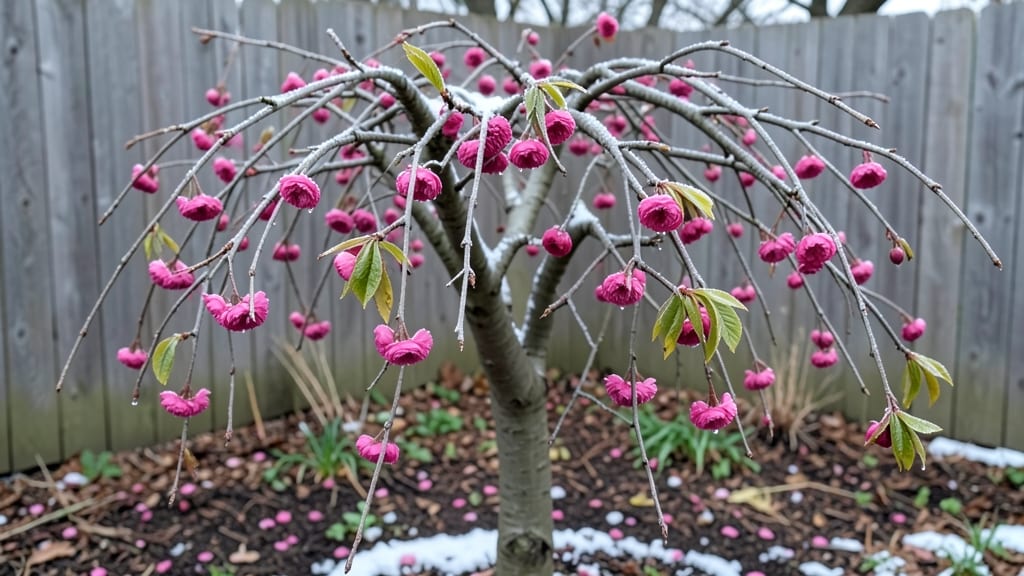
The snow fountain weeping flowering cherry transforms your garden into a Pacific Northwest winter wonderland with its graceful, cascading branches and delicate blossoms. 🌸 I fell in love with this tree the first time I saw it in a misty Seattle garden—its elegant silhouette stands out year-round, whether heavy with spring flowers or bare against a stormy sky.
This frost-resistant beauty thrives in zones 5-8, making it perfect for PNW climates where harsh winters and rainy springs can challenge other flowering trees.
The weeping habit creates natural focal points near patios or entryways, while its spring blooms add soft pink clouds that contrast beautifully with evergreens and early spring bulbs.
With minimal pruning to maintain its shape, this tree offers four seasons of interest: fragrant blossoms in spring, lush foliage in summer, fiery fall colors, and a striking winter silhouette.
Pair it with rhododendrons or hellebores for layered texture, or let it anchor a small garden as a dramatic centerpiece.
Whether you're designing a cottage-style garden or a modern landscape, this cherry delivers effortless elegance—just give it space to spread its branches and watch it become the heart of your outdoor living space.
📚 In This Guide
- What you need
- Instructions
- Tips and common mistakes
- Wrapping up and next steps
What you need
- ● Plant: 1 Prunus serrulata ‘Snow Fountain’ (weeping flowering cherry tree, 5–7 ft. tall at maturity, with cascading branches).
- ● Soil: Well-draining, slightly acidic to neutral soil (pH 6.0–7.0).
- ● Amend heavy clay soil with 2–3 inches of compost or organic matter (e.g., peat moss, pine bark).
- ● Sunlight: Full sun (6+ hours/day) for optimal blooms and health.
- ● Watering: 1–2 gallons of water 2–3 times per week during the first year (adjust for rain).
- ○ Drip irrigation system (optional but recommended for consistent moisture).
- ● Fertilizer: Slow-release, acid-loving plant fertilizer (e.g., 10-10-10 or 8-3-9) applied once in early spring.
- ● Mulch: 3–4 inches of organic mulch (e.g., wood chips, shredded bark) to retain moisture and regulate soil temperature.
- ● Pruning Tools: 1 pair of bypass pruners (for small branches).
- ● 1 pruning saw (for thicker stems).
- ● 1 sterilizing solution (e.g., rubbing alcohol or bleach water) to prevent disease.
- ● Soil Test Kit – To check pH and nutrient levels before planting.
- ● Tree Stake & Ties – For young trees in windy areas (remove after 1 year).
- ● Winter Protection: Burlap wrap for young trees in harsh winters.
- ● Anti-desiccant spray (e.g., Wilt-Pruf) to prevent winter burn.
- ● Decorative Stones or Gravel – For a polished look around the base.
Step-by-Step guide to planting and caring for Snow Fountain weeping flowering cherry
This graceful tree thrives in the Pacific Northwest’s cool climate—here’s how to plant and nurture it for years of elegant blooms.
🌱 Step 1: Select and Prepare the Planting Site
The Snow Fountain weeping cherry (Prunus serrulata 'Snow Fountain') loves full sun to partial shade and well-draining soil. Choose a spot with 6+ hours of sunlight daily, though it tolerates morning shade in hotter inland areas. This tree’s cascading branches need 10-15 feet of horizontal space—avoid planting near sidewalks or driveways where its graceful limbs might obstruct.
Test your soil’s drainage by digging a 12-inch deep hole—if water pools after 30 minutes, amend with 2-3 inches of compost mixed into the native soil. The tree’s roots are sensitive to waterlogging, so raised beds or slightly mounded soil work well in heavy clay areas common to the PNW. I always mark the planting zone with stakes before digging to ensure proper spacing.
🪴 Step 2: Plant at the Correct Depth and Stake for Support
Dig a hole twice as wide as the root ball but no deeper—the top of the root ball should sit 1-2 inches above ground level to prevent stem rot. Gently loosen the roots if they’re circling and place the tree in the center, backfilling with native soil mixed with 1 part compost. Water deeply to settle the soil, then create a 2-inch deep basin around the base to direct future watering.
Stake the tree only if needed—this cultivar’s weeping habit makes it top-heavy. If staking, use two 6-foot stakes placed 12 inches from the trunk at a 45-degree angle, securing with soft tree ties (never wire). The goal is temporary support while roots establish; remove stakes after 1-2 years. I’ve seen staking too tightly restrict trunk growth, so leave a 1-inch gap between the tie and bark.
☀️ Step 3: Water Deeply and Mulch for Moisture Retention
Water the newly planted tree deeply for 10-15 minutes until the soil 6 inches down is thoroughly moist. After the first week, water twice weekly (or daily in 90°F+ heat) until new growth appears—usually within 4-6 weeks. The Snow Fountain’s shallow roots dry out quickly in PNW summers, so drip irrigation is ideal. Avoid overhead watering, which can spread fungal diseases like powdery mildew on the delicate blossoms.
Apply 3 inches of mulch (wood chips or bark) in the basin, keeping it 6 inches away from the trunk to prevent rot. Replenish mulch annually in spring. This tree’s roots are sensitive to temperature fluctuations, so mulch protects them from winter freeze-thaw cycles. I’ve noticed that mulching too heavily can suffocate roots, so maintain that 6-inch clearance—it’s a common mistake.
✂️ Step 4: Prune for Shape and Airflow After Flowering
Prune immediately after blooming (late spring) to shape the tree and remove any dead, crossing, or inward-growing branches. The Snow Fountain’s weeping habit means you’ll focus on thinning branches rather than heavy cuts—never remove more than 25% of the canopy in one season. Use clean, sharp pruners to make cuts just outside the branch collar to prevent disease entry.
This cultivar’s flowers appear on old wood, so prune lightly in winter if needed—focus on removing only damaged or rubbing branches. Avoid summer pruning, as new growth won’t harden off before winter in the PNW’s cool climate. I’ve seen over-pruning reduce next year’s bloom count, so be conservative. Fertilize lightly in early spring with balanced 10-10-10 if growth appears slow.
⏰ Step 5: Winterize for Pacific Northwest Freezes
The Snow Fountain is USDA Zone 5-8 hardy, but young trees benefit from winter protection in exposed sites. Apply 4-6 inches of mulch in late fall, then wrap the trunk with tree guard to prevent rodent damage. In areas with wind exposure, consider burlap windbreaks on the north and west sides. Prune any ice-laden branches in late winter to prevent breakage.
Water sparingly in winter—only if the ground is frozen solid for more than a week. The tree enters dormancy naturally, so no additional watering is needed unless you’re establishing a new planting. I’ve seen trees suffer from sunscald in winter, so avoid pruning that exposes bare wood to harsh winter sun. With proper care, this tree will reward you with spectacular spring blooms for decades.
Tips & tricks for perfect Snow Fountain weeping flowering cherry care
A few simple tricks will help your Snow Fountain weeping cherry thrive for decades in Pacific Northwest conditions.
Soil Test Tip: That 30-minute drainage test in Step 1 is crucial—if water pools, you're dealing with heavy clay common in PNW gardens. For extreme cases, consider creating a raised bed or mound the soil slightly to improve drainage. I've seen roots rot when planted in flat ground with poor drainage, so take this test seriously.
Staking Strategy: When staking in Step 2, I recommend using soft tree ties that won't cut into the bark as the tree grows. The 1-2 year guideline is firm—leaving stakes too long can actually girdle the trunk as it expands. Mark your calendar when you plant to remember stake removal time!
Watering Wisdom: The 10-15 minute deep watering in Step 3 should soak the soil to 6 inches—this encourages deep root growth. I've noticed that many gardeners water too lightly, which keeps roots shallow. Use a soil probe or trowel to check moisture depth after watering to ensure proper saturation.
Pruning Precision: In Step 4, when thinning branches, make your cuts just outside the branch collar where the branch meets the trunk. This technique promotes faster healing and prevents disease entry points. I've seen many gardeners make flush cuts that leave ugly stubs and invite infections.
Pro Tips for Snow Fountain Weeping Flowering Cherry
- A few simple tricks will help your Snow Fountain weeping cherry thrive for decades in Pacific Northwest conditions.
- Soil Test Tip: That 30-minute drainage test in Step 1 is crucial—if water pools, you're dealing with heavy clay common in PNW gardens.
- Staking Strategy: When staking in Step 2, I recommend using soft tree ties that won't cut into the bark as the tree grows.
Frequently asked questions
Got questions about growing a Snow Fountain weeping flowering cherry? Here are some answers to help you navigate this stunning shrub’s care, quirks, and beauty!
How cold can a Snow Fountain weeping cherry tolerate?
This frost-resistant beauty thrives in USDA Zones 5-8, making it perfect for the Pacific Northwest’s chilly winters. It handles temperatures down to -20°F (-29°C) with ease, though young plants may need winter mulch for extra protection.
When does it bloom, and how long do the flowers last?
Expect late spring blooms (April–May), with delicate pink-white flowers that last 2–3 weeks. For extended color, plant near early-blooming bulbs like daffodils or crocuses to create a layered spring display!
How much water does it need, especially in winter?
Water deeply 1–2 times per week during the first year, then reduce to monthly deep waterings once established. In winter, avoid overwatering—let the soil dry slightly between waterings to prevent root rot in soggy Pacific Northwest soils.
Can I grow a Snow Fountain in a container, or is it better in the ground?
While it prefers ground planting for its sprawling habit, you can grow it in a large (20+ gallon) container with well-draining soil. Just ensure it gets full sun (6+ hours/day) and repot every 2–3 years to prevent root-bound stress.
Why are my cherry leaves turning yellow or dropping early?
Yellowing leaves often signal overwatering or poor drainage. Check for soggy soil or fungal issues (like powdery mildew). If leaves drop early, it could be stress from transplant shock or pests—inspect for aphids or spider mites and prune affected branches.
How do I prune it to encourage more flowers?
Prune right after blooming (June) to shape and remove dead wood. Avoid heavy pruning—focus on light trimming to maintain its weeping form. Never prune in fall or winter, as it blooms on old wood.
Wrapping up and next steps
The snow fountain weeping flowering cherry brings a touch of whimsical beauty and resilience to Pacific Northwest gardens, thriving where others falter. Its delicate blooms, cold-hardy nature, and graceful form make it a standout choice for year-round interest—whether you’re a seasoned gardener or just starting. 🌸❄️
Ready to transform your outdoor space? Start by selecting the perfect spot—one with well-draining soil and partial shade—and watch as this frost-resistant gem becomes the centerpiece of your landscape. Happy planting!