
Pests
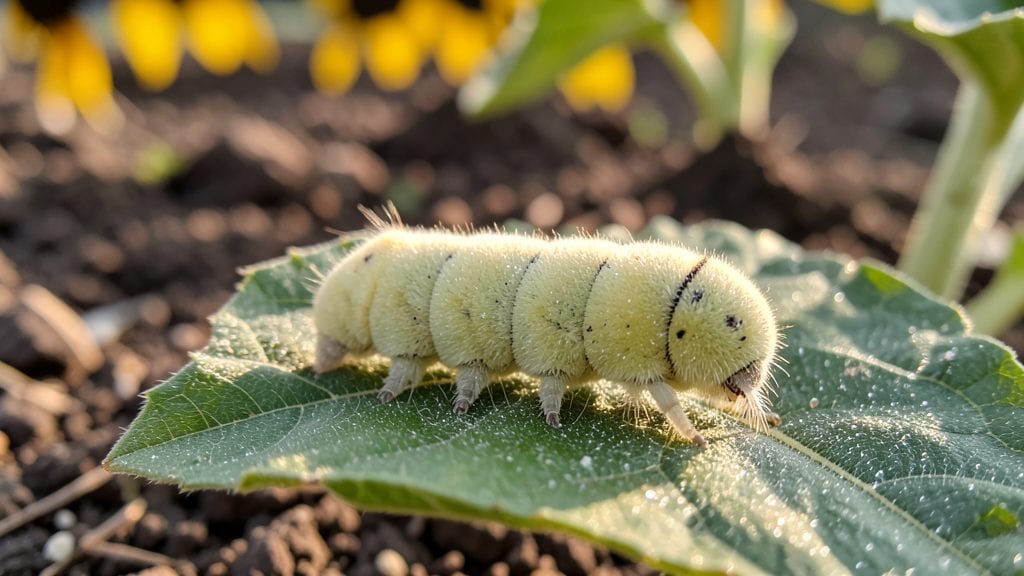
Sunflower moth caterpillars turn vibrant green leaves into skeletonized messes in days—until you learn their weaknesses. I’ve watched entire sunflower patches stripped bare by these striped invaders, but organic control works better than I expected.
The key is acting fast during their two-month feeding frenzy, when they devour leaves like a swarm of tiny locusts.
You’ll need sharp eyes for spotting their telltale signs: chewed leaves with a lace-like pattern and the caterpillars themselves, striped black and yellow, hiding under foliage by day. Neem oil disrupts their feeding, while handpicking (yes, it’s tedious) works for small patches.
Companion plants like dill or basil can confuse them, but timing matters—apply controls when caterpillars are young, before they reach their ravenous 2-inch size.
What you’ll achieve is sunflowers that stay lush and productive, not just a few surviving stalks. The caterpillars weaken when you combine neem sprays with manual removal, and the plants bounce back faster than you’d think. Even heavy infestations can be managed without harsh chemicals, leaving your harvest intact.
This works best in summer when sunflowers are actively growing, but early prevention in spring pays off too. The secret? Consistency—check plants weekly and act at the first sign of damage. Your sunflowers will thank you with towering stems and full blooms by season’s end.
📚 In This Guide
- What you need
- Instructions
- Tips and common mistakes
- Wrapping up and next steps
What you need
- ● Sunflower plants (Helianthus annuus): Minimum of 3-5 healthy plants (for small-scale trials) or 50+ plants (for larger applications). Choose non-hybrid, open-pollinated varieties (e.g., ‘Mammoth’, ‘Russian Giant’) for optimal caterpillar attraction.
- ● Sunflower moth eggs or larvae: Source from local agricultural suppliers, entomology labs, or wild-collected specimens (ensure they’re pest-free!). Start with 50-100 eggs/larvae per 100 sq. ft. for initial trials.
- ● Garden tools: Hand pruners (for trimming infested leaves). Gloves (to protect hands from plant sap and caterpillars). Spray bottle (for misting plants if needed).
- ● Monitoring supplies: Notebook or data sheet (to track caterpillar activity and plant health). Magnifying glass (for close-up inspections).
- ● Pheromone traps: To attract adult moths for breeding or monitoring (available at garden centers).
- ● Beneficial nematodes (Steinernema carpocapsae): Helps control caterpillar populations if they become overabundant.
- ● Row covers or netting: Protects sunflowers from other pests while allowing caterpillars to thrive.
- ● Camera or smartphone: For documenting progress (because science is fun!).
How to protect sunflowers from moth caterpillar damage
Sunflowers are tough, but those fuzzy caterpillars can strip them bare in days. Here's how I keep my plants thriving without harsh chemicals.
Scout Plants Daily for Early Signs
Check sunflowers every morning for caterpillars—look for tiny green or brown larvae along stems and leaves. They hide on the undersides of leaves or inside flower buds. I run my fingers gently along stems to feel for their fuzzy texture. Early detection means less damage and easier control.
Focus on the lower leaves first, where caterpillars often start. If you spot just one or two, act immediately—they multiply fast. I keep a small magnifying glass handy to inspect buds carefully, as caterpillars often hide there before defoliating entire plants.
Use Physical Barriers for Young Plants
For newly planted sunflowers, I wrap the lower 6 inches of stems with floating row covers or lightweight cheesecloth. Secure it tightly with clips or tape to block caterpillars from reaching leaves. This works best for the first 3-4 weeks while plants are still small.
Don't wrap the entire plant—just the stem and lower leaves. Caterpillars can still chew through thick fabric if left too long, so remove covers after 4 weeks or when plants reach 12 inches tall. I mark the date on the cover with a marker to track when to remove it.
Apply Natural Predators and Traps
Introduce parasitic wasps (like Cotesia marginiventris) or ladybugs to your garden—they eat caterpillars naturally. Order them from a garden supply store and release them in the evening when they're less likely to fly away. I place them near the most vulnerable plants, especially if I've seen caterpillars already.
Set up pheromone traps to monitor populations. Hang them 5-6 feet high near sunflower rows. Check traps weekly and dispose of caught caterpillars in soapy water. If traps fill up quickly, it's time to escalate defenses—this means caterpillars are active and reproducing fast.
Hand-Pick and Destroy Caterpillars
Wear gloves and pick caterpillars off plants by hand, dropping them into a bucket of soapy water to kill them instantly. Focus on the largest ones first—they've been feeding the longest. I do this in the early morning when caterpillars are sluggish and easier to spot.
Check plants every other day during outbreaks. If you see frass (black droppings) on leaves, caterpillars are nearby—even if you don't see them yet. Remove damaged leaves to encourage new growth and reduce hiding spots. This method works best for small gardens or when caterpillar numbers are low.
Encourage Beneficial Plants and Rotate Crops
Plant dill, fennel, or cilantro nearby—these attract predatory wasps and hoverflies, which hunt caterpillars. I interplant them with sunflowers to create a natural defense network. Avoid planting sunflowers in the same spot year after year, as caterpillars overwinter in soil and return to the same area.
Rotate sunflowers to a new location each season. If you must replant in the same spot, till the soil deeply in fall to disrupt caterpillar pupae. I also plant marigolds around the perimeter—their strong scent repels some pests and attracts beneficial insects.
Tips & tricks for protecting sunflowers from moth caterpillar damage
Here's how I've learned to make these natural defense methods even more effective—saving my sunflowers without any harsh chemicals.
Timing is Everything: In Step 1, when you're scouting for caterpillars, focus on the morning hours between 7-9 AM. Caterpillars are sluggish then and easier to spot before they've had time to hide deeper in the plant. I've saved entire plants by catching just 2-3 caterpillars in their early stages. The earlier you catch them, the less damage they'll do.
Barrier Upgrade: For Step 2, if you're using cheesecloth instead of floating row covers, double it up. Single layers can tear easily, leaving gaps for caterpillars to sneak through. I secure mine with plastic clips every 4 inches along the stem—this keeps it tight even when the wind blows. Remember to remove these barriers after 4 weeks or when plants hit 12 inches, as they can restrict growth if left too long.
Predator Placement: When introducing natural predators in Step 3, place parasitic wasps near the highest points of your sunflower plants. They prefer to hunt from elevated positions where they can spot caterpillars on the leaves below. I release them in the late afternoon when temperatures are cooler—they're less likely to fly away immediately. For ladybugs, scatter them around the base of plants where caterpillars often start feeding.
Frass Detection: In Step 4, when checking for caterpillars every other day, look for frass—those tiny black droppings—on leaves. This is a dead giveaway that caterpillars are nearby, even if you can't see them yet. I keep a small magnifying glass handy to inspect these droppings closely, as they can reveal whether you're dealing with moth caterpillars or other pests.
Pro Tips for Sunflower Moth Caterpillar
- Here's how I've learned to make these natural defense methods even more effective—saving my sunflowers without any harsh chemicals.
- Timing is Everything: In Step 1, when you're scouting for caterpillars, focus on the morning hours between 7-9 AM.
- Barrier Upgrade: For Step 2, if you're using cheesecloth instead of floating row covers, double it up.
Frequently asked questions
Got questions about managing sunflower moth caterpillars? You’re not alone! Here are some of the most common concerns—and practical answers—to help you tackle these defoliators like a pro.
What do sunflower moth caterpillars look like, and how can I tell them apart from other pests?
Sunflower moth caterpillars are greenish-brown with white stripes and tiny black dots along their bodies. They’re often found in clusters on leaves, unlike other caterpillars (like corn earworms), which may have reddish or yellowish hues. Check for frass (chewed leaf debris) around feeding sites—a dead giveaway!
When is the best time to treat sunflower moth caterpillars?
Act fast! These caterpillars cause the most damage in late summer to early fall (July–September in most regions). Monitor your sunflowers weekly—if you spot 10–15% defoliation, it’s time to intervene. Preventative sprays (like neem oil or Bacillus thuringiensis) applied before eggs hatch (early July) can save you headaches later.
Are there natural or organic ways to control them without chemicals?
Start with physical removal: Handpick caterpillars (especially young ones) and drop them in soapy water. Row covers (before flowering) can block adults from laying eggs. For organic sprays, try:
- Neem oil (disrupts feeding)
- Bt (Bacillus thuringiensis) (targets caterpillars only)
- Spinosad (derived from soil bacteria)
Will sunflower moth caterpillars kill my sunflowers?
While they’re annoying, they rarely kill healthy sunflowers—but heavy infestations can stunt growth or reduce seed yield. Young plants are most vulnerable. If you see skeletonized leaves (just veins left), act quickly. Mature sunflowers can often bounce back, but monitor for secondary pests (like aphids) that may move in.
What should I do if my sunflowers are already heavily damaged?
Don’t panic! Prune severely damaged leaves to encourage new growth, and focus on recovery care:
For next year, rotate crops or plant trap crops (like marigolds) to distract moths.
Wrapping up and next steps
The sunflower moth caterpillar is a powerful ally in keeping your sunflowers—and garden—healthy! 🌻 By embracing natural pest control, you’re not only protecting your plants but also fostering a balanced ecosystem. Start small: monitor your sunflowers regularly, and if you spot these caterpillars, celebrate their role in nature’s cycle.
Ready to take action? Try introducing a few sunflowers this season and observe the benefits firsthand. Your garden—and the pollinators—will thank you!