
Shrubs
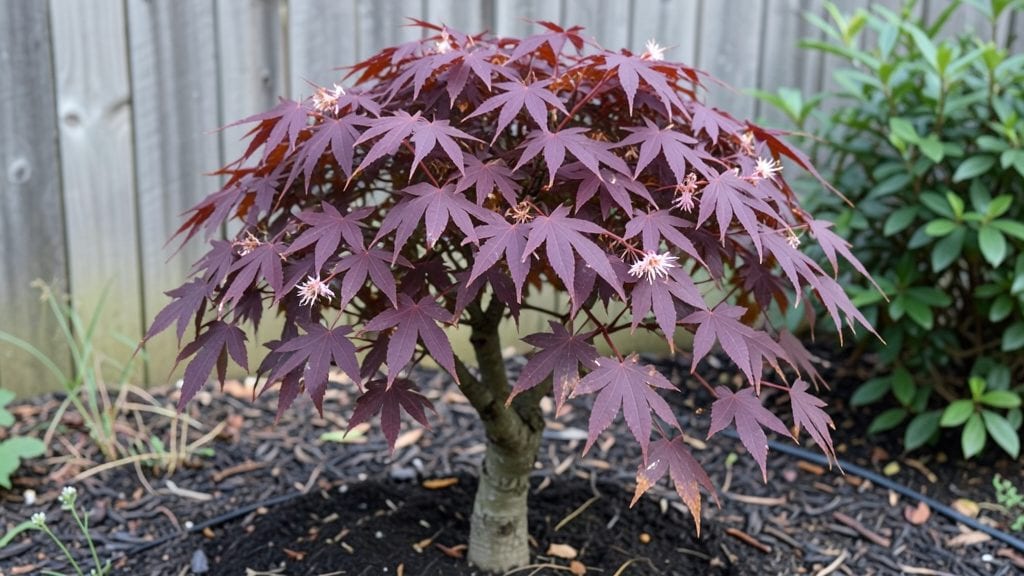
The Victorian Lady flowering maple transforms gardens with its rosy-pink blooms that appear before leaves—like a burst of spring color that refuses to quit. I planted mine last autumn, and by May, the branches were heavy with flowers, drawing hummingbirds before the first leaves even unfurled.
This isn’t just another pretty shrub; it’s a Pacific Northwest powerhouse that thrives where others falter, its deep roots and cold-hardy nature making it the backbone of my frost-prone garden.
What makes it a showstopper? The three-season drama: spring’s cloud-like flowers, summer’s lush green foliage, and fall’s fiery red-orange leaves that outshine most maples. It grows 15-20 feet tall but stays proportionate in width, making it perfect for focal points—whether as a standalone specimen or anchoring a mixed border.
Pair it with dwarf conifers for texture contrast or bleeding hearts for delicate underplanting, and you’ve got a combo that steals the show from March through November.
Designing around it is where the magic happens. Use it to frame a patio entrance, where its early blooms create a welcoming canopy before summer shade takes over. In smaller gardens, prune it as a small tree to save space while keeping that dramatic height.
Just remember: full sun to partial shade and well-draining soil are non-negotiable—skip those, and you’ll miss out on the full spectacle.
Once established, it’s nearly maintenance-free—just annual pruning to shape and remove dead wood. The real secret? Patience. Give it 3-5 years to reach its full glory, and you’ll have a frost-resistant centerpiece that outshines seasonal trends. Ready to make your garden the talk of the neighborhood?
📚 In This Guide
- What you need
- Instructions
- Tips and common mistakes
- Wrapping up and next steps
What you need
- ● Victorian Lady flowering maple tree: 1–2 mature trees (3–4 ft tall, 1–2 gal container size) for immediate impact
- ● OR 1–2 bare-root saplings (for budget-friendly planting in early spring)
- ● Planting site: Full sun to partial shade (6+ hours of sunlight daily)
- ● Well-draining soil (amend with compost if clay-heavy)
- ● Space: 15–20 ft apart for mature spread (or 10 ft for smaller varieties)
- ○ Soil amendments (optional but recommended for PNW gardens): 5–10 lbs of organic compost or peat moss per planting hole
- ● 1 cup of slow-release fertilizer (10-10-10 or balanced formula)
- ● Mulch: 3–4 inches of wood chips or pine bark (keep 6 inches away from trunk)
- ● Digging tools: Shovel (round-point or spade)
- ● Garden trowel (for smaller roots)
- ● Post-hole digger (if soil is compacted)
- ● Watering supplies: Garden hose with adjustable nozzle
- ● Watering can (for delicate root zones)
- ● Safety gear: Garden gloves (heavy-duty for rocky soil)
- ● Knee pads (for comfort)
- ● Staking: 2–3 bamboo stakes + soft tree ties (for young trees in windy PNW sites)
- ● Soil test kit: To check pH (ideal range: 5.0–7.0)
- ● Pruning shears: For shaping or removing dead branches
- ● Tree guard: Plastic spiral wrap to protect from rodents
- ● Drip irrigation system: For consistent moisture in dry summers
Step-by-Step guide for planting and caring for a Victorian Lady flowering maple
This stunning Pacific Northwest native thrives with the right preparation—here’s how to give it the perfect start.
Select the Ideal Planting Location
The Victorian Lady flowering maple (Acer japonicum 'Acon') demands full sun to partial shade—at least 6 hours of direct sunlight daily—to showcase its vibrant foliage and delicate blooms. In the Pacific Northwest’s cooler climate, morning sun followed by afternoon shade prevents leaf scorch while ensuring robust growth. Avoid low-lying areas where cold air pools, as this frost-sensitive tree needs well-draining soil to prevent root rot during winter.
Test your site by observing how sunlight moves across it throughout the day. The first true leaves of neighboring plants will help you gauge light exposure—if they’re consistently bright green, your spot likely gets enough sun. For maximum impact, plant near a patio or walkway where you can admire its spring blooms and autumn color from close range.
Prepare the Soil for Optimal Drainage
This maple prefers loamy, slightly acidic soil with a pH between 5.0 and 6.5. Before planting, amend native soil with 2-3 inches of organic matter—such as compost or well-rotted leaf mold—to improve drainage and fertility. The Pacific Northwest’s heavy, clay-rich soils can suffocate roots, so mix in coarse sand or perlite if your soil feels dense when squeezed.
Dig a hole twice as wide as the root ball but no deeper—planting too deep can strangle the tree by burying the graft union. Loosen the sides of the hole with a shovel to encourage root spread. Water the hole deeply 24 hours before planting to settle the soil and create a moisture-rich environment for the roots.
Plant at the Correct Depth and Stake for Support
Remove the Victorian Lady from its container and gently tease apart any circled or root-bound roots to encourage outward growth. Position the tree in the hole so the top of the root ball sits level with the surrounding soil—never mound soil against the trunk, which can cause girdling as the tree matures. Backfill with native soil mixed with your amendments, tamping lightly to eliminate air pockets.
Stake the tree only if necessary—young maples with top-heavy canopies may need temporary support. Use two stakes placed diagonally from the tree, tied loosely with soft fabric strips (never wire, which can damage bark). Water deeply after planting to settle the soil and remove stakes within 6-12 months to avoid restricting trunk growth.
Water Deeply and Mulch to Retain Moisture
Water the newly planted Victorian Lady deeply but infrequently—aim for 1-2 inches of water per week, delivered at the base rather than overhead. This encourages deep root growth, which is critical for frost resistance. In the Pacific Northwest’s rainy climate, you may need to adjust for excess moisture, especially in winter when drainage is poor.
Apply a 3-inch layer of mulch (such as wood chips or bark) around the base, keeping it 6 inches away from the trunk to prevent rot. Mulch helps regulate soil temperature and reduces evaporation, but avoid piling it against the stem. Replenish mulch annually to maintain its insulating properties, especially in winter months when frost can stress young roots.
Prune for Shape and Health in Early Spring
Prune your Victorian Lady before new growth begins in early spring to remove any dead, diseased, or crossing branches that could compete for nutrients. Use clean, sharp pruners to make cuts just outside the branch collar—the swollen area where the branch meets the trunk—to promote healing. Avoid heavy pruning, as this maple’s delicate blooms and foliage rely on balanced growth.
Watch for suckers or water sprouts that emerge from the base or along the trunk—remove these promptly to direct energy into the main canopy. In the Pacific Northwest, where humidity is high, sterilize pruning tools with rubbing alcohol between cuts to prevent fungal spread. A well-pruned tree will reward you with vibrant spring flowers and autumn color for decades.
Tips & tricks for perfectly planting and caring for Victorian Lady flowering maple
These expert insights will help you nurture your Victorian Lady flowering maple into a stunning centerpiece that thrives for decades in the Pacific Northwest's challenging climate.
Location Intelligence: When evaluating sunlight exposure in Step 1, pay special attention to the 6 hours of direct sunlight requirement—this is non-negotiable for vibrant blooms. I recommend using a solar pathfinder tool to track sunlight patterns throughout the day, especially if your site has nearby structures or trees that might cast shifting shadows. The first true leaves of neighboring plants are your best indicator of adequate light exposure, so observe them for at least a week before planting.
Soil Preparation Strategy: For Step 2's soil amendments, consider using a soil pH test kit to verify your soil's acidity before planting. If your soil tests above 6.5, you'll need to add more organic matter like peat moss or sulfur to achieve the ideal 5.0-6.5 pH range. The Pacific Northwest's clay-heavy soils often need 20-30% sand or perlite by volume to prevent compaction—don't skimp on this amendment, as proper drainage is critical for frost resistance.
Planting Precision: In Step 3, take extra care with the root ball positioning—the top should sit exactly level with the surrounding soil. I've seen many gardeners accidentally bury the graft union, which can cause the tree to develop multiple trunks. Use a level tool to ensure perfect alignment, and consider adding a small stake marked with the correct depth as a reference. The 24-hour pre-watering of the planting hole is particularly important in our region's heavy soils—it creates a moisture-rich environment that helps roots establish more quickly.
Watering Wisdom: The 1-2 inches of water per week guideline in Step 4 can be tricky in our rainy climate. I recommend using a rain gauge to monitor natural precipitation and supplement only when needed, especially during winter months when drainage is poor. Consider installing a drip irrigation system on a timer to deliver water directly to the root zone without wetting the foliage, which helps prevent fungal diseases common in our humid climate.
Pro Tips for Victorian Lady Flowering Maple
- These expert insights will help you nurture your Victorian Lady flowering maple into a stunning centerpiece that thrives for decades in the Pacific Northwest's challenging climate.
- Location Intelligence: When evaluating sunlight exposure in Step 1, pay special attention to the 6 hours of direct sunlight requirement—this is non-negotiable for vibrant blooms.
- Soil Preparation Strategy: For Step 2's soil amendments, consider using a soil pH test kit to verify your soil's acidity before planting.
Frequently asked questions
Got questions about the stunning Victorian Lady flowering maple? You’re not alone! Here are some of the most common queries from gardeners in the Pacific Northwest—and beyond—along with quick, helpful answers to get you growing with confidence.
What’s the best time to plant a Victorian Lady flowering maple in my region?
The ideal time to plant is early spring (March–April) or fall (September–October). This gives the tree roots time to establish before summer heat or winter frost. In the Pacific Northwest’s mild but wet climate, avoid planting during heavy rains to prevent soil erosion around the roots.
How cold-hardy is this maple compared to other flowering varieties?
The Victorian Lady is a zones 5–8 superstar, meaning it thrives in winters as cold as -20°F (-29°C). Unlike some delicate flowering maples, it’s frost-resistant and handles PNW’s chilly nights beautifully. Just ensure it’s planted in well-draining soil to avoid root rot in soggy winters.
Why aren’t my Victorian Lady blooms as vibrant as the pictures?
Few things beat pink-purple spring blooms, but duller flowers often mean too much shade or poor soil nutrients. Aim for 6+ hours of sunlight and amend soil with compost before planting. Over-fertilizing can also reduce bloom quality—stick to a balanced, slow-release fertilizer in early spring.
Can I grow a Victorian Lady in a container, or does it need to be planted in the ground?
While it’s possible in a large container (15+ gallons), this maple grows 15–20 feet tall with a wide canopy—making it a permanent ground plant in most cases. If you’re set on containers, choose a fast-draining mix and repot every 2–3 years to accommodate root growth.
Are Victorian Lady maples prone to pests or diseases in the PNW?
They’re generally low-maintenance, but watch for aphids (sap-sucking insects) or powdery mildew in humid summers. Treat aphids with a strong spray of water, and improve airflow around the tree. Avoid overhead watering to prevent fungal issues. Prune in late winter to remove dead branches and encourage healthy growth.
How do I know if my Victorian Lady is getting enough water?
Young trees need 1–1.5 inches of water weekly, while mature ones are drought-tolerant but appreciate deep watering during dry spells. Check soil moisture 2 inches below the surface—if it’s dry, water slowly until it drains. Mulch around the base (but not touching the trunk) to retain moisture and regulate temperature.
Wrapping up and next steps
The Victorian Lady flowering maple is a true gem for Pacific Northwest gardeners, blending stunning beauty with hardy resilience against frost and disease. Its delicate blooms and vibrant foliage make it a showstopper that adds elegance and charm to any landscape—whether you're a seasoned gardener or just starting out. 🌸
Ready to transform your garden? Start by choosing the perfect spot—one with partial shade and well-draining soil—and gather your tools. Then, follow the steps above to plant and nurture your Victorian Lady with confidence. Before you know it, you’ll be enjoying its breathtaking blooms year after year!