
Flowers
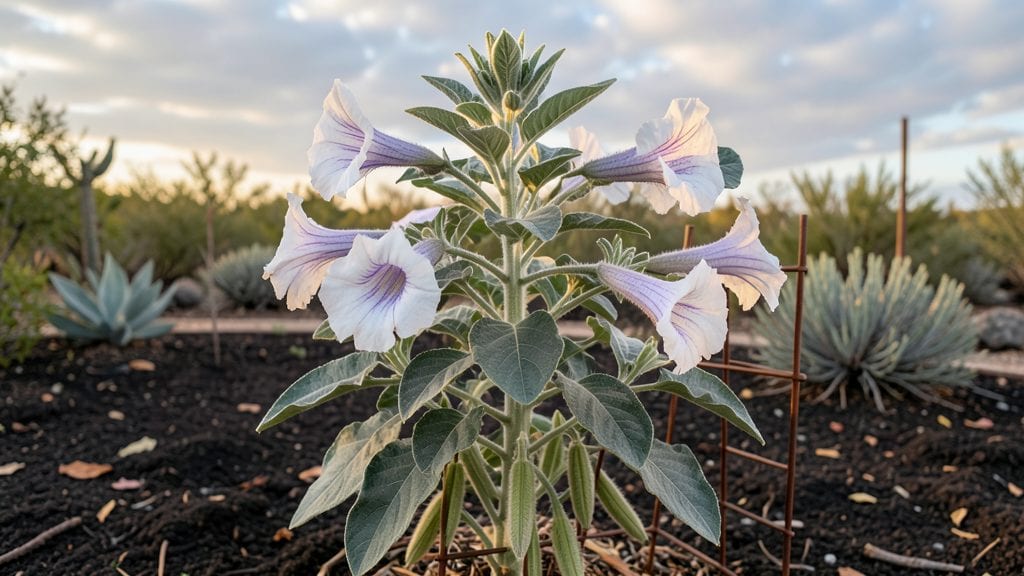
The white and purple trumpet flower transforms any garden into a hummingbird highway. 🌿 I planted mine last spring near the patio, and now it’s the star of every summer evening—swirling with bees, butterflies, and the occasional hummingbird diving for nectar.
The velvety blooms glow under the setting sun, creating a soft purple-pink haze that feels like a secret garden.
These dramatic flowers thrive in the Pacific Northwest’s mild summers, handling both coastal fog and inland heat better than most tropicals. They’re perfect for dramatic borders, mixed containers, or as a focal point near seating areas.
Pair them with silver foliage plants like lamb’s ear or dusty miller to make the trumpets pop even more.
You’ll love how they pair with deep purples—think salvia, cleome, or even black mondo grass—to create a moody, romantic vibe. Or go bold with chartreuse foliage like lime green coleus to make the flowers sing. Just remember: they need well-draining soil and morning sun to keep blooming all season.
Whether you’re designing a pollinator paradise or just want a showstopper for your backyard, these trumpets deliver effortless drama. Start with one plant—you’ll be hooked by the first hummingbird visit. Ready to make your garden the talk of the neighborhood?
📚 In This Guide
- What you need
- Instructions
- Tips and common mistakes
- Wrapping up and next steps
What you need
- ● Seeds or young plants: 1–3 Campsis radicans (trumpet creeper) plants or seeds (choose a variety with white/purple blooms, like 'Madame Galen').
- ● Well-draining potting mix: 5–10 gallons (depending on pot size). Use a blend with perlite or sand for aeration.
- ● Containers or garden bed: For containers: 2–3 gallon pots (minimum 12" deep) with drainage holes.
- ● For in-ground planting: A sunny spot with at least 6 hours of light daily. Soil should be slightly acidic (pH 6.0–7.0).
- ● Fertilizer: Slow-release granular fertilizer (10-10-10 ratio) or organic compost (1 cup per plant).
- ● Watering can or hose: With a gentle spray nozzle for moisture control.
- ● Pruning shears: Sharp, clean shears for trimming (sterilize with rubbing alcohol).
- ● Mulch (2–3 inches of wood chips or shredded bark to retain moisture).
- ● Trellis or sturdy support (8–10 feet tall) for climbing varieties.
- ● Plant ties or soft twine to secure young vines.
- ● Soil pH test kit (to ensure optimal growing conditions).
- ● Organic pest control (neem oil or insecticidal soap, if needed).
How to grow stunning white and purple trumpet flowers in the Pacific Northwest
Here's the foolproof method I've used to turn my PNW garden into a hummingbird haven with these showstopping blooms.
🌱 Step 1: Select the Right Variety and Planting Site
Choose between Allamanda cathartica for tropical purple trumpets or Allamanda schottii for creamy white blooms. Both thrive in USDA zones 10-11, but we'll adapt for cooler PNW summers by selecting microclimate spots near south-facing walls or in containers you can winter-protect. I always test soil drainage first—these plants despise soggy roots.
Look for areas with morning sun and afternoon shade to prevent leaf scorch. The ideal spot gets 4-6 hours of direct sunlight before temperatures climb above 75°F. In coastal areas, even full sun works because of the cooling ocean breezes. Amend heavy native soil with 3-4 inches of compost to improve drainage and fertility.
🪴 Step 2: Prepare Containers or In-Ground Beds
For containers, use 18-inch diameter pots with drainage holes—each plant needs space to develop its sprawling habit. I fill mine with a mix of 50% cactus/succulent mix and 50% peat moss to create the fast-draining conditions these tropical beauties crave. Never use garden soil alone; it compacts and suffocates roots.
In-ground plantings require a 3-foot diameter hole to accommodate the plant's mature spread. Mix 2 cubic feet of compost into the native soil and add a handful of slow-release fertilizer (10-10-10) at the bottom. The key is creating a loose, airy planting medium—press the soil lightly but don't compact it.
☀️ Step 3: Plant and Establish for Summer Blooms
Remove the plant from its nursery pot and loosen the roots if they're circling. Position it so the top of the root ball sits 1 inch below the soil surface—this prevents stem rot while allowing roots to access moisture. Backfill with your prepared mix and water deeply until it drains from the bottom.
Here's where PNW gardeners often fail: trumpet flowers need consistent moisture but hate soggy conditions. Water when the top 2 inches of soil feel dry, then let excess drain completely. Mulch with 2 inches of pine bark to retain moisture and protect roots from temperature swings. You'll see new growth within 3-4 weeks—that's your signal the plant has rooted successfully.
💧 Step 4: Feed and Prune for Continuous Blooms
Feed every 6 weeks during the growing season with half-strength liquid fertilizer (20-20-20). I use a water-soluble formula because trumpet flowers respond dramatically to regular feeding. The secret to non-stop blooms is deadheading—remove spent flowers immediately with clean pruners. This encourages the plant to produce more buds rather than set seed.
Prune leggy growth in early summer to shape the plant and encourage bushier growth. Cut back one-third of the longest stems just above a leaf node. Avoid heavy pruning after mid-summer as new growth won't have time to harden off before cooler PNW nights arrive. Watch for aphids on new growth—spray with neem oil at the first sign of sticky residue.
⏰ Step 5: Winter Care for Pacific Northwest Conditions
Before first frost, move container-grown plants to a protected location like an unheated garage or under eaves. Wrap pots in bubble wrap and reduce watering to every 3-4 weeks—just enough to prevent complete drying. In-ground plants need 6-8 inches of mulch to insulate roots through winter. I've successfully overwintered these in zone 8a by providing this protection.
The real test comes in early spring when you'll see new growth emerge. Resume regular watering when soil temperatures reach 60°F and fertilize lightly with fish emulsion to jumpstart growth. Trumpet flowers are frost-sensitive but remarkably resilient—with proper winter care, they'll reward you with blooms starting as early as May in the PNW.
Tips & tricks for growing Pacific Northwest trumpet flowers
These pro tips will help you transform your PNW garden into a vibrant hummingbird magnet with stunning trumpet blooms.
Microclimate Mastery: The 4-6 hours of morning sun is non-negotiable for trumpet flowers—especially in cooler PNW summers. I've found that planting near south-facing walls or using large containers (18-inch diameter) creates the perfect microclimate. In coastal areas, you can extend to full sun thanks to cooling ocean breezes, but inland gardeners should stick to morning sun only to prevent leaf scorch when temperatures rise above 75°F.
Root Health Foundation: When preparing your planting hole or container mix, focus on creating a loose, airy medium that mimics their tropical native conditions. For in-ground plantings, mix 2 cubic feet of compost into the native soil to improve drainage—these plants will literally rot if their roots stay soggy. The 50/50 cactus/succulent mix to peat moss ratio in containers is your secret weapon for preventing root suffocation.
Watering Wisdom: The "top 2 inches dry" rule is crucial, but timing matters just as much. Water in the morning so leaves have time to dry before evening—this prevents fungal issues that are common in our damp PNW climate. That 2-inch pine bark mulch isn't just for moisture retention; it also creates a thermal buffer that protects roots from our temperature swings between day and night.
Pruning Precision: When you cut back one-third of the longest stems in early summer, always make your cuts just above a leaf node. This encourages bushier growth while maintaining the plant's natural shape. I've found that using clean pruners and immediately disposing of spent blooms during deadheading prevents pest issues—especially aphids—which can become a problem on new growth if left unchecked.
Pro Tips for White And Purple Trumpet Flower
- These pro tips will help you transform your PNW garden into a vibrant hummingbird magnet with stunning trumpet blooms.
- Microclimate Mastery: The 4-6 hours of morning sun is non-negotiable for trumpet flowers—especially in cooler PNW summers.
- Root Health Foundation: When preparing your planting hole or container mix, focus on creating a loose, airy medium that mimics their tropical native conditions.
Frequently asked questions
When is the best time to plant trumpet flowers in the Pacific Northwest?
The ideal time to plant trumpet flowers (Campanula persicifolia or Campsis radicans) in the PNW is early spring (March–April) or early fall (September–October). This gives roots time to establish before summer heat or winter frost. Avoid planting in late summer—hot, dry conditions can stress young plants. For container gardening, you can plant anytime the soil isn’t frozen!
Are trumpet flowers toxic to bees or other pollinators?
Not at all! Trumpet flowers are pollinator superstars—especially for bees, butterflies, and hummingbirds. Their tubular blooms are perfect for long-tongued insects, and they provide nearly year-round nectar (if deadheaded regularly). Just avoid pesticides, and you’ll turn your garden into a buzzing paradise.
How do I protect trumpet flowers from PNW winters?
Most trumpet flowers (like Campsis varieties) are hardy to USDA Zone 5, but young plants or tender varieties may need extra care. Mulch heavily with wood chips or straw (3–4 inches) around the base, and wrap containers in burlap if growing in pots. Prune back dead foliage in early spring—new growth will emerge once temperatures rise above 50°F.
What’s a good alternative if my trumpet flowers aren’t thriving?
If trumpet flowers struggle in your microclimate, try these PNW-friendly alternatives with similar trumpet-shaped blooms:
- Penstemon (beardtongue): Drought-tolerant, hummingbird-loved, and comes in white/purple varieties.
- Lobelia: Thrives in moist soil and offers cascading purple-white blooms.
- Fuchsia: Hummingbird magnets with trumpet-shaped flowers (great for containers!).
Why are my trumpet flowers wilting or dropping buds?
Wilting or bud drop usually signals one of three issues:
- Underwatering: Trumpet flowers need consistent moisture, especially in the PNW’s dry summers. Water deeply 2–3 times per week unless rain is frequent.
- Overcrowding: These plants need space to breathe. Prune back congested growth and thin out stems to improve airflow.
- Pests: Check for aphids or spider mites on undersides of leaves. Blast off with water or use neem oil for organic control.
Wrapping up and next steps
The white and purple trumpet flower isn’t just a stunning addition to your Pacific Northwest garden—it’s a lifeline for pollinators and a burst of color that brightens any space. 🌸 From its easy-care growing habits to its magnetism for bees and butterflies, this beauty proves that nature’s most vibrant gifts often come with the simplest care.
Whether you’re a seasoned gardener or just starting, now’s the perfect time to plant one and watch your garden transform.
Ready to take the next step? Pick a sunny spot, grab some soil, and let the trumpet flower do the rest! Your pollinator friends—and your eyes—will thank you.