Flowers
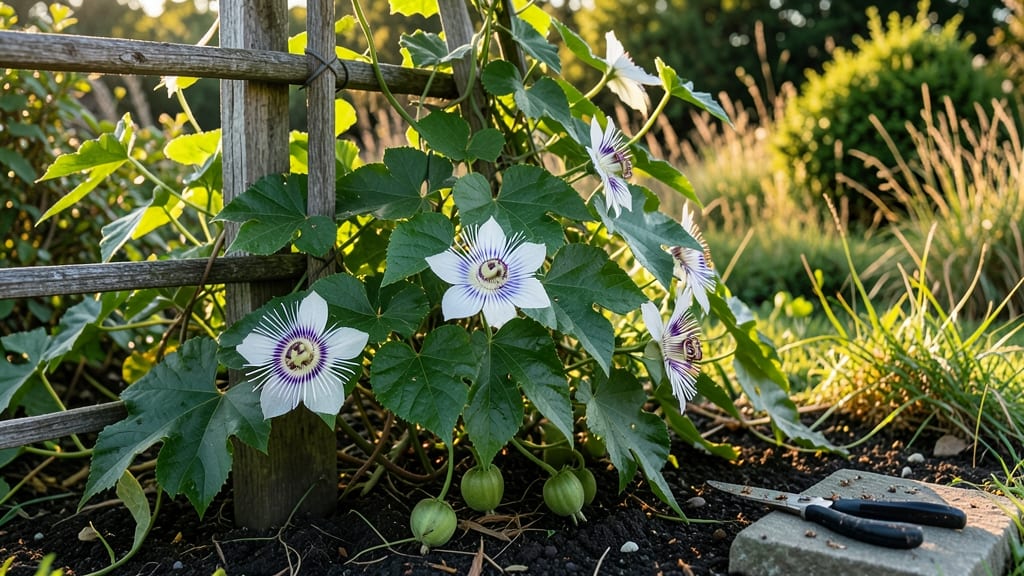
The white maypop passion flower (Passiflora incarnata 'Alba') brings a taste of the tropics to your Pacific Northwest garden with its velvety white blooms and edible fruit. 🌿 I fell for this vine after seeing how well it thrived in my zone 8 yard—its hardiness surprised me, and the fragrant flowers make it worth every effort.
Unlike fussy tropicals, this one handles our cooler summers and damp winters with ease, as long as you give it the right support and care.
You’ll need a sturdy trellis or fence at least 6 feet tall since this vine can sprawl dramatically, plus well-draining soil with a touch of compost. Morning sun and afternoon shade mimic its native woodland edges, and it tolerates clay soil better than most passionflowers.
The real magic happens when you plant it near a patio or deck—those fragrant blooms and sweet fruit make it a conversation piece.
By midsummer, you’ll be rewarded with clusters of 3-inch white flowers that smell like honey, followed by the namesake maypop fruit—edible when fully ripe, though the pulp is tart. The vine’s glossy leaves add lush texture to any garden, and it even attracts hummingbirds like crazy.
With proper pruning in early spring, it stays vigorous for years without taking over.
This plant adapts beautifully to containers if you live in colder zones, though it’ll need winter protection. The key is keeping it slightly moist but never soggy—once established, it’s surprisingly drought-tolerant.
Whether you grow it for its flowers, fruit, or just the tropical vibe, it’s a standout for Pacific Northwest gardens.
📚 In This Guide
- What you need
- Instructions
- Tips and common mistakes
- Wrapping up and next steps
What you need
- ● White maypop passion flower seeds or bare-root plants – 1-3 plants (or 5-10 seeds if starting from scratch). Look for certified organic or locally adapted varieties.
- ● Well-draining potting mix – 5-10 gallons (for containers) or enriched garden soil (for in-ground planting). Mix in compost (1 part compost to 3 parts soil) for fertility.
- ○ Containers (optional but recommended for PNW climates) – 15-20 gallon pots with drainage holes (if growing in containers). Use fabric grow bags or plastic pots with saucers.
- ● Mulch – 2-3 inches of straw or wood chips to retain moisture and protect roots from cold snaps.
- ● Support structure – A 6-8 foot trellis or strong fence (passion vines can grow 15+ feet but are manageable with pruning).
- ● Garden trowel or shovel – For planting and soil prep.
- ● Pruning shears – Sharp, sterilized shears for trimming vines and deadheading.
- ● Watering can or hose with gentle spray nozzle – Passion flowers need consistent moisture but hate soggy roots.
- ● Fertilizer – Balanced organic fertilizer (10-10-10) or compost tea (apply every 4-6 weeks during growing season).
- ● Row cover or frost cloth – For young plants in early spring or late fall (PNW’s chilly nights can be tricky!).
- ○ Gloves (optional) – Passion flower vines have tiny hooks—gloves help avoid scratches!
- ● Drip irrigation system – Automates watering and saves time.
- ● Epsom salt – A spoonful in water every few weeks boosts magnesium for vibrant blooms.
- ● Pollinator-friendly companions – Plant bee balm, borage, or lavender nearby to attract hummingbirds and bees (critical for fruit set!).
- ● Greenhouse or cold frame – Extends the growing season if you’re eager for earlier blooms.
How to grow white maypop passion flower in the Pacific Northwest
This hardy tropical vine thrives in our cool, wet climate—here's how to coax its stunning blooms and edible fruit.
🌱 Step 1: Choose the Perfect Planting Site
White maypop passion flowers need a location that mimics their native tropical understory—partial shade with morning sun and afternoon shade from trees or structures. In the Pacific Northwest, a north-facing wall or east-facing garden bed works beautifully. The key is protection from harsh afternoon sun that can scorch the delicate leaves.
Test your spot by observing how much light it gets throughout the day. If leaves would get more than 4 hours of direct afternoon sun, provide shade cloth (30-50% coverage) during peak heat. I've found that even a light covering of nearby foliage creates the ideal microclimate for these vines.
☀️ Step 2: Prepare the Soil for Tropical Roots
These passion flowers thrive in well-draining, slightly acidic soil with a pH between 6.0 and 7.0. Amend your native soil with 3 inches of compost and 2 inches of perlite or coarse sand to improve drainage—their roots despise soggy conditions. I mix these into the top 12 inches of soil where the roots will establish.
Create a mound or raised bed if your soil drains poorly. The roots should never sit in water for more than a few hours after rain. A simple soil test kit will confirm your pH—if it's too alkaline, add sulfur according to package instructions to lower it gradually.
🪴 Step 3: Plant at the Right Time and Depth
Plant your white maypop in early spring after the last frost when soil temperatures reach at least 60°F. Dig a hole twice as wide as the root ball but only as deep—the crown should sit just above soil level. This prevents rot while allowing roots to spread freely.
Gently remove the plant from its container and loosen any circling roots with your fingers. Place it in the hole, backfill with native soil mixed with compost, and water deeply. The first few weeks are critical—keep soil consistently moist (not soggy) until new growth appears, which usually takes 3-4 weeks.
💧 Step 4: Water and Fertilize for Optimal Growth
Water deeply 2-3 times per week during the first growing season, aiming for 1-2 inches of water per week. Let the top 2 inches of soil dry slightly between waterings—this encourages deep root growth. In summer, increase to 3-4 times per week if temperatures exceed 80°F.
Feed with a balanced 10-10-10 fertilizer in early spring and again in midsummer, using half the recommended dose. Too much nitrogen produces lush foliage but fewer flowers. I also sprinkle bone meal around the base in early spring to encourage flowering—this vine rewards patience with stunning white blooms and edible fruit by late summer.
✂️ Step 5: Prune and Train for Maximum Blooms
Prune in late winter before new growth begins. Remove dead or diseased branches first, then cut back one-third of the oldest growth to encourage new, vigorous shoots. This also opens the center of the plant for better air circulation, reducing fungal issues common in our damp climate.
Train young vines along a strong trellis or arbor—they'll climb 15-20 feet with proper support. Remove any suckers growing below the main stem to focus energy on upward growth. You'll see first blooms in year 2 or 3, but the wait is worth it for those 3-inch white flowers that look like tropical orchids.
Tips & tricks for perfect white maypop passion flower growth
These simple yet game-changing tips will help your white maypop passion flower thrive in our Pacific Northwest climate.
Location Insight: When testing your spot in Step 1, pay close attention to afternoon shade patterns. In our region, even a north-facing wall can get too much sun during summer afternoons. I've found that positioning near evergreen trees provides the best natural shade—just make sure the canopy isn't too dense, which can block all light. For container growing, place near your home's east side where morning sun warms the soil but afternoon shade keeps roots cool.
Soil Prep Pro Tip: In Step 2, don't skip the sulfur test if your soil pH is above 7.0—our Pacific Northwest soils often test alkaline. I've seen dramatic improvements by adding sulfur gradually over two applications (spring and fall) rather than all at once. For the 12 inches of amended soil, consider adding a handful of worm castings too—they improve soil structure and provide natural nutrients these tropical roots love.
Planting Precision: When planting in Step 3, the "just above soil level" crown position is crucial. I've had plants rot when buried too deep, but also seen stunted growth when planted too high. A good trick is to mound some soil in the hole first, then place the plant on top and fill around it—this creates the perfect elevation without guessing. The 3-4 week wait for new growth is your best indicator of success, so don't rush watering if you don't see sprouts yet.
Watering Wisdom: The 2-3 times per week guideline in Step 4 works for most of our climate, but adjust when our summer heat waves hit. I've learned to check soil moisture by sticking my finger 2 inches down—if it's dry, water deeply. For containers, you'll need to water more frequently, sometimes daily during heatwaves. The top 2 inches drying between waterings is your cue that roots are developing properly below.
Pro Tips for White Maypop Passion Flower
- These simple yet game-changing tips will help your white maypop passion flower thrive in our Pacific Northwest climate.
- Location Insight: When testing your spot in Step 1, pay close attention to afternoon shade patterns.
- Soil Prep Pro Tip: In Step 2, don't skip the sulfur test if your soil pH is above 7.0—our Pacific Northwest soils often test alkaline.
Frequently asked questions
Got questions about growing white maypop passion flowers in your Pacific Northwest garden? You’re not alone! Here are some of the most common queries—plus straightforward answers to help you cultivate this stunning tropical beauty with confidence.
How cold can white maypop passion flowers tolerate?
These tropical vines thrive in USDA Hardiness Zones 8-11 and can handle brief dips to 25°F (-4°C) if protected. In the PNW’s cooler climates (Zones 7-8), grow them in containers or greenhouses and bring them indoors when temps drop below 30°F (-1°C). Mulching and frost cloth add extra insulation!
How long does it take for white maypop passion flowers to bloom?
With ideal conditions (full sun, rich soil, and patience!), expect first flowers in 1–2 years from seed or 1 year from a nursery-grown plant. Young vines focus on root and vine growth first—don’t rush them! Prune aggressively in early spring to encourage faster blooming and more abundant flowers.
Can I grow white maypop passion flowers in containers?
Containers are perfect for PNW gardeners, as they allow you to move the plant indoors during winter. Use a 15+ gallon pot with drainage holes, fill it with well-draining potting mix, and provide a trellis or sturdy support for the vines. Just ensure the container gets at least 6 hours of sunlight daily.
Why aren’t my white maypop passion flowers producing fruit?
Fruit (maypops!) form after successful pollination, which requires bees or hummingbirds. If you’re not seeing fruit, check for:
- Lack of pollinators: Hand-pollinate flowers with a soft brush.
- Over-fertilizing with nitrogen: Too much greenery = fewer flowers. Switch to a balanced or phosphorus-rich fertilizer.
- Immaturity: Young plants may take 2–3 years to fruit.
What’s a good alternative if white maypop is too tricky for my climate?
If the PNW’s climate feels too challenging, try these hardy, vine-y alternatives with similar tropical vibes:
- Clematis: Cold-hardy (Zones 3–9), thrives in shade, and blooms prolifically.
- Passionflower (Passiflora caerulea): Hardy to Zone 5 and produces edible fruit!
- Honeysuckle (Lonicera): Fast-growing, fragrant, and attracts pollinators.
Wrapping up and next steps
Growing white maypop passion flower in the Pacific Northwest is absolutely doable—even with its tropical roots!
With the right care, this stunning vine can thrive in your garden, offering fragrant blooms and edible fruit. Start small with a single plant, experiment with trellises, and soon you’ll have a lush, living canopy that’s the envy of the neighborhood.
Ready to take the next step? Plant your first vine this spring and enjoy the journey of nurturing this unique beauty. Happy gardening! 🌿🌸